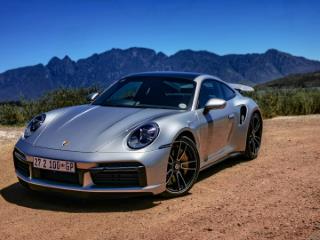
Porsche 911 Turbo S Coupe (2026) First Drive Impression
I travelled to the Western Cape to drive Porsche's latest take on the 911 Turbo S, a car that has earned a reputation as a bit of a giant killer thanks to its price-to-performance ratio and relatively subdued aesthetics. Does the new hybrid version continue where the 992.1 left off, or is this an entirely new ballgame?

The Porsche 911 Turbo S has long held the title of the definitive everyday supercar, and for 2026, Zuffenhausen has taken a technological leap forward. Tearing through the sweeping bends of the Western Cape's coastal passes, the flagship 992.2 iteration reveals its new party trick: a performance-focused hybrid powertrain.
Key Takeaways
The highlight: A 3.6-litre performance-hybrid setup that eliminates turbo lag while delivering a staggering 523 kW and 800 Nm.
The verdict: Unmatched point-to-point speed and daily usability that keeps the 911 at the apex of all-weather supercars.
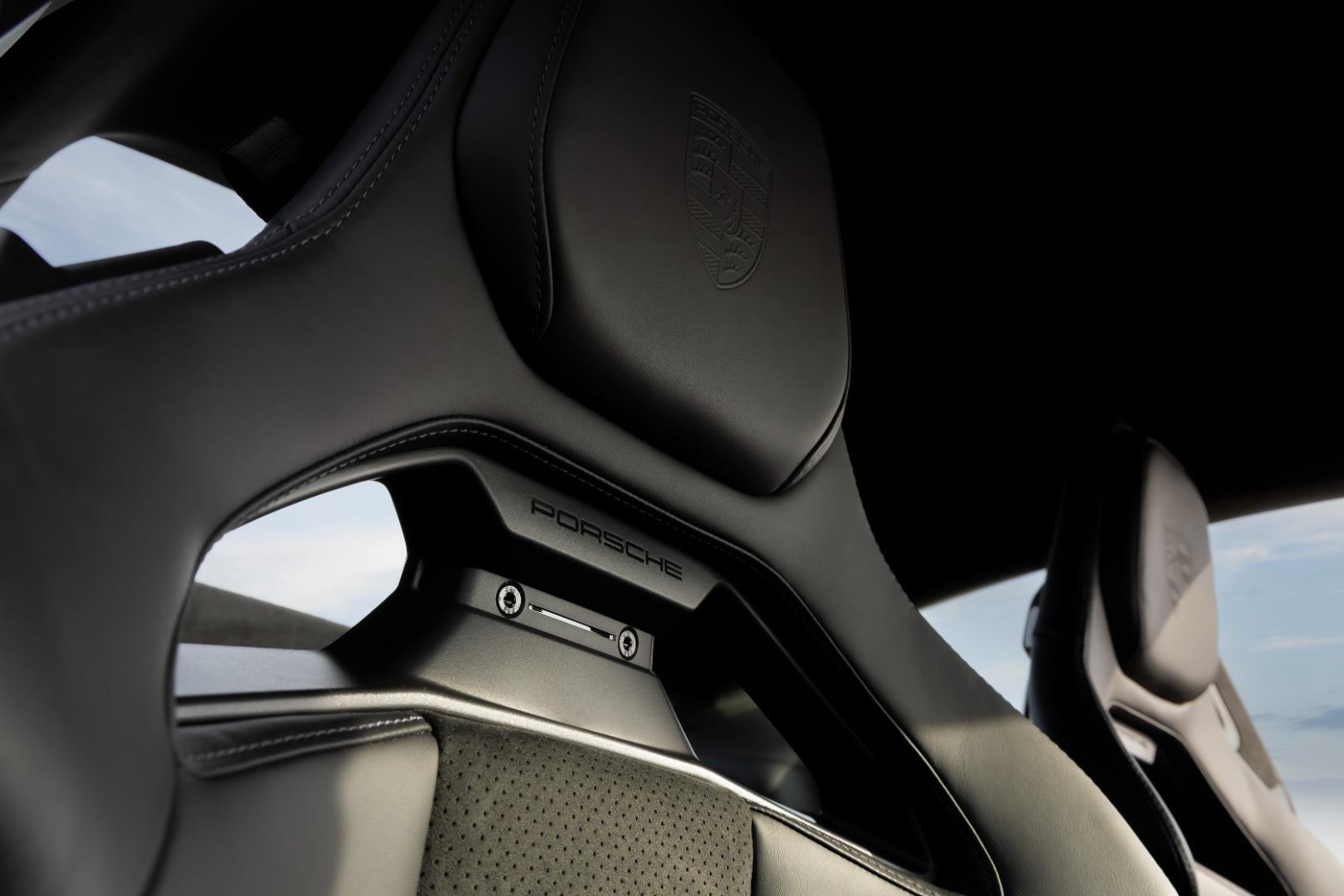
Price: R5 722 000 (incl. emissions tax) and just over R6.4-million as tested (thanks to the addition of bucket seats and carbon fibre bits).
A brief history of the Turbo
The evolution of the Porsche 911 Turbo S, from scary death machine to high-tech point-and-shoot rocket, spans several key chapters:
1. 930 Turbo (1975–1989)
The vibe: "The Widowmaker."
What Happened: Before there was an "S", there was the original 930 Turbo. It introduced massive turbo lag: you stepped on the accelerator pedal, and nothing happened for three business days, and then all 194 kW+ hit at once, mid-corner, launching unsuspecting wealthy dentists straight into the nearest tree.
2. The 964 Turbo S (1992)
The vibe: A lightweight apology for nearly killing everyone in the 80s.
What Happened: Porsche’s Exclusive department stripped out many creature comforts, bumped up power significantly, painted it Speed Yellow, and built them in very limited numbers. It was terrifying, rare, and basically a racecar with a number plate.
3. The 993 Turbo S (1997–1998)
The vibe: The air-cooled finale gets twin turbos.
What happened: To stop the car from actively trying to murder its driver, Porsche gave the 993 twin-turbochargers and standard all-wheel drive. The 331kW Turbo S added yellow brake callipers, carbon trim, and those iconic hollow rear-fender air scoops. It could break the 300 km/h mark. I don't envy the person tasked with that first 300km/h+ shakedown run.
4. The 996 Turbo S (2004–2005)
The vibe: Water cooling and egg-shaped headlights.
What happened: Porsche switched to water-cooled engines; some say that on a quiet night, you can still hear the purists weeping. This model also added the "fried-egg" headlights, loathed by many at the time, but far more in vogue as the neo-classic 911s entered the cultural zeitgeist in 2026. The Turbo S came standard with massive carbon-ceramic brakes (PCCB) and a 6-disc CD changer, so you could switch from Evanescence to The Black Eyed Peas while hitting 100 km/h in 3.8 seconds.
5. The 997 Turbo S (2010–2013)
The Vibe: Goodbye manual, hello PDK.
What Happened: Porsche decided humans were too slow at shifting gears. The 997.2 Turbo S threw out the manual box entirely in favour of the 7-speed PDK dual-clutch transmission. With 390kW and launch control, it became an effortless, space-time-bending grand tourer. It is widely considered the last fun-sized 911 before the bulky 991-era models, and that alone makes it a bit of an icon.
6. The 991 Turbo S (2014–2019)
The vibe: The "Launch Control is my personality" era.
What happened: Armed with 427kW, the 991.2 Turbo S became famous for torturing passengers. You could launch the car 50 times in a row without breaking the gearbox, although your passengers' necks would have given up far before then.
7. The 992.1 Turbo S (2020–2024)
The vibe: Supercar chasing machine.
What happened: With 478 kW and 800 Nm, it officially did 0–100 km/h in 2.7 seconds, though independent tests regularly clocked it as faster. It became the default answer to "What can out-accelerate a Ferrari while carrying two bags of groceries?"
8. The 992.2 Turbo S (2026+)
The vibe: Cyberpunk hybrid boost.
What happened: Porsche added a 1.9 kWh battery, an electric motor in the PDK, twin e-turbos, and 523 kW. It now weighs more than a 911 should, but it is the fastest accelerating production 911 ever made.
Styling
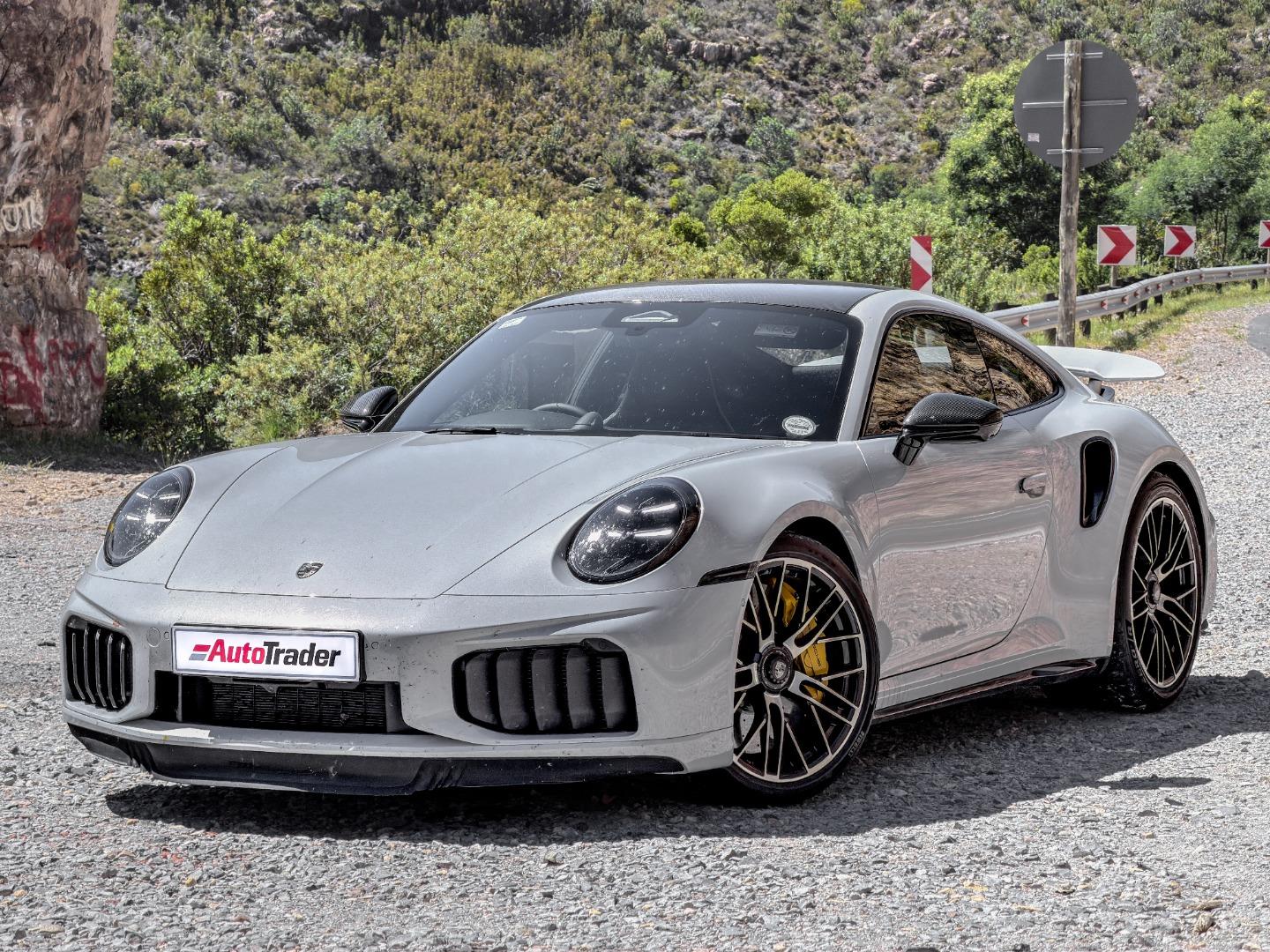
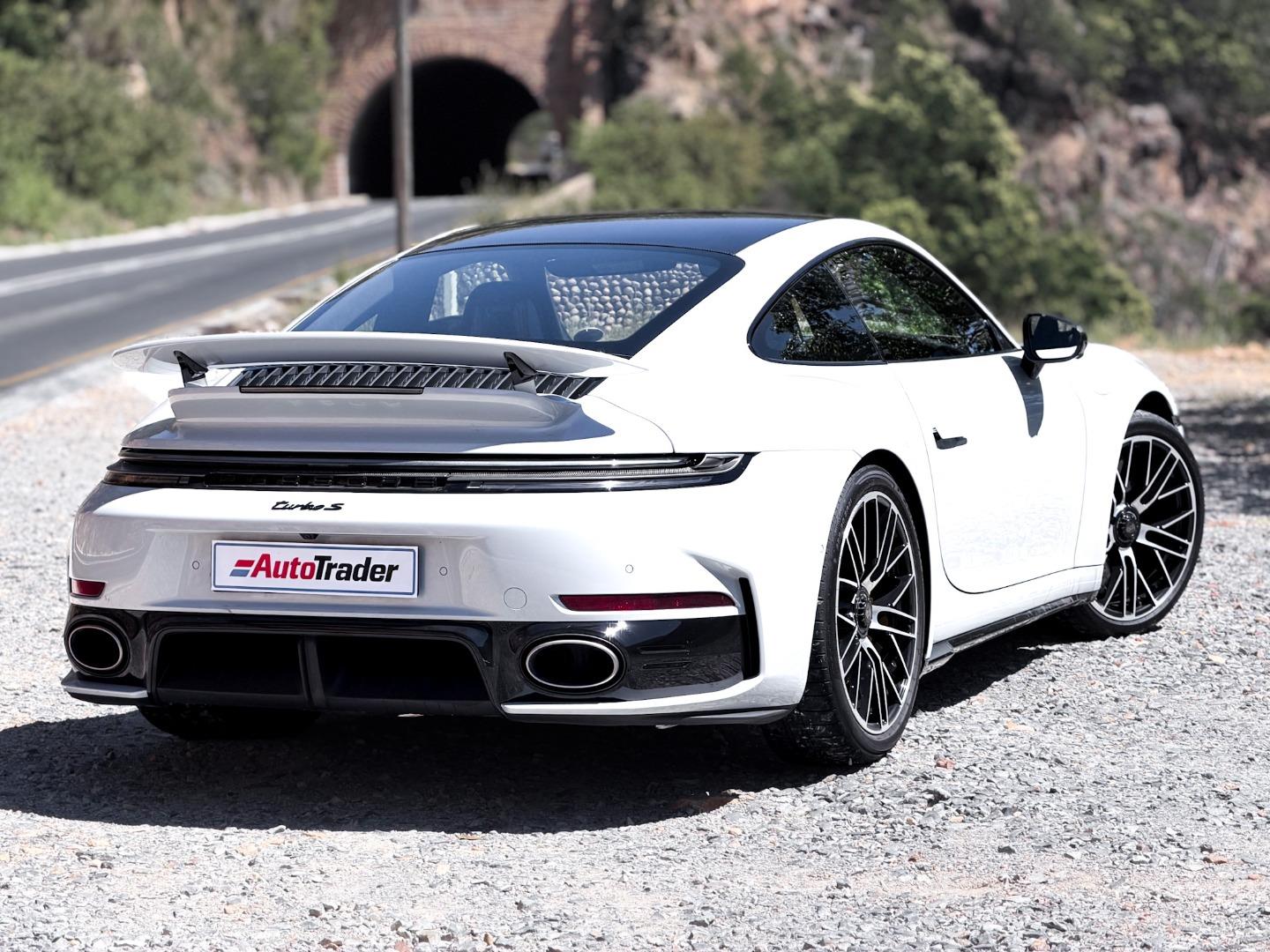
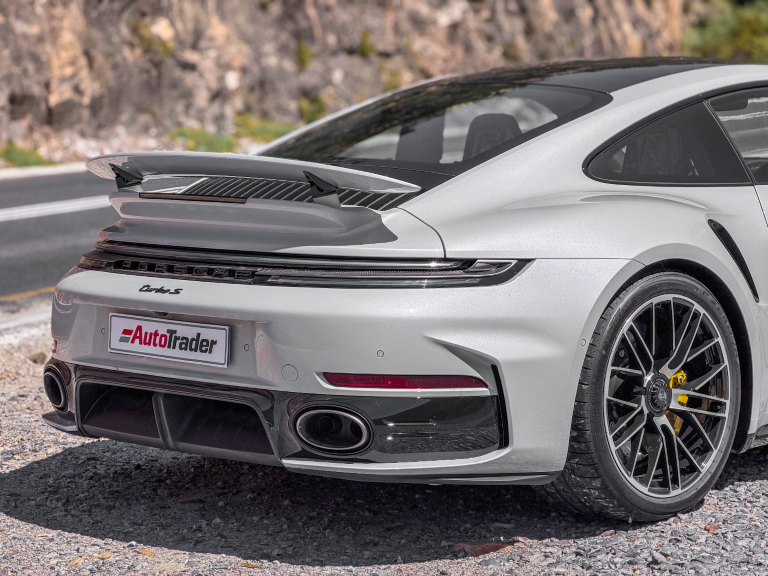
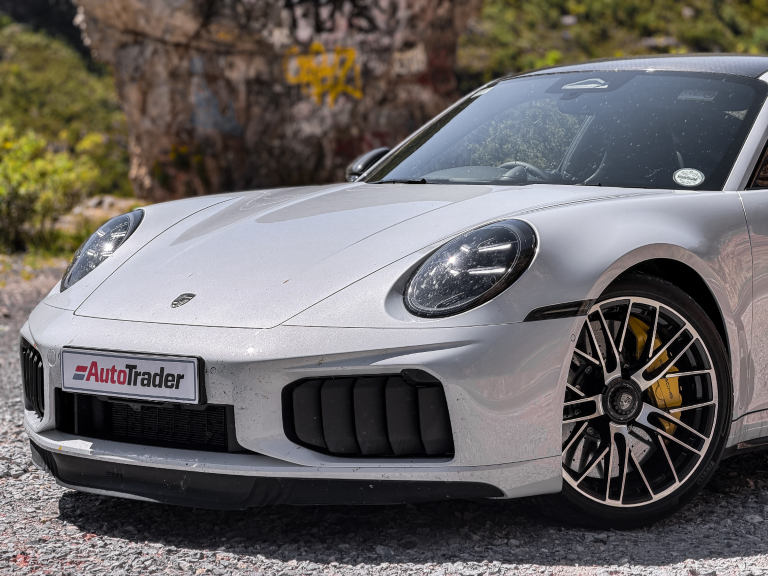
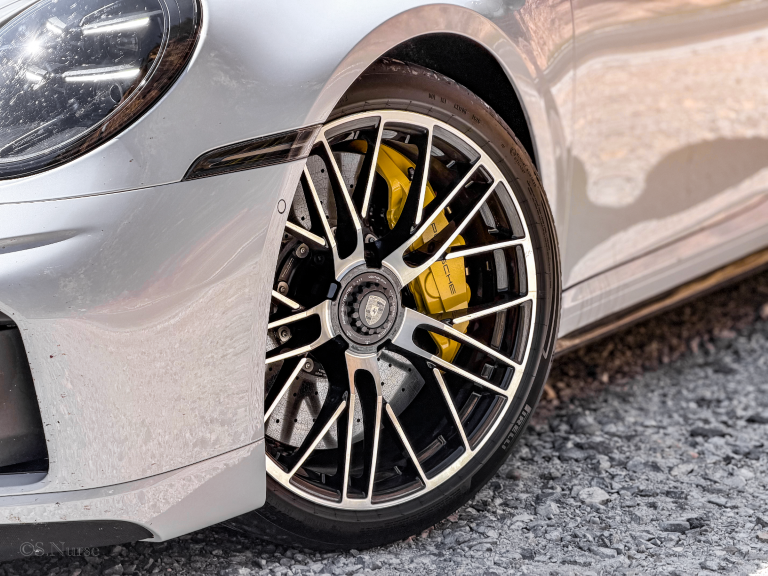
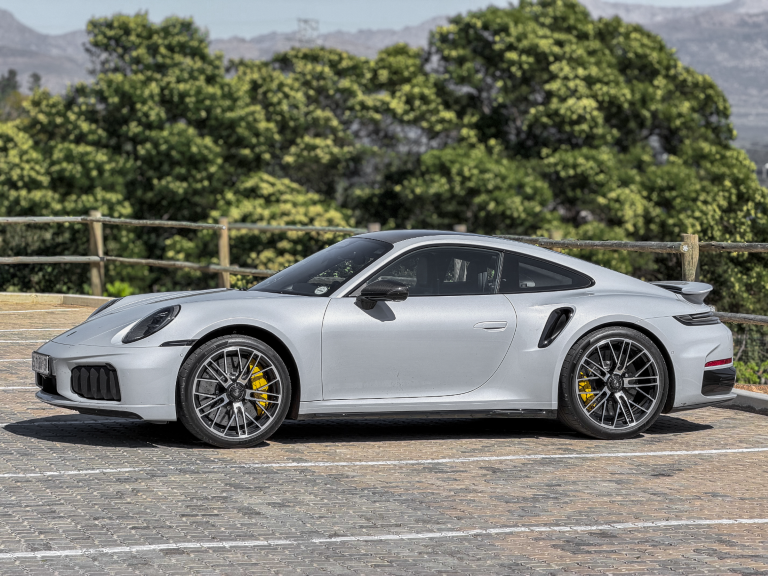
Visually, the Turbo S retains its signature widebody stance, measuring a muscular 1 900 mm across. Distinguishing details include standard Turbonite badging and trim accents, active cooling flaps up front, matrix LED headlights, and centre-locking 20-inch front and 21-inch rear wheels wrapped in massive rubber (325/30 R21 at the rear). Our press unit had the optional carbon roof and side mirror caps, which added to its aesthetics.
In true 911 fashion, it is relatively understated given the enormous performance potential, and that's what makes the Turbo S so appealing; it's a bit of a sleeper until you see the badge at the back, after which, you're almost assured of being decimated when the lights go green.
Drivetrain & Performance
Under the rear engine cover sits a 3.6-litre flat-six paired with an integrated electric motor nestled inside the 8-speed PDK dual-clutch transmission. This is not a plug-in system strictly aimed at zero-emission commuting; it is a self-charging performance hybrid designed for instantaneous response.
You may think that this sounds familiar, and that's because it is. This is, broadly speaking, the same set-up as seen in the latest GTS, only with the wick turned up and some key changes. Instead of one electric turbocharger, the Turbo S features twin eTurbos (one per cylinder bank) with dedicated dual throttle bodies and intercoolers. Energy recovery doubles, harvesting up to 22 kW from the exhaust gas stream. To put it into perspective, the GTS produces 357 kW and 570 Nm from the 3.6-litre internal combustion engine (ICE) alone, while the Turbo S produces 471 kW and 760 Nm from the 3.6-litre ICE alone. As for electric assistance, in the GTS, the transmission-mounted electric motor within the 8-speed PDK delivers 41 kW and 150 Nm, while in the Turbo S, an upgraded PDK motor boosts output to 52 kW.
Combined Power Output: 523 kW (471 kW ICE + 52 kW Electric)
Combined Torque Output: 800 Nm
0–100 km/h: 2.5 seconds (claimed)
Top Speed: 322 km/h
Key battery nuances
Same battery capacity, faster discharge/charge cycle: Porsche kept the high-voltage battery at 1.9 kWh in both the Turbo S and GTS models to prevent adding excess weight. Instead of storing large capacities for EV-only driving, the cell chemistry prioritises high power density, enabling rapid discharge during aggressive acceleration and rapid recharge via energy recovery under braking or from the exhaust stream.
Auxiliary chassis controls: In both models, the 400V high-voltage battery powers the dynamic anti-roll system (PDCC) and the front-axle lift system directly rather than using a traditional belt-driven 12V pump.
Related: Porsche 911 Carrera GTS (2026) Review
Cabin & Daily Usability
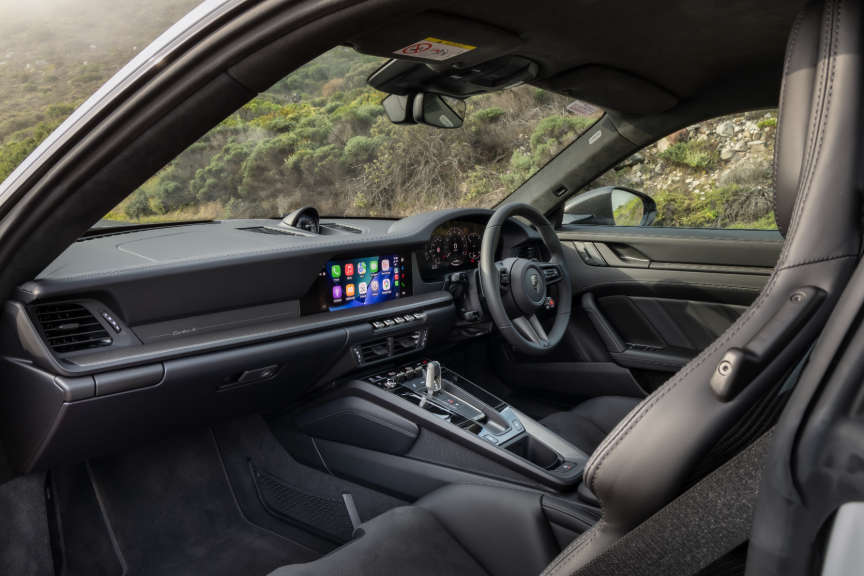
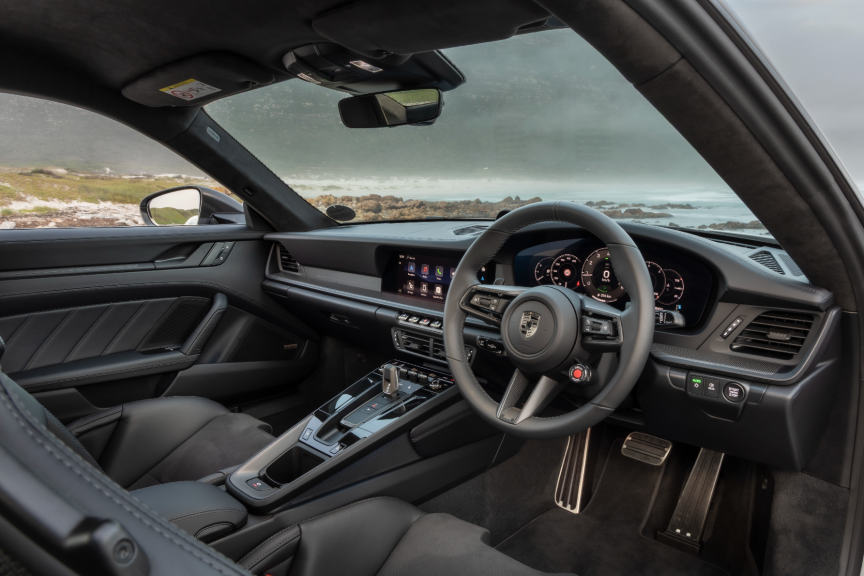
Inside, you get a fully digital instrument cluster, adaptive Sport Seats Plus, and an ultra-clean dash interface. In true 911 fashion, visibility is excellent, and the front luggage compartment offers 92 litres of space, supplemented by 373 litres behind the front seats for luggage on a weekend getaway. Unlike its GT-badged counterparts, the Turbo series from Porsche is more plush, more GT-ready, and as such, the interior feels more luxurious for a holiday cruise than a stripped-back track day special. Our press unit has the bucket seats and the carbon roof, both of which are optional extras. I am not convinced that these carbon-backed bucket seats are the best option for a super GT like this, as the comfort on offer is a bit compromised, though it may just be a sign that I am getting older and more boring with each 911 update. That being said, I believe that unless you're a younger crypto bro, most buyers will be older folks who can realistically afford one of these, so comfortable seats are a must.
There's a drop-top version available, too, which adds 85kg to the total weight, reduces luggage space, but adds infinite headroom for around R270 000 more.
Driving impression
Pin the throttle out of a tight Cape hairpin, and the electric boost fills the gap instantly while the e-turbos spool up. The result is relentless, instantaneous linear torque that leaves you breathless the first few times you try it. The engine sound is reminiscent of that in the GTS, producing a trademark boxer flat-six whine, but with more pronounced whooshes and other turbo sounds that make us all giggle like the hyenas in The Lion King.
Kerb weight has risen to 1 740 kg, an increase of 85 kg over the 992.1 version. This flavour of 911 is becoming rather big and heavy now. It's a beefy 270kg heavier than a 991.2 GT2 RS, and manages to be faster from 0-100 km/h, covering the benchmark sprint in a bonkers 2.5 seconds. I only mention that car because, having driven it some five years ago, it still set the benchmark for me when I think of sheer, unadulterated automotive violence. The Turbo is an entirely different animal from the GT2, though, with a smooth, relentless power delivery, versus the swift kick to the kidneys delivered by the RS, which is always actively trying to murder you. The Turbo S feels like it's in your corner, goading you to push harder, to try launch control just one more time. Let me prepare you, though, the way that this car launches is genuinely frightful, so if you're past the age of 60 and have some heart condition, this could push you over the edge. I now know what those poor potatoes felt like when I would fire them from my potato cannon as a child.
Handling is impressive despite the added heft, with rear-wheel steering helping to make the car feel both smaller and lighter than it truly is. Porsche Ceramic Composite Brakes (PCCB) are standard and potent, providing immense, fade-free stopping power on mountain descents. The brakes are the largest ever fitted to a two-door Porsche production car, and, having altered the Earth's rotation momentarily with launch control, I was happy to know it. Once you're done being a passenger as the car hurtles towards the horizon, you'll slow down, drive in silence for a bit, contemplate what just happened to you, and, if you're like me, you may appreciate that this is a rather nice thing to drive at low speeds too. There's still the hallmark 911 road noise, and you're aware that you're lower than almost everything else on the road, and the ride is firm, not GT3 firm, but noticeably hard. Other than that, it's a wonderful car for covering mileage, all things considered.
In 15 years of driving, testing and reviewing pretty much every new car on the market, I can say with some confidence that this latest Turbo S is the fastest car I've driven. There are electric cars, McLarens and Lamborghinis that, given the right conditions and a long enough piece of tarmac, are faster. Still, regardless of the prevailing weather and grip on offer, the Porsche delivers the sort of accelerative violence and combination of handling and composure that allow me to reach this verdict. It's the sort of car that defines 'real-world' performance, simply because it is so approachable, so usable, and so complete as a sports car flagship.
For those who care, the brand claims a combined fuel consumption of 11.8 L/100km, which I couldn't quite replicate during my drive, with a closer figure of 16.0 L/100km. I wasn't particularly concerned, given the level of performance on offer.
How Does It Compare?
At this price tier, luxury and performance manifest in very different ways:
| Spec / Feature | Porsche 911 Turbo S Coupe | Bentley Continental GT S | Ferrari Amalfi Coupe |
| Engine | 3.6L Twin-Turbo Flat-6 + Electric | 4.0L twin-turbo V8 + PHEV | 3.9L twin-turbo V8 |
| Layout | AWD with rear-wheel steer | AWD | RWD |
| Power | 523 kW | 500 kW | 470 kW |
| Torque | 800 Nm | 930 Nm | 760 Nm |
| 0–100 km/h | 2.5 seconds | 3.5 seconds | 3.3 seconds |
| Kerb Weight | 1 740 kg | 2 459 kg | 1 470 kg |
| Price* | R5 722 000 | R5 532 000 | R6 150 000 |
Versus the Bentley Continental GT S: The Bentley offers a plug-in hybrid V8 with pure-electric range (up to 84 km) and ultimate luxury refinement, but it weighs over 700 kg more, making it a heavy GT cruiser rather than a precision weapon.
Versus the Ferrari Amalfi Coupe: The Amalfi brings pure rear-wheel-drive emotion and a lighter chassis (1 470 kg), but lacks the all-weather, rocket-ship launch capabilities of Porsche's all-wheel-drive hybrid system.
To put the new price into perspective, here's an excerpt from my 2020 first drive of the pre-facelift 992.1 Turbo S.
The 911 Turbo model range consists of both a Coupe and a Cabriolet model. The former retails for R3 899 000 while its drop-top sibling is priced at R4 099 000. All models come with a 3-year Drive Plan as standard, covering servicing and maintenance for this period.
The Turbo S has gone from R3.9m to R5.7m, roughly 47% more in six years.
*Pricing includes tax and was correct at the time of publishing and is subject to change without prior notice.

Verdict
So, is this a continuation or a new ballgame? Both. The character is pure Turbo S: composed, approachable and ridiculous. But the delivery is new, with even less lag, the weight is up, and the price is now considerably higher. It's the fastest Turbo S yet, but it is now essentially an R6.4-million car with some options, placing it firmly in supercar territory, and some may find its styling too subdued at this price point. One thing that nobody can dispute, however, is that this offers supercar performance, no matter what you compare it to.
Price*
Porsche 911 Turbo S coupe: R5 722 000
Porsche 911 Turbo S cabriolet: R5 991 000
*Pricing includes a 3-Year / Unlimited km Warranty & 5-Year / 100 000 km Maintenance Plan.