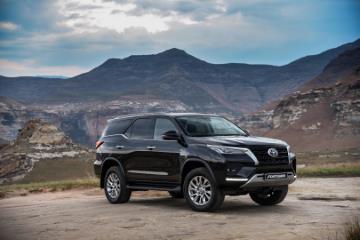
Are SUVs safer?
Apart from the outdoorsy, active image portrayed by SUVs, many buyers also prefer them because their elevated seating positions engender a sense of safety and security. And, as it turns out, there is actually a little bit of truth in this assumption – but perhaps not for the reasons you might imagine.



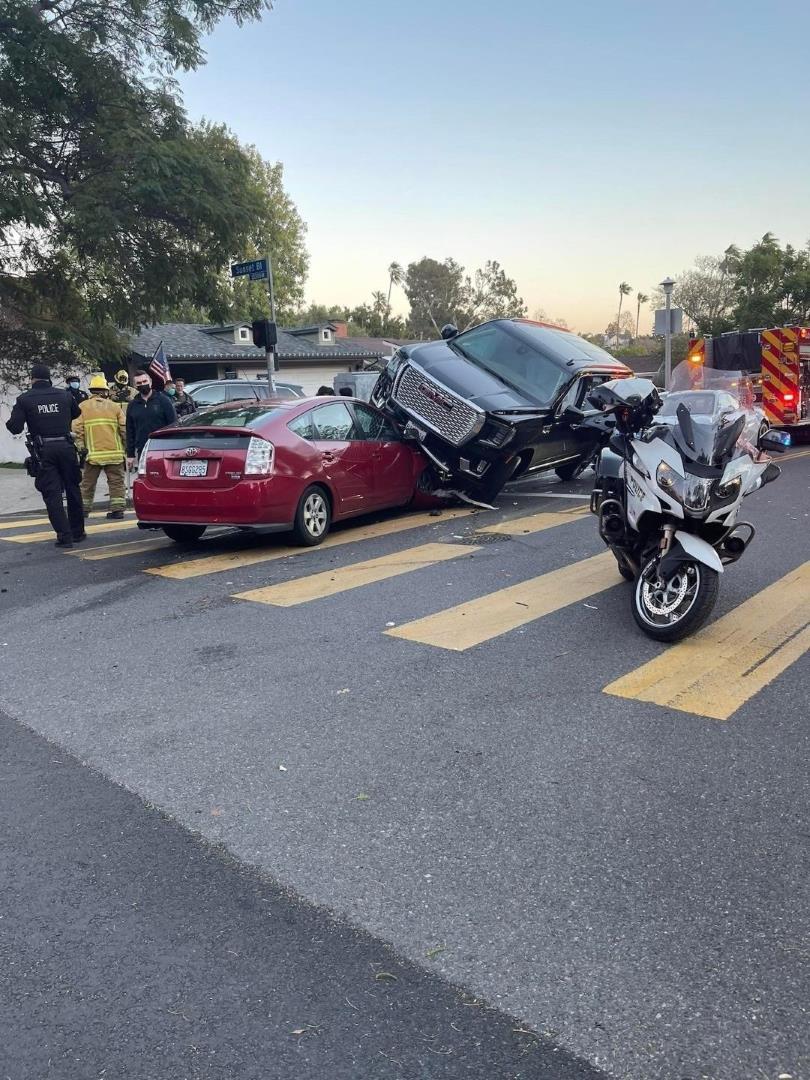
We’ve already discussed why larger cars can be considered safer than smaller ones (of equal crash test rating) in a previous article, so we won’t go into those details again. Suffice it to say that, thanks to plain old physics, larger (heavier) cars have the upper hand in a collision with a smaller (lighter) cars.
But there are different types of large cars, and this influences the outcome in a like-for-like comparison. If we fling a family sedan (or hatchback) against an SUV (or bakkie) of equal mass and crash test ratings, the chances are that the occupants in the SUV will be better-off. This is due to the SUV’s shape, along the design of the car’s crush structure (crumple zones).
Related: Are bigger cars safer?
Size matters
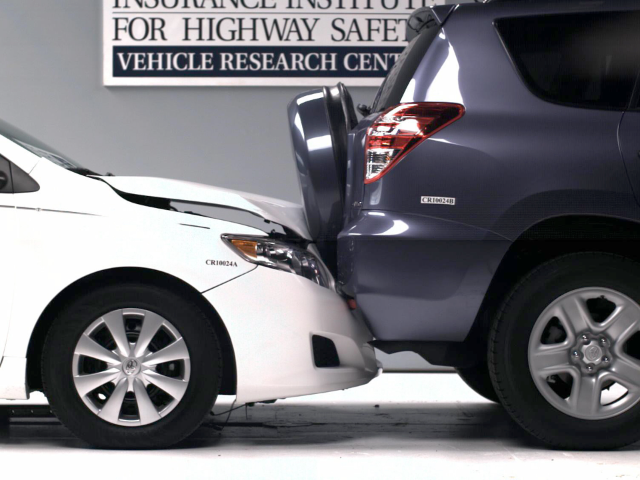
To understand why, you’ll need to evaluate to relative locations of the two vehicles’ points of impact. Because SUVs are built higher off the ground, their beefy bumper braces and chassis members are elevated as well, while the lower-slung car’s impact areas are, by design, closer to the ground.
As a result, the SUV would strike a car at a higher point, sometimes missing the car’s bumper and its supporting structure completely. If this happens, the car’s primary impact zones can’t do their jobs, and thus allow the forces access to a different point on the car’s structure – typically, to the engine and then directly into the firewall.
This will lead to dangerous engine intrusion into the cabin, and put the front occupants’ legs, knees, ankles and feet at significant risk. In contrast, the SUV’s crush structures will simply do their job, and transmit significantly less energy into its passenger cell.
Related: The ins and outs of crash tests, and why you need a safer car.
Side impacts
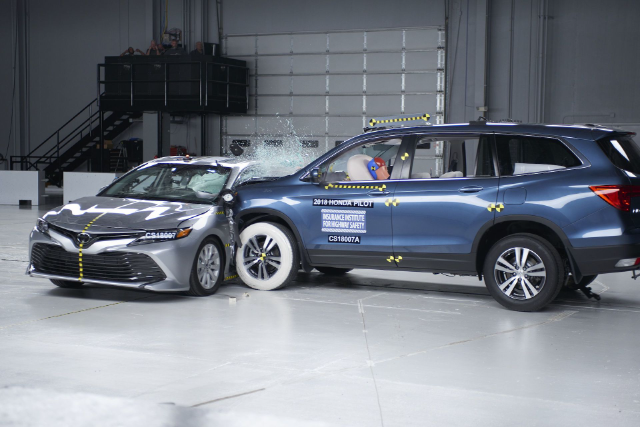
In the course of researching this article, another implication of the SUV’s height advantage came to the fore. In a side impact, an SUV's elevated impact zone may also miss the car’s door-mounted anti-intrusion beams, and the angle of impact could lead to the B-pillar separating from the car’s side- and floor panels.
If the car were to hit the SUV, its nose may also droop low enough to slide under the SUV's body, again transferring more impact to the engine, while the SUV will likely show less cabin intrusion. The impact (sorry) of this is obvious: Simply due to its height advantage, an SUV could bypass a sedan’s well-engineered structural reinforcements, airbags, and safety cage.
About stability
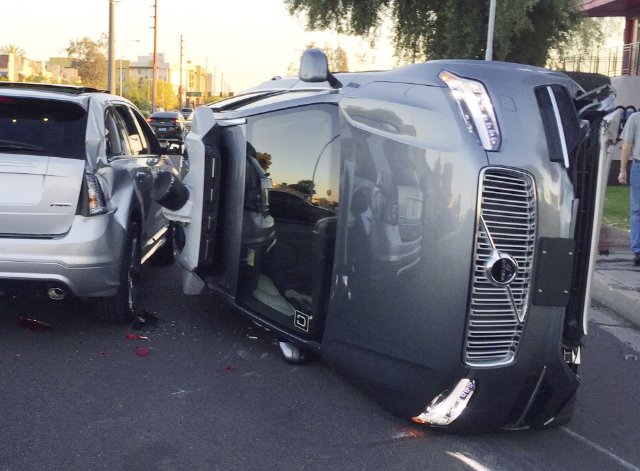
SUVs have one major disadvantage in the safety stakes, however, and it applies across the price spectrum. Their increased ride height doesn't only lift their impact areas further from the ground, but also their centres of gravity. This makes SUVs (and all tall-bodied vehicles) more susceptible to rolling over, either in a collision or in sudden direction changes.
To alleviate this issue, many manufacturers now employ stability control intervention to prevent a roll-over in a quick direction change. To this end, the brakes are applied to the outside front wheel when such a situation arises, to induce understeer and lose some tyre grip in the process. This makes the outer wheels less likely to "dig in" on the road surface, reducing the load transfer to lessen the chance of toppling over.
But, even with such clever gadgetry at play, the dynamics of a lower-built car will always be more stable than a top-heavy SUV. Air suspension and adaptive dampers do great things to make performance SUVs controllable, but their basic configurations are still compromised in this respect.

Verdict
It turns out that the subjective impression of an SUV being safer than a car does indeed carry some weight. This only applies to cars and SUVs of equal safety ratings, though: If an old SUV (say, a 1980s Land Cruiser) were to collide with a modern one, the new one will inevitably offer better protection, and even a modern midsized car would withstand an argument with such an old-timer much more effectively. Size matters, but so does technology...