
NCAP Crash Testing: Why you need a safer car
South Africa’s road fatality statistics make for sobering reading. How does 510 deaths over the 12 days of 2018’s Easter holiday strike you? Or how about more than 14 000 people being killed on our roads in 2017 alone? The fact is that South African road users are among the most vulnerable in the world, and there’s no sign of this carnage getting toned down any time soon.


Sure, we’re about see yet another “zero tolerance” campaign getting rolled out any day now, in a vain attempt to curb the number of fatalities over the December holidays, but the reality is that, historically, none of these efforts have really made much difference. This is why we’re quite pedantic about vehicle safety here at AutoTrader, and why we hammer on about the safety features of new cars: essentially, the motorist’s wellbeing is mostly in their own hands.
The importance of crash testing
All car sold in South Africa are subject to a level of regulatory scrutiny – before a car can be sold here, there are some minimum safety requirements it has to meet. Unfortunately, these requirements were laid down quite a long time ago, before crash safety became such a focal point, and before the crash tests had evolved to the highly sophisticated procedures we see nowadays.
In fact, much of our crash safety regulations date (and are based on procedures) from the late 1990s, or roughly the time when the European NCAP (New Car Assessment Program) organization was founded. It follows that, as the NCAP tests evolved, they became rather more stringent than local regulations require, leading to a rather large gap between the “legal standards” for vehicle safety and “best possible practice” in the local industry.
This is why it’s really helpful when an institution such as Global NCAP decides to hurl our cars at a crash test barrier, simply because it shows us how well the tested cars are likely to perform in the event of a collision – but seen through the “best practice” lens instead of merely being compliant with “legal standards”.
Different kinds of testing
The information thus gathered gives a good indication of how well a car would protect its occupants in the event of a crash, as well as the efficacy of the car’s passive safety systems. (Passive safety includes the operation of airbags and the strength of the passenger cell, amongst other factors.)
What it doesn’t show us is how well a car’s active safety systems work – those systems which attempt to avoid or mitigate a crash, such as the ABS brakes, stability control and automatic emergency braking. By the time a car hits an obstacle, those systems have mostly had their time to shine, leaving the car’s passive safety systems to do most of the work of keeping the car’s occupants alive.
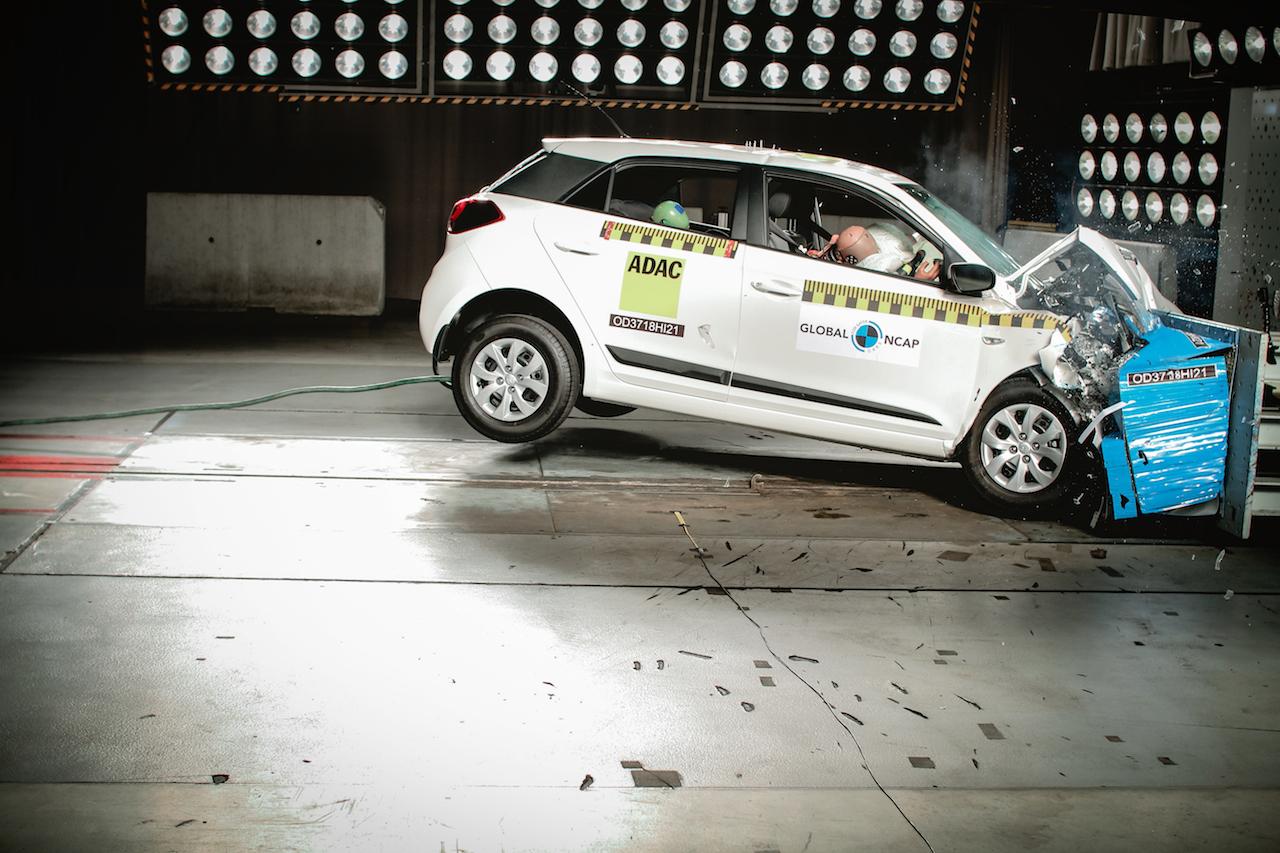
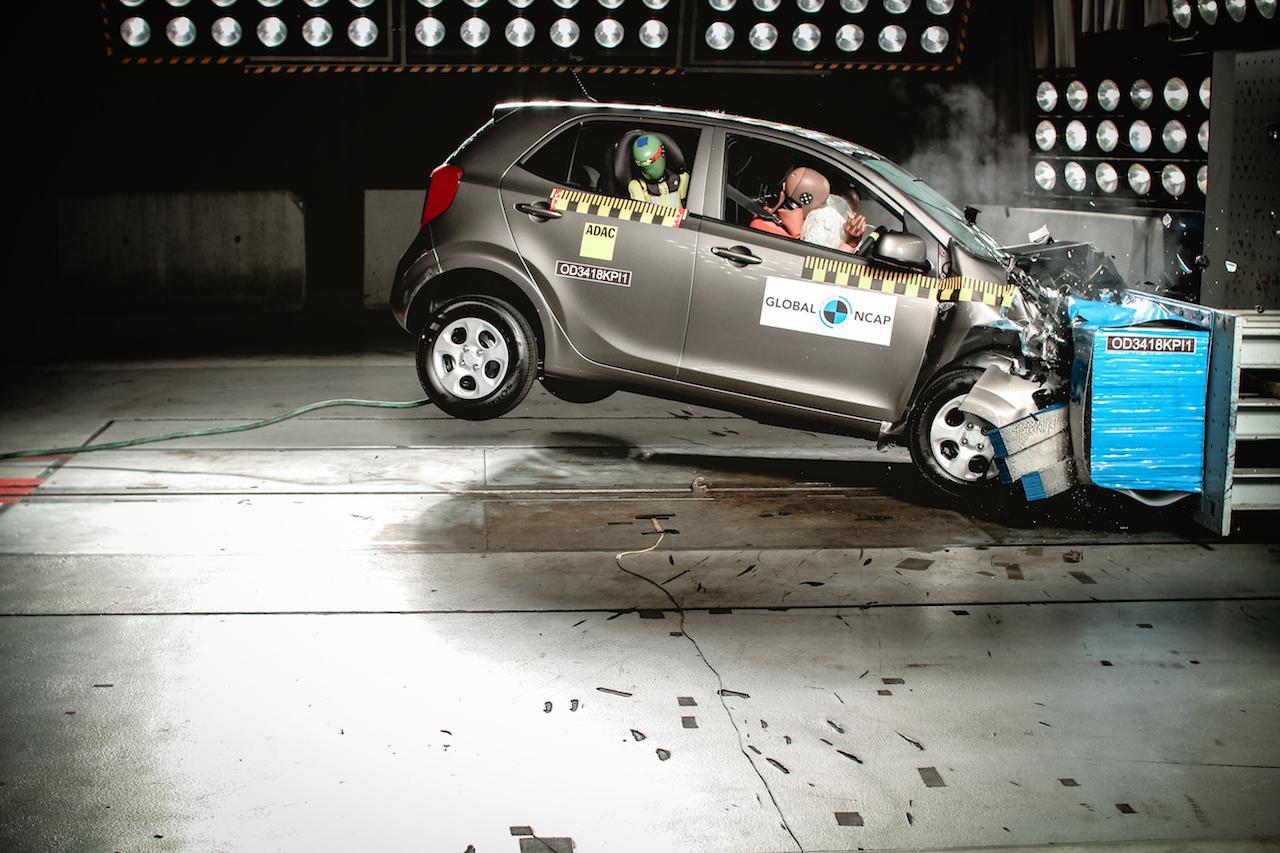
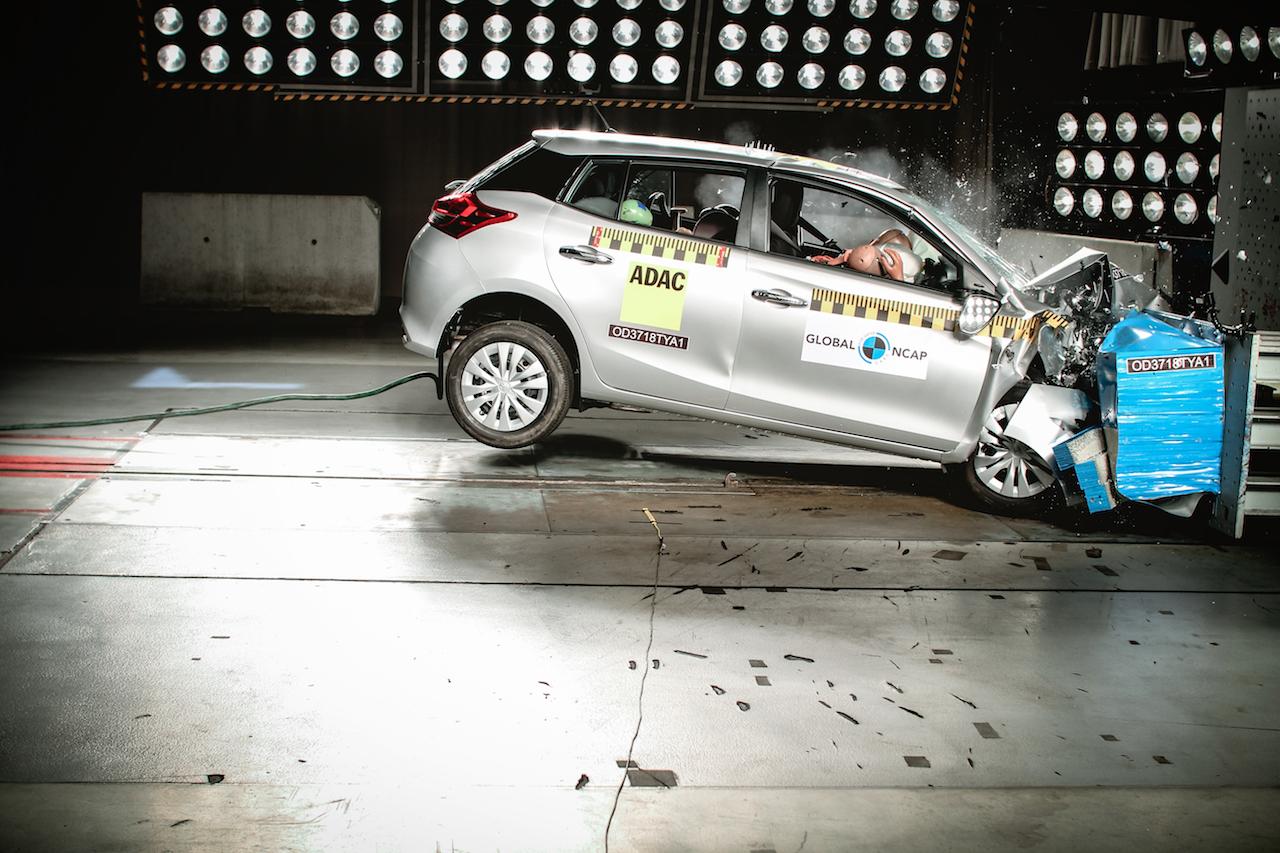
Now, remember that these crash tests are quite narrowly focused: in the case of the current Global NCAP testing, it’s mainly based around the 40%-offset barrier test, with attention being paid to the protection of both front passengers, as well the protection of two children in the rear seats. This means that there will be an adult-sized dummy in each front seat, and two child-sized dummies (an infant and a toddler) in the appropriate child seats in the rear.
After processing the crash test data, the cars are then rated according to the level of protection they afford their occupants. It must be noted that stars are immediately deducted if there’s any possibility of serious injury for either the front- or rear seat occupants, and in the event of a possibly fatal injury, the vehicle will receive zero stars.
Global NCAP vs Euro NCAP (and all the other NCAPs)
The Global NCAP rating is essentially similar to the one rolled out in 1997, when the European NCAP organization was formed, with some added emphasis on child protection. This provides a good baseline for comparative purposes, but is nowhere near as stringent as the latest European standards. The different NCAP programs across the world have evolved into their own directions, with the Australian program (ANCAP) being more stringent than the Latin (South American) tests, and the Global- and Asian NCAP tests being closest to the initial procedures in their protocols.
Seeing as the Global NCAP test rating is based around the most frequent type of collision (the partial offset head-on crash), it discounts pedestrian safety, side impacts, rear impacts, and rollover accidents. The more-stringent testing protocols, such as Euro NCAP, also take these factors into account, and the IIHS (as used in the USA) even include crash tests which simulate the car clipping a barrier with only 25% of its frontal area. These added tests really put a car’s passive safety systems through the wringer, but they do take time and a lot of extra resources.
As the most comprehensive NCAP program, Euro NCAP also scores cars for things such as automatic emergency braking and stability control, factors which aren’t necessarily part of the other NCAP protocols. But, as time goes by, the higher standards of the European tests will filter down to the other test procedures, leading to safer cars all over the world.
Varied results in the latest round of testing
Global NCAP purchased and evaluated four vehicles, all available new in the South African market and all with base prices below the R250 000 barrier, for their latest round of testing. Remember that the cars weren’t supplied by the manufacturers, so no special preparation was possible – the cars were bought new, off a showroom floor, instrumented, and then thrown at a barrier. These vehicles were the new Toyota Yaris, the new Kia Picanto, the facelifted Hyundai i20, and one old-stager: the Nissan NP300.
As expected, the small passenger cars performed reasonably well (earning them all 3-star ratings), because they’re all fairly modern products, designed with an eye on these crash tests. However, it must be noted that these small cars consistently scored lower than when their European-market counterparts were tested according to the Euro-NCAP standards. This isn’t only due to the absence of active safety systems and lower airbag counts in our market, but because they are built down to a price: it’s expensive to make cars safer, so developing markets often receive cars built to rather lower inherent safety standards.
Last year’s results showed that this doesn’t have to be the case, however, because Toyota’s budget-conscious Etios scored a solid 4 stars. Indeed, the new Yaris’s potentially unstable body structure (meaning that it’s unlikely to be able to withstand heavier impacts than it experienced in this test) comes as a bit of a surprise, given the cheaper Etios’s strong showing in this regard. Meanwhile, the European Yaris scored 5 stars in the more-stringent Euro NCAP test...
The Hyundai i20’s result was likewise quite startling, as its European counterpart scored 4 stars, while the locally-available model only received 3 stars and a warning about its potentially unstable body structure. Meanwhile, the little Kia Picanto, which also only received 3 stars, at least had a stable body structure in its favour.
NP300 Controversy
The NP300 was even less accomplished in these tests, however, and received no stars at all. Among its problems were a collapsing cabin structure, and a steering column which impacted the “driver” dummy’s torso, in spite of its airbag. In fact, there was shown to be a risk of potentially life-threatening injuries for the driver, which automatically earned the NP300 a zero-star rating, even though the child safety rating was surprisingly good.
But here’s the thing: the NP300 comes from an era before the partial-offset crash test even became a priority. In the mid-1990s, when the NP300’s “D22” platform was developed, crash safety requirements were limited to a full-impact test, where the vehicle had to hit the barrier with its entire width. This spread the load over the vehicle’s complete structure, rather than over only 40%, as is required in more-recent tests.
As a result, the NP300’s test results were predictably abysmal, and the motoring press (and public) immediately went into an equally predictable hysteria. “How could Nissan sell such an unsafe vehicle and get away with it?”, everyone exclaimed. Well, remember how we talked about local regulations being based on very old safety standards? That’s how. The fact is that the NP300 complies with local regulations, and thus it can be sold here. It meets legal standards, even though those standards are by now far removed from the industry’s best practice.
It’s also wise to maintain some perspective here. Yes, the NP300 performs poorly in modern testing, because it’s a very old design (the D22 has been with us for 21 years already), but its opponents in the budget-focused 1-ton bakkie segment are not likely to perform any better. In reality, other budget bakkies such as the Mahindra Scorpio, Tata Xenon or the old GWM Steed5 are just as unlikely to pass in this test, for the same reason: they’re all older designs, and they cater for a market segment where safety takes a back seat to affordability and lower running costs.
(Work)horses for courses
Should you put your family in an NP300? Probably not – you will likely be much safer in a pre-owned (but newer-generation, and thus safer) Hilux or Navara, which should cost you about the same as a new double-cab NP300. But as far as (relatively) inexpensive workhorses go, they’re all sub-par when measured against modern passenger-car standards.
Of greater significance is the relatively poor showing of the budget hatchbacks in this test. Given Toyota’s good reputation for safety, the new Yaris’s 3-star rating comes as a bit of a shock, and the i20’s demotion from a 4-star car in Europe to a 3-star car in the developing world is cause for concern. The Picanto may have an excuse in this round of testing, in that the base-spec car tested by Global NCAP only comes with a driver’s airbag as standard, but that in itself is an indictment of many manufacturers who deem safety features to be of secondary importance to a low purchase price. (The Picanto doesn’t have ABS in basic “Start” trim, either.)
In short, we really need to take another look at our safety regulations: they are simply too lax, and allow manufacturers to sell outdated vehicles and cars without crucial safety equipment to local consumers. Putting it bluntly: if we had better legislation, we wouldn’t even see Renault Kwids, pre-facelift Datsun GOs, NP300s and the like on our roads. But until our safety requirements are updated, it’s up to the buyers to look out for their own interests.