
All cars are getting safer
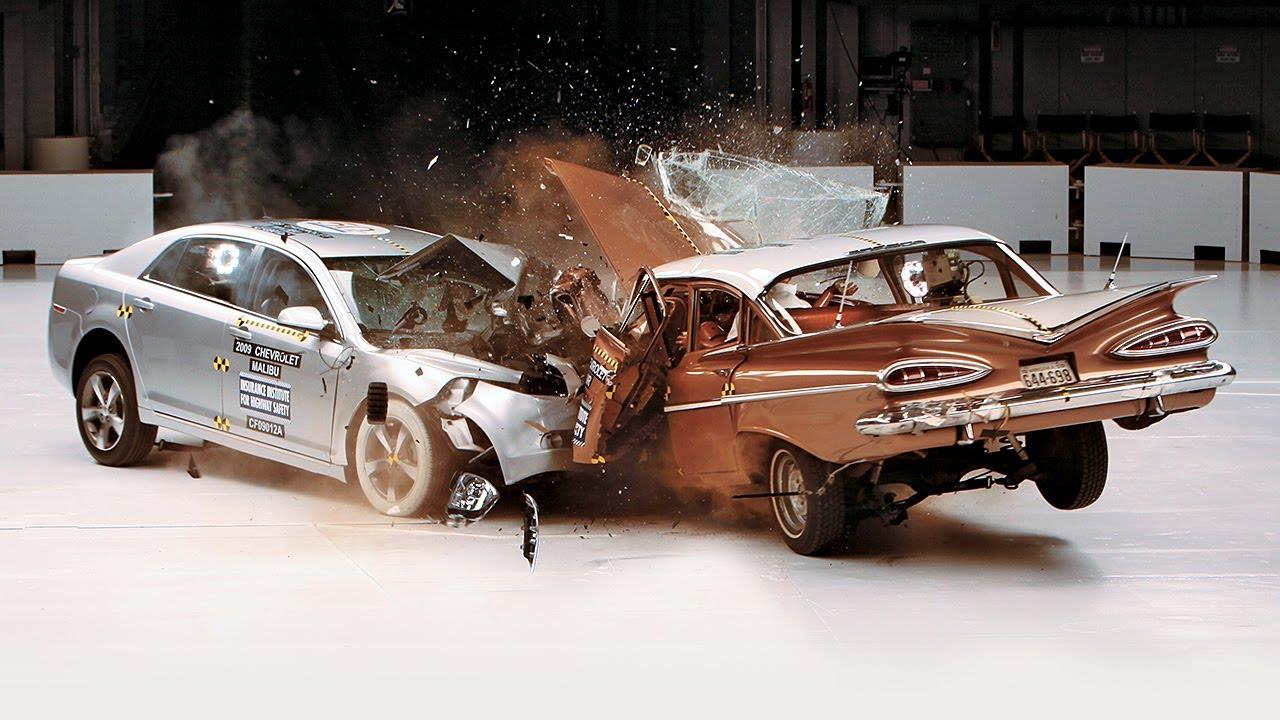
Before we consider the weight- or size aspects, we should first mention that all cars are getting safer, all the time. Thanks to improved materials (specifically the fairly recent implementation of high-strength steel), computer-aided design, and modern manufacturing processes, the physical body shell of just about any modern car is likely to be safer in an impact than most cars from, say, 3 decades ago. (Check out this YouTube link to see just how much things have improved in 50 years!)

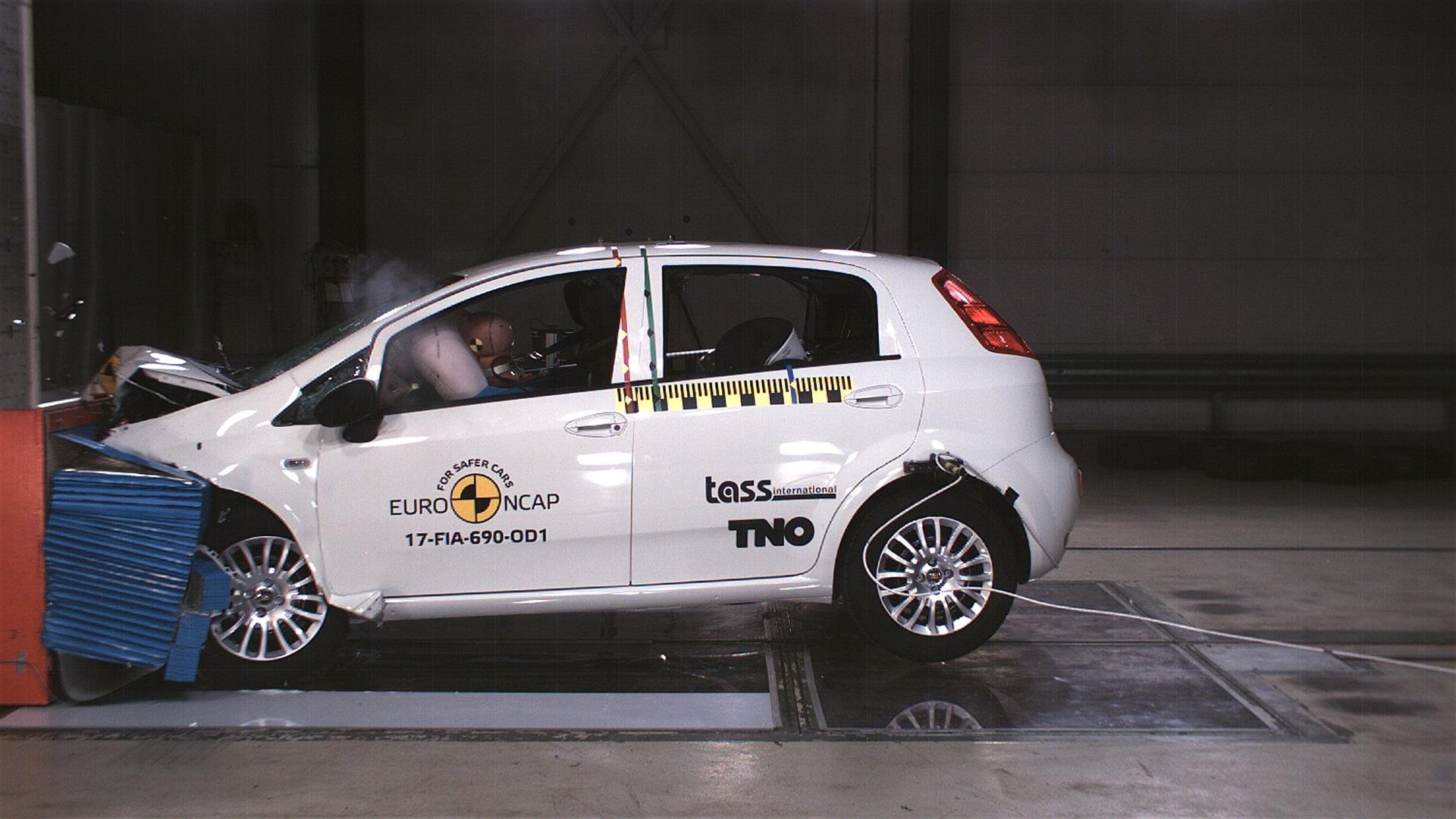
Add the inclusion of active safety systems such as ABS and stability control, and the widespread adoption of airbags across almost the entire passenger car market, and it stands to reason that a car from 2021 should offer better occupant protection than its predecessors. In fact, safety standards move so quickly that former 5-star cars now receive 0 stars in Euro-NCAP crash testing, as seen in this 2017 test of the Fiat Punto (which scored 5 stars at its initial launch in 2005).
The long and the short of it is that all cars, big and small, have steadily become safer through the years, with really notable improvements in occupant protection over the past decade. But even this cannot re-negotiate the laws of physics, which still favour larger cars in collision scenarios.
Related: For more details about the physics behind crash testing, this IIHS video provides easy-to-understand insights.

About crash testing protocols
It’s important to remember that safety ratings, such as those bestowed by the NCAP organisations world-wide, or the IIHS and NHTSA in the USA, are all standardised. This means that the cars are all tested according to the same criteria (whichever applies to which testing authority), which includes the amount of frontal offset, the deformability of the crash barrier, and the speed of impact.
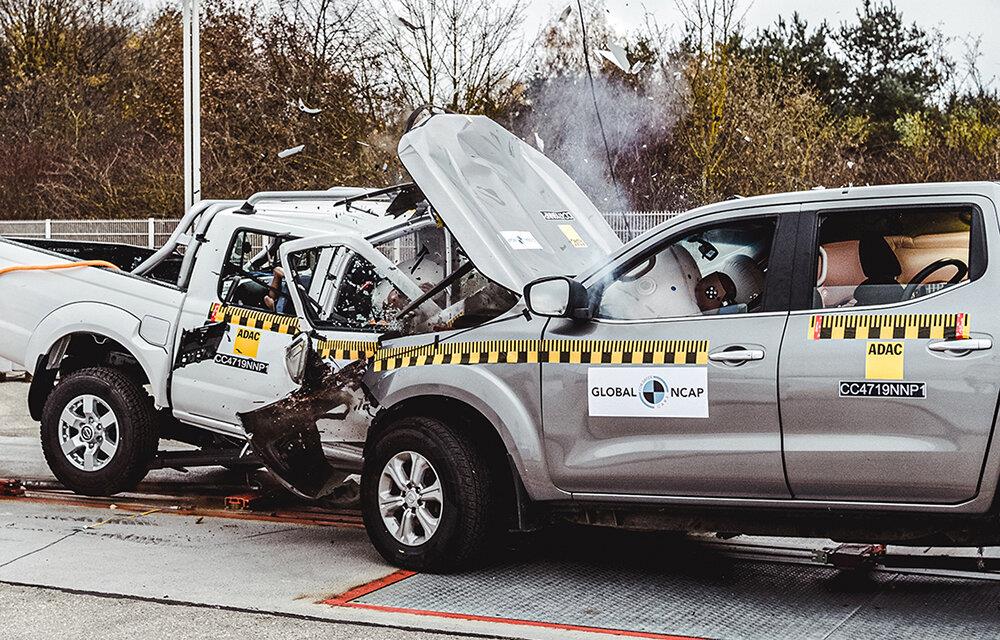
None of the testing protocols account for variations between the weight and size of the tested cars, however. Regardless of size, they all crash into the same barrier at the same speed. This is a useful approach to keep all the test subjects on a level playing field and facilitates easier comparisons, but it still falls some way short of simulating real-world collisions.
Related: NCAP crash testing - Why you need a safer car.
The bigger car will do more damage
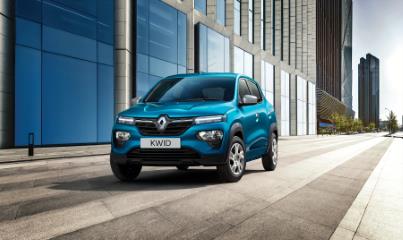
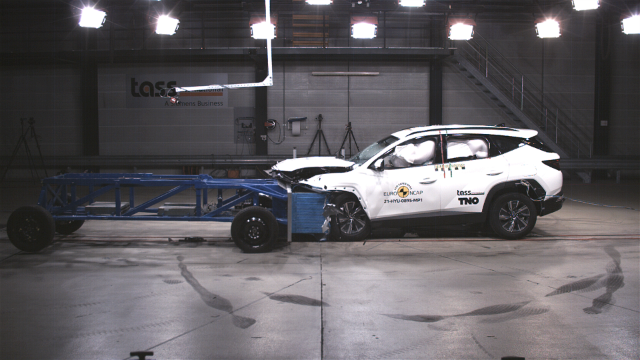
Let’s assume that two cars are heading for a collision: a little city car, and a large SUV. Both of them have all the available safety equipment fitted, and they both achieved 5-star Euro NCAP safety ratings in comparable tests. In this scenario, the heavier SUV will definitely have the upper hand in a frontal crash, and for various reasons.
- Thanks to its longer nose, the SUV has larger crumple zones to dissipate the collision’s forces. The city car, on the other hand, has to rely only on clever routing of the impact’s energy around the passenger cabin, rather than on voluminous crush structures.
- The SUV is also heavier, meaning that it will continue its forward motion (albeit at a much lower speed) after impact. This is significant, because it translates directly to the decelerative forces exerted on the occupants of both cars. The city car will crash, then bounce back and possibly spin around, leading to greater inertial forces on its occupants than those in the SUV would experience.
- Finally, the SUV’s higher centre of gravity may focus the impact’s energy on an area where the city car may not be optimised for keeping the passenger cell intact: higher along the bonnet or directly onto the windscreen’s lower rail. And, even if it doesn’t reach such extremes, the taller vehicle will tend to “push downwards” on the smaller car, again introducing forces to its occupants that those in the SUV likely won’t even notice.
Related: The 3 most important factors when buying your first car.
Conclusion
While there is no doubt that modern cars are safer than ever, there’s also the unfortunate reality that the laws of physics cannot be re-written. Given identical safety ratings but a significant difference in weight, the heavier car will always perform better in a real-life collision with a smaller car. Unless that heavier car is more than about a decade old, that is...