Paperwork done
It is difficult for any motorcyclist to sell a bike. The deep connection that is formed between a biker and their chosen machine is hard to break, but life happens. Whether it's age, life commitments, or financial difficulty, when a biker needs to sell their machine, the documentation for the procedure remains the same.
Related: How to finance buying a motorbike?
Before you put your bike on the market or approach a dealer to buy it, you should get all your required paperwork in order. For a private sale, you will need to get the below paperwork together to expedite the sale; if you are selling to a dealer, they may take the lead and gather the bulk of these documents for the sale agreement, but it's best if you do it yourself.

1. Identification
Have a copy of your ID or driver’s licence ready to give to the buyer, and make sure to ask for the buyer’s ID as well; if they have a copy, that is even better. If not, take a clear picture of their ID, licence, or passport with your smartphone.

2. Proof of ownership certificate
You will only have this if the document if the bike is fully paid up. Typically, a letter from the bank certifying that the motorcycle is truly yours goes along with this. If you are without these documents, contact the relevant financial institution to obtain them. To learn more about the ownership certificate, click here.

3. A settlement letter
This is only needed if you still owe money on the bike. The settlement letter will state the outstanding amount, so the buyer can see for himself.

4. Notification of Change of Ownership
Unless you want to be held responsible for the new bike owner's traffic fines, you must fill out a Notification of Change of Ownership (NCO) form (see above), which is available to download online or pick up at any traffic department. The seller and the buyer need their signatures on this form, and the buyer will need his own copy. The Department of Transport is to receive a copy of the NCO form for the transfer to the buyer’s name.
5. Vehicle Registration Certificate
The new owner will need your original Vehicle Registration Certificate to register the bike. You should also keep a copy for the de-registration of the bike you are selling and one more to keep on file, just in case.

6. Proof of sale
Once the deal is sealed, get a receipt acknowledging the date, the amount paid, the make and model of the bike, the motorcycle's registration, VIN number, and the names and contact details/addresses of the buyer and seller. Make two copies so you and the buyer both have one. This serves as proof of sale for your own protection and the buyer’s. It is not a legal requirement, but it’s important should something fishy arise.
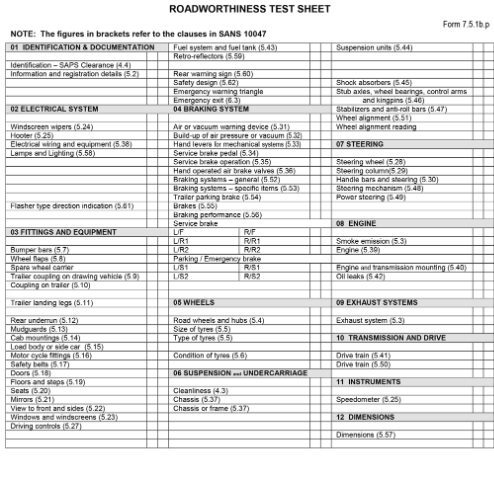
7. RWC (Roadworthy Certificate)
For registration purposes, the buyer will need a current RWC within 21 days of the sale. This is mainly for private sales, for sales to a dealer the business may take on the RWC themselves when they sell the bike later. If your RWC has expired, you can obtain an updated one for the buyer. Take the bike to the testing station with your ID, vehicle registration, and completed Application for Roadworthiness Certification.

8. Service history and receipts
This is extremely valuable. Some people won’t buy a used bike without a full-service history. Hand over all receipts and any documentation relating to the motorcycle's warranty, if it still has one.