


Before we dive into the details, here's a quick overview of what you'll learn:
Ready to become a Natis document expert? Let's get started!
Navigating the car-buying world involves understanding many documents, but none are more vital than the ownership certificate!
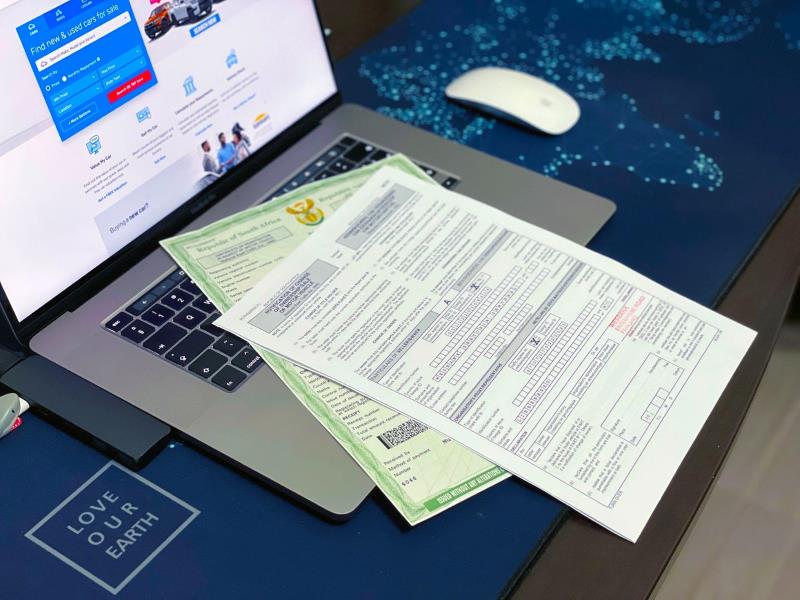
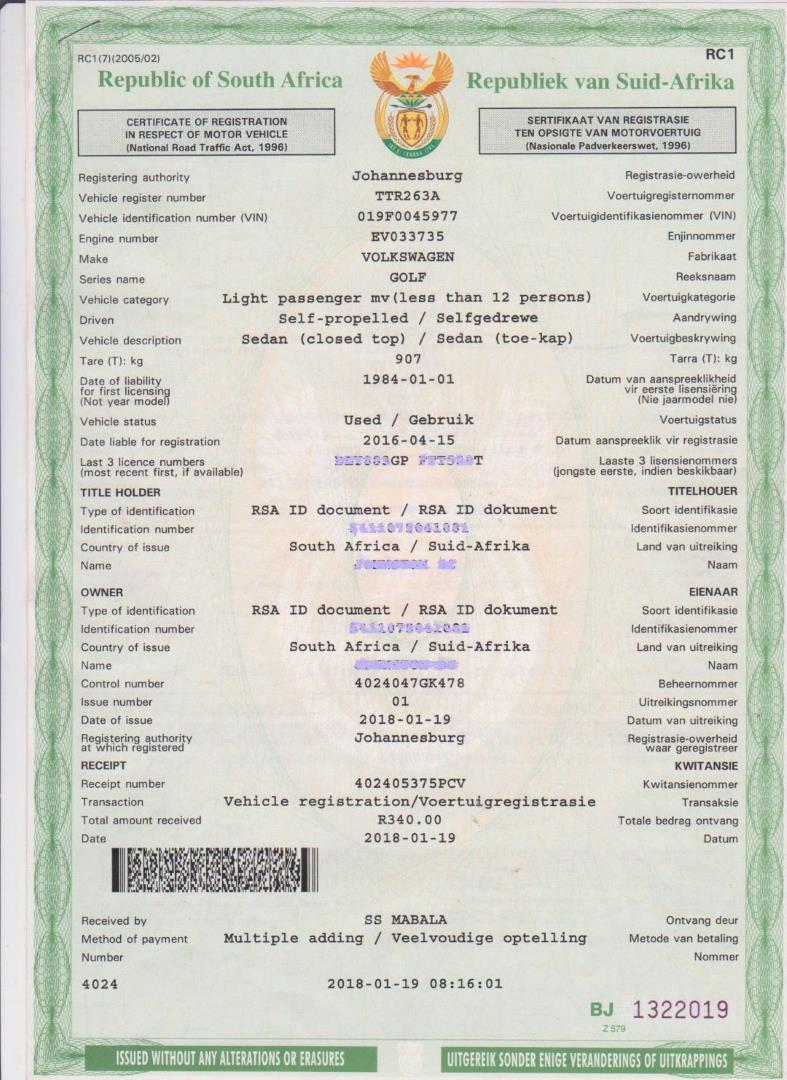
The National Traffic Information System (Natis) issues this green document, which bears the legend "RC1" in the top right corner. It is a national document, the same type that Natis issues in all our provinces.
Officially called the "Certificate of Registration in Respect of Motor Vehicle," this document is crucial in verifying legal ownership and ensuring the seamless transfer of your vehicle. As a cornerstone in safeguarding against fraud, the ownership certificate does the following:
1) It authenticates the seller's right to the vehicle,
2) It confirms its identity through registration numbers
3) It secures transactions against future disputes.
Whether you're a buyer or seller, understanding the importance of this certificate is key to a secure and hassle-free car ownership journey!
To reiterate: This is your most important document regarding owning your car. It is a title deed, and once the car has been registered in your name, it lists you as the owner with your relevant personal particulars.
Sell your car within minutes here with AutoTrader's Instant Offer tool!

What you need to know about this document in the following instances:
When buying a car
When you buy a car, the most important document you need to obtain from the seller is the Certificate of Registration. You will need to submit this form, along with change-of-ownership forms and copies of your Identity Document, to the Natis licensing authority. A new registration form in your name will then be issued. This must be kept in a safe place that is nevertheless accessible to you.
Related: What paperwork do you need when you want to buy a car?
When selling a car
When selling the car, once the deal is concluded and the money has changed hands, you will provide this document to the buyer. The buyer hands this document to the licensing authority, along with the change-of-ownership papers, and a new registration form bearing the new owner’s particulars will be issued.
Find all local traffic-related forms here on the NaTIS website
When purchasing a vehicle with bank financing
It is important to note that when you buy a vehicle that a bank or other money-lending institution finances, you will not retain the Certificate of Registration until all outstanding amounts owed on the vehicle have been settled.
The finance house will retain the registration document in your name, along with a file detailing your particulars. The registration certificate, in this case, will list you as the owner, but not the titleholder. In this case, the titleholder will be the financial institution that granted you the loan in the first place.
To learn more about car finance, click here.
Getting the Certificate of Registration of Ownership
Once you have paid off your car, contact the financial institution to confirm it is paid off and request that they release the registration certificate to you. They will do so and also provide you with documentation confirming that you have made the final instalment payment. You will then need to visit your local traffic authority with these documents and have a new registration form issued, listing you as both the owner and the titleholder.
If you buy a car that is not roadworthy, you should still register it in your name within 21 days of buying it.
If you buy a non-roadworthy car that you intend to fix up, you should register it in your name within 21 days of buying it. You will receive a registration certificate for the car in your name. But you can only license the car for road use once you have obtained a roadworthy certificate.
All this data is recorded on the National Traffic Information System’s central computer.

The Certificate of Ownership form, deciphered!
The following is a step-by-step explanation of what is listed on a typical Certificate of Ownership form, and what the various legends and numerals mean. We list the items as they appear on the form, from top to bottom.
Registering Authority: This refers to the place where the car is registered, such as Johannesburg, Cape Town, or another South African city, town, or region.
Register number: This number often confuses. It refers to the Natis system number, where the car’s details are logged. This is, in essence, the car's Natis I.D. number. A typical example of this number is TSR 465A (a fictitious number), which is not found anywhere on the car itself. It has nothing to do with the license number.
VIN: This is one of the most critical numbers on the form and on the car. It is the Vehicle Identification Number, stamped into the car’s body or chassis (usually on the sheet metal under the bonnet, or affixed to the body via a plate. A VIN will enable you to thoroughly research a car’s history from the day it was originally built. In some cases, it even details items such as original paint and upholstery colour.
Engine number: The engine number will be stamped onto the engine block (main structure). In the case of cars, where a replacement engine has been fitted, this new number is legally supposed to be recorded with Natis. If this hasn’t occurred, and the engine number differs from the one on the registration form, you will need proof of where the engine came from. You may need to obtain a police clearance (check with your local traffic authority) to ensure the engine is not on a stolen property list.
Make: The vehicle manufacturer’s name, such as Volkswagen or Toyota
Series name: The model name, such as “Golf”. If the licensing people are unfamiliar with this model name, they might print “unknown” in this field.
Vehicle category: This refers to the size and type of road-legal vehicle. There are 7 different vehicle categories
- A – Motorcycle
- B - Light passenger vehicle that carries less than 12 passengers
- C – Heavy passenger vehicle that carries more than 12 passengers
- K – Light load vehicle where the GVM is less than 3500KG, a small bakkie
- L – Heavy load vehicle where the GVM is greater than 3500 KG, a truck or similar
- U – Special vehicle, a tractor or similar industrial vehicle
- M – Heavy load vehicle where the GVM is greater than 3500 KG and the vehicle draws a trailer
Driven: Most are self-propelled, but there are four types of so-called driven vehicles, as follows.
- Self–propelled, most engine-driven vehicles
- Trailer
- Semi-trailer
- Trailer drawn by tractor
Tare: The vehicle's tare weight refers to the unloaded weight of the car, bakkie, or truck. The tare weight determines the cost of your vehicle’s license.
Date of liability for first licensing: This should refer to when the vehicle was first licensed, and normally corresponds to the year of manufacture. But sometimes this is not the case, and refers to when the car was first logged on the Natis system.
Vehicle Status: There are 4 different vehicle statuses,
- New - Code 1
- Used - Code 2
- Rebuild - Code 3
- Scrapped- Code 4. Normally, the registration certificate will state “new” or “used”.
Date liable for registration: This is the date that you took ownership of the car. If you have delayed registering the car in your name after taking ownership, you will be liable for late penalty fees. This date is usually determined by the settlement letter, the notification of change of ownership, or the receipt from the seller.
Last license: This section lists the previous three license numbers (the ones on the number plates) recorded in the system for the vehicle. This form may or may not record the latest license number if the vehicle was issued with a new number when you bought the car. It depends on whether you licensed the vehicle at the time you purchased it.
Title Holder: This is important to note! The titleholder is the legal owner of the vehicle. In the case of a financed vehicle, the finance house (lender) is the legal owner or title holder until you have paid off the car.
Type of identification. This refers to the Title holder’s identity. This can be a business registration certificate, a traffic register certificate or an RSA identity document.
Identification number: This refers to the ID number of the title holder. In the case of a company, this would be a company registration number. If your car is all paid up, then you are the title holder as well as the owner, and your I.D. number will appear here.
Country of issue: Where the identity document (furnished by the titleholder) was issued.
Name: The name of the title holder.
Owner: If you have paid cash for the car or bought it on finance, you are listed in both cases as the owner of the car. The owner is responsible for traffic violations, insurance and licensing of the vehicle. The owner cannot sell the vehicle or deregister it (scrap it) unless authorised by the Title Holder.
Type of identification: This applies to the owner.
Identification number: Applies to the owner.
Country of issue: Applies to the owner.
Name: The owner’s name.
Control number: This is an internal Natis number that identifies the specific document, including when and where it was issued. The watermark on the registration certificate’s paper is an anti-fraud device. When you submit a certificate of registration for any transaction, this control number is checked. If you need to apply for a duplicate registration form because you have misplaced the original (after submitting your proof of personal identity as the registered owner), a new control number will be issued.
Issue number: This is an internal Natis code to record the transaction for this document.
Date of issue: This refers to the date the registration certificate was printed or issued.
Registering authority: This refers to the place where you registered the car, such as Johannesburg or Cape Town.
Receipt number: This lists the receipt for the car registration fee.
Transaction: The type of transaction referred to here is “Vehicle Registration”.
Total amount received: The amount in Rands and cents.
Date: The date here refers to the day the registration fee was paid.
Received by: The name of the teller that you dealt with will appear here.
Method of payment: The description “multiple adding” will appear here if you registered and licensed a vehicle at the same time and paid for both at the same time. A single transaction would show “single transaction”.
The last item in the document is the exact date and time it was printed. Again, this helps determine that the document is genuine and accurate in detail. The document is also bar-coded at this point.
Do you want to sell your car?
We now make it easier than ever to sell your car, with the introduction of our new Instant Offer service. After following this simple 3-step process, you will get a market-driven valuation for your car within minutes, and a solid cash offering within hours—safely, conveniently, and with total peace of mind.