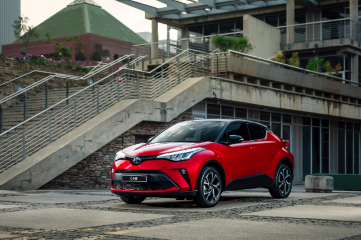


Buying a car opens up a whole new world to you. From being dependent on family members or public transportation for mobility, you can now make far-reaching and far-ranging decisions about where you want to be and how you’ll plan your weekend or next holiday.
Related: Can a leased car be used as a trade-in?
Moreover, pride in car ownership is a huge factor in South African life. Once you have ownership of a car, you can customise it so that it stands out from the crowd by fitting different wheels, perhaps a sound system that lets the neighbours know in no uncertain terms when you are in the vicinity – or that aftermarket exhaust system that you enables you to commune with your car’s engine on a non-stop basis!

South Africans want to own their cars, but…
For the above-mentioned reasons, South Africans have been mad-keen on car ownership for over a century. This contrasts with other car markets, such as Europe and America, where leasing a car – an extended rental scheme – has been popular for decades. Leasing, simply put, means you pay monthly for car usage over a specified period. This is usually around 2-3 years depending on the nature of your contract. You don't own the car but as the name states, lease it. Once the lease ends, you return the vehicle. What happens at the end of the lease exactly?
But things are changing here, too. One of the reasons for this is that many finance deals are done over the maximum allowed 72 months, yet many owners are keen to change their cars much more frequently, and this makes all the paperwork required for such a shift (and the financial implications!) far more complex. Can you buy out of a car lease early, though?

The advantages and disadvantages of leasing a vehicle
Advantages
- You can get a new vehicle more often. There's no need to sell a vehicle. The contract terms are shorter, and there are more affordable instalments. Insurance and maintenance can be included in the deal depending on how the lease is structured. There's no residual value (balloon) risk.
Disadvantages
- There's no vehicle ownership and there are limitations on vehicle usage (the client contracts up front the maximum amount of kilometres allowed, and any amount over will incur penalties). Penalties are also levied on the early termination of the contract.

The advantages and disadvantages of buying a vehicle
Advantages
- Vehicle ownership at the end of the term and no limitations to vehicle use.
Disadvantages
- Vehicle depreciation, consumers tasked with disposing of/selling vehicles, and early termination of finance contracts is complex. The owner is responsible for the maintenance and insuring of the vehicle. If there is a balloon payment, the client is responsible for the balloon value at the end of the term.

The differences between leasing a car and buying a car:
The conventional vehicle finance model called an Instalment Sale Agreement, and most popular in South Africa, involves obtaining a loan to finance the full purchase price of the vehicle. This can be used in conjunction with deposits to reduce the borrowed amount and balloon payments, a lump sum paid at the end of the loan period. When a buyer has paid the loan in full, ownership is transferred from the financier to the client, and they become the vehicle owner.
In contrast, a vehicle lease sees a consumer paying for the use of a vehicle for a set period. At the end of this period, the vehicle is returned to the vehicle manufacturer, dealership or finance house. Once the vehicle has been returned, the consumer can initiate a new lease for a new vehicle. So, to summarise, the purpose of an instalment sale agreement is to buy the car and to own it once it is paid off, versus the lease, where you pay for the usage of the car for a specific time without the intention to own it.