


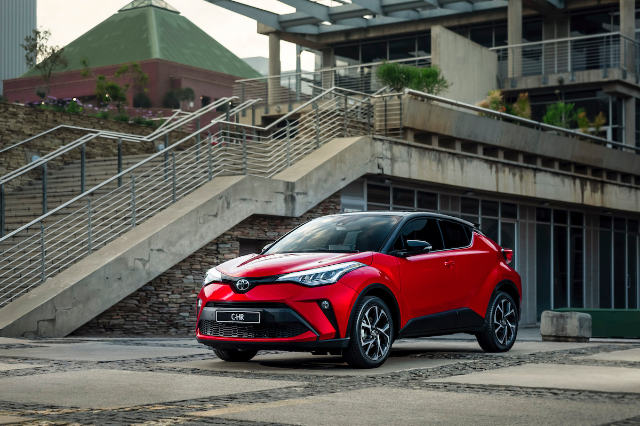
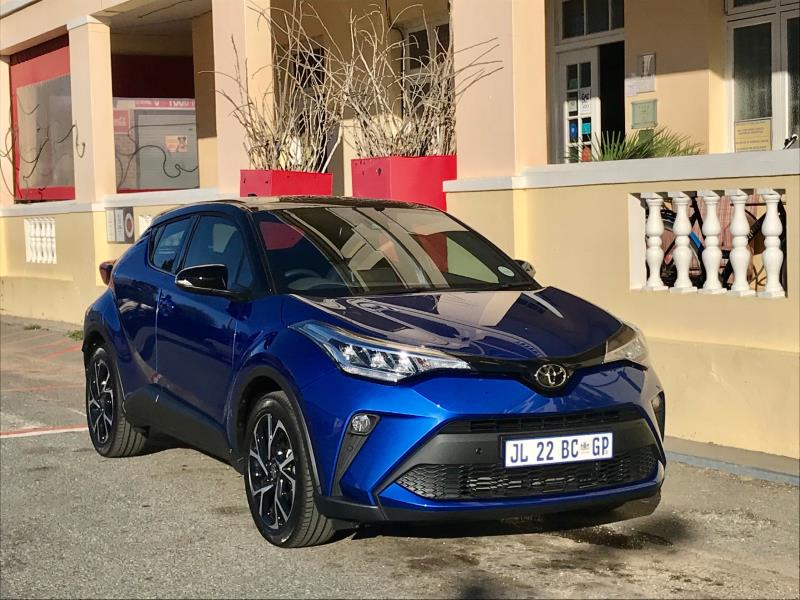
Toyota’s C-HR is one of those products from the otherwise-conservative Japanese giant that breaks the mould. Every now and again Toyota comes blazing out of left field with a totally attention-grabbing product, such as the sports-orientated Supra, the MR2, and the Toyota 86. And with the C-HR, Toyota has shaken up the compact Cross Over market.
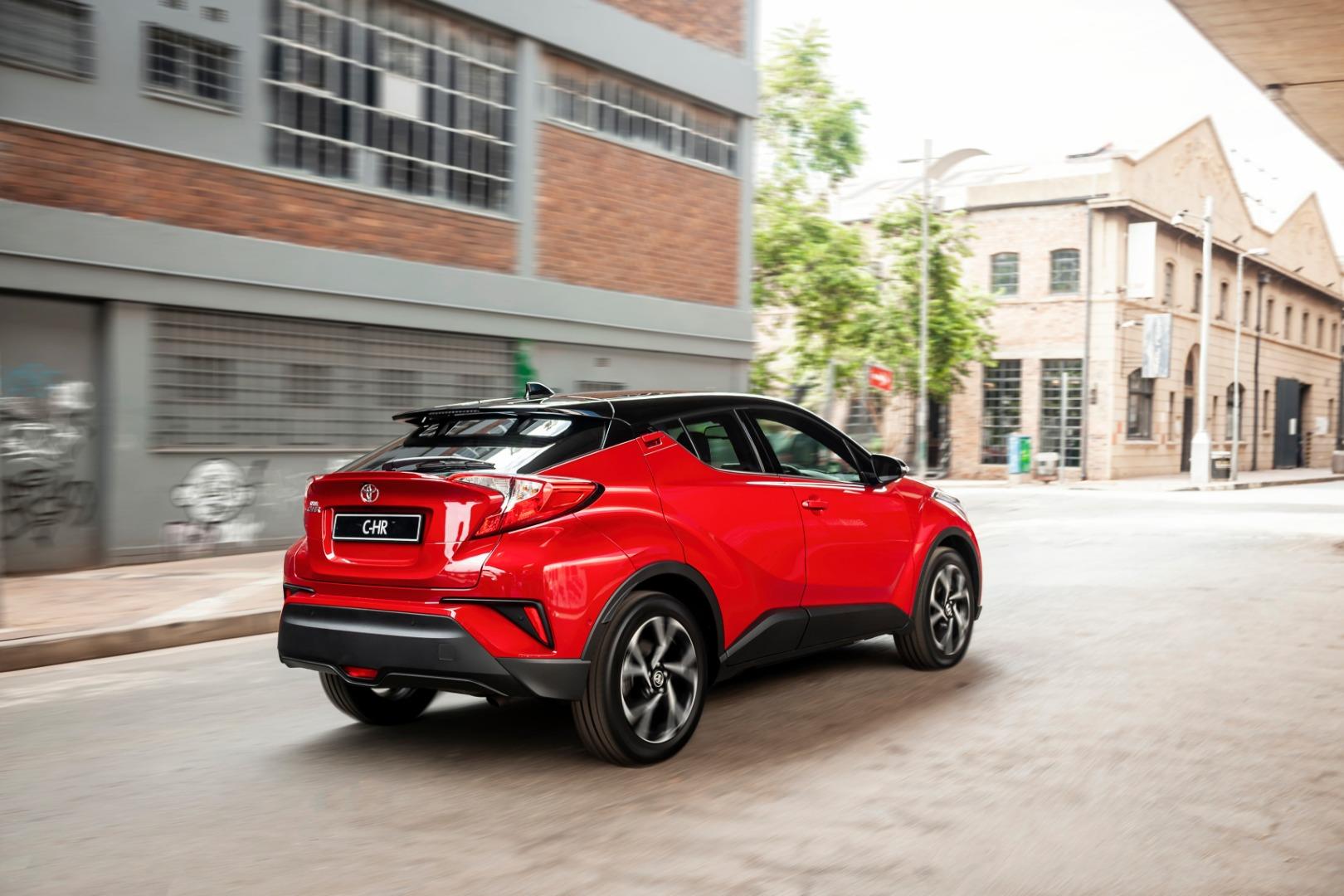
Launched in early 2017, the C-HR is quirkily styled with a combination of flowing lines, sharp edges and steroidal bulges around the flanks. It’s as if the design team was given a brief to throw disparate avant garde design themes in a melting pot and come up with something cohesive. And they have all- but-succeeded with the C-HR!
The name, by the way, stands for “Coupe High Rider” and the name itself is another example of this Cross Over blending a couple of automotive themes. We could also have added “rally car” as an influence, referring to those pronounced wheel-arch blisters that give the C-HR a planted, solid look. From the side, conversely, the blackened lower panels emphasise a high-rider-type image more often associated with serious off-roaders.
A 1,2-litre turbocharged petrol engine
Just for the record, there’s nothing off-roadish about the car in terms of of the way it handles, and nor does it sit high on its suspension. Its ground clearance is a conservative 160 mm, it has front-wheel-drive only, and its engine is quite conservative too. It’s an 85 kW 1,2-litre petrol turbo that is used across the model range, but there are two gearbox choices. Two models use a six-speed manual ‘box, while a CVT automatic is used on the other two.
Practicality suffers
Looks-wise Toyota has certainly made a splash with the C-HR, but practicality has suffered. The accommodation in the rear is spoiled by a sloping roof line that makes things feel a bit stuffy in there, as do the thick window pillars. The rear side windows are decidedly small, and as a family car this has its drawbacks, especially when it comes to keeping young children happy. Another compromise where form gets priority over function is in the luggage area. The boot is decidedly small.
As for the interior styling, it is quite dramatic, in keeping with the rest of the car. Typically of Toyota, cabin materials used are reasonable if unspectacular in terms of perceived quality, but beautifully assembled, so the overall effect is reassuring.
Model line-up
There are four Toyota C-HR models in the range. The entry model is the 1.2 T 6-speed manual at R371 700. This is followed by the 1.2 T Plus, which at R403 000 offers more luxury spec, and this one also employs a 6-speed manual gearbox. Next up is the 1.2 T Plus Automatic, priced at R415 100, and this uses a CVT transmission. Finally there is the range-topping 1.2 T Luxury, which is also equipped with the CVT ‘box and, unsurprisingly, is the most lavishly-trimmed model. It costs R476 600.
Which C-HR model will hold its value best?
The most popular model on the showroom floor is the C-HR 1.2 T Plus Automatic. This has the same level of extra kit as the C-HR 1.2 T Plus manual, but according to a Toyota spokesperson the CVT gearbox model is by far the best seller of the range. In the popularity stakes the next-best would be the 1.2 T Plus 6-speed manual, then the entry-level 6-speed manual 1.2 T and lastly the 1.2T Luxury, which also uses the CVT gearbox but is quite expensive compared to the other models in the range.
Cars that sell well on the new-car floor move equally quickly in the used car arena. Greater demand means that a higher price can be asked for a used model. So if value retention is your major priority, it’s a no-brainer to opt for the C-HR 1.2 T Plus Automatic.
If you are thinking of buying one of these intriguing Cross Overs, AutoTrader currently list some 60 New and Used Toyota C-HR models for sale.
Recommended next:
New vs used Toyota C-HR: what are the top 4 differences?
Toyota C-HR vs. Hyundai Creta vs. Nissan Qashqai: Which one offers the best value?