
Sub-Saharan Africa is an adventure biking frontier, offering rugged gravel tracks across the Namib Desert, technical climbs in the Maluti Mountains, and vast savanna trails. Riders encounter diverse wildlife and remote cultures, requiring self-sufficiency and grit. From Lesotho’s high-altitude passes to Botswana’s salt pans, it’s a world-class journey of raw, untamed beauty.
Related: Why neck protection is standard gear for off-road and ADV biking
When you're crossing a continent where road is often a suggestion rather than a literal description, reliability isn't just a spec—it's your safety net. In Africa, reliable means two things: the bike doesn't break, and if it does, it can be fixed with basic tools or has a dealer network that actually exists between Cairo and Cape Town.
Spokes or Alloy? Why do off-road and street bikes need different wheel designs

Choices Choices
1. The Indestructible Classics
If your priority is fixing a bike with a rock and a zip-tie in the middle of the Sahara, these are the kings.
Suzuki DR650SE: Often called the "Bush Pig." It’s air-cooled, carbureted (in older models), and incredibly light. There is almost nothing to go wrong electronically.
Kawasaki KLR650: The ultimate budget overlander. It’s heavy and "thumpy," but its massive fuel tank and tractor-like engine make it a staple for trans-African solo trips.
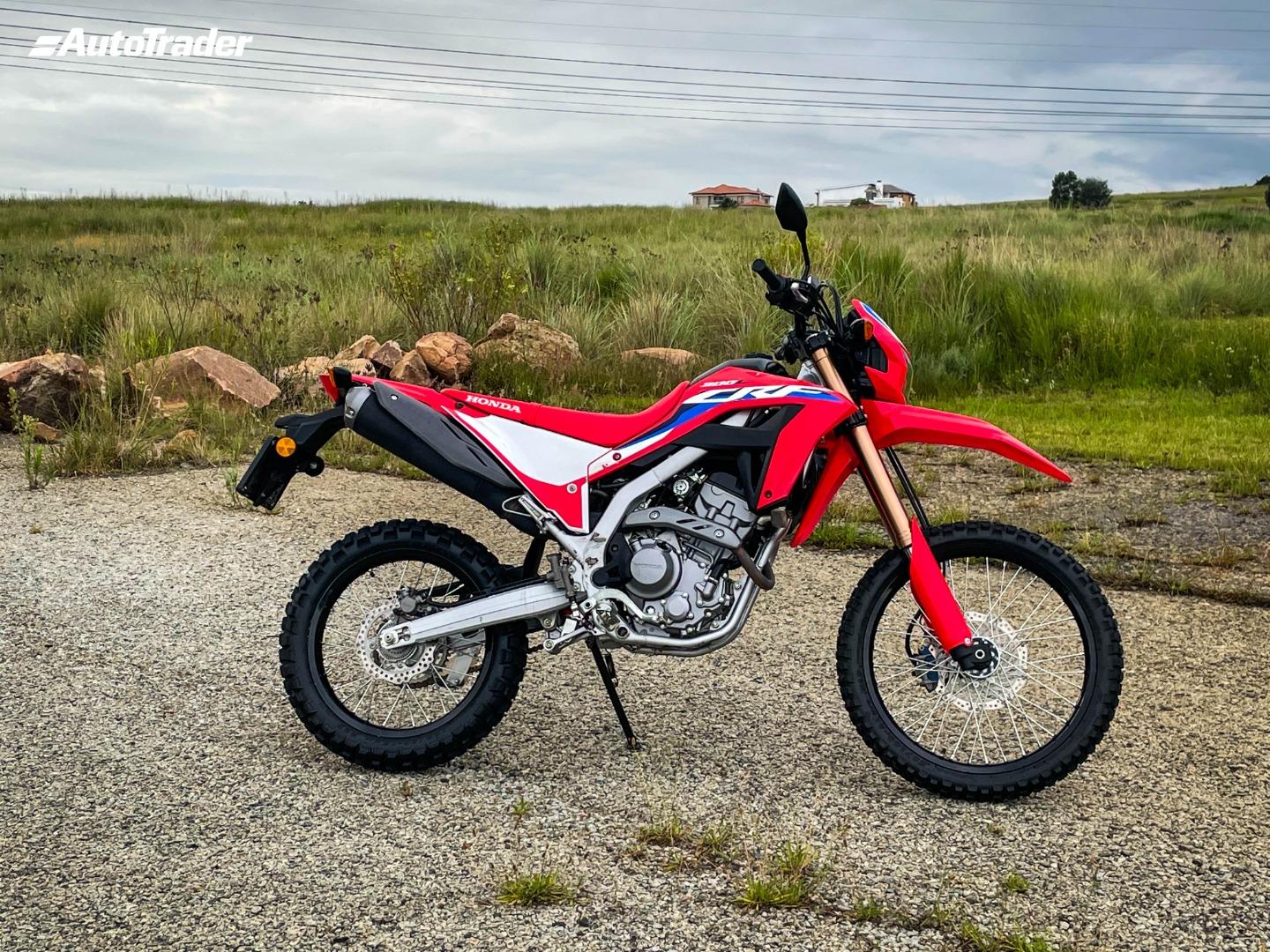
Honda CRF300L Rally: The modern successor to the lightweight throne. It is bulletproof, fuel-efficient, and easy to pick up when (not if) you drop it in deep sand.
2. The Middleweight Sweet Spot
These bikes are the current favourites for 2026 overlanding because they handle highways and technical trails with equal grace.
Yamaha Ténéré 700: Currently, it's the gold standard for reliability in the middleweight class. It uses the CP2 engine (proven over millions of miles) and avoids complex electronic rider aids that can fail in high heat or dust.
Honda XL750 Transalp: A newer contender that has quickly earned a reputation for "Honda Reliability." It's smoother on the road than the Ténéré but still simple enough for remote travel.
Royal Enfield Himalayan 450: The new "Sherpa" engine has proven to be a massive leap forward. It’s built for the Himalayas, so it handles the heat and rough terrain of Africa surprisingly well for its price point.
3. The Heavyweight Long-haulers
If you’re riding two-up with a passenger or carrying heavy luggage, you need the big guns.
Honda Africa Twin (CRF1100L): Legendary name for a reason. Its electronics are more complex, but its mechanical reliability is top-tier.
Pro-tip: The DCT (automatic) version is great, but for remote Africa, the manual is easier to push-start if your battery dies.
BMW R1300GS / R1250GS: While electronically complex, BMW has the best dealer network in Africa, especially in North and Southern Africa. If you need a specific part in Windhoek or Nairobi, you’re more likely to find it for a GS than any other bike.

Which is right for your route?
| Bike Model | Category | Primary Strength | Repairability |
| Suzuki DR650 | Lightweight | Mechanical Simplicity | High (Basic tools) |
| Yamaha T7 | Middleweight | Engine Reliability | Medium (Standard) |
| Honda Africa Twin | Heavyweight | Off-road Capability | Low (Needs Tech) |
| BMW R1300GS | Heavyweight | Comfort / Dealer Support | Low (Dealer-only) |

Key Reliability Tips for Africa
The 21-inch Rule: Stick to bikes with a 21-inch front wheel. They roll over ruts and rocks much better than 19-inch wheels.
Tube vs. Tubeless: Tubeless tyres, like on the GS or Ténéré World Raid, are easier to plug, but tubes (CRF300L/DR650) are easier to fix when you dent a rim in the middle of nowhere.
Fuel Quality: Newer Euro-5 bikes are sensitive to bad fuel. Consider a fuel pre-filter, like Guglatech, to handle the jerry-can petrol you'll find in rural villages.