
Why the big fuss at the drive?

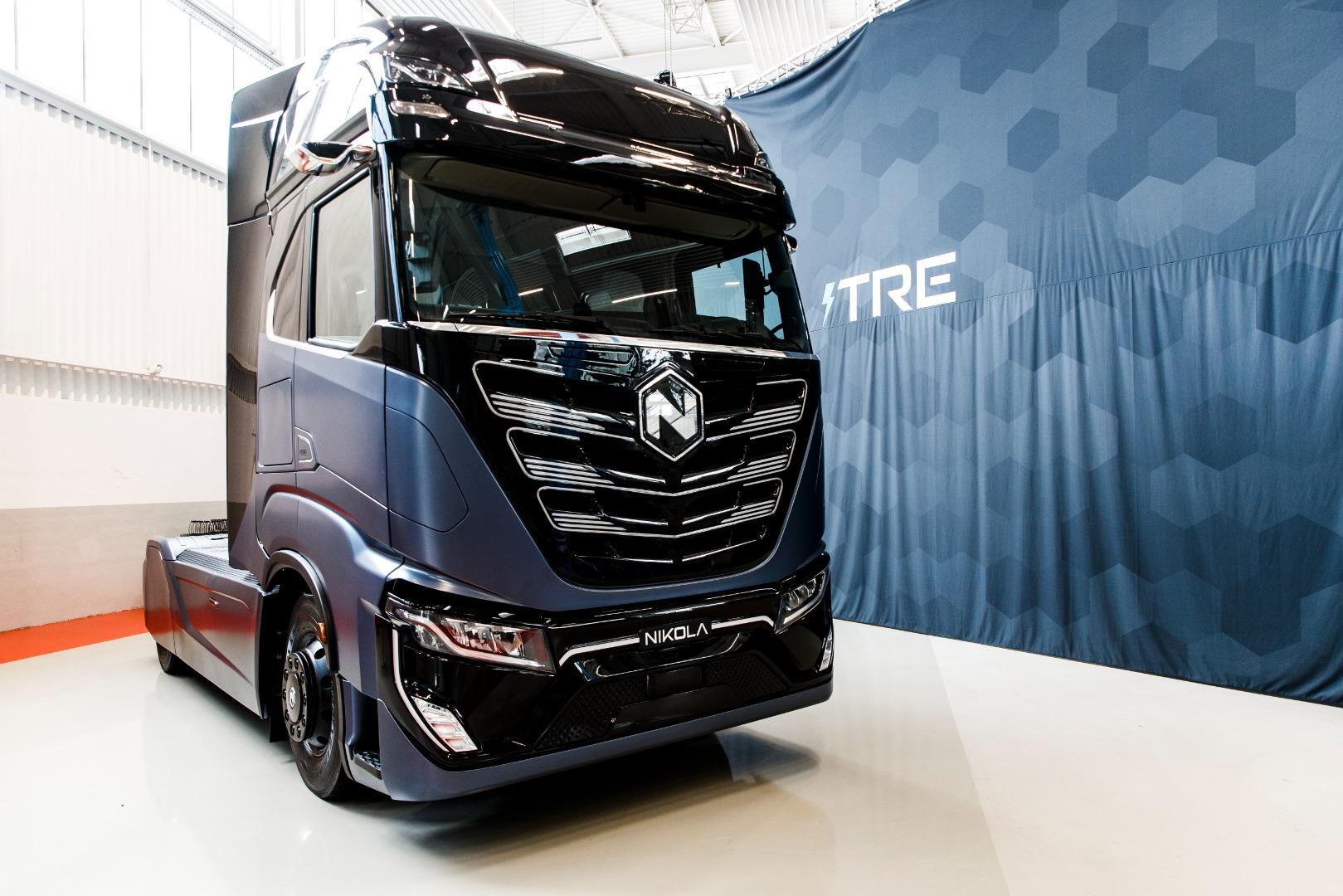
Normally, the driving of a new truck is not a massively big deal. It’s something that we do each day. However, the Nikola Tre is a slightly unusual case. This is thanks to the antics of the company’s founder, Trevor Milton, who was recently arrested and charged with fraud. Many people wondered if the Tre would ever see the light of day.

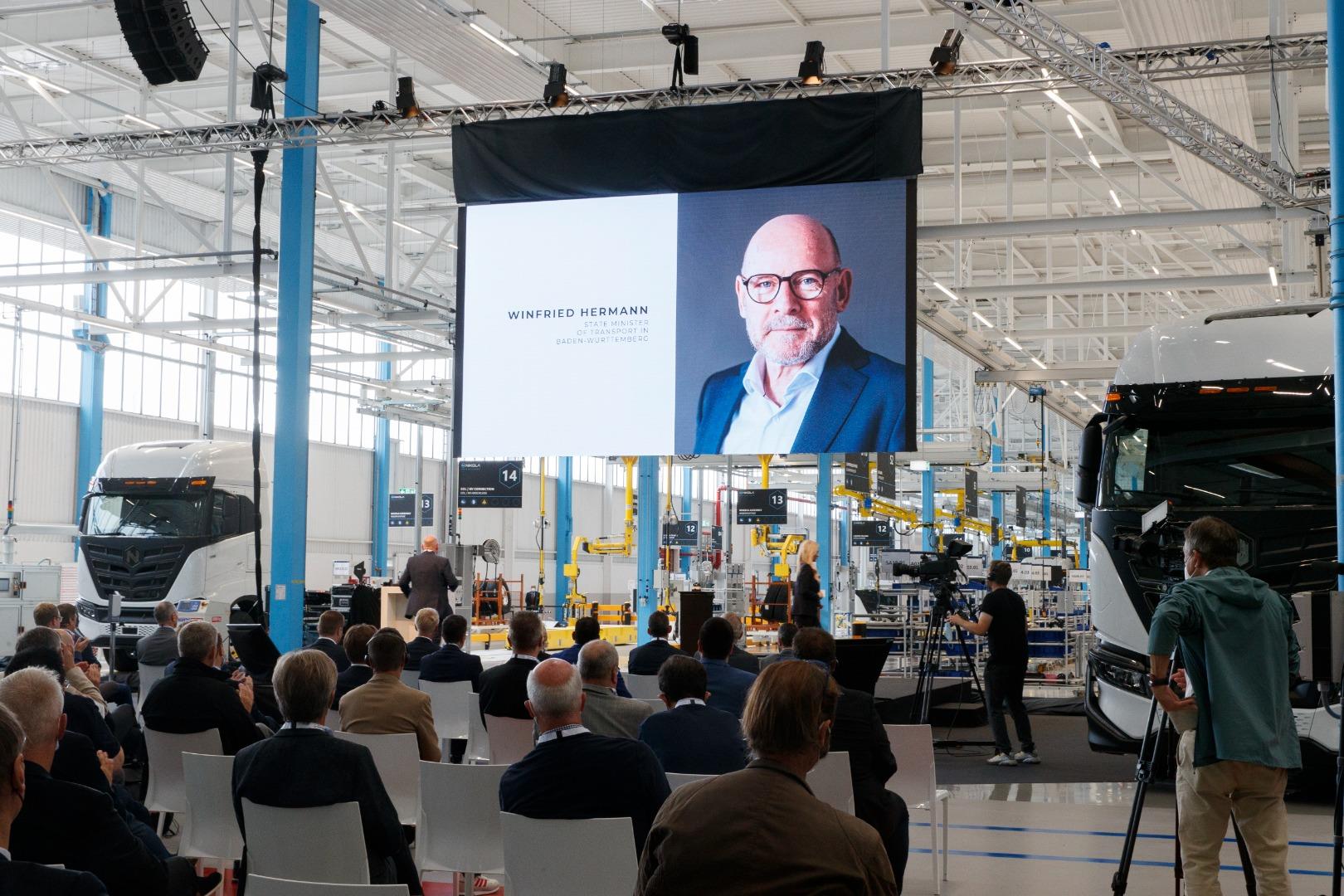
But it has! The Tre – which is being developed and built in conjunction with Iveco – is alive and well. Last week, an exciting new chapter in Iveco and Nikola Corporation’s sustainable transport story set its course last week in Ulm, Germany, as the manufacturing facility dedicated to the Nikola Tre electric heavy-duty trucks was inaugurated. Production will commence there by the end of the year.
1000-unit capacity

The 50 000 m2 Ulm factory – which was previously used for the manufacture of diesel-powered trucks – features a final assembly process that has been specifically designed for electric vehicles. Nikola and Iveco have invested €40 million (about R691 million) in the development of the factory.
This site, and the first phase of industrialization, represents a joint investment by Iveco and Nikola and involves a projected 160 suppliers in the process from start to finish. The production line is currently expected to be capable of manufacturing approximately 1,000 units per shift per year and is expected to undergo a progressive ramp-up over time. The site is expected to operate according to the principles of the World Class Manufacturing programme, with the goal of achieving zero waste, zero accidents, zero failures and zero stock.
US customers get it first

While the Tre will almost certainly find its way to South Africa one day, the first models produced in Ulm will be delivered to customers in the United States in 2022.
The vehicle is based on the Iveco S-Way truck platform with an electric axle co-designed and produced by FPT Industrial. It features Nikola’s advanced electric and fuel cell technology, along with key components provided by Bosch. Together, the teams have designed a modular platform capable of fuel cell as well as battery propulsion technology (the fuel cell truck will enter production in Ulm by the end of 2023).
The battery-electric Tre will have a range of up to 563 km (obviously driven under ideal circumstances) and a recharging time of 120 minutes (based on a charge from 10 to 80% state of charge at 240kW). It boasts a 753kWh battery pack.
Driving experience

Not surprisingly, Nikola says its truck will be great to drive. “It provides a spacious and well-laid-out environment rich in comfort features and advanced technology. With its high visibility and smooth ride, free of the noise and odour of a diesel engine, the Nikola Tre battery-electric vehicle is set to become your driver's favourite vehicle and the envy of the other drivers on the road,” it proclaims. Do independent journalists agree?
“It’s certainly a well-designed vehicle,” confirms Gianenrico Griffini, president of the International Truck of the Year. Griffini was at the inauguration of the factory, and he travelled in the truck with a test driver (journalists were not allowed to drive the Tre).
He was taken in by the truck at the end of the drive. “The Nikola Tre 80,000 pound electric 6x2 tractor-trailer combination looks impressive. It is fast and seamless in acceleration, quiet at cruising speed, there’s no vibration, and there’s also strong deceleration with regenerative braking,” he reports.
The future of trucking

There’s no doubt about it; the Tre represents the future of trucking. After all, we all know about the dangers of climate change. The Tre delivers zero emissions while, according to its manufacturer, also offering excellent performance, great safety features and superb reliability. We’re certain that Nicola and Iveco cannot wait to bring it to South Africa.
Assuming that the total cost of ownership is right (we all know that this is a very price-sensitive market), we feel certain that environmentally conscious transport operators in this country will be equally enthusiastic about its local launch.
Photography: Richard Kienberger