Finally! An inexpensive electric bus!
We’ve become accustomed to electric vehicles (EVs) costing twice or even three times as much as their diesel-engined counterparts. But now we can bring good news: a company called Quantron is launching an electric bus. It will cost the same as a diesel-engined bus. And it’s coming to South Africa!

Introducing Quantron
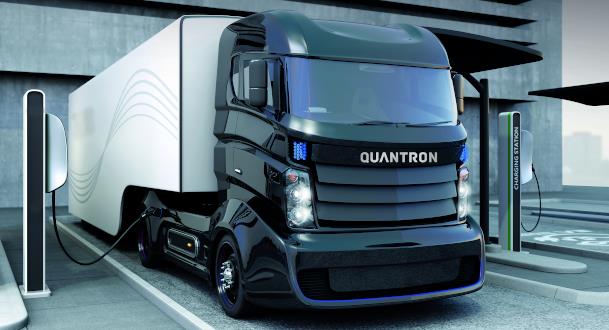
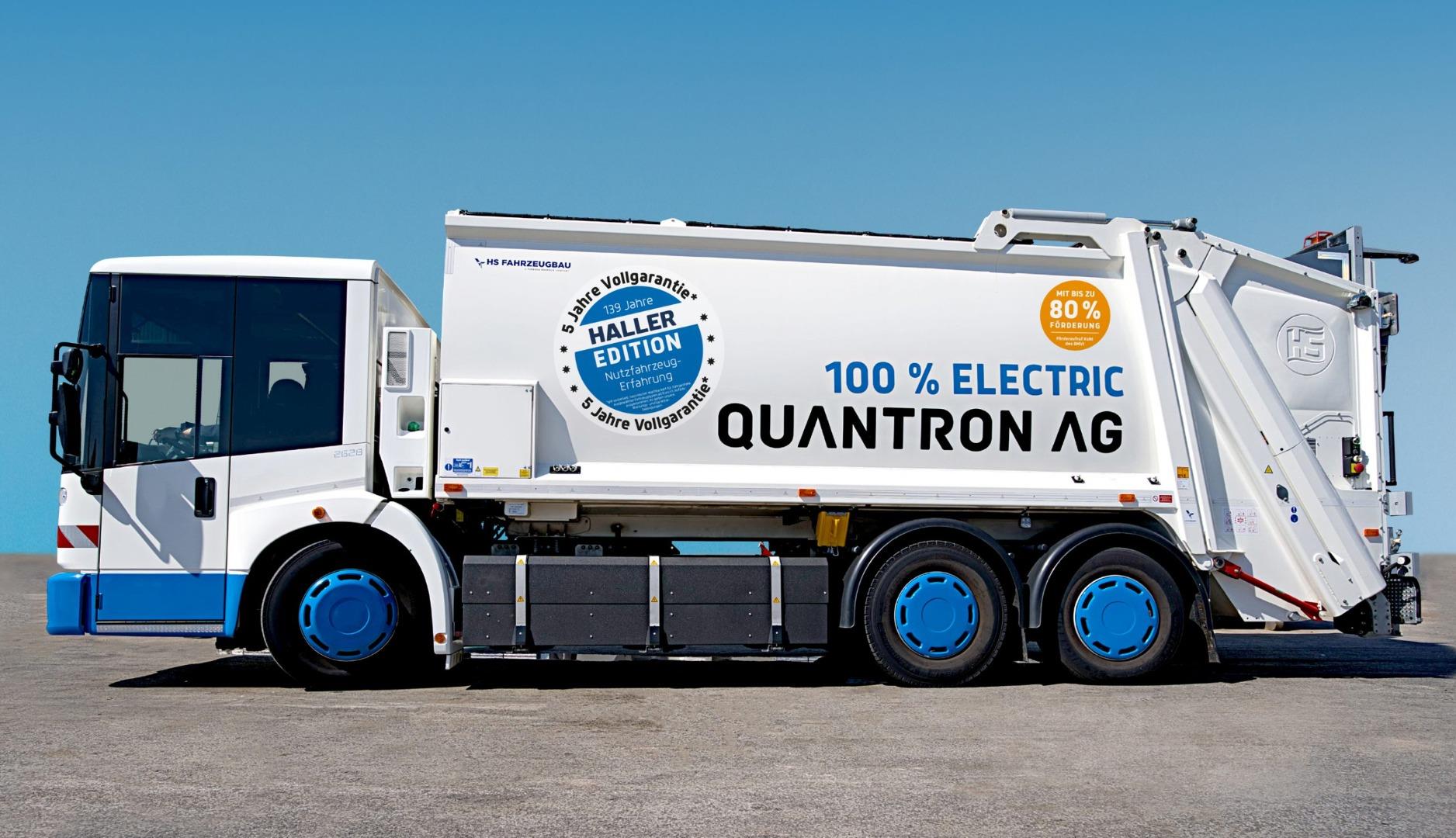
The name, Quantron, isn’t particularly well known in South Africa. But this German company – created in 2019 and a high-tech spin-off of the well-known Haller GmbH & Co, which has been in the commercial vehicle business for 139 years – certainly appears to be going places. While it does a lot of things, its primary focus is on the electrification of used and existing vehicles and also the sale of new e-commercial vehicles.
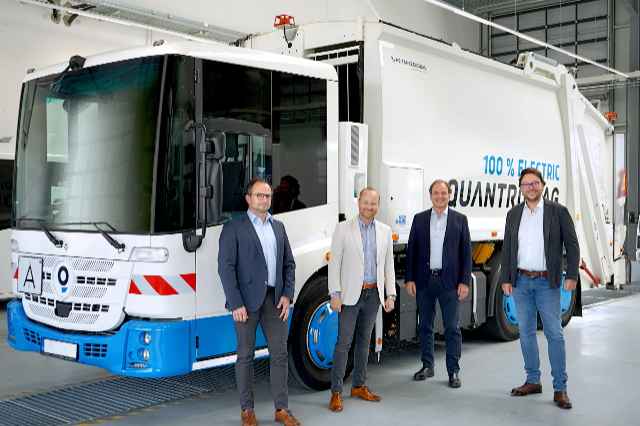
Let’s kick off with the former. When the vehicle is brought to Quantron, the complete drivetrain is removed (namely the engine, transmission, exhaust system and tank). These parts go back to the manufacturer or a third party supplier and are given a second life as spare parts. This is followed by the refurbishment: the complete preparation of the vehicle (exterior, interior and paint). After completion, the new drive system is installed (electric motor, power electronics, batteries, with H2 additional fuel cells and H2 tanks). Then the drivers are trained in the smooth and energy-efficient use of the EV. Finally, the converted –and now environmentally friendly – e-vehicle is handed over to the customer.
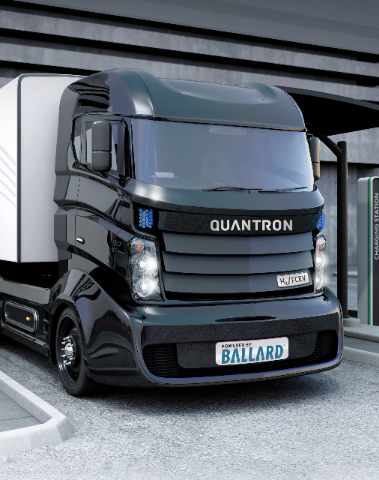
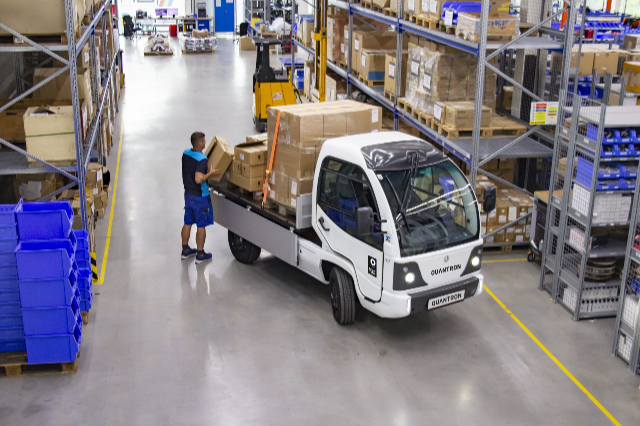
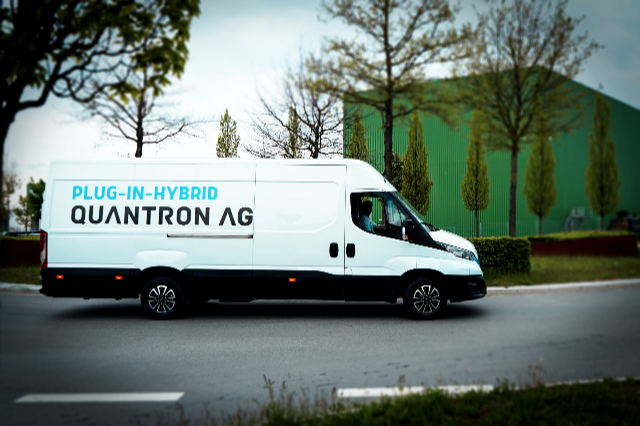
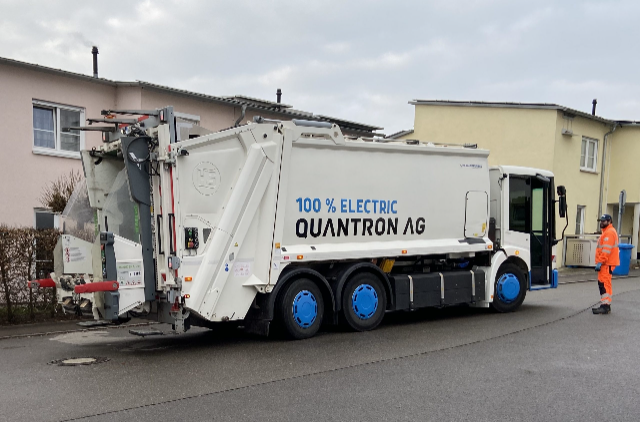
Quantron also offers its own new e-commercial vehicles. The spectrum of vehicles ranges from electric vans and e-buses to electric heavy-duty truck tractors. GVMs for the EVs range from 3.49 to 44 tonnes.
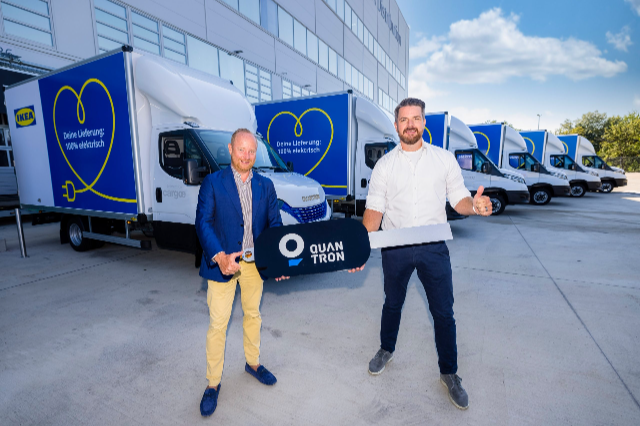
The company appears to have many blue-chip customers. Recently, for instance (in August 2021), Ikea took delivery of 30 fully electric Q-Light vehicles from Quantron. These medium commercial vehicles have a range of at least 170 km, drive power of 100 kW and a maximum charging power of 70 kW. They’re in service in Vienna. The electricity for the vehicles is generated by photovoltaic systems and thus comes from 100% renewable energies.
Quantron also sells batteries and integrated customized electrification concepts to manufacturers of commercial vehicles, machinery, and intralogistics vehicles.
Enter the bus
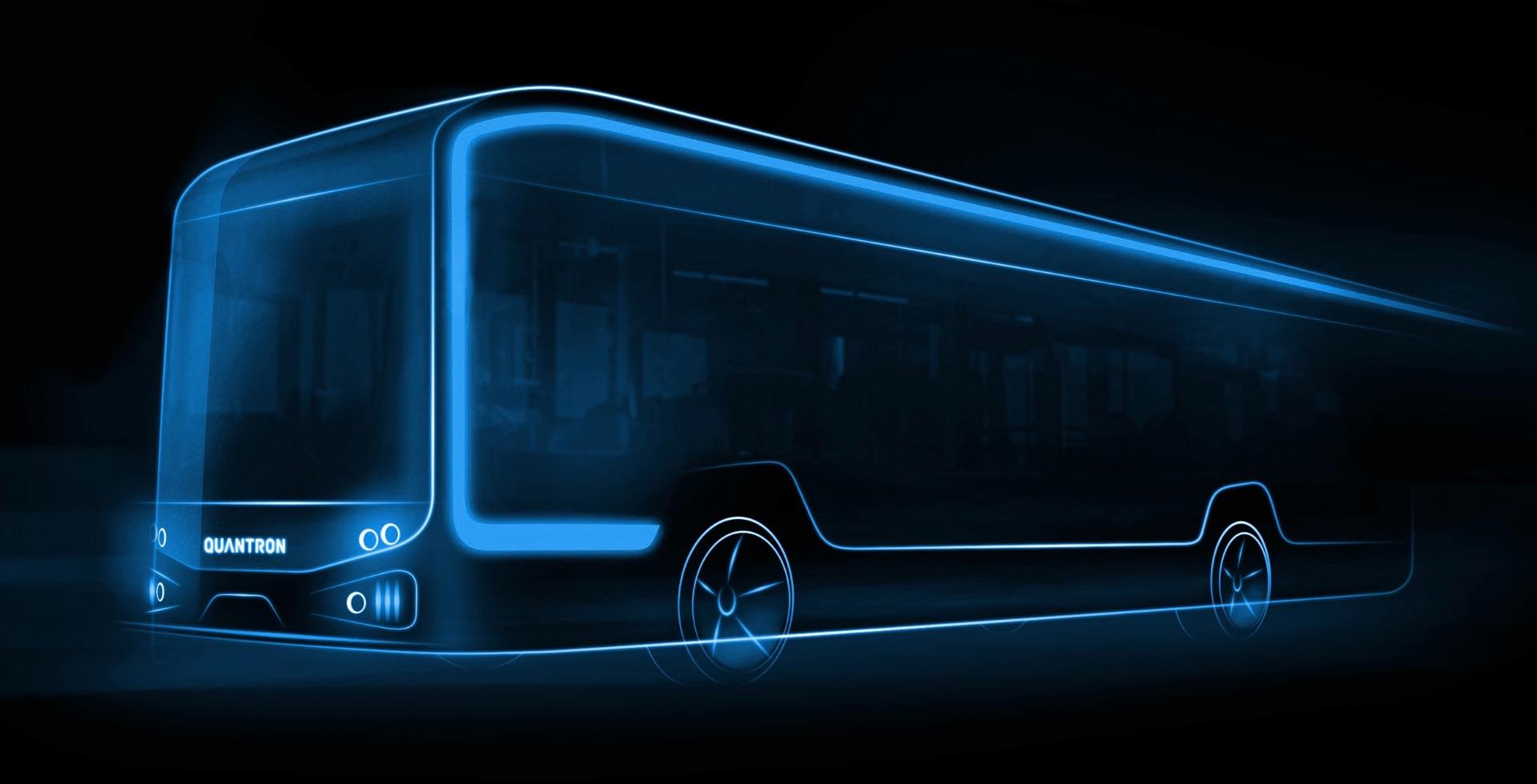
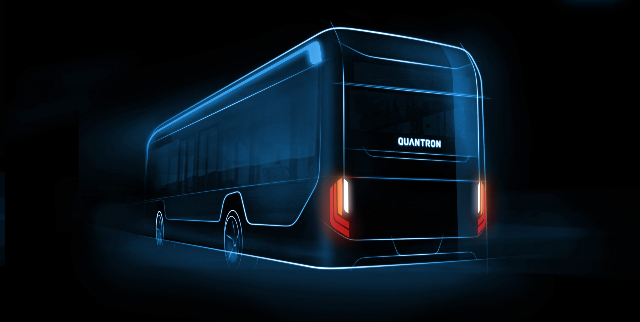
One of the EVs that Quantron has developed is the aforementioned bus. It is a fully electric 12 m low-floor bus – and Volker Seitz, Chief Marketing Officer at the company, has confirmed that it will be sold in right-hand drive markets, including South Africa.
The city bus will be offered in two versions: a battery electric vehicle (BEV) and a fuel cell electric vehicle (FCEV). But the really big news is that it will have a similar price tag to conventional diesel buses. “With our bus, we prove that sustainable zero-emission passenger transport does not necessarily mean double or triple costs. We achieve the attractive pricing by a clever mix of having the right partners, smart sourcing and our 139 years of German commercial vehicle experience. The performance of the electric bus and its pricing certainly give a competitive advantage to Quantron,” notes Seitz.
The bus is being offered in close cooperation with Quantron investor and strategic partner EV Dynamics, a European-Asian consortium of companies specialising in electric and hydrogen-based mobility. Both the batteries and the fuel cells come from the world's leading manufacturers of the respective technologies, namely CATL and Ballard Power respectively.
Legacy of successful operation

Miguel Valldecabres Polop, CEO of EV Dynamics, says that customers can buy the buses with peace of mind. "Several thousand buses have already been produced. These have been operating successfully in Asia for years,” he reveals.
With fully electric drive, the bus achieves a maximum output of 250 kW. The range is up to 280 km, making the vehicle ideal for daily urban use. The charging power is up to 80 kW with a battery capacity of up to 422 kWh. The battery is charged via a European standard plug CCS 2 within three to six hours (depending on the battery size). This means, for example, that the city bus is fully operational after overnight charging. The battery system is adapted to the respective operational requirements and is compatible with various charging solutions. The bus has a capacity for up to 95 passengers.
Available from end 2021
According to Seitz, the BEV version of the bus will be available from the end of 2021. “The FCEV will follow in spring 2022 (European spring, that is, so Q2/22),” he reveals.
It’s going to be fascinating to see how many of these buses end up on South Africa’s roads. One thing is certain: their price tag is super appealing.
VEHICLE DATA: QUANTRON 12 METRE LOW-FLOOR BUS BEV
Permissible total weight: 19500 kg
Maximum power: 250 kW
Maximum torque: 3400 Nm
Range: 160 to 280 km
Battery capacity: 242/281/363/422 kWh
Charging time: three to six hours
Maximum charging power: 80 kW
Passenger capacity: 71 to 95