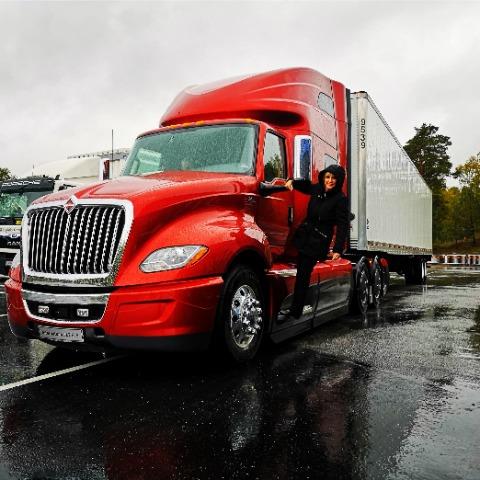
Back to the future: these digital technologies will shape the future of commercial vehicles
Digital technology is transforming every part of the modern transport industry. From advanced telematics to real-time data analytics, vehicles are becoming more connected, intelligent and efficient than ever before. For South African fleet operators facing rising fuel prices, tough competition, and infrastructure challenges, these technologies offer new ways to cut costs, improve safety and build resilience.


Here are three digital innovations that are set to redefine the way commercial fleets operate – from taxis and buses to long-haul trucks.
1. Advanced on-board computing
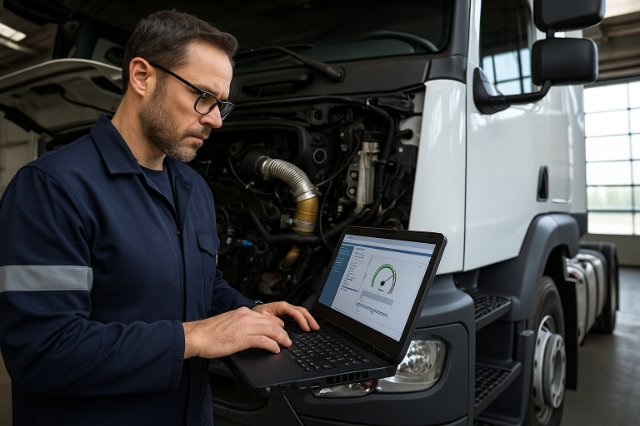
Engines and drivetrains today are far more than mechanical systems; they are complex networks of sensors and processors generating thousands of data points every minute. These sensors monitor everything from fuel consumption and emissions to driver behaviour and component wear.

Until recently, most of this data was sent back to manufacturers or telematics providers for analysis – a process that could be slow and data-heavy. Now, high-performance computing hardware is being built directly into vehicles, allowing critical information to be processed on board in real time.

This approach, known as edge computing, means that vehicles can detect faults, optimise performance, or trigger maintenance alerts instantly, without needing to send vast quantities of raw data to a remote server. Local brands such as MiX Telematics and global players like Bosch Mobility and Continental are already developing on-vehicle computing systems that integrate directly with fleet-management software.
For operators, this means quicker diagnostics, reduced downtime and better decision-making – all crucial in an environment where every hour on the road counts.
2. Software containerisation and open platforms
If on-board computers are the muscle of digital fleets, then software is the brain. However, developing and deploying software for commercial vehicles has always been complex. Each manufacturer uses different hardware and operating systems, meaning that software often needs to be rewritten or adapted multiple times before it can run on different vehicles.
The concept of software containerisation is changing that. In simple terms, containerisation allows developers to package software together with everything it needs to run – regardless of the platform. The same application can operate across multiple vehicle brands or telematics systems without needing to be rebuilt from scratch.

This is the same principle that has revolutionised cloud computing and app development globally. In transport, it means that new digital tools – such as route optimisation, driver scoring or fuel-use analytics – can be rolled out across mixed fleets faster and more securely.

For instance, Cummins is working closely with Microsoft, and over 40 industry partners, to create a shared framework for commercial vehicle software called the Open Telematics Framework. By working to create a shared framework for the industry, Cummins is making it easier for containerised software to be developed and deployed for commercial vehicles. This means new technologies can reach customers faster than ever before.
3. Over-the-air software updates
In the past, updating vehicle software meant booking a service appointment, taking the vehicle off the road and waiting hours – or even days – for the work to be completed. Today, over-the-air (OTA) technology has made this almost obsolete.

Using secure wireless connections, manufacturers and fleet managers can now update a vehicle’s software remotely – whether it’s an engine control module, navigation system or safety feature. The process is similar to updating a smartphone: fast, automatic and requiring little to no downtime.

Many global brands, from Mercedes-Benz Trucks, MAN, Volvo, Iveco, DAF and Scania to Isuzu, UD and Hino, already use OTA systems in their latest models. Updates can improve fuel efficiency, enhance emission control, or fix bugs long before they become costly problems.
For South African operators, OTA updates also mean fewer visits to workshops in distant towns, better uptime for rural or cross-border fleets, and the ability to maintain consistent performance standards across all vehicles.
The bigger picture: A connected, data-driven fleet future
These three digital technologies – advanced on-board computing, software containerisation, and over-the-air updates – form part of a broader shift toward connected, data-driven transport ecosystems.

They are helping operators monitor vehicle health, predict maintenance needs, reduce fuel waste and enhance safety. Combined with artificial intelligence, these systems can even forecast component failures, recommend optimal driving habits and help logistics planners manage entire fleets with precision.

In South Africa, where transport infrastructure, cost pressures and long-distance haulage present daily challenges, the move toward smarter, connected vehicles isn’t just about convenience – it’s about competitiveness and sustainability.

Fleet managers who embrace digitalisation early will gain a measurable edge: fewer breakdowns, better compliance with emissions standards, and improved driver satisfaction. The tools are already here; what matters now is how quickly the industry adopts them.
The road ahead for commercial vehicles is not just mechanical – it’s digital, intelligent and interconnected. And for South African transport businesses, that’s a future well worth preparing for.