


Ready, steady, go!
The United States, Europe, and China are at the forefront of the autonomous trucking revolution, with each region adopting unique approaches to developing and regulating the technology.

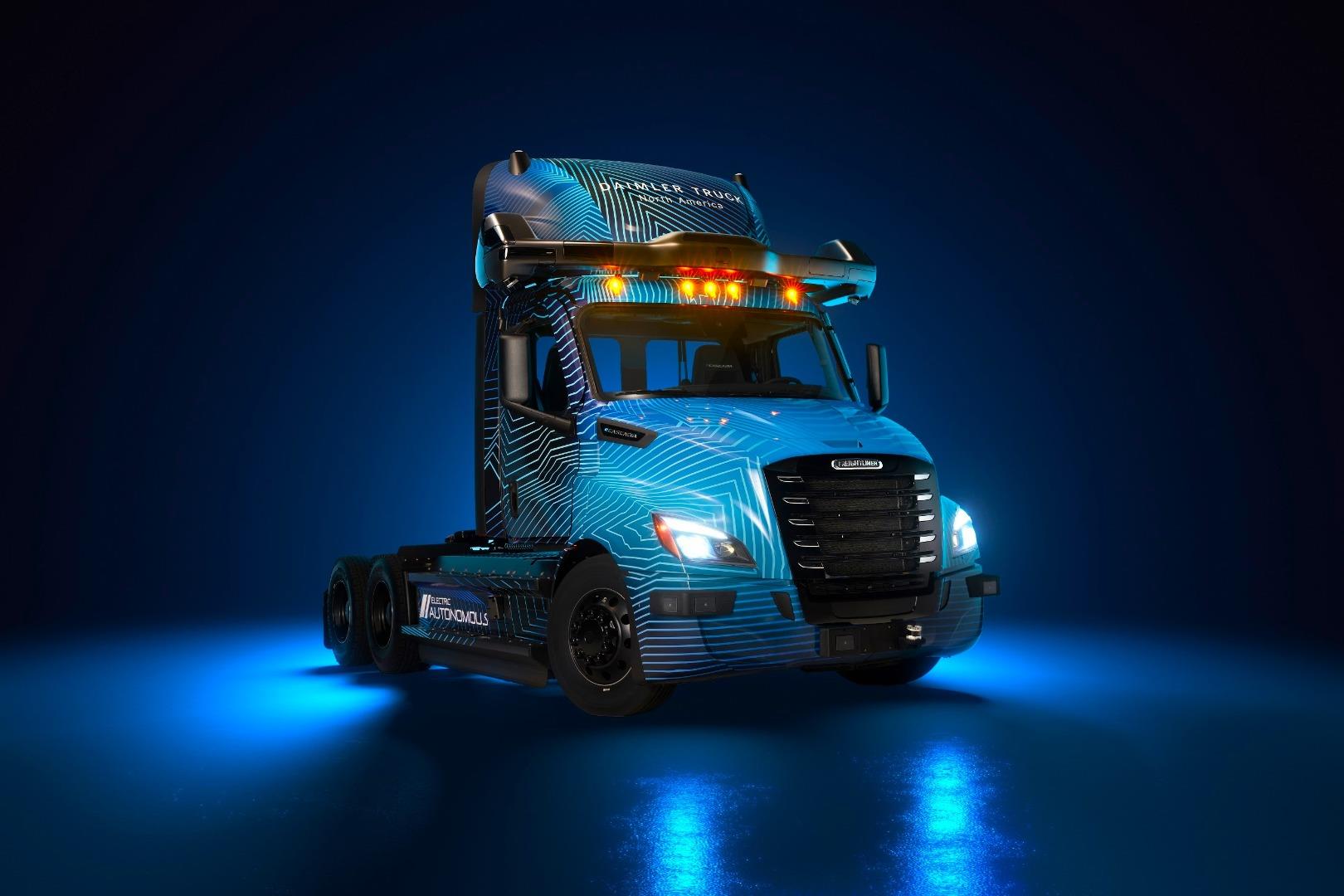
In the United States (US), extensive testing programmes are underway in states like Texas and California, where companies such as Waymo and TuSimple are testing their autonomous trucks on public roads. Daimler Truck has also lifted the lid on the autonomous Freightliner eCascadia. The truck is based on the North American production model of the battery-electric Freightliner eCascadia and is equipped with Torc Robotics' autonomous driving software as well as state-of-the-art sensor and computer technology. A lack of unified federal regulations, however, poses challenges in the US, with a patchwork of state-specific laws creating obstacles for interstate autonomous freight transportation.

In Europe, the regulatory framework is more harmonised, with countries like Germany, Sweden, and the Netherlands pioneering commercial trials. Germany's legal framework for Level 4 (L4) autonomy is particularly advanced, allowing for human-free truck operations in designated areas. Europe’s emphasis on sustainability is also pushing for the integration of autonomous electric trucks, which align with broader environmental goals.

Meanwhile, China is advancing rapidly, supported by a government that sees autonomous trucks as part of its broader smart logistics and electric vehicle strategy. Chinese companies such as Inceptio and DeepWay are already conducting pilot operations on major highways, benefitting from clear national regulations and government support for infrastructure development, including smart highways and charging stations.
IDTechEx’s research shows that these regions are not only implementing pilot programmes but are also laying down the necessary regulatory, technological, and infrastructural foundations to facilitate the full-scale deployment of autonomous trucks within the next decade.

That’s the global picture. What’s happening in South Africa? While the world moves closer to autonomy, South Africa faces five significant challenges.
Challenge #1: Infrastructure
One of the most crucial factors in the deployment of autonomous trucks is the technological feasibility. Globally, companies are developing and refining the sensors, cameras, and algorithms required for trucks to operate safely without human intervention.
But South Africa’s road network is far from optimal. The success of autonomous trucking depends heavily on well-maintained roads, clear markings, and continuous connectivity, areas where South Africa could struggle without significant investment in smart infrastructure.
Challenge #2: Regulations

The legal framework for autonomous vehicles in South Africa is still in its infancy. Countries like the US and Germany have specific regulations that provide legal cover for the operation of autonomous trucks. In South Africa, no such legislation exists yet. Insurance, liability in accidents, cybersecurity concerns, and licensing need to be addressed before autonomous trucks can hit the roads.
Challenge #3: Safety
Autonomous trucks could bring significant improvements to road safety in South Africa, where human error is a major cause of traffic accidents. The technology promises to reduce fatigue-related crashes, improve reaction times, and ensure safer road operations overall.
However, South Africa’s mixed driving conditions present a unique challenge. The country’s roads vary significantly in quality, and – to put it nicely – driver behaviour is “unpredictable”. Introducing autonomous trucks into this environment could be risky without ensuring that the technology is robust enough to navigate these challenges.
Challenge #4: Cost
The initial costs of deploying autonomous trucks can be prohibitive. While the technology could lead to long-term savings in terms of fuel efficiency, reduced downtime, and lower labour costs, the upfront investment in both technology and infrastructure is steep. South Africa, with its current economic challenges, may find it difficult to allocate the resources necessary to build smart highways, upgrade road infrastructure, or provide financial incentives for adopting this new technology.

Challenge #5: Employment
The impact on employment is a significant consideration. The trucking industry in South Africa is a major employer, and the introduction of autonomous trucks could lead to job losses.
Opportunities do exist
Despite the challenges, South Africa has areas where autonomous trucks could thrive. The mining sector, for instance, provides ideal conditions for testing autonomous vehicle technologies – because it is a controlled environment.
So, is South Africa ready for autonomous trucks? The answer is both yes and no. South Africa can benefit from autonomous trucking, particularly when it comes to improving road safety and efficiency. But mountains will first need to be moved.
If autonomous trucks are to succeed in South Africa, there will have to be a concerted effort to upgrade the roads, a regulatory framework will need to be developed, and the economic implications, particularly for the labour force, will need to be addressed. Which means that driverless trucks are a long, long way away…
ENDS