Truck and bus market slightly down this year
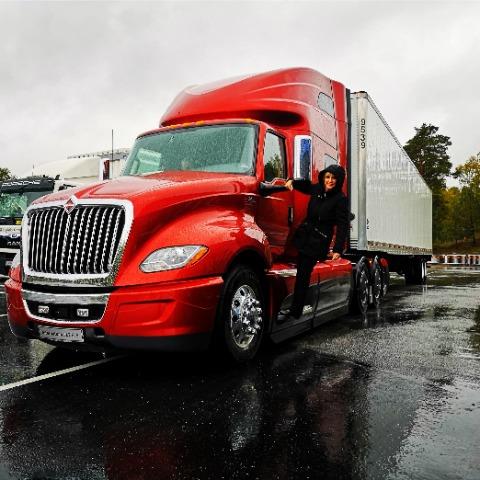
The global commercial vehicle market is expected to reach 18.2 million units this year, slightly down from the 18.3 million market in 2021. And while electric vehicle sales are growing elsewhere, diesel will be far from dead in South Africa.


The market prediction – which covers all commercial vehicles, from bakkies and vans to trucks and buses – is courtesy of global research firm Interact Analysis. While the total market will be relatively stagnant, the market for battery electric vehicles is on the move. According to Interact Analysis’s latest research, 634,000 battery electric trucks and buses will be sold this year. This is a massive increase over last year, when 268,000 battery electric trucks and buses were sold.
Impact of war in Ukraine
The global economy in 2022 has taken a pounding thanks to the Ukraine war; were it not for this, the market would probably have increased over 2021. The Centre for Automotive Research believes that almost 20 million electric vehicles (all vehicles, not just commercials) are going to be taken out of production this year due to the lithium shortage and the impact of the war.

The European commercial vehicle market, for instance, is plagued by supply issues, including disruptions from the war in Ukraine, and lead times are exceptionally long – because companies just don’t have stock. This is reflected in the fact that, five months into 2022, new commercial vehicle sales decreased by 19.8% in the EU, totalling 673,095 units.

While Jamie Fox, Principal Analyst at Interact Analysis, acknowledges that the global economy in 2022 isn’t great owing to the Ukraine war, he says it’s hard to quantify in data. “Yes, the Ukraine conflict has had an impact on the electric vehicle market. “This impact has been rather mixed. On the one hand, as regions become increasingly reluctant to rely on Russia for fossil fuels, this will likely create a faster push towards electrification. On the other hand, the conflict has created significant supply chain issues causing a substantial rise in commodity prices, battery prices and the price of electric vehicles overall,” he explains.
Growing BEV market
Interact Analysis predicts that, by 2030, there will be over nine million battery electric trucks and buses sold out of a total market of 21 million. Meanwhile, the total global market for trucks, both electrified and non-electrified, remains much larger than that of buses, so most OEMs are likely to prioritize development of electric trucks over buses. Accordingly, the electric truck market will become far larger than the electric bus market by the second half of the decade.

While battery electric vehicles (BEVs) are set for strong growth, this will vary widely according to vehicle type and country. In Germany for example, the BEV market for buses will experience impressive growth in 2022 but little or no growth in 2029. In contrast, on a global basis, long-haul battery electric trucks have a very low forecast shipment for 2022 but significant growth for 2029. In terms of BEV truck sales, China leads the way, partly because the Chinese government has provided the most funding to the industry. In 2021, China shipped just short of 100,000 units compared to approximately only 10,000 in the Americas.
Diesel dominates
In terms of long haul vehicles (both trucks and buses), battery electric is also edging ahead, while fuel cells still have a fighting chance in this segment of the market. But, up to 2030, the long haul market will still be dominated by diesel.

“The combination of lower price vehicles, existing fuelling infrastructure, available supply and being a known and understood vehicle type give diesel too many advantages for now. And with legislators focusing on city environments where NOX can be more harmful, diesel will undoubtedly still account for the largest share of long-haul heavy trucks in 2025. Our forecasts also suggest diesel will still account for the majority of sales even in 2030, especially when we account for regions like Latin America, Africa, the Middle East and South-East Asia where the pace of electrification is very slow,” says Fox.

“In some countries with no electrification plans from their government and strong economic growth, it is even plausible that diesel may see a similar number of vehicles sold in 2030 as 2020. Long haul will be the last on-road holdout for diesel, which isn’t ready to die yet,” he predicts.
Euro 5 in South Africa instead
His predictions appear spot-on for South Africa which, instead of turning to BEVs, is focusing on the introduction of vehicles with higher emission ratings. Rather incredibly, South Africa is still a Euro 2 market. But more and more companies are introducing “cleaner” trucks. Most recently, UD Trucks and Isuzu both announced the launch of their Euro 5 trucks. Scania is about to launch its Euro 5 trucks too (it will hand over Euro 5 trucks to Shoprite on August 16).

MAN has even launched a Euro 6 truck – the TGX 26-510 – in this country. The new model has been launched in Euro 6D for South Africa, with a view to analysing the performance of the truck in local conditions. “The main reason we have brought in the TGX 26-510 is not only to enhance our great product portfolio for the local market, but also to test the Euro 6D technology in our long-haul operations,” explains MAN Automotive South Africa head of sales and product truck, Philip Kalil-Zackey.

The first of those tests happened recently, when the TGX participated in Truck Test 2022. It passed the test with flying colours, achieving the best diesel consumption: a remarkable 48.63 litres per 100 km. Given an outstanding consumption figure like that, local operators will need a very convincing reason to turn to BEVs.