Volvo XC40 Recharge Ultimate (2024) Quick Review
Volvo’s fully electric XC40 Recharge Ultimate Twin Motor came to visit us in the Western Cape, but since we don’t live in town and cannot presently charge at home, we decided to put it to the road-trip test where we'd only use public charging points. Here’s how it went!

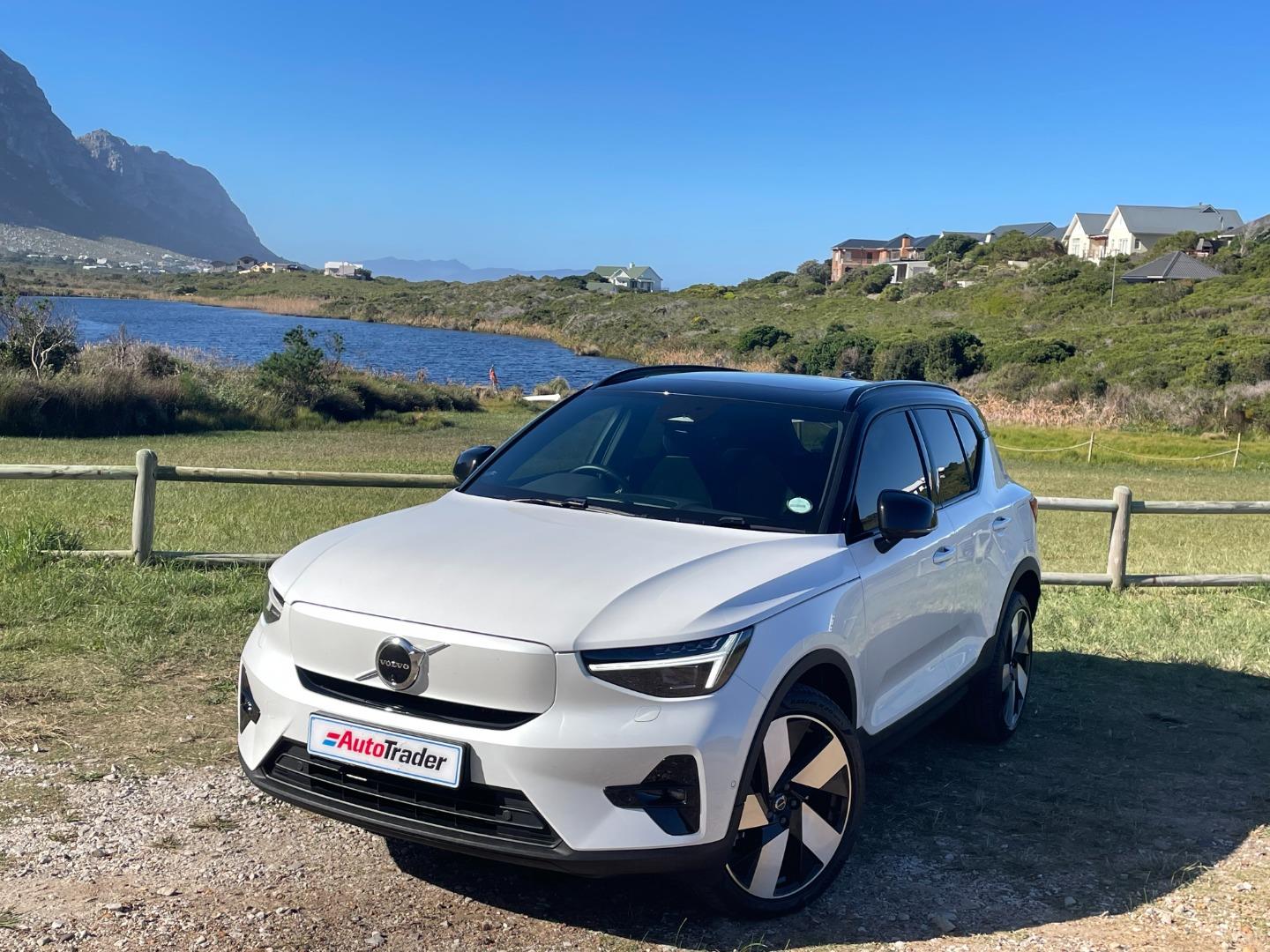
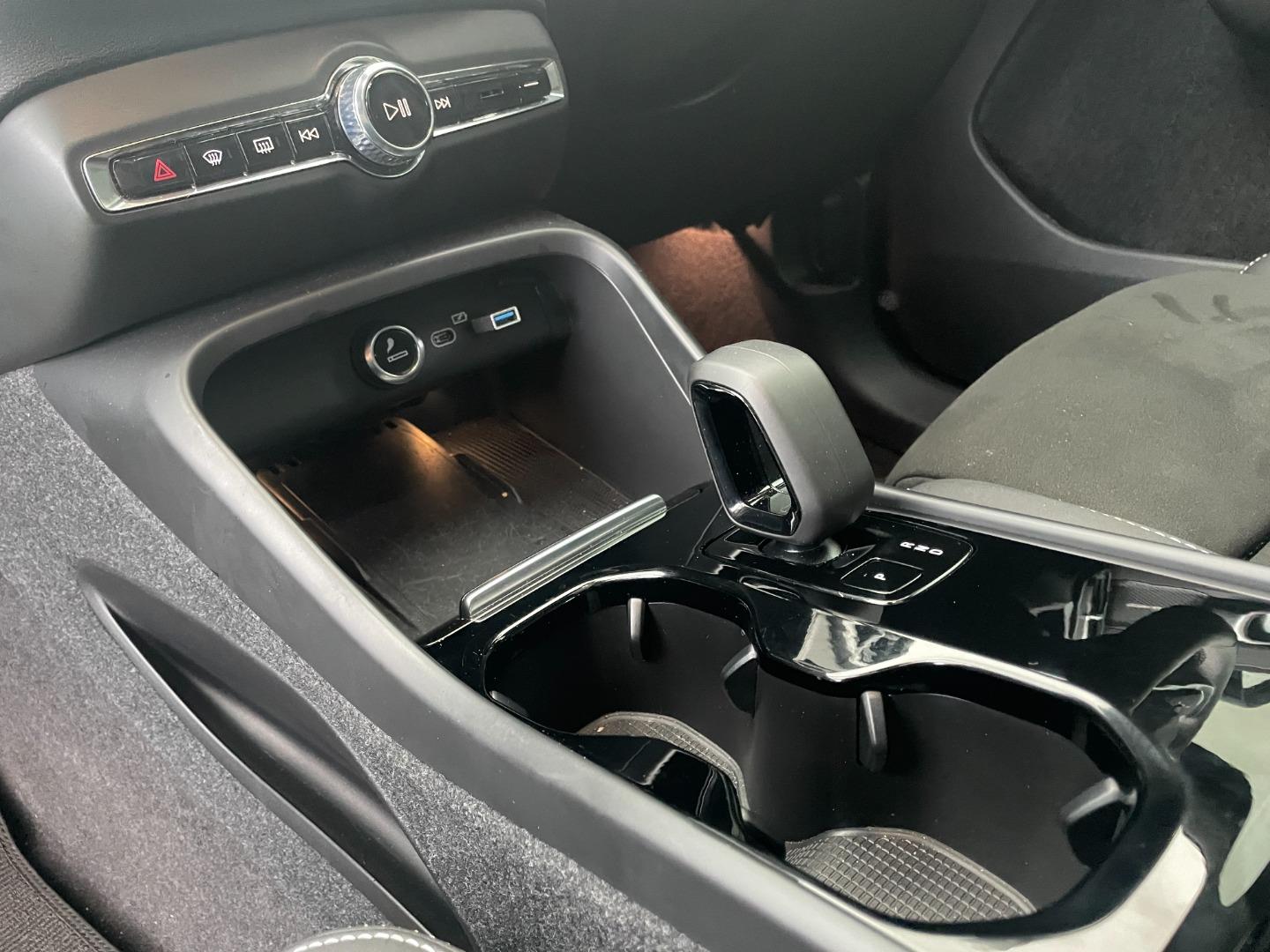
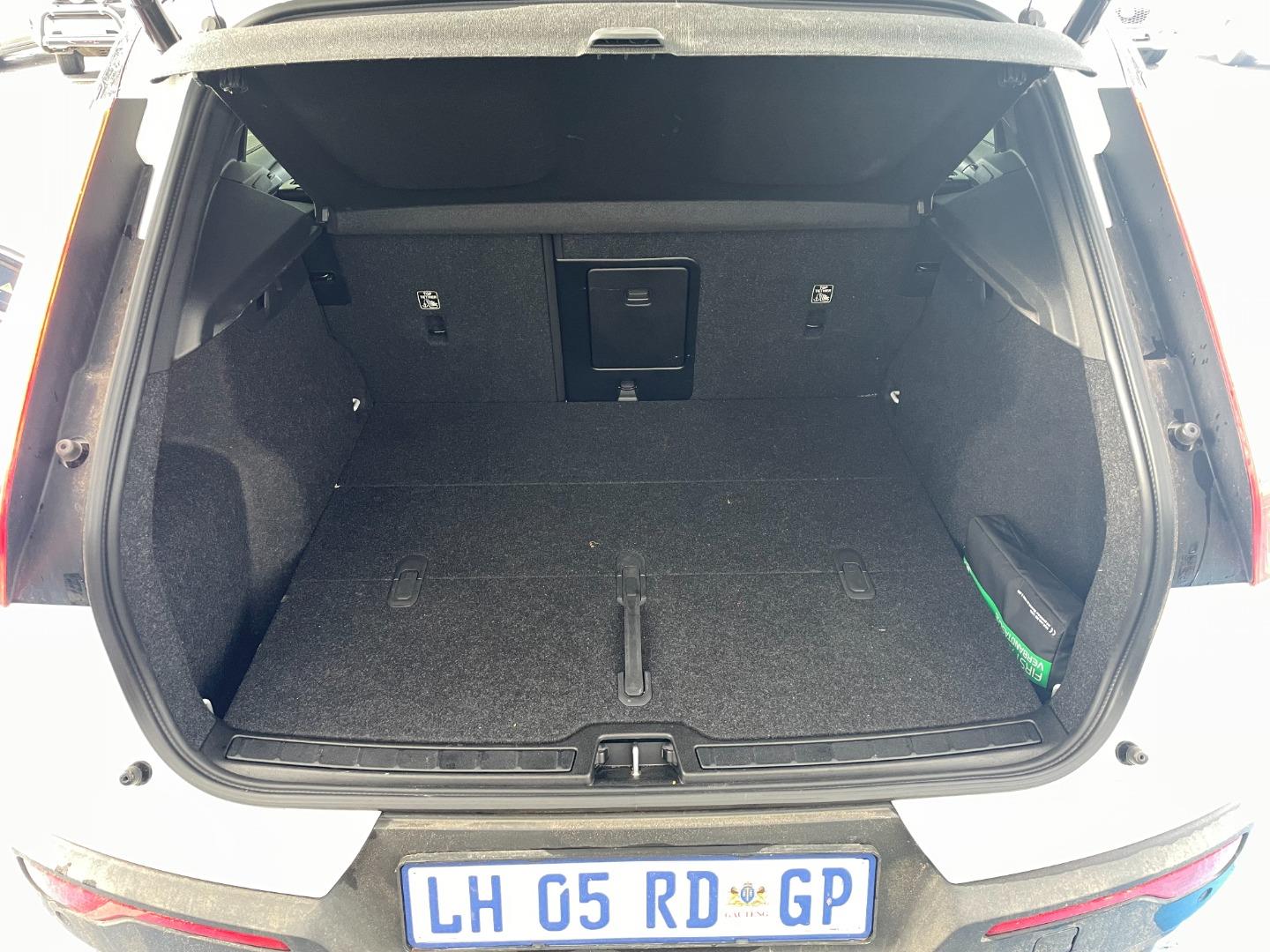
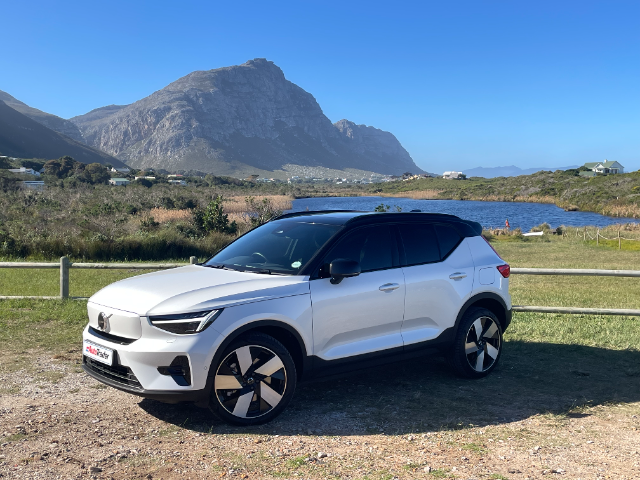
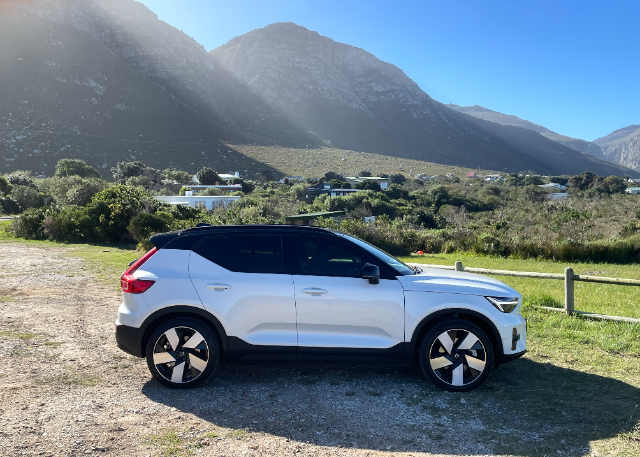
The XC40 Recharge in Twin Motor Ultimate trim is the most powerful fully electric model in the XC40 lineup with two electric motors, one one each axle, and a large lithium-ion battery where energy is stored. It is the flagship model with every conceivable creature comfort apart from a built-in espresso maker.
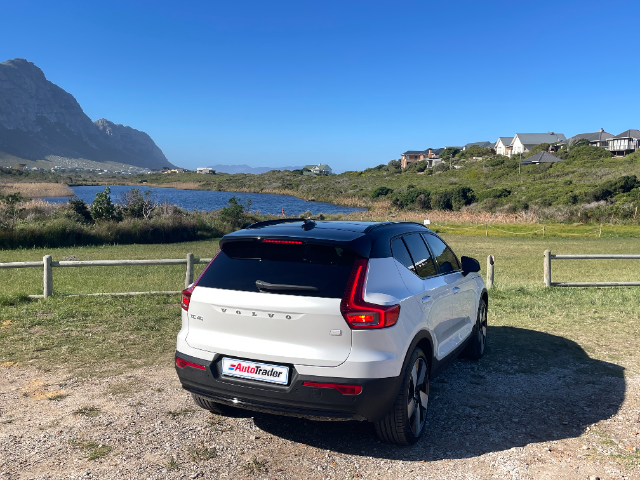
Apart from the flat, body-coloured panel that replaces the traditional grille, there’s nothing that alludes to its sprinting abilities - yet it is sports-car fast, accelerating as quickly from 0 - 100 km as the Golf R and Mercedes-AMG A35. What would it be like to travel with one, however, if you can't charge at home?
Read our Mercedes-EQA (2023) review, here
Is the XC40 Recharge road-trip ready?
The biggest drawback surrounding electric vehicles (apart from perceived threats such as load-shedding), is range anxiety. I love the challenge of driving carefully to make it to the next charging station, but my husband, the worrier, starts panicking when the battery falls below 40%.
Volvo reckons this specific XC40 offers about 500 km of range, but in our experience, it sounded a little ambitious. It is winter now, after all, and range reduction is a reality, but it isn’t exactly Siberia either. Driving at highway speed also tends to guzzle range, and if your driving style is erratic, or your foot is heavy, you pay in kilometres. But we were up for the challenge.
Related: Volvo XC40 P6 Recharge Review
On the go: Finding stations, and the reality of charging
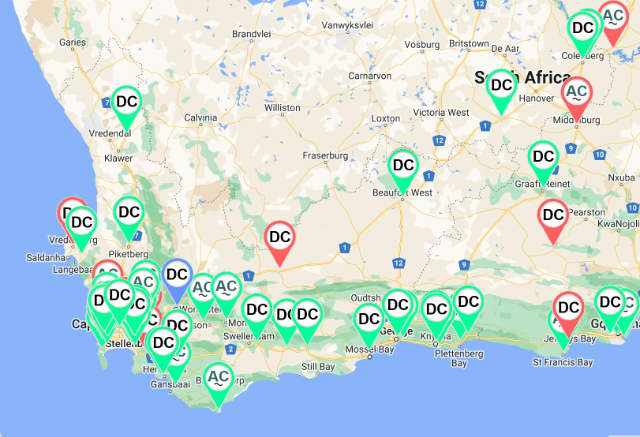
Range anxiety shouldn’t be such a massive problem anymore; since EVs were first released in SA, lots of new charging points have been popping up all over SA, but in the same breath, the central part of SA still looks a bit bare; a definite deterrent for longer EV journeys, but a colleague who regularly drives an EV from Jo’burg to Cape Town says it wasn’t much of a hassle.
When I'm behind my laptop, I usually head on over to Gridcars' live map that will show you the finer details of specific charging stations, but you can access it from the browser on your smartphone. The ABRP app (an acronym for A Better Routeplanner) is also highly recommended.
Related: Where can I find charging stations for EVs in SA?
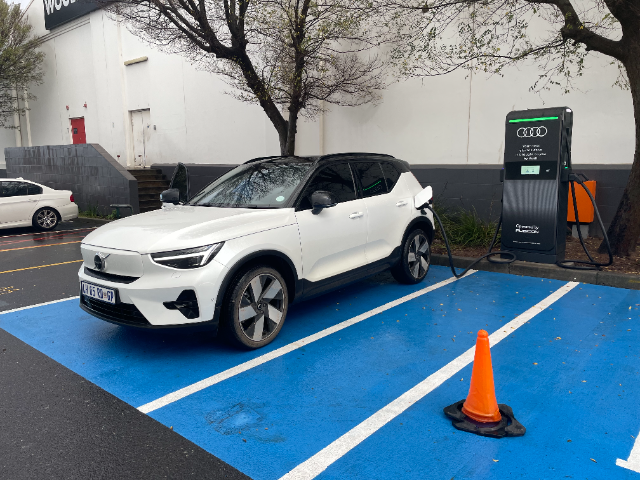
The Volvo’s Satnav system (which works via Google Maps, which is already built into the Google-powered infotainment system) makes planning easy, by showing you a selection of charging points nearby or en route, and also shows you how much energy you would spend getting to any destination and how much charge (and range) you would have left upon arrival. This alleviates a lot of the stress of simply not knowing and winging it, hoping you’ll have enough power to get home.
Related: Toyota RAV4 2.5 Plug-In Hybrid Quick Review
Making every kilometre count
In our week (and a half) with the XC40 Recharge, we undertook journeys that either had stations along the way or at the final destination. A full charge yielded a range of 400 km, and to conserve as much power as possible, we employed one-pedal driving. This means your foot never touches the brakes, as the car brakes itself when your foot isn’t pressing the accelerator. This creates drag and every time the car slows down, the battery recharges via kinetic braking.
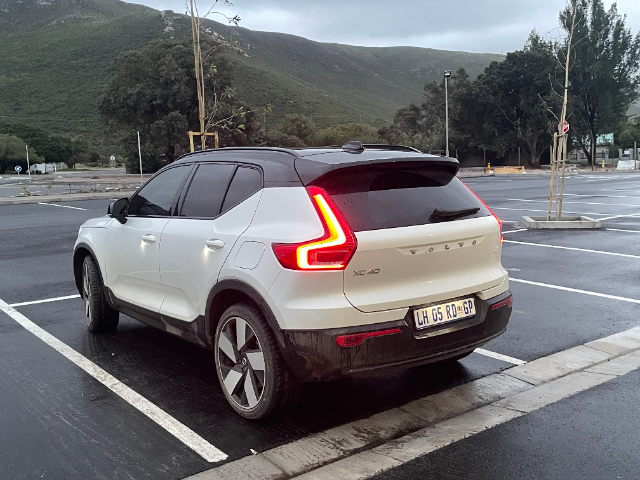
To save even more power, we drove with the airconditioning off, only switching it on when the windows fogged up in the rain. This proved to be a significant range extender, showing a difference of up to 50 km of range. In summer, this won’t be pleasant, and you’ll be driving with the windows open. Yet again, this is something one does in most EVs when you want to make your power last a bit longer.
If you use the Satnav in conjunction with Pilot Assist, Volvo’s semi-autonomous driving assistant, it also helps you drive more efficiently, as the system will maintain a smooth and consistent driving style, easing off the throttle where needed. It also helps to prevent driver fatigue as the XC40 basically drives itself - you're almost just holding the steering wheel.
The true cost of charging
We, the inhabitants of the Hermanus area, now have our very own 30 kW DC (and 22kW AC) charger in the centre of Hermanus at the scenic Gearing's Point which overlooks the ocean. It’s 16.5 km from home, and conveniently close to school. It will cost you about R7.50 per kWh (equal to one unit of electricity) to charge there, which is the going rate.
Previously, if we wanted to charge on the go, we had to schlepp all the way to Caledon’s 60kW "fast" charger but that defeats the purpose, since it’s a 70 km return trip that also has to be factored in, and needless to say, you return with 35 km less than you would have liked. Also, it has happened that a BMW iX had just pulled in to charge, and we had to kill a few hours at the casino nearby, which really messes with your schedule (and your pocket, if you're a gambler). And we all know that time is money, these days.
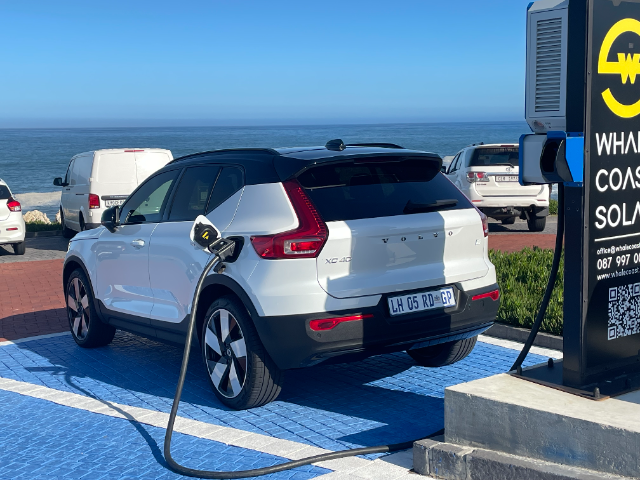
With 39% of charge left, charging to 95% took around an hour and a half at Gearing’s Point. (It’s worth noting that charging to 80% is more effective, as the remaining 20% takes a lot longer - an hour would have been ample.) During this time, I almost got in my 9 000 steps on the coastal cliff path and surrounds. If you’re less fitness-minded, you can go for breakfast and work on your laptop or do some shopping and come back to a fully charged car.

The XC40’s lithium-ion battery pack holds 82 kWh, so charging it from 0 to 100% (at a public, DC or direct current charger) costs about R 615.00. And the price of your breakfast, plus the hour or two you spent waiting or working. Should you undertake a 1200 km road trip, you'll shell out about R1845 in total for DC public charging.
If I had a wallbox at home, or I just plugged into my normal wall socket, I’d pay approximately R2.50 per kWh, which works out to 400 km for R200 - but this isn't relevant for road trips, just the first charge. It's cheap, but if your EV cost over a million Rand, it will take a few years to offset the initial cost - but there are much cheaper Volvo EVs now, like the EX30.
Related: GWM Ora Cat quick review
Is an EV worth the trouble if you’re travelling far?
Yes - but it’s not without its challenges, but that's not the XC40's fault. Checking the GridCars live map shows that a few crucial charging stations along the seem to be offline. A quick message to GridCars explained why - the company says that sometimes the map shows that one of the points is offline but it's actually just a signal issue, and you can contact GridCars for a pin number for charging when you get there or even the day before travelling, to get your EV juiced up.
I am undertaking an EV road-trip trip from Hermanus to Bloemfontein in July and if the Laingsburg charging station isn't functioning, it means I would have to take a massive detour, travelling all the way to George where I can get my last charge and then to Beaufort-West where I can plug in again.
One could also charge a little overnight at a normal wall socket but if your EV's battery is very low, it won't get you very far, but, it could also add just enough range to get to the next charging stop.
If you’re a holidaymaker, and you have your young family with you, a two-hour stop or more (if someone is already charging when you get there), might be a nightmare. That said, families who own EVs and regularly undertake lengthy road trips usually do it in their other car, which has an internal combustion engine. At one point, Volvo actually offered EV customers the use of their diesel SUVs over the holidays.
Related: Mahindra XUV700 December Holiday Road-Trip Review
Is the Volvo XC40 Recharge the EV I would buy if my wallet allowed?
The XC40 is a wonderful family vehicle - comfortable, spacious, stylish, and Volvo’s semi-autonomous driving assistant is “the bomb”, as my kids would say. I think that Volvo’s EVs are the most intuitive and user-friendly of the bunch.
And then there's that instant acceleration.The XC40 Recharge Twin offers 300kW and 670 Nm, and the power is addictive. Overtaking slow-moving traffic requires only a second or three of flat-footing that pedal and whoosh! No longer are you stuck behind that pesky truck.
In July, I’ll have the EX30 on test which is the smallest EV in the Volvo lineup and about half the price of the XC40 Recharge Twin Power Ultimate (R1 298 000). There is also the XC40 Recharge Single Motor Plus at R1 108 000.
But, if you need luxury, space, and speed, the XC40 Recharge Twin Motor is your go-to!
ENDS