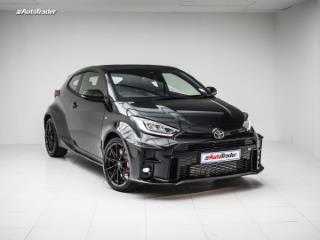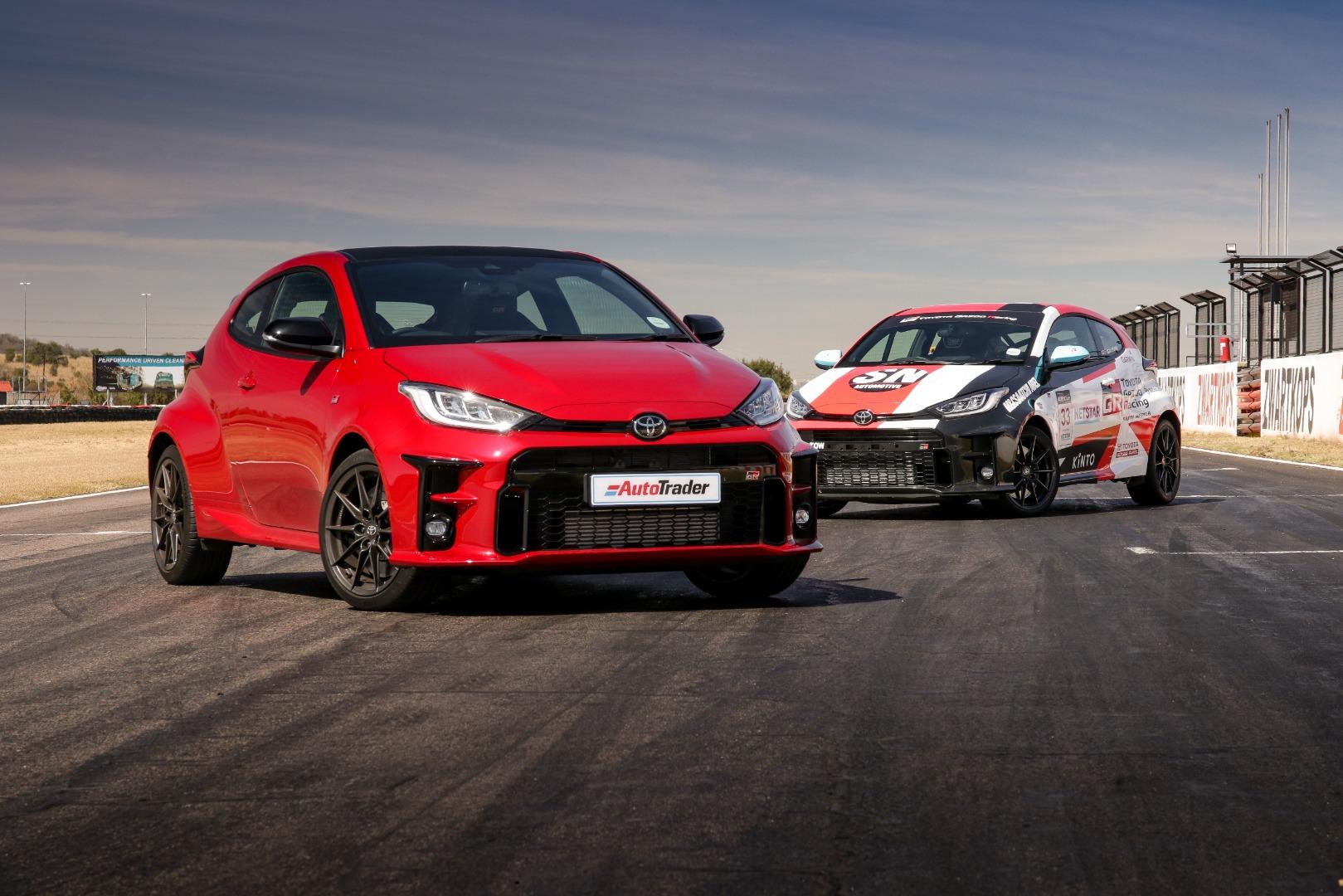
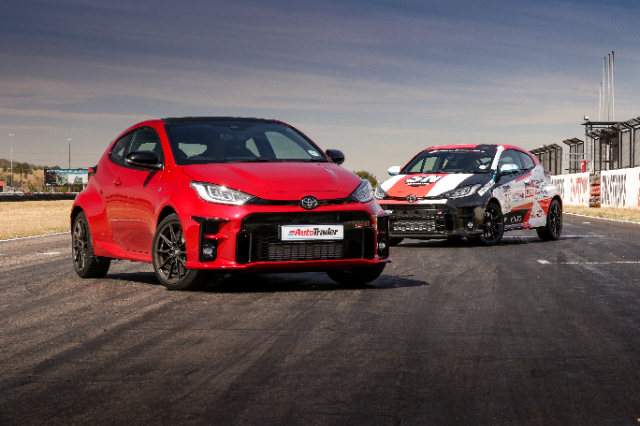
It's official, the second allocation of Toyota GR Yaris models has begun trickling into the local market after a massive demand from local car enthusiasts who have seen the value in this rather special little car. The big news is that there will only be Rally-spec models brought in now as the former base spec proved far less popular. Toyota dropped one of the vehicles from the second allocation off at AutoTrader HQ so that we could compare it with this writer's racing version.
Styling
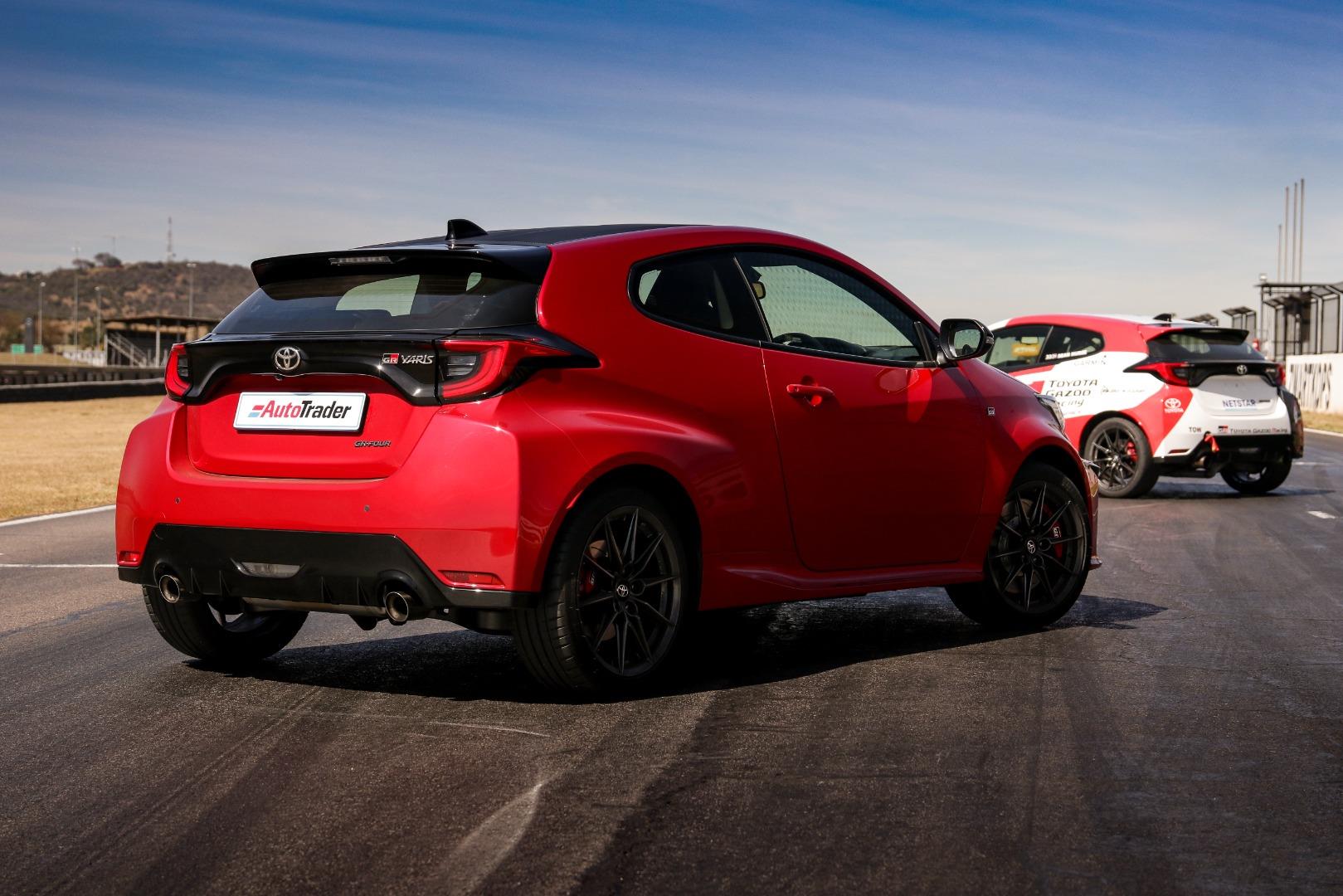
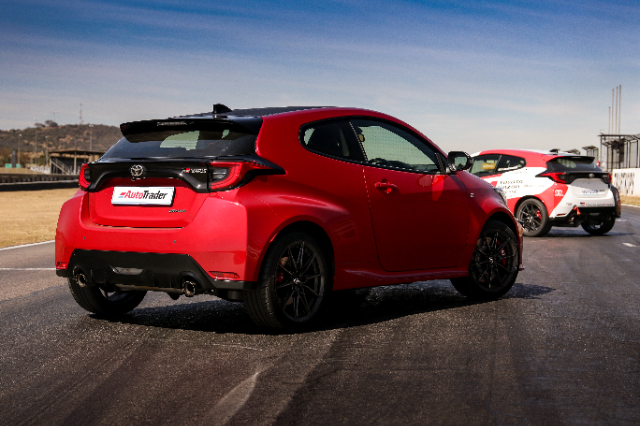
While this GR might wear a Yaris badge and even lightly resemble one, it becomes apparent that this is far more than a budget-friendly city runabout when the car is seen in the metal. The forged BBS alloy wheels, flared wheel arches, forged carbon roof, large front air intakes, two doors in place of the usual four, its low-slung stance and generally angry-looking design make this one of the most distinctive performance hatchbacks on the road. We are particularly fond of the Fierce Red exterior hue, which really appears to suit the GR.
Interior and space
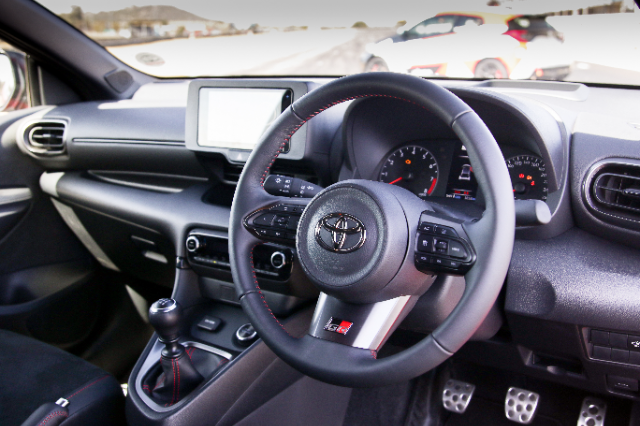
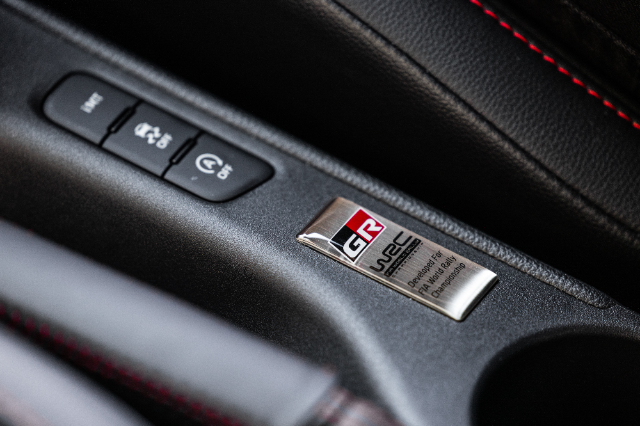
Inside the GR Yaris is a golden-era JDM fan's dream, with an emphasis on minimalism and functionality akin to other homologation projects from iconic WRC vehicles such as the Lancia Delta Integrale, Subaru Impreza 22B and the Mitsubishi Evo VI Tommi Makinen. There is the distinct impression that it was a very deliberate decision to make the interior as uncluttered as possible so that the driver can get on with the task of driving, which is really where the GR shines.
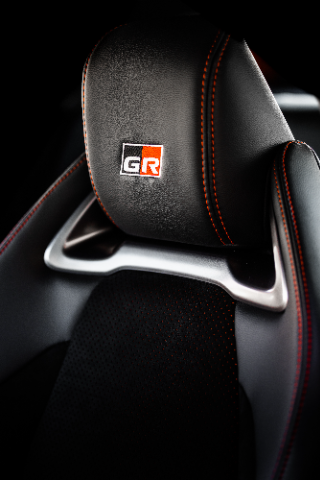
Despite the simplistic interior, there are still some creature comforts in the Rally model with dual-zone climate control, the addition of a reverse camera and rear PDC, leather and Alcantara clad bucket-style seats, a multifunction steering wheel, keyless entry/start, 6 airbags, LED headlights and fog lights as well as the Toyota Pre-Collision System, adaptive cruise control and Lane Trace functionality. The infotainment system too is functional but boasts Apple CarPlay and Android Auto functionality with media played through a modest 6-speaker sound system.
From a practical perspective, there really is not much room for adults in the rear quarters of the GR while the boot's 141-litres is minuscule, however, the rear seats fold flat, so if the car is treated as a two-seater, there is a quite a lot of loading space.
Performance and driving impression
This scribe has had the privilege of campaigning a racing version of the GR Yaris in this year's Extreme Festival, as part of the inaugural GR Cup. We have been touring the country's race tracks and competing in identical machinery, having a great time and learning some race craft in the process. This meant that when we were offered another drive in the road car, I had to get my race car involved and do some comparisons. After many laps in the GR Cup car in 2022, hopping into a road-going version, we were surprised at how quiet and refined things were, showcasing that the little GR is certainly something that can be lived with on a daily basis.
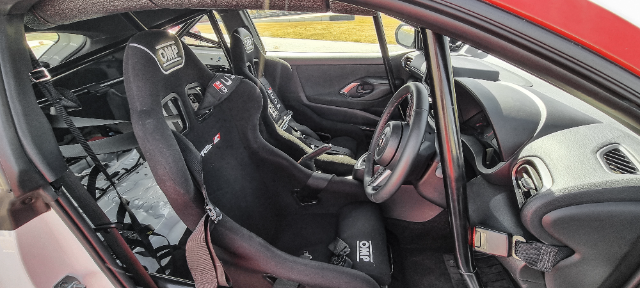
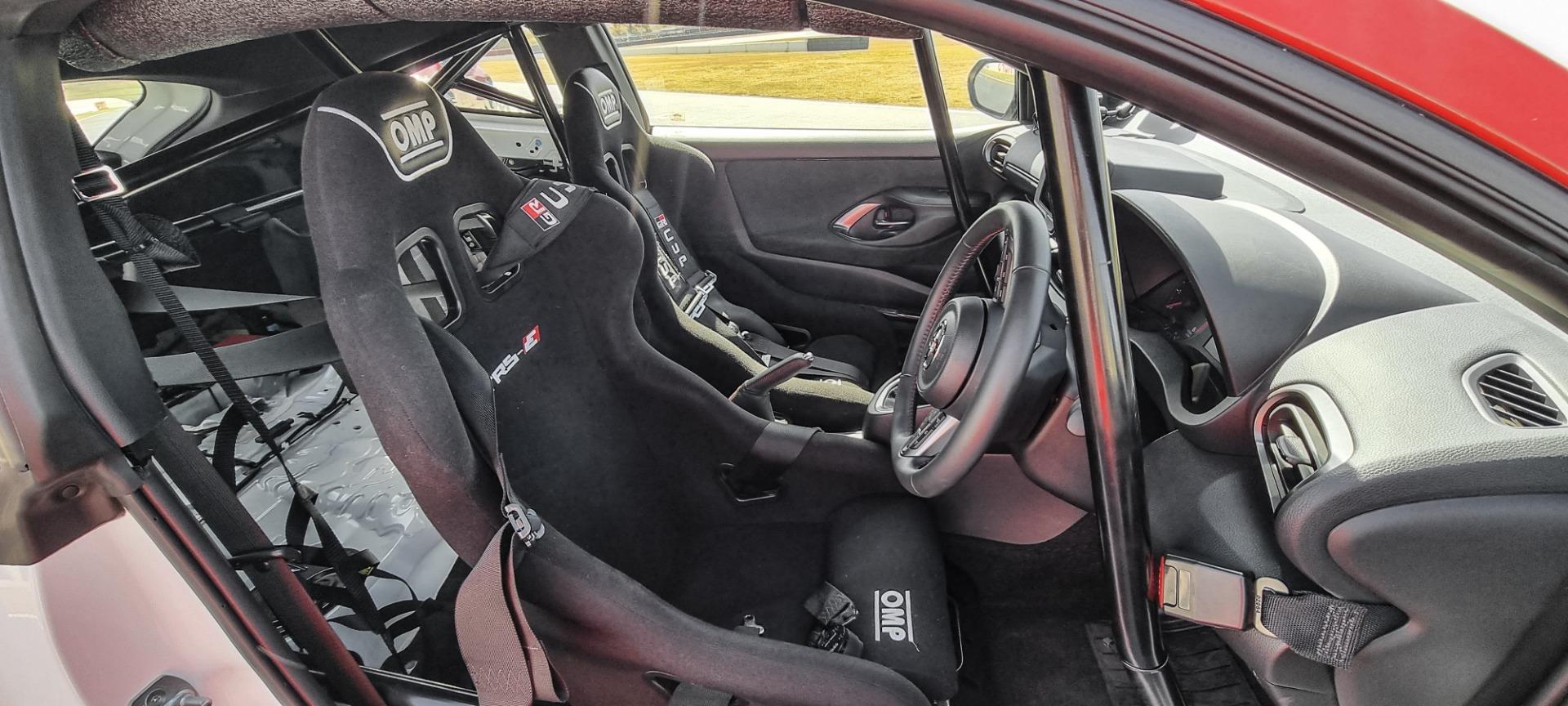
The race and road cars produce the same 198kW/360Nm of torque from a turbocharged 1.6-litre three-cylinder engine which is paired with a 6-speed manual gearbox sending power and torque to a bespoke four-wheel drive system. The racing car is based on a Rally-spec car too meaning revised suspension, front and rear Torsen limited-slip differentials and BBS alloy wheels. It has had its interior stripped out, OMP racing seats installed, a roll cage fitted, an exhaust system, upgraded brake pads and racing brake fluid and rides on Dunlop semi-slick tyres. Other than these changes, the car is as similar to a road-going Yaris as possible, so how do the two compare?
We had Zwartkops International Raceway at our disposal for a few hours and I had a chance to drive the two cars back-to-back. Interestingly, the Michelin Pilot Sport 4S-shod road car provided more confidence initially with more immediate grip, however, once the race car's semi-slicks were up to temperature, the feel from the front end and the car's willingness to rotate into corners showed where the race car gets its more confidence-inspiring handling from. The obvious grip and brake longevity advantage of the racing version aside, it is the sound of the two cars that are so different, highlighting that the road car could use a better exhaust tone while the race car is incredibly loud. The racing version also fixes one gripe with the road car, its high seating position, with the lower OPM seat allowing for a more connected feel.
The lesson learnt from driving both cars back-to-back is that there is the perfect GR Yaris somewhere between the two cars. That perfect car is very probably a road car that has the uprated braking performance should the owner do track work, a set of spare wheels with semi-slick tyres, a slightly more raucous exhaust system and a racing seat installed for the driver to offer that lower driving position. This would endow the car with road-going credentials while also allowing it to be used for track days and time attack scenarios. We are certain that the race car, with suspension, engine and further weight reduction upgrades would be even more phenomenal to drive on the circuit.
In 2020, the Yaris model range was crash-tested by the Euro NCAP vehicle safety programme. It achieved a 5-Star rating, with a score of 86% for adult occupant safety, 81% for child occupant safety, 78% for pedestrian safety and 85% for its safety assist systems. It must be said that with over 200 additional welding points on the body and more than 30-metres of structural adhesive used in the constriction of the GR version, it is reasonable to assume that the GR Yaris will prove even safer that the 'regular' Yaris in the event of a collision.
Fuel consumption
Toyota claims that the GR Yaris will consume unleaded at a rate of 7.6 L/100km, however, our week with the vehicle resulted in a figure of 9.3 L/100km, not bad considering the track work.
Pricing
The solitary GR Yaris Rally model retails for R761 200, and with order books full, you should look for a pre-owned model. The model comes with a 9-service/90 000km service plan and a 3-year/100 000km warranty.
Verdict
The biggest takeaway from this exercise is just how impressive the GR Yaris is as a package. The racing machine has taken abuse and simply continues going after 10 000km, an impressive feat considering less than a year ago it was driving on local roads while the road car we compared it with completed hot laps without destroying its tyres, without brake fade or any other problems road cars usually throw at us during tracks shoots. The tough-as-nails engine, engaging gearbox and clever four-wheel drive system combined with what this product stands for make it one of the last crazy internal combustion-powered road car projects, and for that, the humble Yaris should be celebrated and welcomed into the pantheon of other great motorsport homologation projects.