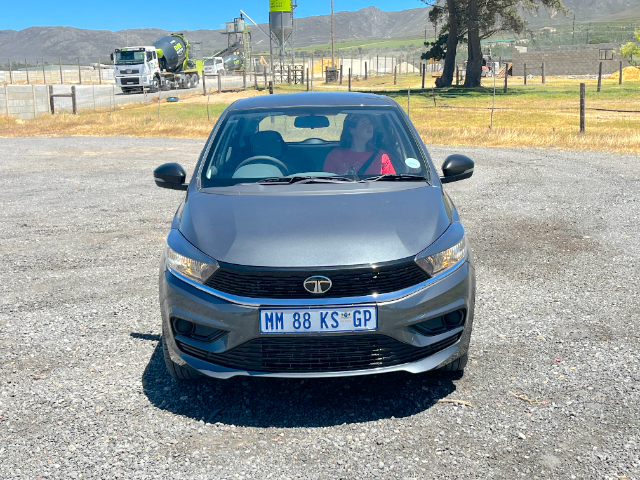
Tata has returned to South Africa (in partnership with Motus Holdings) with four brand-new passenger vehicles, and the Tiago, its most affordable model, faces tough competition from the Suzuki Celerio, S-Presso, and the Toyota Vitz in the entry-level hatchback segment.
We drove the mid-spec Tiago 1.2 XM manual model to find out if Tata knows what budget shoppers want from their cars in 2025.
Related: Sampling Tata's 4 new models (2025 Tiago first drive review in this article.)
Tata Tiago Fast Facts
| Feature | Detail |
|---|---|
| Price (South Africa) | XM MT: R184,900 |
| Engine | 1.2L Revotron, 3-cylinder petrol, 1199cc |
| Power Output (Max) | 63 kW @ 6000 rpm |
| Torque Output (Max) | 113 Nm @ 3300 rpm |
| Transmission | 5-speed manual |
| Driven Wheels | Front-wheel drive (FWD) |
| Suspension | Front: Independent, lower wishbone, McPherson (dual path) strut Rear: Twist beam with coil spring, hydraulic shock absorbers |
| Fuel Consumption (Claimed) | 5.0 L/100km (combined) |
| Boot Capacity | 242 litres |
| Wheels (Standard) | 14" steel wheels (175/65 R14) |
| Competitor Price/key rivals | Toyota Vitz: From R209,900 Suzuki Swift: From R205,900 (approximate as of late 2025) |
Pros and Cons
Pros
- Looks upmarket enough considering its price
- Decent sound system
- Apple CarPlay/Android auto is quick to set up (XT and above)
- Aircon blows ice cold, quickly
- Fun to drive
Cons
- Noisy-ish cabin
- Sound quality on bluetooth calls is not great
- Cabin design impractical in some places
- Not enough correctly sized cup holders
- Slotting into reverse can be fidgety at times
Related: Toyota Vitz review (Feb 2025)
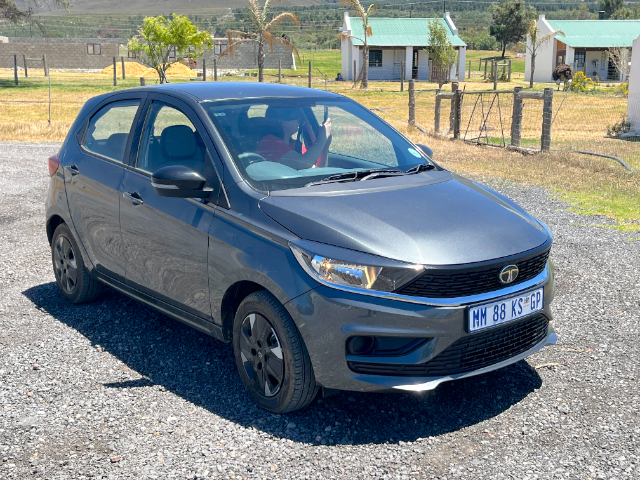
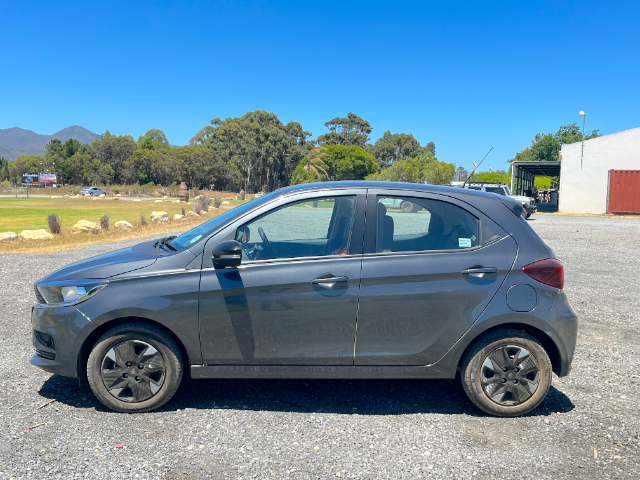
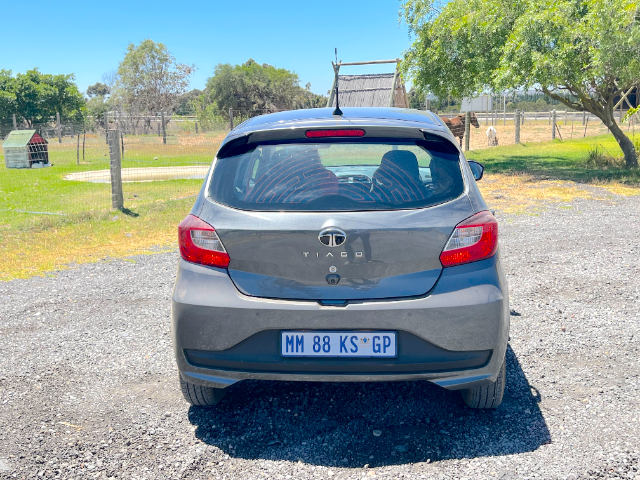
Styling
Interior & Technology
The Tiago 1.2 XT MT’s cabin feels far more grown-up than its price suggests. You get a neat dual-tone dash, an easy-to-read fully digital instrument cluster and a 7.0-inch Harman touchscreen infotainment system that brings Apple CarPlay and Android Auto into play, plus four speakers for decent everyday audio, although the sound quality when making calls via Bluetooth could be better. (MT gets two speakers.)
Related: Sean drives the new Tata range in SA (2025)
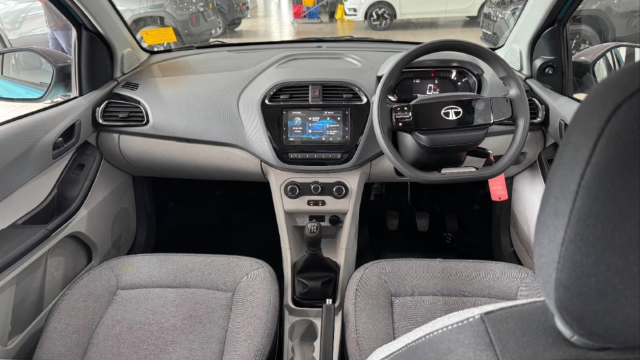
Steering wheel-mounted controls, a reverse camera (XT) takes the stress out of tight mall ramps, while the height-adjustable driver’s seat helps you find a confident driving position quickly. However, in my test car the rear parking sensors did not make a sound when there were obstructions behind me, which I thought strange.
The downside to the cabin is the overall lack of suitably shaped cup holders; the ones you do get are oddly-sized, with none in the front doors. Should you choose to employ the front central cupholders, it interferes with the release of the handbrake, and should you use the one in at the rear, it's too wide, so the drink may topple over. However, it is something that can be worked around with an aftermarket cup holder, I suppose.
You get a USB-A socket up front, and a useful, deep binnacle right below it, and the glove compartment is quite big.
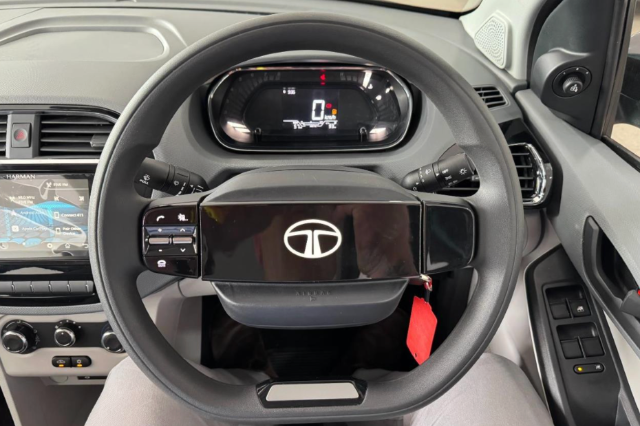
Despite these little hiccups, the mix of intuitive tech and simple, robust finishes makes the Tiago a competitive contender in the entry-level hatchback segment.
Space and Comfort
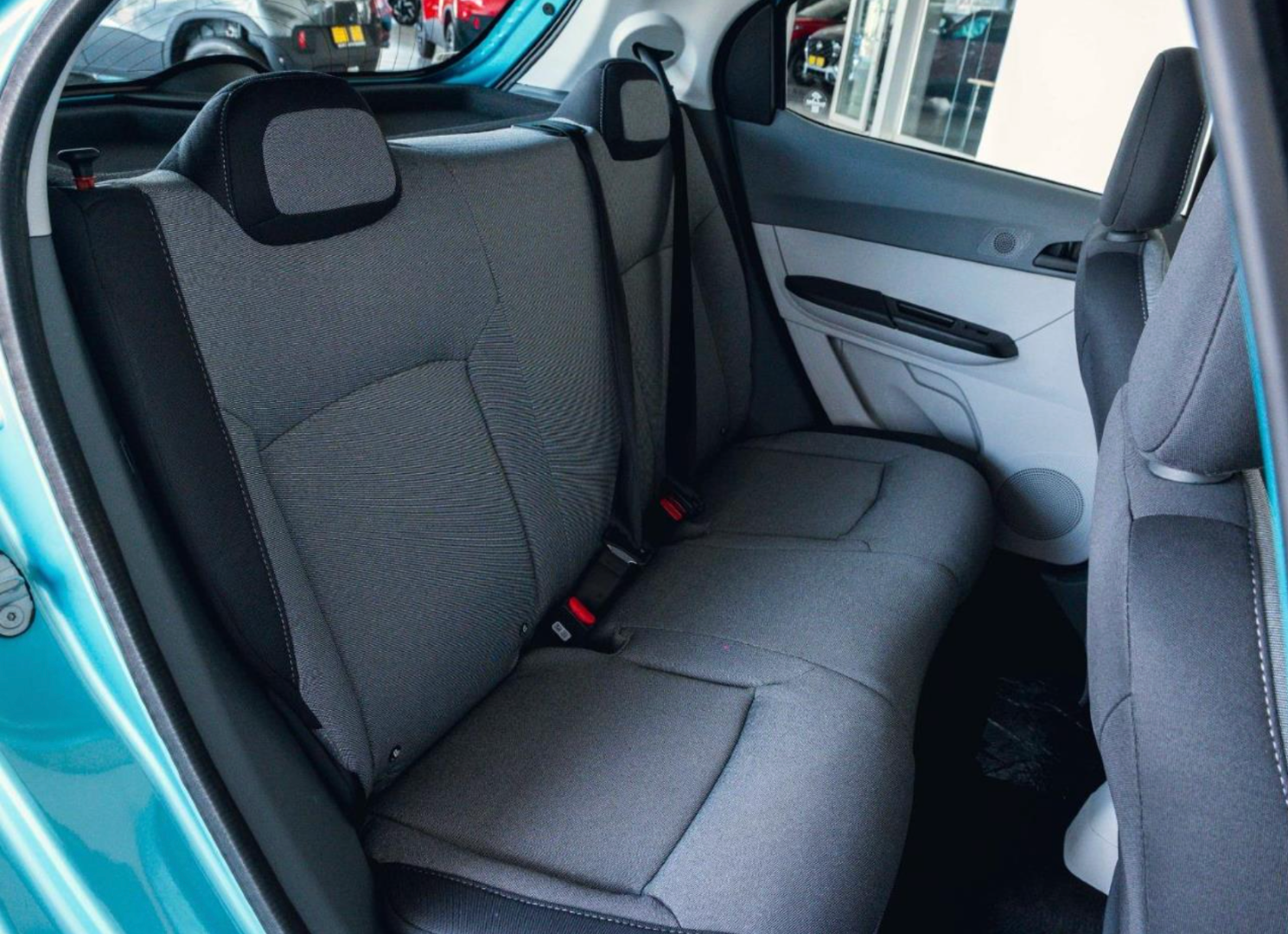
Space & practicality in the Tiago are very much a case of 'small car, roomy packaging'. With its compact footprint, it slots into super tight city bays, yet the cabin feels uncramped, with enough headroom and legroom for average-height adults in both rows, as long as you keep it to no more than four on longer trips.
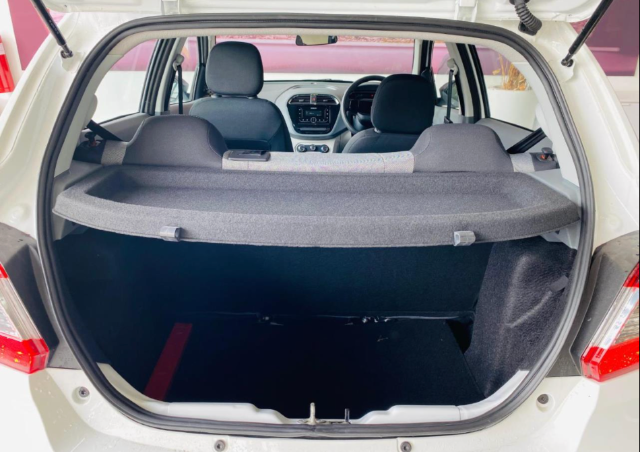
The 242-litre boot is generous for this class and neatly shaped, so a couple of medium suitcases slot in without drama, although you still need to pack with some intention.
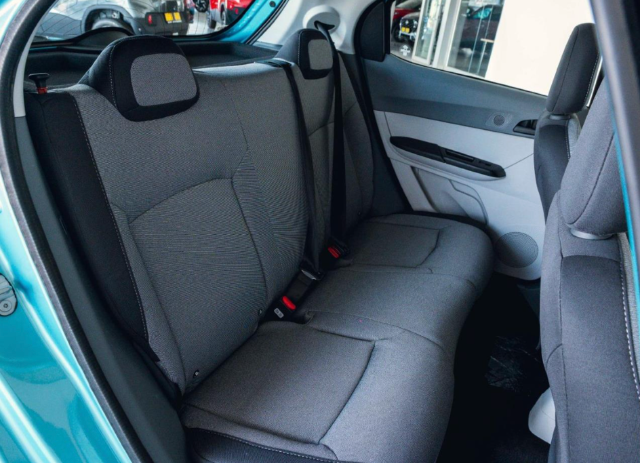
As for the seats, they're sufficiently supportive and covered in a durable material that doesn't feel cheap, and the outer rear seats also have Isofix for the babies or toddlers.
Related: Suzuki S-Presso vs. Renault Kwid vs. Tata Tiago - running cost comparison
The Drive
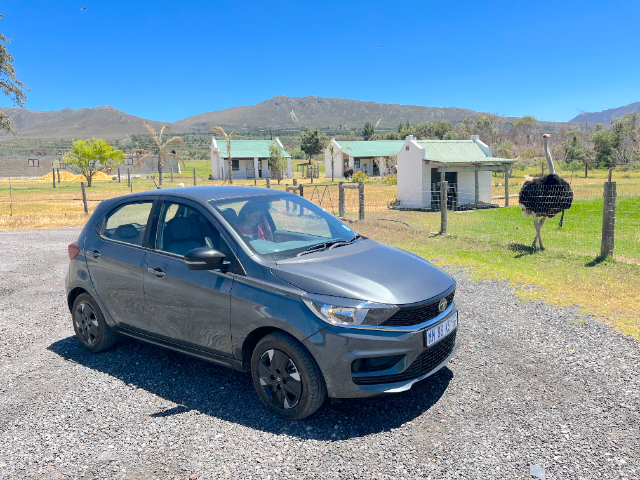
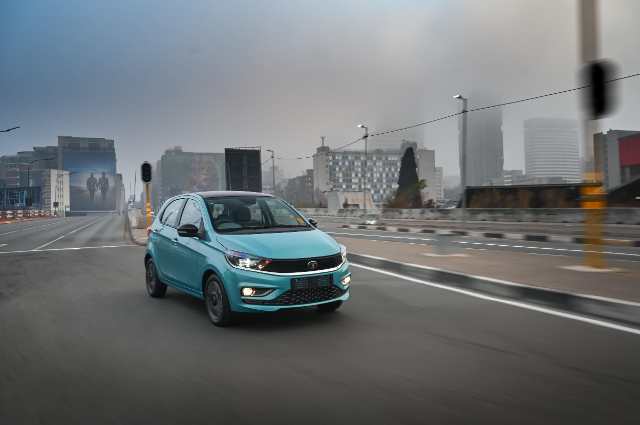
All Tata Tiago models in South Africa use a 1.2‑litre three‑cylinder Revotron petrol engine that delivers 63 kW and 113 Nm to the front wheels. Buyers can choose between a five‑speed manual gearbox or a five‑speed automated manual transmission (AMT), with both focused on everyday usability and fuel efficiency rather than outright performance. I haven't driven the AMT, but I do not usually fancy AMTs and I'd rather tire out my quad muscles in traffic with a manual 'box than having to suffer one of those on the daily (and that goes for all the budget cars in the segment).
Performance
Safety
Tata Tiago safety & features by trim
Tata says: "Previously tested and a rated 4-star Global Ncap rating in 2020, safety is at the core of this sporty hatch."
| Feature / item | 1.2 XM Manual | 1.2 XT Manual / 1.2 XT AMT |
|---|---|---|
| Airbags | Dual front airbags | Dual front airbags |
| ABS with EBD | Standard | Standard |
| Stability Control | Standard | |
| hill‑hold assist | Not available | Standard on XT (including AMT) |
| Rear parking sensors | Standard | Standard |
| Reverse camera | Not available | Standard with guidelines |
| ISOFIX child seat mounts | Standard | Standard |
| Rear wiper, washer, demister | Not available | Standard |
| Headlamps / DRLs | Halogen, DRLs | Halogen, DRLs |
| Front fog lamps | Not available on XM | Standard on XT |
| Infotainment screen | Basic audio, small display | Larger colour touchscreen |
| Apple CarPlay / Android Auto | Not available | Standard on XT |
| Bluetooth / USB | Standard | Standard |
| Steering‑mounted audio controls | Not available | Standard on XT |
Fuel Consumption
Owner reports and long‑term reviews broadly cluster as follows for the 1.2 petrol:
Mixed driving: around 15–17 km/l (5.9–6.7 l/100 km), implying a realistic mixed range of roughly 525–595 km per tank if you run it close to empty.
Urban‑heavy use: many owners see closer to 12–14 km/l (7.1–8.3 l/100 km), which brings the tank range down to roughly 420–490 km in stop‑start conditions.
Open‑road cruising: careful highway driving at steady speeds can get owners close to the claimed figure, in the 18–19 km/l region (about 5.3–5.6 l/100 km), so 630–665 km per tank is achievable on long, gentle runs.
In short, the safe expectation for South African buyers is a mixed real‑world range of about 500–600 km per 35‑litre tank, depending on how much of your life is spent in city traffic versus open road driving.
I found that my petrol ran out faster than expected, at just under 7 litres per 100 km on average, but admittedly, my right foot was heavier than usual with more urgent errands to run, in town, where traffic is heavier due to the holidaymakers heading to Hermanus.
Price
Derivative | Price |
|---|---|
| Tata Tiago 1.2 XM MT | R184 900 |
| Tata Tiago 1.2 XT MT | R209 900 |
| Tata Tiago 1.2 XT AMT | R224 900 |
Pricing includes a two-year/30 000km service plan and a five-year/125 000km warranty.
What about resale and reliability?
Since the Tata Tiago is brand new and there are very few used examples in the market, it's too soon to tell, but early listings hint that it should retain value sensibly if kept on the lower end of mileage with complete service records.
Overseas, most long‑term owners describe the 1.2‑litre petrol as mechanically dependable, with issues more often relating to small trim rattles, occasional electrical quirks and variable dealer experiences rather than major drivetrain failures, which suggests the core engine and gearbox are fundamentally sound when serviced on time.
Locally, the real test will be whether Tata and Motus can deliver consistent after-sales support and parts availability; if they do, the Tiago’s safety kit and relatively low running costs should help it age far better in the used market than earlier Tata models did.
Related: Tata Motors returns to SA (2025)
The Verdict
The Tata's biggest advantage over its rivals is its 1.2-litre engine while the rest of the entry-level club have to make do with the 1.0. It's not really that noisier than its rivals, but that cabin design quirk is it's only true achilles tendon. Is it a dealbreaker, though? Probably not.