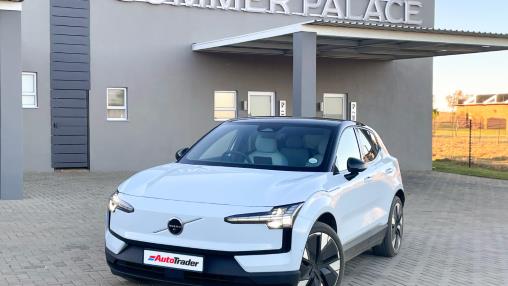
Volvo EX90 (2025) road-trip Review
Extensive road-tripping in an EV might seem challenging, but the Volvo EX90 changes the game with its massive 111 kWh battery, seven-seat practicality, and seamless Google-powered infotainment. If you have substantial funds for a large luxury EV, is this the one to invest in?

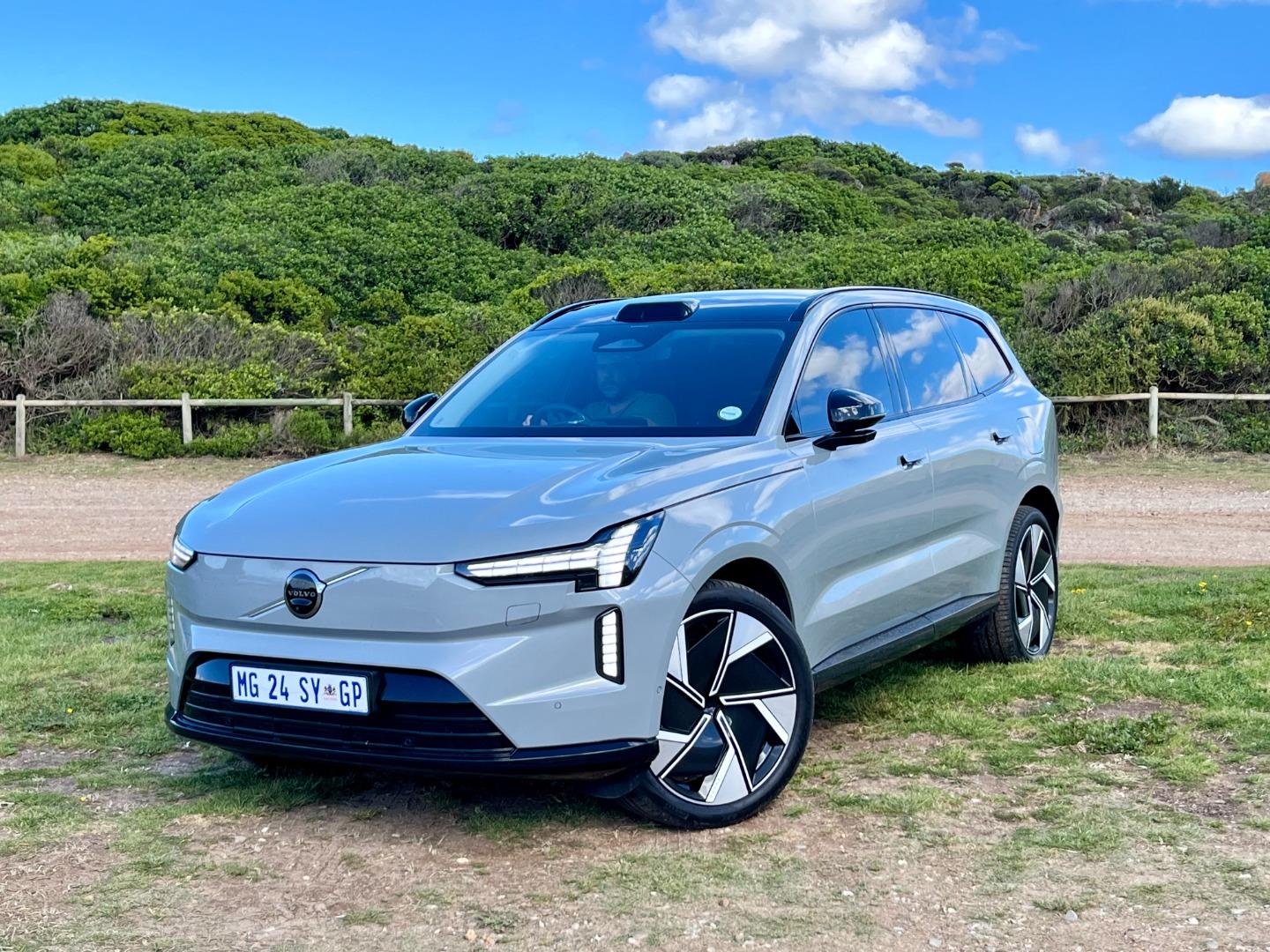
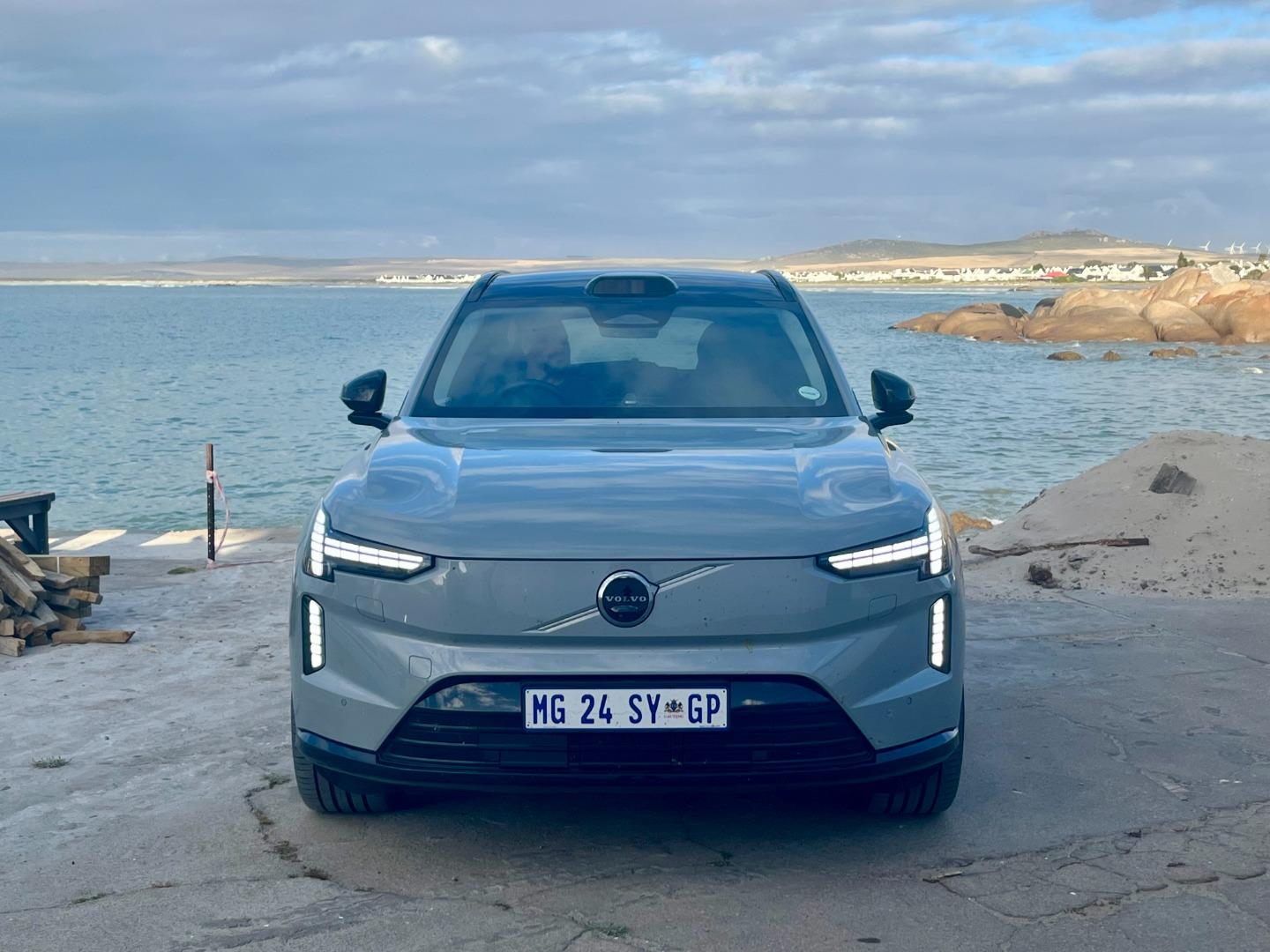
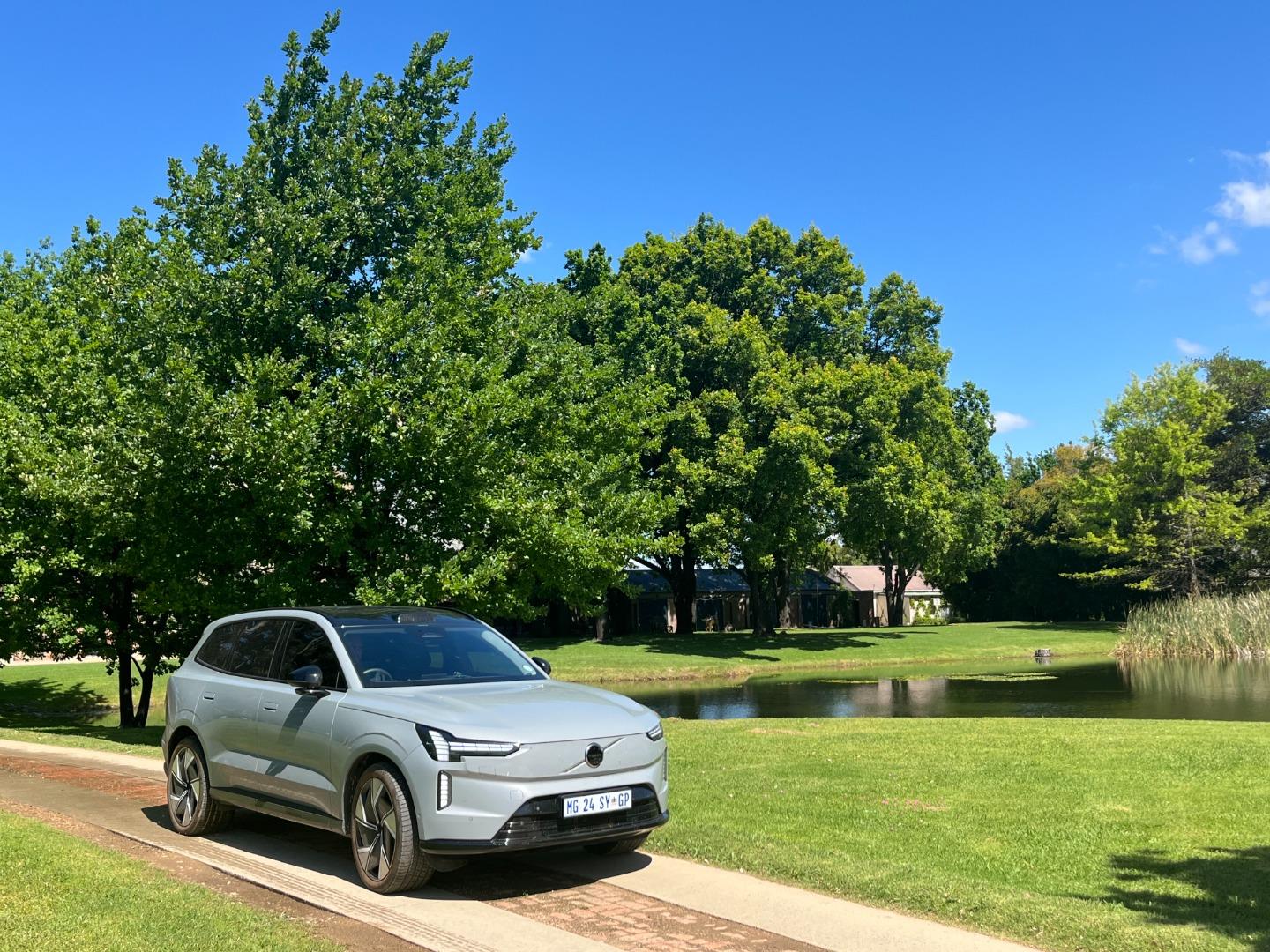
Volvo EX90 Ultra Twin Performance
Fast Facts
| Feature | Specification |
|---|---|
| Vehicle Type | Premium SUV |
| Engine | Electric |
| Power | 380 kW |
| Torque | 910 Nm |
| Transmission | Automatic (single-speed) |
| Drive | All-wheel drive (AWD) |
| 0-100 km/h | 4.9 seconds (claimed), 4.79 seconds (tested) |
| Fuel Tank Capacity | 111 kWh battery |
| Average Fuel Consumption | 20.7 kWh/100 km (claimed), 22 kWh/100 km (real-world tested) |
| Driving Range | 616 km (claimed) |
| Kerb Weight | 2,712 kg (DIN), 2,787 kg (EU) |
| Ground Clearance | 210–250 mm (adjustable via air suspension) |
| Towing Capacity | 2,200 kg (braked), 750 kg (unbraked) |
| Interior Features | 14.5-inch Google-powered touchscreen, Apple CarPlay, Google Assistant, 25-speaker Bowers & Wilkins audio, heated, ventilated, and massaging front seats, soft-closing doors, heated steering wheel, wireless charging, USB-A/C ports (front, rear, third row). Runs on Android Automotive, the EX90's native operating system that runs on the car itself (it's not phone mirroring like Android Auto, but works with any phone). |
| Convenience & Comfort | Adaptive air suspension, keyless entry and start, 360-degree camera, adaptive cruise control, Pilot Assist, electric front and rear windows, fixed panoramic roof, electric tailgate with hands-free opening, split-folding and electric third-row seats, 4-zone climate control |
| Safety | 7 airbags, lane departure warning with lane-keeping assist, blind-spot monitoring, traffic sign recognition, automatic emergency braking, collision warning, attention assist, hill-start assist, stability control, tyre pressure monitoring, surround-view cameras, rear cross-traffic alert |
| Pricing | R2,650,000 (Ultra Twin Performance) |
| Warranty & Service Plan | 5-year/100,000 km vehicle warranty, 8-year/160,000 km battery warranty, 3-year/60,000 km maintenance plan |
| Competitors | BMW iX, Mercedes-Benz EQS SUV |
Pros
- Ultra-luxurious
- Effortless to drive
- More range than you'd think
- A clever Google Assistant
- FAST, and quick to charge
- Sexy and eye-catching
- Ultra-effective climate control
Cons
- Proximity sensor not sensing at times
- Low-profile tyres make for cautious soft-roading
- A little more body-roll than expected
- Intrusive on-board nannies
- Too much heat enters the cabin via the panoramic roof in summer
- You have to keep the car key charged
Related: 9 Flashy new cars for the 2025 matric farewell
Styling
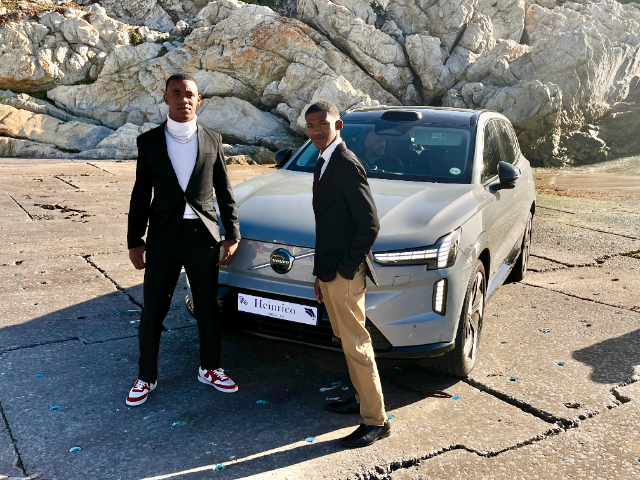
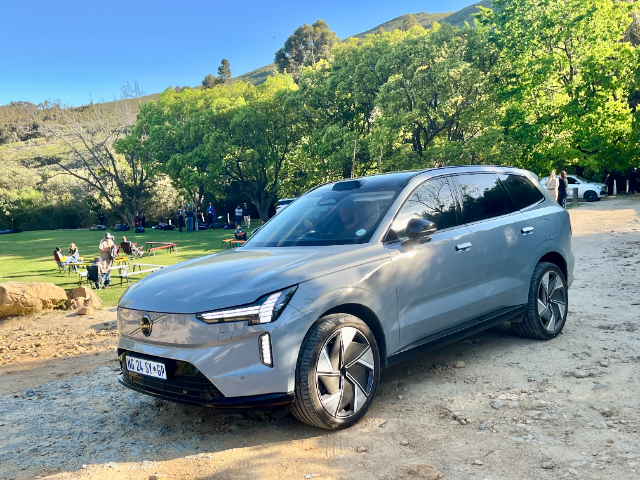
After our local child welfare society reached out, I booked the Volvo EX90 to drive a foster learner to his 2025 matric farewell. Needless to say, this Grade 12 learner (on the left) and his brother, who rode along, were super impressed with their wheels for the evening, and rolled into the event with the necessary opulence and glitz. The large crowd at the school gates met the svelte and suave-looking Volvo with loud cheering and gasps of delight, which was exactly the impression the boys wanted to make.
Since I would have the Volvo EX90 at my disposal for the entire week, I also committed to taking five scouts to a campsite in Wellington. On Saturday morning, we set off at sunrise with a nearly full battery (92%). Our trip computer showed an estimated range of 420 km (always towards the conservative side, based on usage of 24 kWh/100 km) but a maximum range of 560 km.
Interior
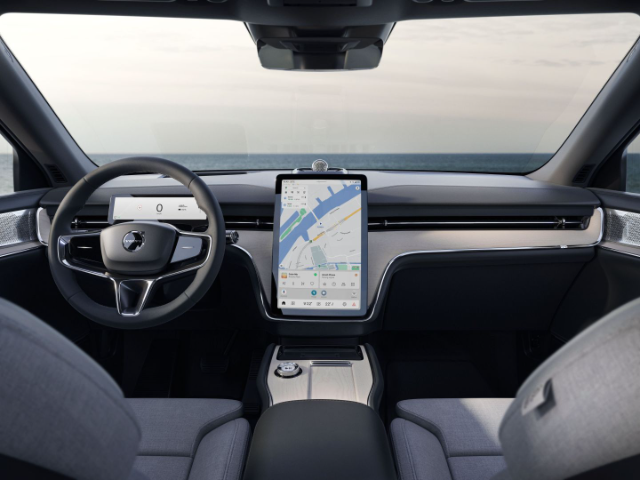
My colleague Taye covers the interior trimmings and enchantments in his own EX90 review here, while I will be covering the more practical aspects of living with the EX90 in this road-trip review, but if I had to give you the nutshell version: The EX90 cabin is at the top of its game, with the iPhone-like touchscreen and built-in Google Assistant being the user-friendliest and most intelligent we have encountered. 'She' understands natural speech perfectly (even my hubby's Afrikaans accent), calculates your range and battery usage down to the last percentage and kilometre, and follows every command you give her perfectly. Apple CarPlay is also available and you'll configure it easily.
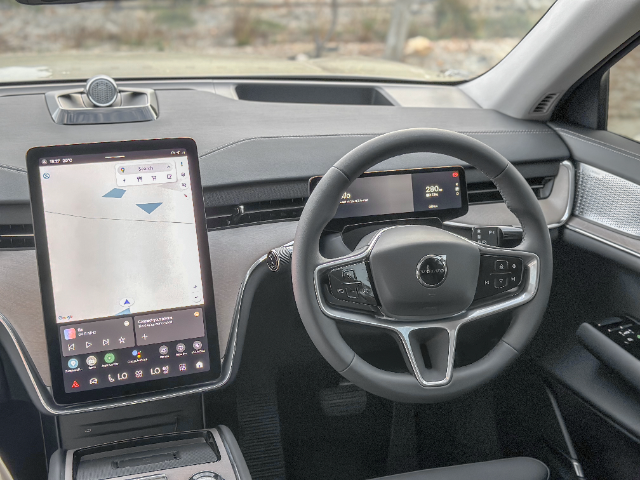
The infotainment touchscreen system itself is extremely logical and intuitive, a far cry from the Chinese SUVs we've been driving the past few weeks. Although Geely still holds the major stake in Volvo Cars, the EX90 is unabashedly Swedish and, therefore, logical in its overall execution.
Space and Comfort
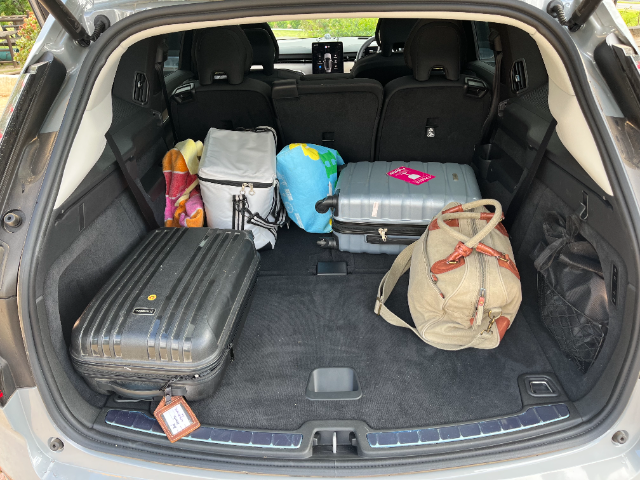
The roomy EX90 makes the perfect (premium) scout mobile. With all seven seats up, it still provides 324 litres of luggage space. My husband and I enjoyed the heated and massaging seats up front, while the three teenage boys occupied the second row, which offers equal space for all three passengers and includes heating functionality. The shorter teenage girls squeezed into the rearmost row, where legroom is more limited, but the generous cargo area tends to compensate for this.
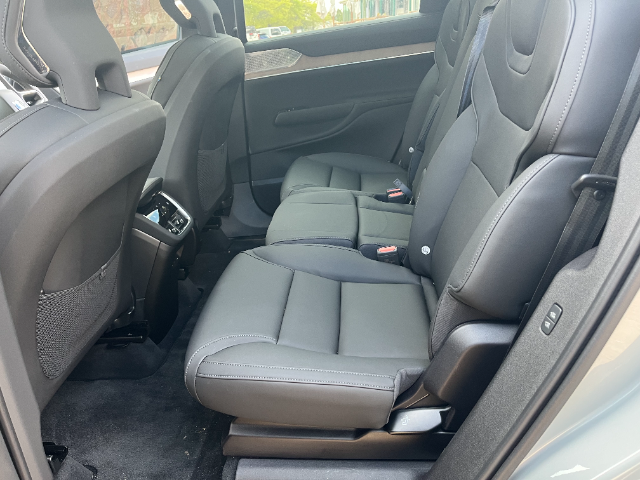
To accommodate everyone, we had to carefully pack the three boys’ gear into the boot, playing an expert-level game of Tetris to fit everything in. The second row can slide forward, which helped when one of the taller boys sat behind the front passenger seat; we moved the front passenger seat forward, giving him more room to breathe.
I knew there would not be enough space for the luggage of five kids with seven people on board, so the girls’ bags were sent to the campsite in another car the previous day. Despite this, the EX90’s flexible seating made it a comfortable and practical choice.
The Drive
Having completed a mammoth winter road trip in the Volvo EX90 the previous year, my hubby and I don't mess around when conserving power; not that one really needs to with a battery this size (the bigger the battery, the more range you have, and this one is a monster).
For example, we turn the air conditioning on only when it's really hot, and one-pedal driving is always activated. This means that the Volvo brakes automatically every time your right foot leaves the accelerator pedal. It takes some getting used to, but it soon feels completely normal, and it's the best way to harvest the most energy. We also tend to drive slowly.
One major feather in Volvo's cap is that you can select an Eco mode for the climate control, and if you hit the recirculate button as well, you don't use much power to keep cool. On a hot day, a lot of heat is transferred to the cabin via the coverless panoramic roof (Sweden sure isn't SA), but the air conditioning is so effective that it cools the entire area in no time at all.
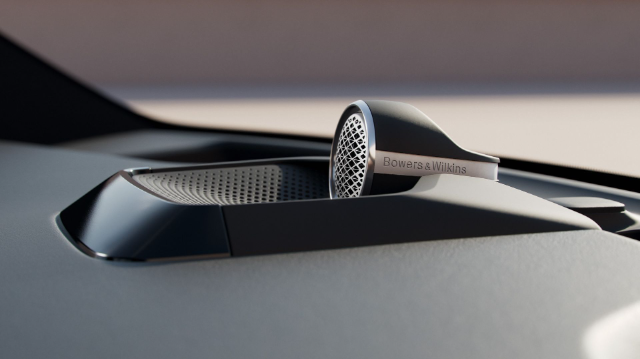
With five teens in the back and a dad‑joke machine at the wheel, mayhem was inevitable. My husband eased up next to a big bunch of cyclists grinding up a Stellenbosch hill, dropped every window and unleashed "Da' Vat Hy", a well-known Afrikaans pop song, through the 25‑speaker Bowers & Wilkins system. He held eye contact. The kids imploded with cringe, then laughed as the cyclists gave us identical stink‑eye.
When the kids’ faces were back to normal, we rolled into the tree‑lined campsite and tiptoed over a short, rocky stretch; those low‑profile tyres don’t love sharp stones, and there’s no spare on board.
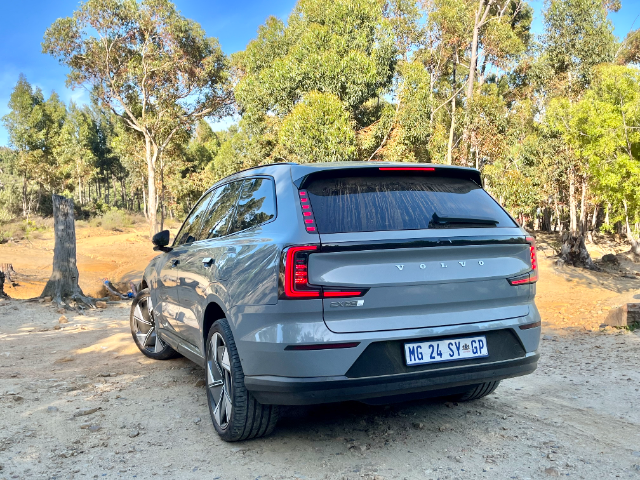
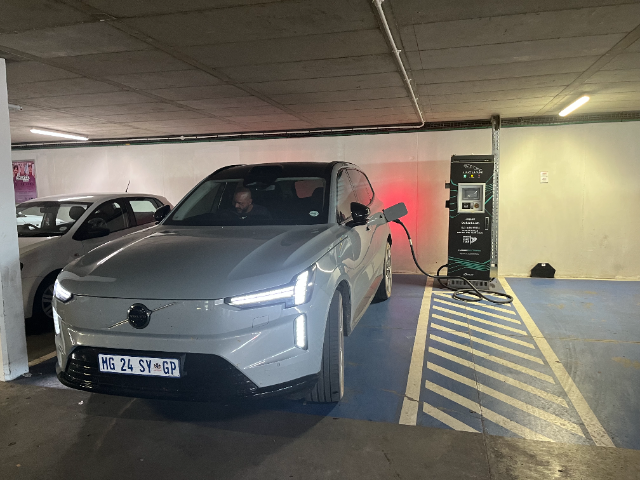
Once we had dropped off the boisterous kids and their camping gear, we peacefully enjoyed a coffee in Wellington. We decided to hit the charging station at Stellenbosch Square on the way back home for a quick top-up, while we enjoyed an early lunch. We spent under an hour there and returned to a car with plenty of range, and gingerly drove back to Hermanus via a rainy Clarence drive. Tomorrow, it would be our turn to road-trip, sans children.
More driving!
The next morning, we folded the third row of seats flat and packed our bags into the massive boot.
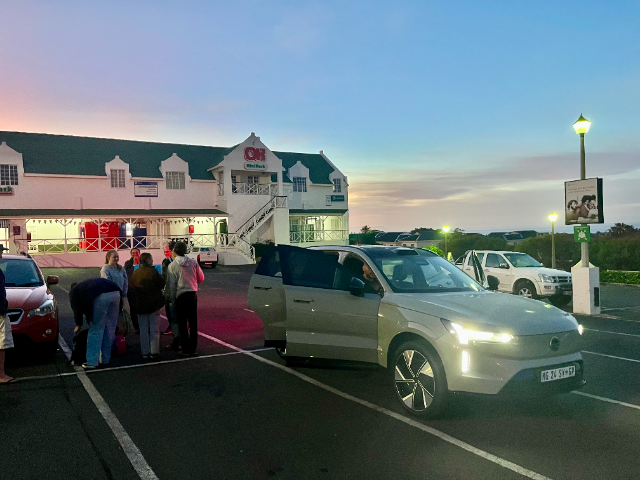
With our battery at 57% we arrived in Somerset West to charge at the relatively new 150 kW DC charger. We walked around, sat down for a snack, and by the time we were done, our EX90 was nearly full. Normally, we'd only charge to 80 % (it conserves the battery, and it takes less time), but with a long journey ahead of us, my range-anxiety-ridden husband wanted a full charge.
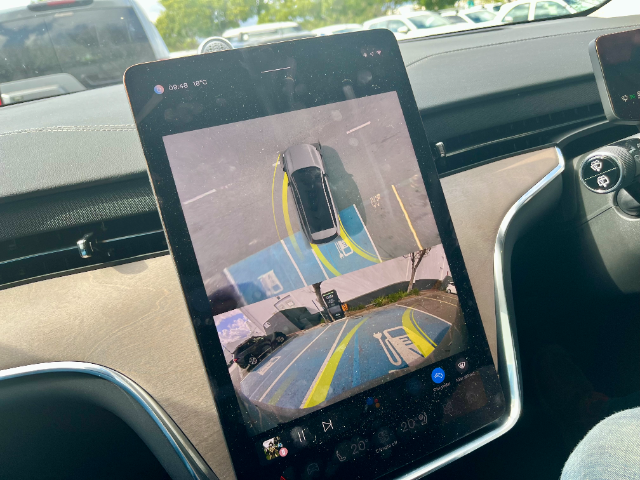

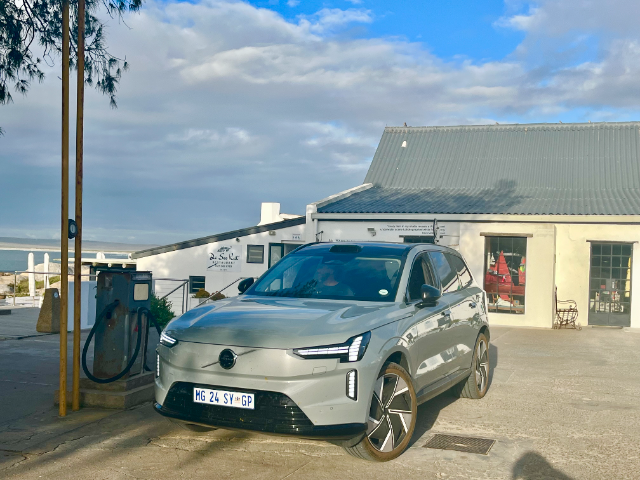
We proceeded up the West Coast and arrived at our accommodation in Jacob's Bay (between Saldanha Bay and Paternoster) with plenty of range to spare, but we wanted to go exploring. Since Vredenburg's DC charger was not working, we looked on the Chargepocket map, which showed a 22 kW AC charger at Club Mykonos. However, we didn't feel like spending so much time there, so we decided to charge at the 60 kW DC charger at Engen outside Langebaan the next day instead.
After breakfast, we spent 10 more minutes in the car (way more pleasant than any Wimpy) getting our backs massaged by the marvellous seats. Then, we headed into the town of Langebaan itself and Paternoster later that afternoon. (The battery went from 35% to 80% in around 55 minutes.)
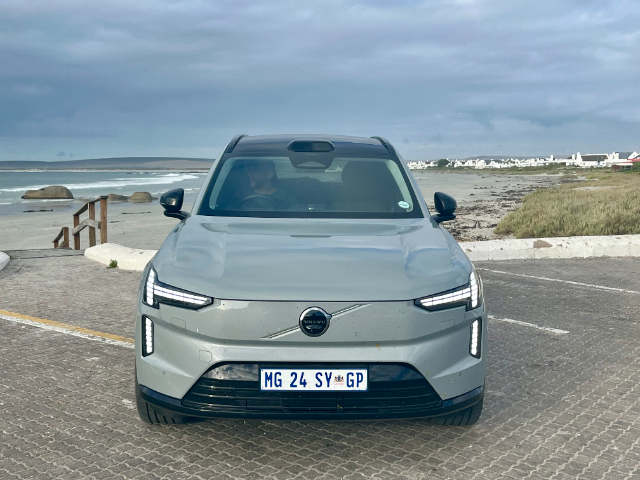
Homeward bound
Keen to do the trip home via a different route, we decided to head east to Piketberg, which offers a 60 kW charger, since Vredenberg was still out of action.
This is one of the better charging stations that offers three restaurants, a bit of shopping and coffee shops; definitely a worthwhile stop if you want to travel via the Swartland. (We left Jacob's Bay with 72%, arrived in Piketberg with 51%, and charged for an hour to 98% while we enjoyed a bacon roosterkoek.)
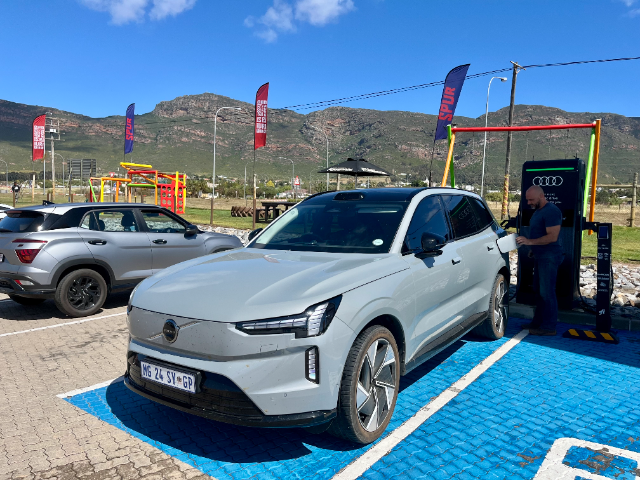
We ended up exploring the picturesque town of Piketberg, then Tulbagh (Saronsberg winery is a must-visit, even though the driver would have to spit the wine out if she's tasting), and then Riebeek-Kasteel where we had delicious nachos for lunch at La Parilla in the main road, across from the steeped-in-nostalgia Royal Hotel.
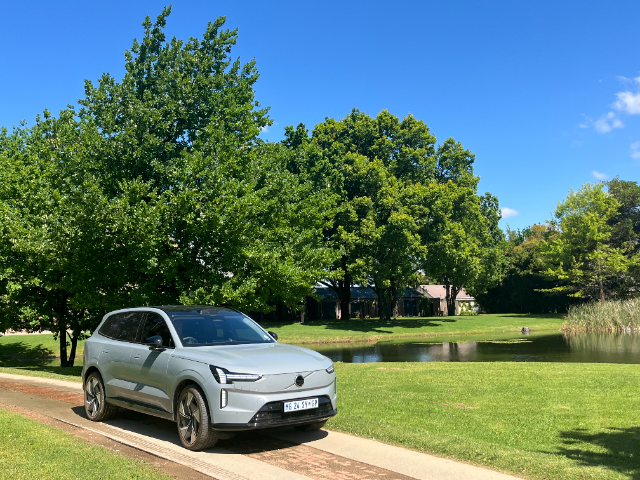
Heading home, we again parked in Stellenbosch Square's basement, plugged in the EX90, and topped up to 80% in only 35 minutes on the 60 kW DC charger.
Why are there differences in charging stations with the same kW rating?
Charging times at public stations, even with the same rating, can vary due to factors like battery temperature, state of charge, grid load, charger maintenance, and cable condition, all of which affect the actual power delivered during a session.
In overseas markets, there have already been software updates to reduce charging times significantly, along with a host of other tweaks to the EX90 such as an opaque function for the panoramic roof, among others.
Performance
It goes against the laws of gravity for a nearly 3-tonne SUV to accelerate from 0-100 km/h in under 5 seconds, but the EX90 does it in two shakes of a lamb's tail, maybe even just one. And you don't pay too dearly in kWh if you drive sensibly the rest of the way.
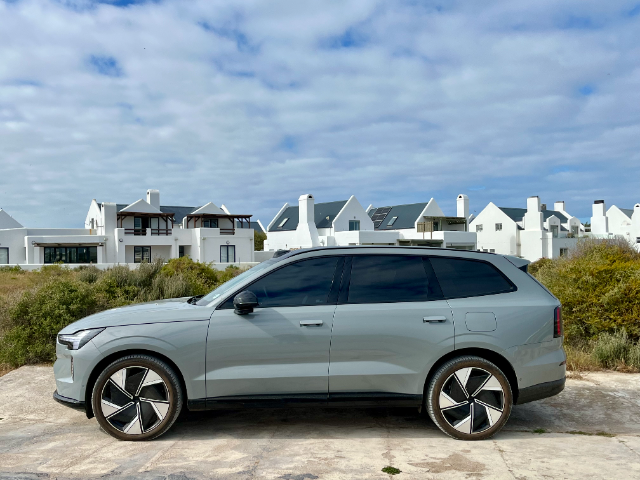
There is also a dedicated Performance button that shaves a few more milliseconds off that sprint time, but the EX90 is so quick already, there's not much point! The power is addictive, and on the odd occasions where I planted my right foot hard, I would almost get a headache from the sudden, fierce acceleration. (It's worse for the passenger who doesn't expect it.)
Fuel Consumption
(Or rather, energy consumption)
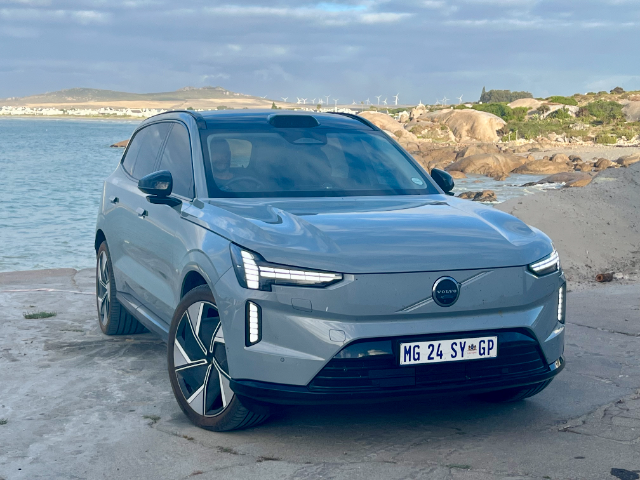
If you can stick to driving 90-110 km/h on the open road, you will see your consumption dropping lower, but there is no need to drive under 120 km/h, because 1) you have so much range, and 2) you can charge so quickly from a DC charging point. There is no reason for any range anxiety whatsoever.
Our best consumption was 19 kWh/100 km, and our highest came to 25kWh/100 km, but we settled around 22 kWh/100 km.
Here are the estimated driving ranges on a full charge (±107 kWh usable from a 111 kWh battery pack), based on different average consumption figures:
19 kWh/100 km (our best):
on a full charge, in traffic, slow suburban routes, not in the depths of winter. Ideal conditions for EVs! Flat and windless.22 kWh/100 km (our average):
(during our road-trip, with one-pedal driving, and at around 95-100 km/h on the highway, mild weather conditions, some hills and uphill climbs, but you also gain kWh on the way down.)25 kWh/100 km (our worst):
(driving it a bit harder at around 120 km/h on the highway, short bursts of speed to overtake slow-coaches.)
And how long does it take to charge?
Here’s how long it would take to charge the Volvo EX90 (on average) at typical fast-charging speeds in South Africa:
From 50% to 80% on a 60 kW DC charger:
This would take approximately 35 to 40 minutes. The EX90 charges quickly in this range, but a 60 kW charger limits the speed. You’d gain around 180–200 km of range, making it ideal for a quick top-up during a break on a long trip.From 50% to 80% on a 150 kW DC charger:
This would take about 18 to 22 minutes. Even though the charger can deliver 150 kW, the EX90’s charging rate tapers as the battery fills, so it won’t sustain peak power the whole time. This is a very efficient way to add significant range during a short stop.From 50% to 100% on a 60 kW DC charger:
Charging from 50% to full would take roughly 60 to 70 minutes. The last 20% (80–100%) slows significantly to protect the battery, nearly doubling the time compared to 50–80%.From 50% to 100% on a 150 kW DC charger:
This would take around 40 to 50 minutes. While the first part (50–80%) is speedy, the final stretch (80–100%) drops to a much lower charging rate, so it’s not twice as fast like the 50–80% segment.
(In real-world use, most drivers top up to 80% at fast chargers for efficiency. For longer stops, charging to 100% is practical, but not the fastest option.)
What about 22 kW AC chargers?
If you have the patience or you don't have much of a choice (life happens, and just like when you sometimes forget to put in petrol/diesel, you may forget to take the turn-off to the fast-charging station), you can also use a more widely available 22 kW AC charger. Still, it's the slowest public charger you'll find.
Note: the EX90’s onboard AC charger is 11 kW, so you’ll see up to around *11 kW from a 22 kW AC post, that is why it takes so long. Have a look below:
| Charger Type | 0–100% | 0–50% | 50–80% | 50–100% | 80–100% |
|---|---|---|---|---|---|
| 22 kW AC | 10-11 hrs | 5-5.5 hrs | 3-3.35 hrs | 5–5.5 hrs | 2-2.5 hrs |
| 60 kW DC | 100–110 min | 35–40 min | 35–40 min | 60–70 min | 25–30 min |
| 75 kW DC | 80–90 min | 28–32 min | 28–32 min | 50–55 min | 22–25 min |
| 150 kW DC | 50–60 min | 18–22 min | 18–22 min | 30–35 min | 12–15 min |
*The EX90's onboard charger limits it to 11 kW on AC (so a 22 kW post still gives ~11 kW), but on DC, the conversion happens in the charger cabinet and bypasses the car’s limit, allowing far higher power.
Charging at home
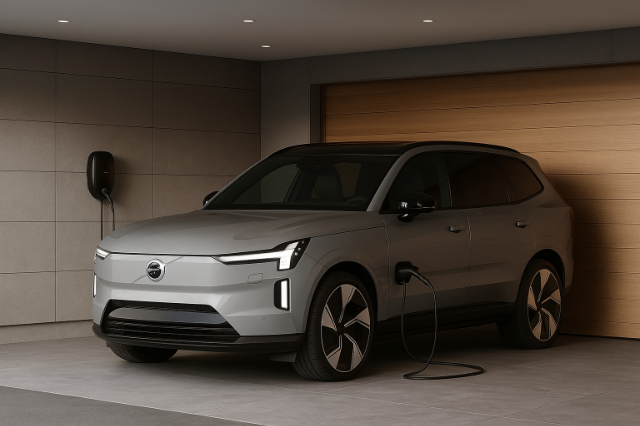
When you buy a Volvo EX90, Volvo helps you get set up for home charging by covering R7 500 towards the purchase and professional installation of a GridCars wallbox at your house. This wallbox supports up to 22 kW AC charging, so you can recharge your EX90 faster (see the table above) than using a standard home plug. It’s not entirely free (you use the allowance for the unit and installation), but it means less upfront cost when you move to electric.
Volvo’s package also includes a public charging voucher worth R12,000 (valid for two years) to use on the GridCars network at shopping malls and public stations across SA. For connected services and navigation, you get 10 GB of Vodacom data each month for the next three years.
Safety
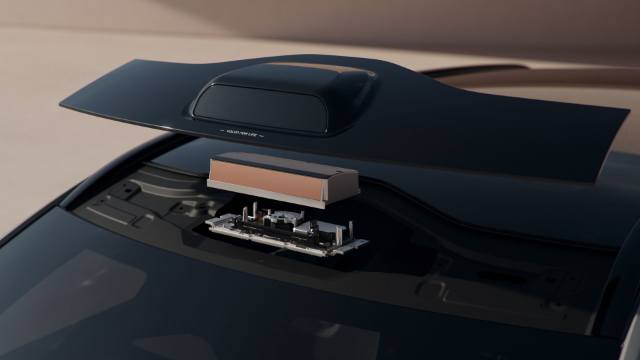
As we mentioned in our fast-facts table at the top of the article, Volvo is almost over-equipped with electronic driving nannies, and it can get a bit much, especially the vision sensor that complains if you take your eyes off the road. The rest of the assistants are helpful, and I still stick to my opinion of Volvo having the best possible semi-autonomous tech in the business. Most things that irritate you can be switched off.
Price
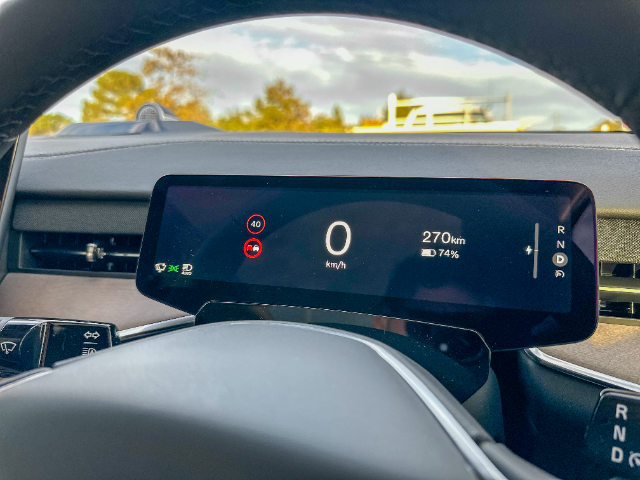
The EX90's price tag will make most people flinch, but when you have big money to spend, this is it. Other drivers have reported some software glitches, but in our case, we had none, apart from the proximity sensor not always playing along, which, too, can be deactivated. As time goes by, updates should take care of these software gremlins.
Remember that premium cars usually have more problems because the tech is always the most groundbreaking.
Cost to charge and cost per kilometre (SA tariffs)
| Charging Type | Tariff (R/kWh) | Full Charge Cost (R) | Cost per km (22 kWh/100 km average) | Cost per km Range (19–25 kWh/100 km) |
|---|---|---|---|---|
| Public DC | R7.00 – R7.50 | R750 – R800 (±107 kWh × tariff) | R1.54 – R1.65 | R1.33 – R1.88 |
| Home AC | Around R3.50 | Roughly R375 (±107 kWh × R3.50) | About R0.77 | R0.67 – R0.88 |
The Verdict
The EX90 is hands-down the best EV I have ever driven, and my other half agrees. When you remove the range anxiety and add the user-friendly tech, luxury, and all that space, you have the sum of a perfect family car, even for road-tripping.
And one day soon, charging might be even quicker than that last‑minute pump queue before the petrol price goes up.