
The Renault Duster has spent over a decade as one of my most recommended "sleeper" budget crossover buys, earning its good reputation through honest practicality, functional design, frugality, and an entry price that made its rough-around-the-edges character entirely palatable. In its earlier guises, it was essentially a high-riding budget car that offered an entirely unpretentious, capable, frugal and practical motoring that flew under the radar. Cheap, cheerful, and built like an indestructible plastic bucket you’d use to wash, well, your Duster, after a day of proving how capable it is. The second generation softened the edges, made it more usable, took away some character, but retained what the car was at its core, retaining the frugal diesel engine.
Now entering its third generation, the French-ish crossover has undergone its most dramatic transformation yet. Shedding its utilitarian roots, the 2026 Duster arrives with aggressive SUV styling, a modernised cabin, and a punchy 1.3-litre turbocharged petrol engine driving the front wheels through an automatic dual-clutch transmission. At R499 999, can the flagship 1.3T Iconic hold its ground against a wave of tech-laden hybrid and turbo rivals like the GWM Ora 5 HEV, BYD Atto 2 DM-i, and Chery Tiggo 7?
Related: Renault Duster 1.3T Intens Review - a familiar friend, reimagined
A New Era for a Familiar Name
Sourcing the third-generation Renault Duster from Chennai, India, rather than Romania’s Mioveni plant as Renault South Africa did previously, marks a strategic shift to reclaim the badge's value-for-money reputation. Sourced from Europe, the SUV faced high import tariffs and manufacturing costs.
Shifting production to India reshapes the model's value proposition:
Lower price floor: Reduced logistics and manufacturing expenses drop the entry point to R339 999 for the 1.0-litre turbo petrol manual.
Simplified powertrains: European hybrid options are swapped for straightforward 1.0-litre turbo manual and 1.3-litre turbo automatic petrol engines.
Region-specific cabin: Interior materials and trims are tailored to manage costs while maintaining a modern, plush feel.
Urban-focused setup: Production prioritises front-wheel-drive urban crossover configurations over complex 4x4 mechanicals to maximise affordability.
Pros & Cons
Pros
Standard specification: Iconic includes a panoramic roof, ventilated front seats, adaptive cruise control, and surround-view cameras.
Eager turbocharged powertrain: The 116 kW / 260 Nm 1.3-litre engine paired with the EDC transmission provides smooth, lively progress.
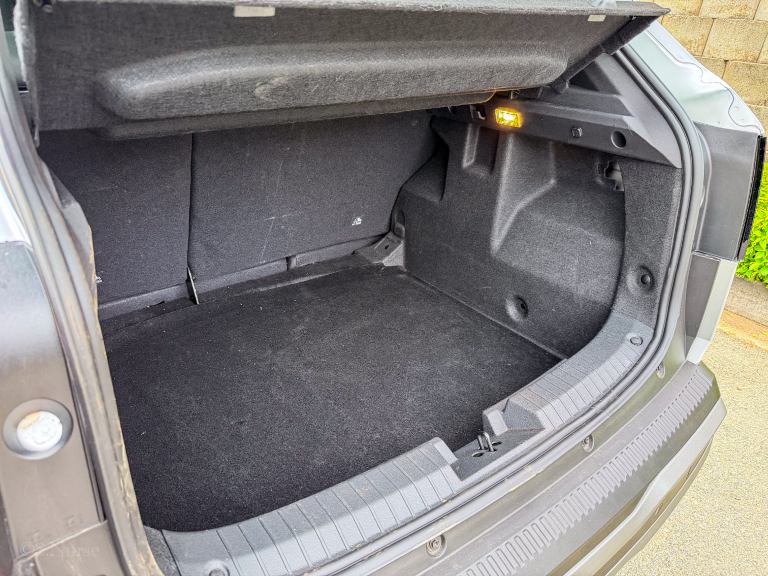
Massive practical boot: The 518-litre load bay swallows luggage with ease.
Genuinely useful off-road geometry: The specs are promising, with solid ground clearance and impressive angles.
Cons
Stiff price point: Touching R500k pushes it directly into the firing line of feature-packed Chinese hybrids.
Scratchy lower cabin plastics: Fine in a budget car, but not for half a million rand.
No diesel option: Enthusiasts of the old 1.5 dCi’s legendary range will miss the oil-burner's extreme frugality.
Front-wheel-drive-only: Power being sent to the front wheels only limits the off-road driving potential.
- Short service plan: At 3-yr/45 000km, it has the shortest service plan of the four cars we compared for this review.
Styling
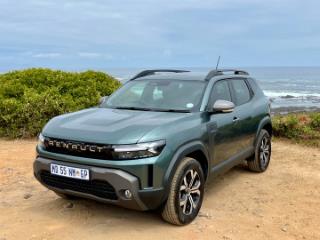
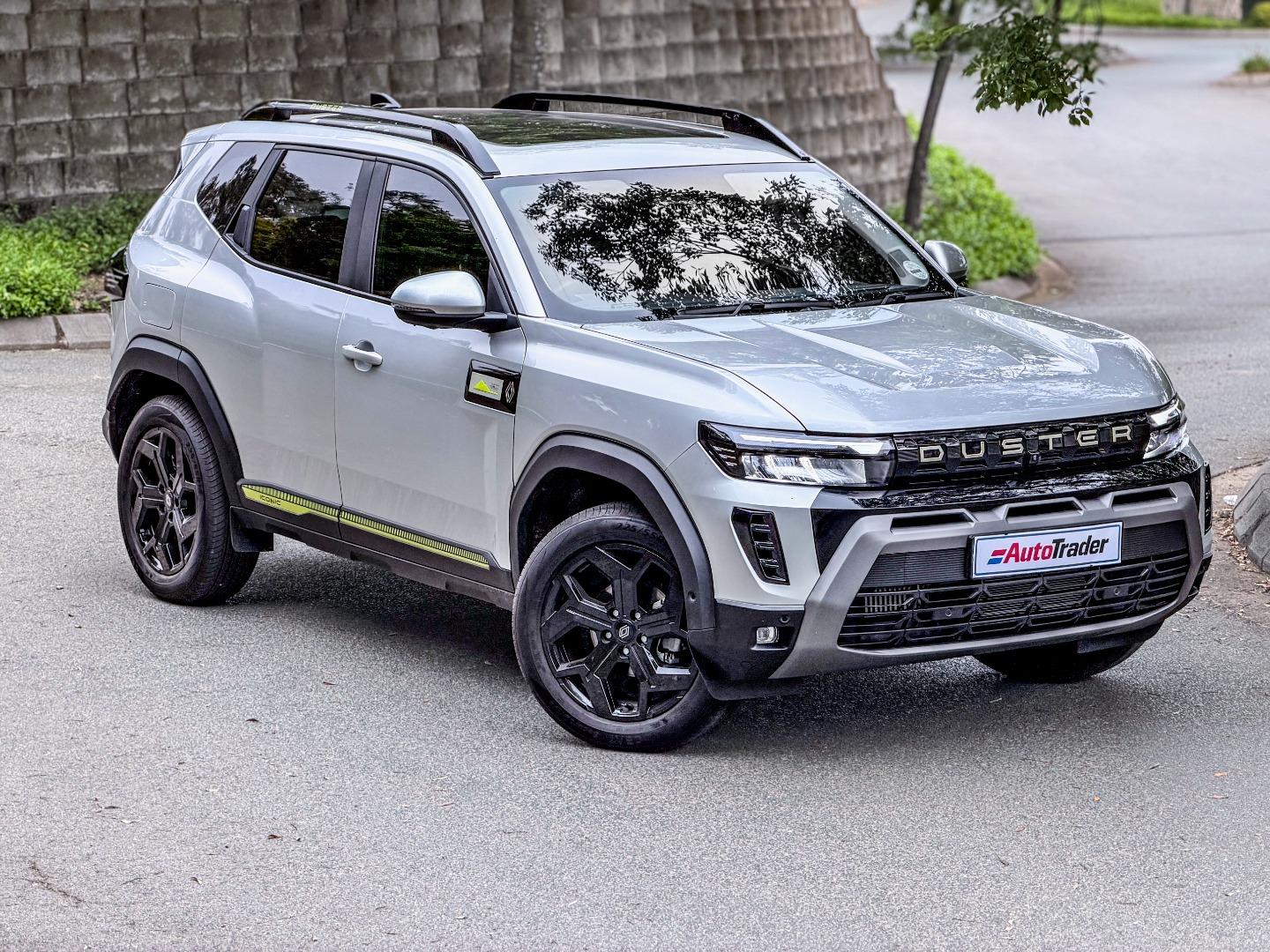
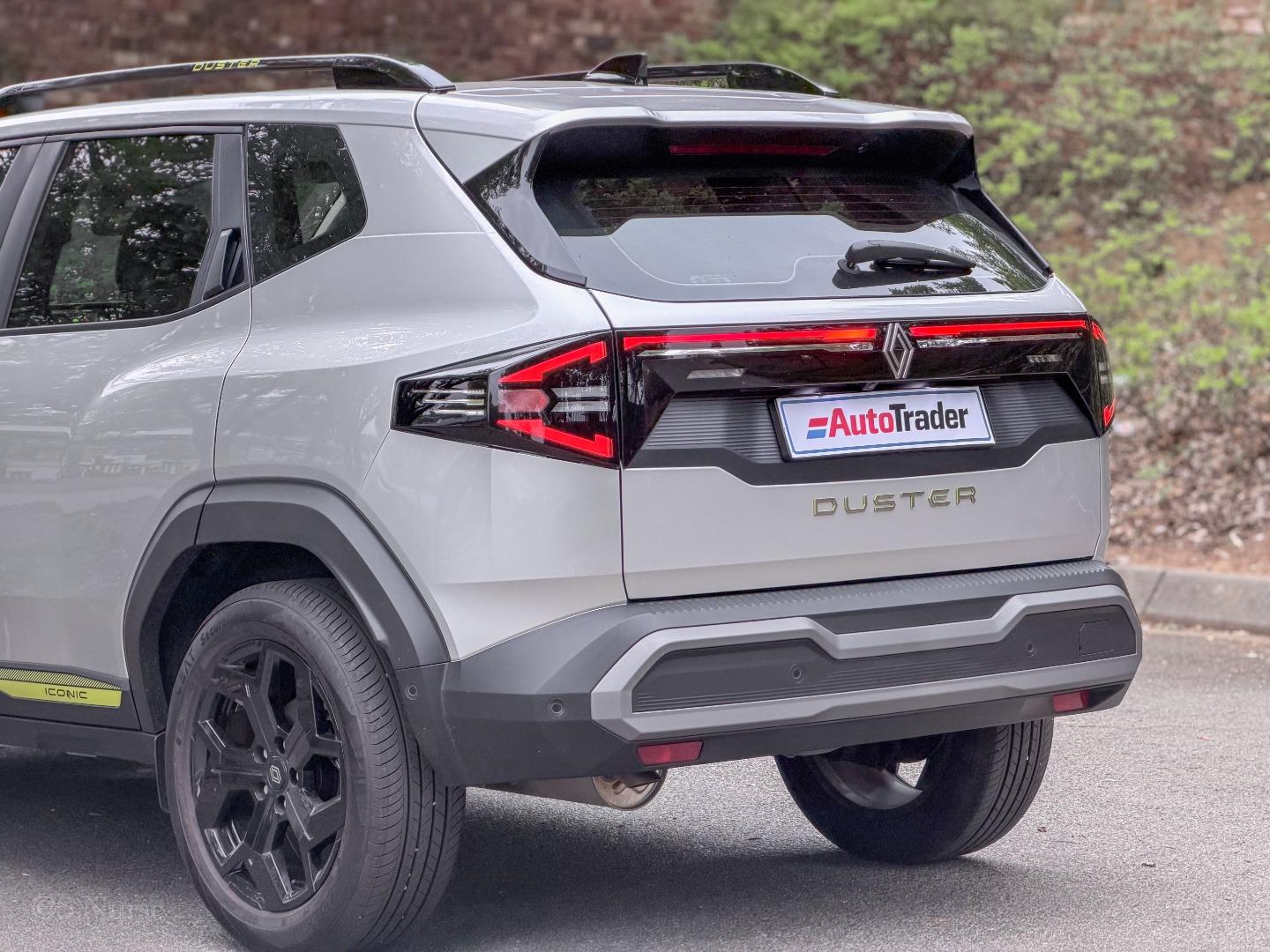
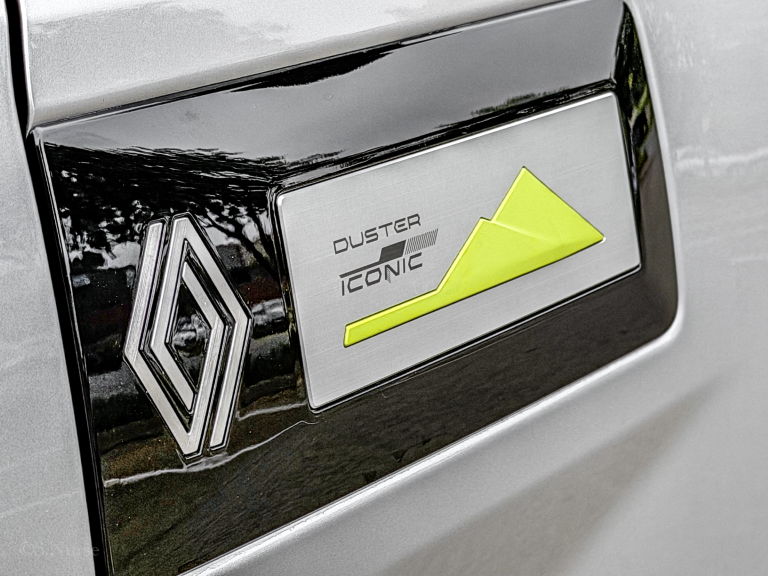
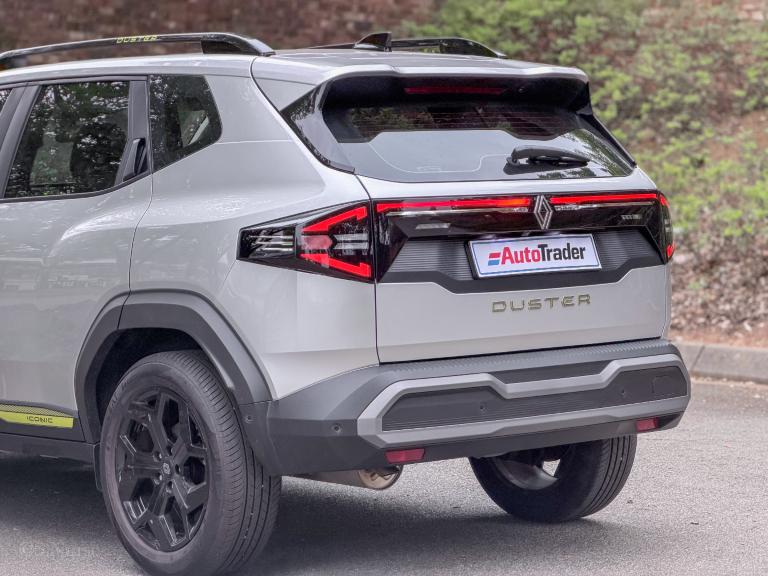
The new Duster is a genuine head-turner. Gone are the rounded, bulbous panels (my personal favourite) of its predecessor; in their place sits a chiselled, angular body with sharp Y-shaped LED lighting signatures, muscular wheel arch cladding, and roof rails. The Iconic variant rides on dark 18-inch alloy wheels wrapped in 225/55 R18 rubber and features bright green accents on various exterior parts. Towering above standard hatchbacks with impressive ground clearance, it possesses real curb appeal, looking every bit ready to tackle the gravel roads of the Tankwa Karoo, even if it spends most of its life mounting suburban pavements.
Interior
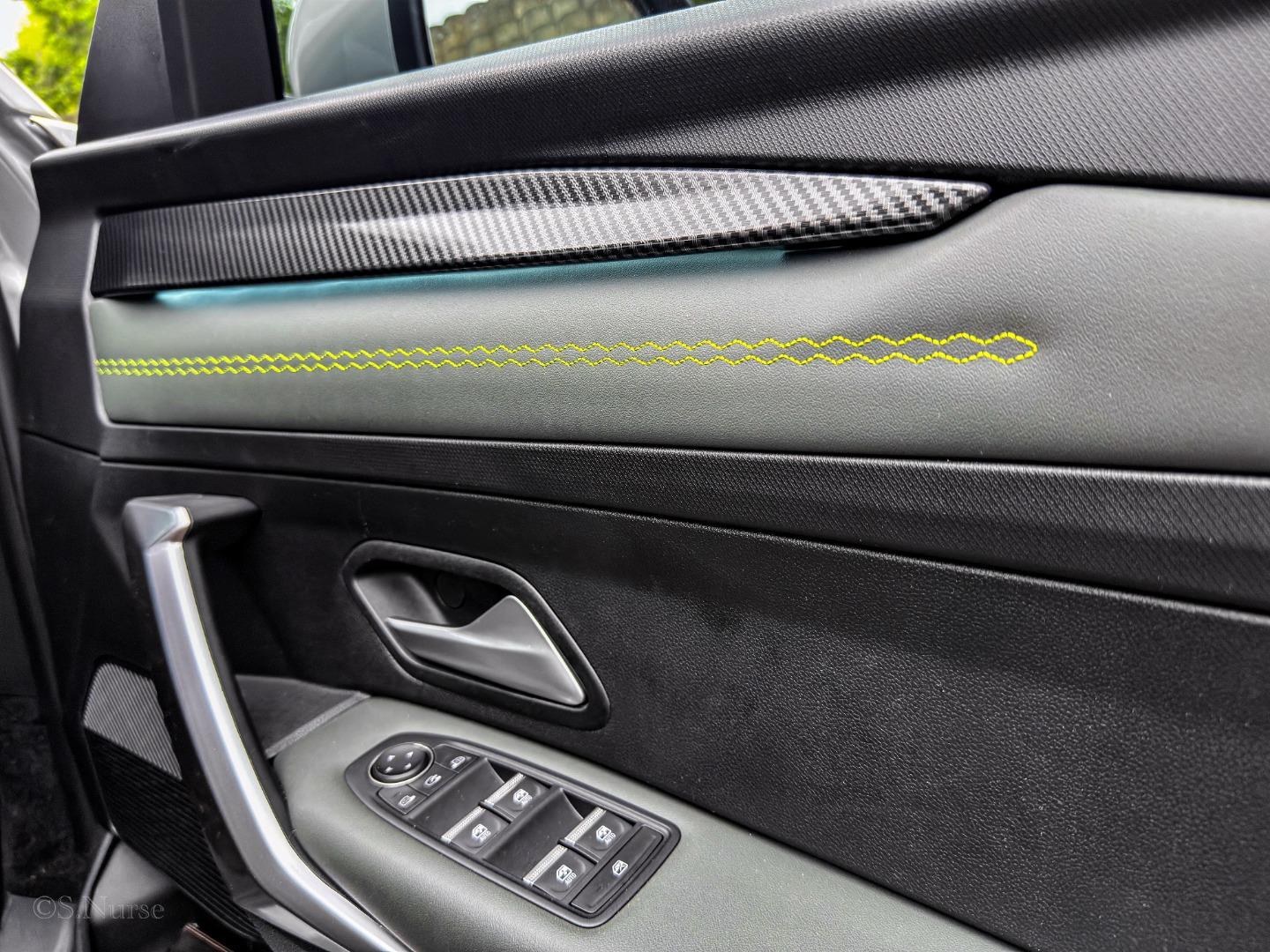
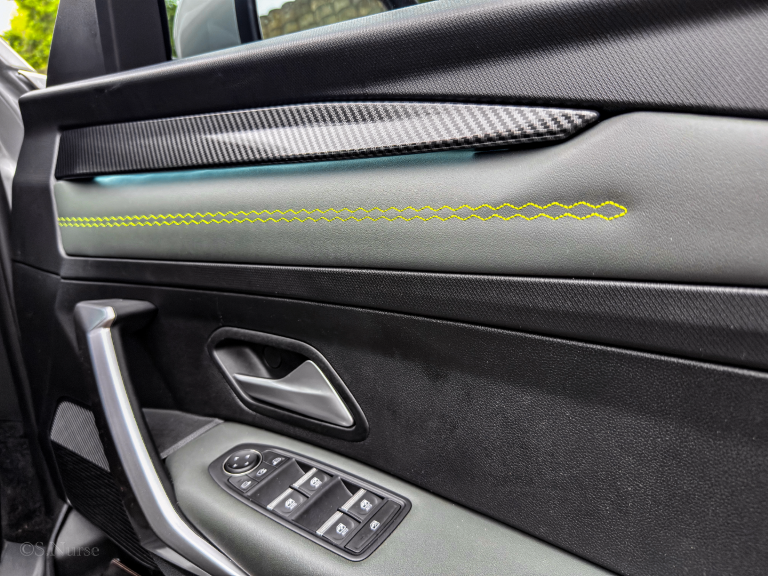
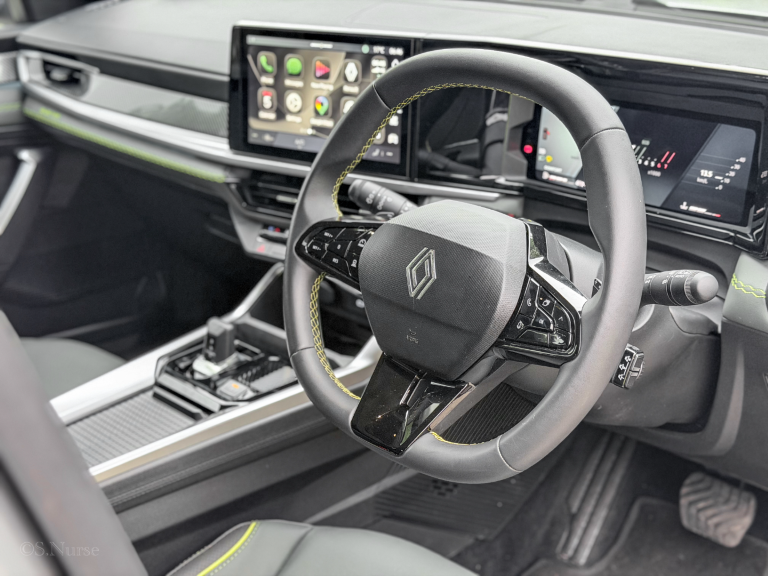
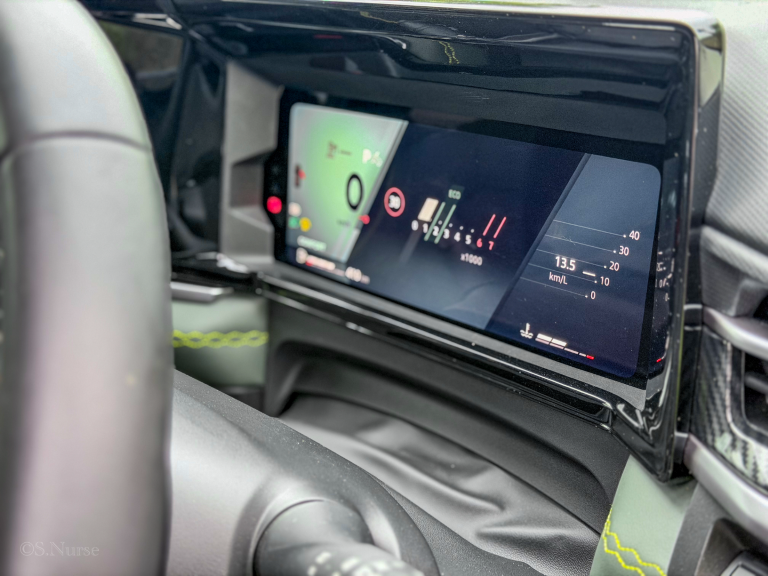
Inside, the Iconic trim comes with artificial leather seats, a digital instrument cluster, an auto-dimming rearview mirror, and an expansive tilt-and-slide panoramic sunroof. The interior also features the same bright green accents, along with black-and-green artificial leather seats and plastic trim that looks like carbon fibre. This is an acquired taste and will not appeal to everyone.
Infotainment is handled by a very solid central touchscreen featuring native navigation, wireless Apple CarPlay and Android Auto and multiple USB ports spread across both rows. While the upper dash looks slick and intuitive to operate, reaching down toward the footwells reveals plastics so dense and scratch-resistant they were clearly commissioned to survive a zombie apocalypse. Hit a severe pothole at speed, and the glovebox area vibrates with the exact frequency of a startled microwave.
Practicality remains a strength. The boot swallows 518 litres, expanding to 1 696 litres with the 60/40-split rear seats folded, easily beating rivals like the BYD Atto 2 (425 litres) and GWM Ora 5 (362 litres), but is smaller than the Chery Tiggo 7 (565 litres). Thanks to a 2 657 mm wheelbase and an upright roofline, rear legroom and headroom comfortably accommodate six-foot adults, complete with dedicated dual rear USB-C ports.
Tech & Infotainment: Central touchscreen, digital instrument cluster, native navigation, voice control, and 4 USB ports (2 front, 2 rear).
Convenience & comfort: Keyless access and start, electrochromic auto-dimming rearview mirror, rain-sensing wipers, ventilated front seats, and a tilt-slide panoramic roof.
Safety & parking assistance: Adaptive cruise control, lane departure warning with lane keep assist, and front & rear PDC paired with 360-degree surround cameras.
Practicality: 518-litre boot capacity and 60/40 split-folding rear seats.
Dimensions & Specs
| Dimension / Spec | Measurement |
| Kerb weight | 1 438 kg |
| Boot capacity | 518 litres |
| Ground clearance | 208 mm |
| Fuel tank capacity | 50 litres |
| Tyre size | 225/55 R18 |
Engine and gearbox
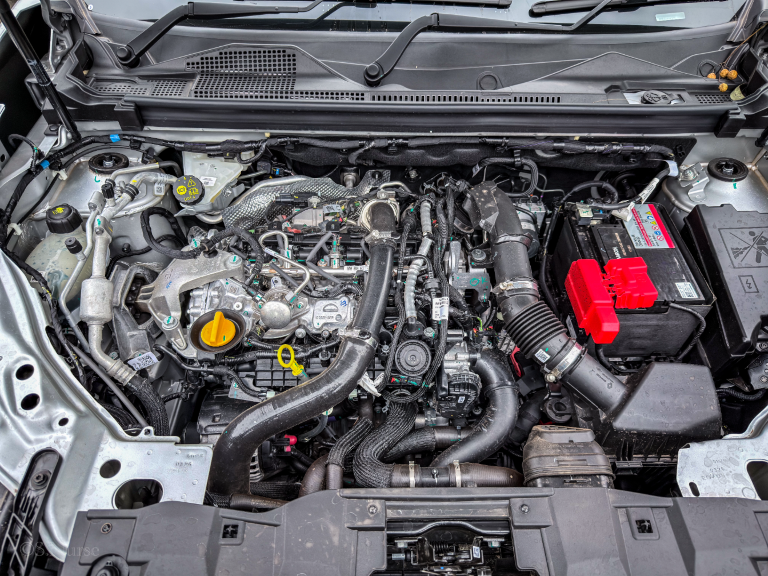
Under the bonnet sits a 1.3-litre turbocharged four-cylinder motor that was co-developed by the Renault-Nissan Alliance alongside Mercedes, the very same engine (internally dubbed H5Ht by Renault and M282 by Daimler) that powers models like the Mercedes-Benz A200 and GLA 200. It boasts cylinder-wall technology first seen in the Nissan GT-R supercar, reducing internal friction and weight, if you're into marketing lingo. Mated to this four-cylinder motor is a 6-speed EDC (Efficient Dual Clutch) automatic transmission supplied by transmission specialist Magna (formerly Getrag). The result is a surprisingly sophisticated drivetrain that churns out 116 kW at 5 250 r/min and 260 Nm of torque from 2 000 r/min.
Having looked at resources such as MotorReviewer, Mercedes Assistance Workshop Guides and Drivisual Automotive News, the engine is considered reliable, with notable weak points being carbon build-up due to direct fuel injection, which can occur between 60 000 km and 120 000 km, minor vulnerabilities around the cooling system and thermostat housing and oil consumption as mileage increases. Luckily, most of these issues, if they arise at all, are likely to surface while the car is still under its 5-yr/150 000km warranty. More local data will be needed to determine reliability.
Driving Impression
Squeeze the throttle on an open stretch of tarmac, and the powertrain responds well if you're overtaking, while not exactly setting your pants on fire from a dynamic perspective. Turn into a sweeping bend; it doesn't pivot with the urgency of a sports car, but the chassis feels very well sorted for a mid-size SUV. In the city and during my sometimes painful but ultimately necessary commute, I found the car to exhibit typical dual-clutch hesitation and relative clunkiness at low speeds, with throttle response sometimes leaving a noticeable lag from the moment the throttle is applied until the vehicle responds. It's like asking a Capetonian for an urgent piece of work after 10 am on a Friday; you can expect mixed results.
Out on the open road, I found the car most impressive. In fact, I had three passengers on board during a longer trip, and they commented on how smooth the experience was. Personally, I noted a bit of wind noise, but other than that, it is a very agreeable thing on the open road. The suspension tuning strikes a balance, supple enough to float over corrugated dirt tracks and jagged potholes, yet firm enough to feel planted at highway speeds. With its 208 mm ground clearance, 26.9-degree approach angle, and 34.7-degree departure angle, the Duster has the figures that promise some off-road ability. The lack of an all-wheel-drive model in the range suggests this is more of a pavement-hopping soft-roader than the off-road underdog it once was.
Power: 116 kW
Torque: 260 Nm
Driven Wheels: Front-Wheel Drive
Claimed Fuel Consumption: 5.4 L/100 km
Fuel Economy & Range
I do miss the old 1.5 dCi diesel unit, a motor so frugal you only needed to visit a filling station once every presidential term. Nevertheless, this 1.3T petrol motor holds its own with a claimed average figure of 5.4 L/100 km. Paired with a 50-litre fuel tank, the theoretical range is an impressive 926 km. In real-world urban traffic and highway cruising, expect consumption to settle around 6.9–7.4 L/100 km, which still translates to around 700 km between fill-ups.
Competitors & Pricing
| Model | Price | Power | Drivetrain | Claimed Consumption | Warranty / Service Plan |
Renault Duster 1.3T Iconic | R499 999 | 116 kW | 1.3T Petrol / FWD | 5.4 L/100 km | 5y/150 000 km (W) / 3y/45 000 km (S) |
GWM Ora 5 1.5T HEV Ultra Luxury | R474 900 | 164 kW | 1.5T Hybrid / FWD | 4.5 L/100 km | 7y/200 000 km (W) / 7y/75 000 km (S) |
BYD Atto 2 Dynamic DM-i | R489 900 | 122 kW | 1.5 PHEV / FWD | 5.1 L/100 km | 5y/100 000 km (W) / 4y/60 000 km (S) |
Chery Tiggo 7 1.6T Prestige | R499 900 | 145 kW | 1.6T Petrol / FWD | 7.2 L/100 km | 5y/150 000 km (W) / 5y/60 000 km (S) |
Ownership Summary
Base Price: R499 999
Price as tested: R499 999
Vehicle Warranty: 5-Year / 150 000 km
Service Plan: 3-Year / 45 000 km (15 000 km intervals)
Verdict
The third-generation Duster has grown up, trading some of its adventurous spirit for adult responsibility. Sourcing the range from India has brought the range's pricing back to sensible levels. Still, at R499 999 the flagship Iconic runs into Chinese rivals that offer more power, hybrid efficiency and far longer service plans. The Duster's case rests on its big boot, generous spec, genuine ground clearance and solid drivetrain. For most buyers, the 1.3T Techno+ is the sweet spot at R439 999; it only loses out on the semi-autonomous driving aids and gets smaller 17-inch wheels. Spend the extra R60 000 on the Iconic only if the aesthetic additions and added semi-autonomous driving tech are what you're after.