The Porsche 911 GT2 first broke cover in 1993. Based on the 993 generation 911, it was an attempt by Porsche to homologate a car for the GT2 racing class. The 993-generation GT2 features a twin-turbo 3.6-litre engine that ranges in power, from 316kW initially to 331kW in later versions. Just 57 of these manual-only products were made during a five-year production cycle.
Fast forward to 2001 and the controversially styled 996 Porsche 911 received the GT2 treatment, complete with bespoke bodywork. The next GT2 is perhaps the most infamous, the 997, which debuted in 2007 and was available in 390kW GT2 spec or 456kW GT2 RS guise, both of which came with a 6-speed manual gearbox. The 997 GT2 became known as ‘the widowmaker’ because it was notoriously difficult to drive, with so much power going to the rear wheels and because of the 911's rear-engine layout.
When we were invited by Porsche to have a go in the latest GT2 RS which is significantly more powerful and similar in weight to in infamous widowmaker, well, we said yes and prepared for what would be a whirlwind 48-hour test period.

Styling
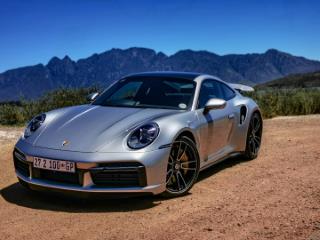
The exterior design of the GT2 RS may appear similar to the GT3 RS that we tested in 2020, however, there are some key differences. Up front, there are larger air intakes to allow more air to reach the bigger radiators and oil coolers while the front lip is more pronounced, allowing space for the GT2 RS badge. The side profile remains similar, with the iconic 911 silhouette but has an extra slat in front of the front wheels, exposed carbon fibre slats on top of the front wheels, intakes and wing mirror caps. There is also a different alloy wheel design and GT2 RS badges on the lower front section of the doors. Despite sharing a carbon fibre rear wing with the GT3 RS, the GT2 RS gets a different rear bumper, with an exhaust exit on either side of the rear end while the rear diffuser itself has been reshaped.

Both the GT3 RS and GT2 RS that we have sampled feature the Weissach package which includes a titanium roll cage, exposed carbon fibre bits for the rear wing, air intakes, roof and bonnet. The GT2 RS has the bonus of a set of magnesium wheels in the package, making the total weight saving 30kg. The exposed carbon bits differ from the GT3 as there is a body-coloured strip painted up the centre of the bonnet and roof, again, differentiating the GT2 and GT3 models. The wheels were finished in Satin White Gold, a fantastic match for the Crayon exterior hue, which was contrasted beautifully by the carbon fibre bits and yellow brake callipers. Overall, it’s unmistakably a Porsche 911, but in the words of Nigel Tufnel from This Is Spinal Tap, everything has been turned up to eleven.
Interior and space
While the exterior of the GT2 is pure motorsport, the interior is a healthy blend of creature comforts with a splash of motorsport exotica. The GT2 RS that we had on test featured a red and black interior, with a red Alcantara headliner, steering wheel trim, inner seat trim and red seatbelts all contrasted wonderfully by black leather and carbon fibre trim pieces.
The titanium roll cage is a highlight, adding to the visual drama, as are the full bucket seats which are also straight from the world of motorsport but have been made more comfortable with leather and Alcantara covering the important bits. The button that allows you to electrically adjust the height of the seat is very helpful, too.

The infotainment system is Porsche’s previous generation PCM unit, which features integrated navigation and Apple CarPlay functionality. There is a stereo system on board, but when you have a sound reminiscent of the 1974 911 RSR 2.1 Turbo singing behind you as the car clunks and whines, your Spotify playlist is the last thing on your mind.
In terms of practicality, there is an impressive piece of scaffolding where the rear seats would normally be situated in a 911 while the Porsche ‘frunk’ sports 115-litres of space, which is slightly smaller than usual on account of the water injection system’s reservoir, which takes up a small space, but aids performance and looks incredible too.
Performance and driving impression
The GT2 is a collection of intimidating numbers, weighing-in at around 1 440kg for the Weissach pack-equipped variant that we had on test, making it only slightly heavier than the outgoing Volkswagen Golf R. Considering that weight let us look at the power figures, an incredible 515kW and 750Nm of torque from a 3.8-litre twin-turbocharged flat-six engine lifted from the 991.2 911 Turbo S, but with improved cooling and larger turbochargers. Power is sent to the rear wheels by an incredibly fast 7-speed PDK gearbox.
Performance is breathtaking, once the optional Michelin Pilot Sport Cup 2 R rubber is sufficiently warm, the GT2 will sprint to 100 km/h in 2.7 seconds, cover the quarter-mile in 10.4 seconds and go on to a top speed of 339km/h. As you might well imagine, a car this fast and this focussed demands an equal level of focus and attention from its driver. While many modern performance cars have synthesised the driving process and assisted drivers in extracting performance, the GT2 feels like it is on your side, but demands all of your skill, attention and willingness to push your boundaries.

The crazy thing about the performance figures is that the GT2 is more about on-track performance, meaning that straight-line speed is not its forte. Take the carbon-ceramic brakes, for example, the front discs measure 410mm and feature 6-piston callipers while the rear features 390mm discs with 4-piston callipers. This means that braking performance is, well, enough to feel as if the internal organs that were dislodged during the acceleration have at least moved back into their original position.
When it comes to handling, features such as four-wheel steering, steel ball joints for all suspension joints and bushings, dynamic engine mounts, lightweight springs, adjustable dampers and fully adjustable camber, caster, toe and the setting of the sway bars make this an absolute weapon. Although the suspension is surprisingly good over bumps, particularly as the speed increases, one gets the impression that this car is more suited to track driving.
On the road, the extreme weight saving employed by Porsche engineers can be seen and heard thanks to the removal of a lot of soundproofing. Every mechanical clunk and whine is audible, every small stone or grain of sand flicked onto the undercarriage heard, providing an authentic motorsport experience. This coupled with the firm ride means that the RS is a very definition of an occasional car, something best left in the garage for when driving conditions are perfect and you are in the mood to focus on driving and driving alone.
Safety
With a production run said to be around 1 000 units globally, there is no chance of a crash test date being available for this model, particularly when we consider that Porsche does not submit the higher volume 911 models for crash test evaluations. Since the German marque considers its 911 a seminal model, it is logical to assume that it would be at least as safe as the likes of the Macan and Taycan, which have both been rated as 5-Star cars by the Euro NCAP new car assessment programme.

Fuel economy
With two days to spend with the fastest production 911 in history, the last thing on our minds was how efficient the car can be, which is likely how the owners of such a car will feel. A glance down at our consumption before handing the car back revealed a figure of 17.8L/100km, an expectedly high number given the performance on offer.

Pricing
Since the GT2 RS is now only available as a used car, exact pricing comes down to the level of specification and mileage on any given example. Having looked at the units for sale on AutoTrader, pricing varies from R5.5-million to R6.0-million for the privilege of owning one of these.
Verdict
The GT2 is brutally fast, engaging, expensive, exclusive and enchanting, so why do I keep thinking back to the GT3? After careful consideration, I feel that it is because I find it hard to believe that two cars that are so similar can be so different. The GT3 RS is a sublime, accurate tool with which a talented driver can extract great lap times while enjoying one of the best road car powertrains on the planet. The GT2 RS, by contrast, is a brute of a car, still endowed with precise handling, potent braking, and the ability to cover ground at an astonishing rate but commanding a great deal more respect when exploiting its performance.
When summarising the GT2 RS, words like ‘ineffable’ come to mind because the experience that this car provides is difficult to describe. Handing the keys back after 48 hours I finally had a chance to sit back and absorb what I had just experienced, a blur of visceral speed and gravitational forces that will forever change cars for me. It certainly lived up to every bit of the hype, the ultimate expression of a Porsche 911, until the next GT2 arrives, that is.