
Mahindra Pik Up S11 Karoo Extended-term Review Part 1: The daily driver
The Mahindra Pik Up has carved itself a comfortable niche as a tough, capable and affordable workhorse, and an ever-growing range and equipment list makes it clear that Mahindra wants this high-value bakkie to grab a slice of the leisure/family market as well. We spent a few months with a top-spec S11 Karoo, to see how well it stacks up in typical daily-driving conditions..


My quarantine buddy
The phone call from Mahindra South Africa’s media liaison came as a pleasant surprise, and was a welcome diversion in the early days of lockdown: Would I be interested in using an S11 Karoo bakkie for a while? Well... my “Essential Services” documentation had just come through, so I could drive around a bit for work, and I had a few things to do for which a bakkie would be useful, so the offer was accepted with some excitement.
Excitement? In a Mahindra bakkie? Yes, but probably not for the reason you’d think. Ever since I first met the Pik Up S11, I’ve been itching to find out if the positive impressions garnered during my preview- and launch drives translated to real-world satisfaction from an owner’s point of view.
It’s one thing to be impressed during a one-day drive (or even a normal week-long review period), but it’s something else altogether to live with a vehicle in its intended role for months on end. In this case, its role was that of an occasional general-use car (for the first half of its tenure in my driveway, anyway) – typically, the kind of usage pattern it would have to endure if put to use as family transport.
Styling
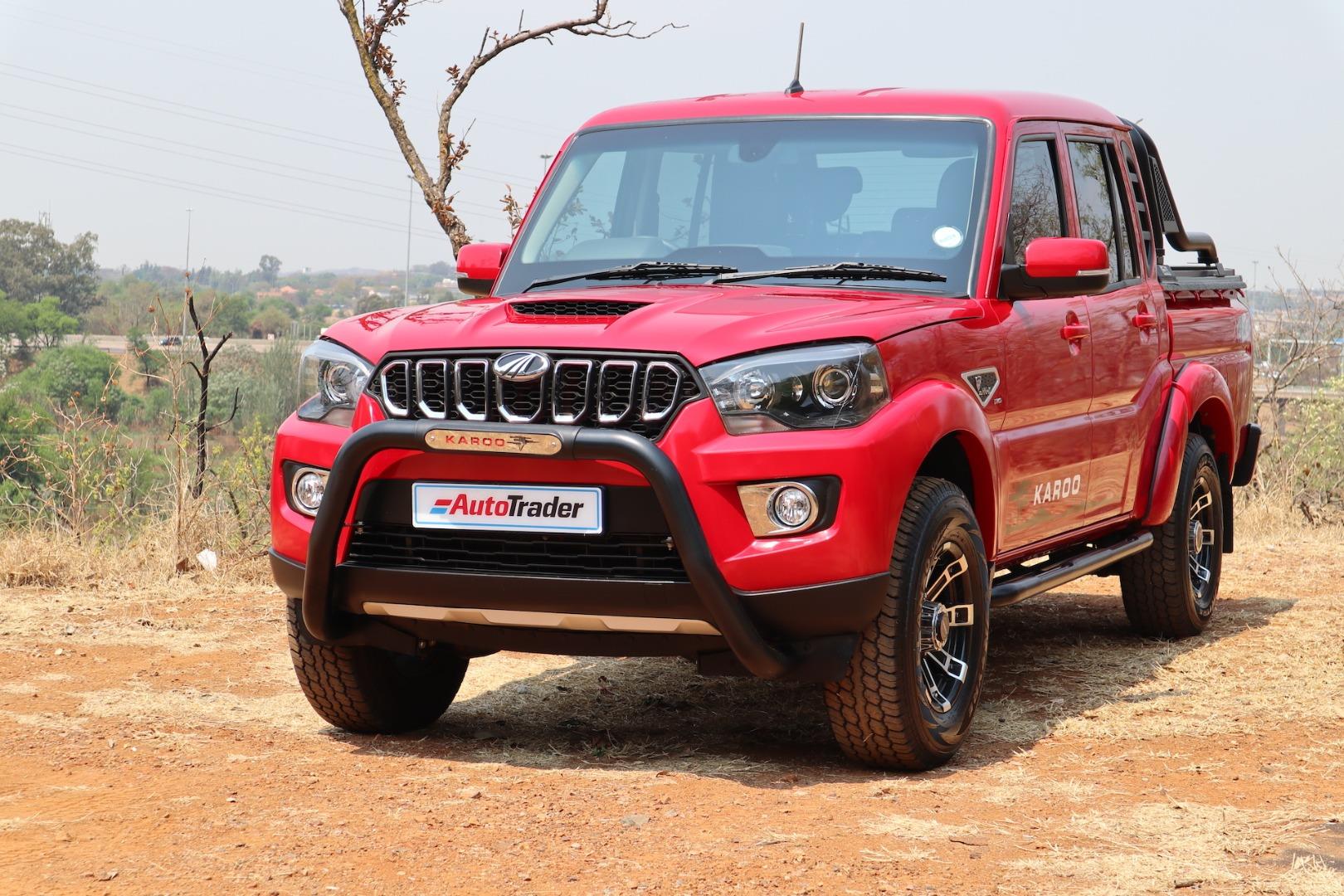
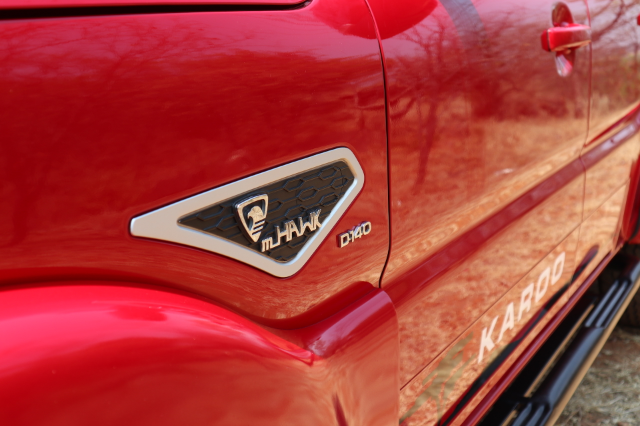
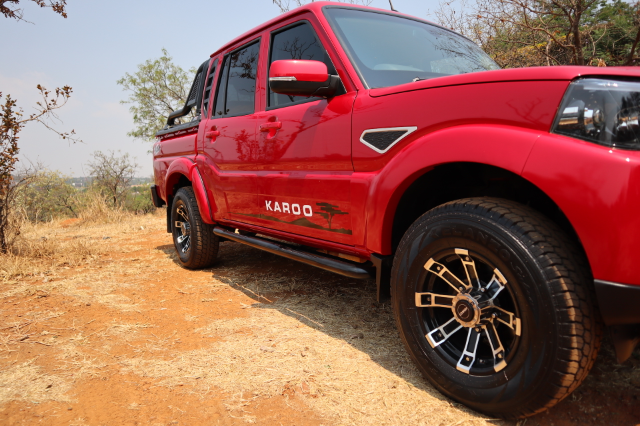
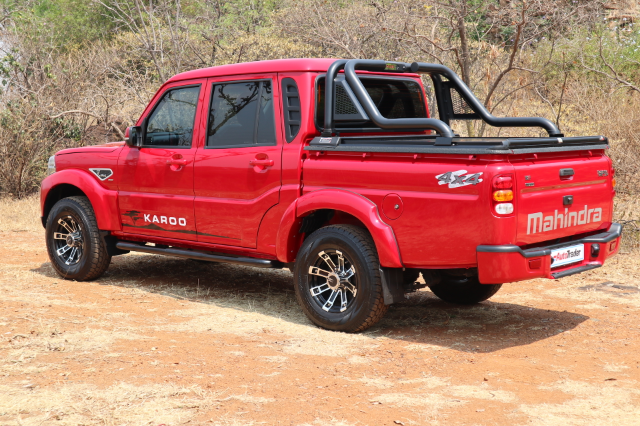
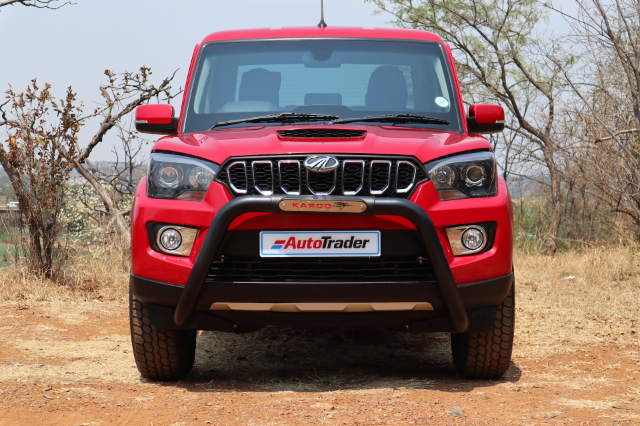
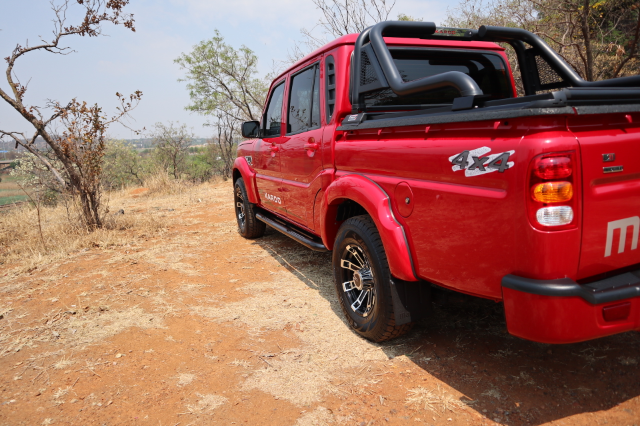
Finished in vivid metallic red paint and festooned with Karoo-specific trim bits, “The Firetruck” (as it was promptly christened) certainly struck an impressive pose when it arrived at my gate. I wouldn’t exactly call it good-looking, but there was a certain honest homeliness to its appearance that promised a wholesome experience.
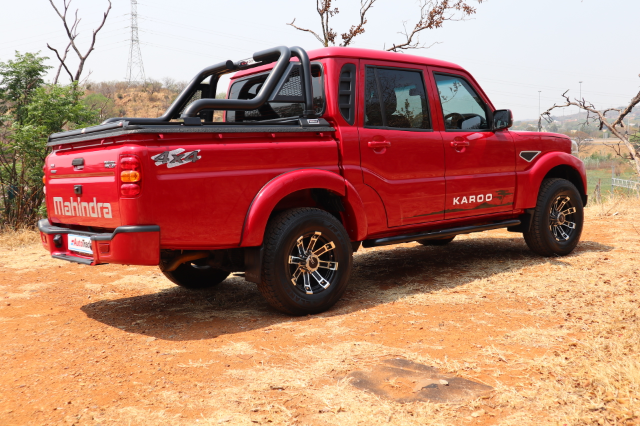
It certainly looked a whole lot nicer than any non-Karoo variant, courtesy of some tubular scaffolding around the front and sides, along with wide, machined-face black wheels that filled their flared arches with quite a bit more conviction than the standard variant's silver alloy rims. The Karoo’s black bush bar/styling bar/side step combination diverts attention from the Pik Up’s tall and narrow stance, and makes it look a lot more assertive than its less-expensive siblings.
Onlookers were generally impressed with the test bakkie’s appearance, so this specific combination is probably the one to get if you want to (mildly) impress your neighbours. Its roots (and older-generation platform) still shine through, however – there’s no getting away from the upright glasshouse and exposed rain gutters, not to mention the strange cutline of the rear doors’ rear edges.
Related: The top 6 must-have accessories for your Mahindra Pik Up.
Engine and drivetrain
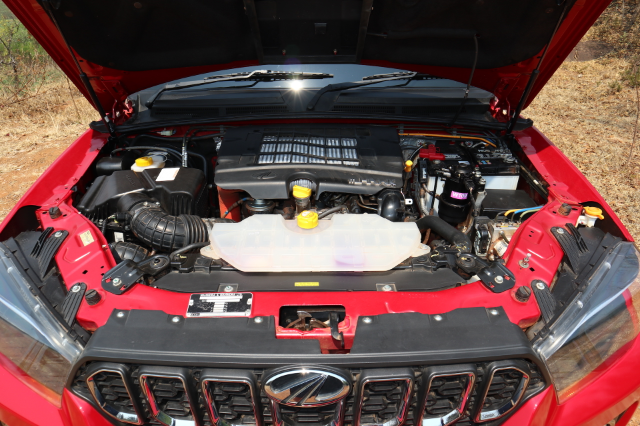
As noted during prior experience with the Pik Up S11, the 2.2-litre 4-cylinder turbodiesel and 6-speed Aisin automatic gearbox makes for a very agreeable combination. It’s not a major powerhouse, mind you: there’s only 103 kW and 320 Nm on offer, but the torque is spread over a wide rev range, and the gearbox is generally adept at selecting the appropriate gear in response to some prodding of the accelerator pedal.
Strapped behind this engine and autobox of our test car was a part-time four-wheel drive system with a low-range transfer case and self-locking rear differential. Selecting the different 4WD settings was easily accomplished via a console-mounted rotary switch, but, seeing as most of this test’s driving was on-road, 2WD high range was engaged almost all the time.
Performance
Asked to describe the automatic Mahindra Pik Up’s performance with one word, I’d settle for “gentlemanly”. It’s not quick in any traditional sense, but it somehow manages to keep up with traffic just fine, pulls smoothly from low revs, and has enough overtaking power on tap to venture into the right-hand lane on the freeway now and then. There are no official performance claims for the S11 4x4, but on-road performance suggests a mid-13-second trot to 100 km/h and a top speed of maybe 160 km/h.
Step-off from a standstill is surprisingly perky, once the momentary hesitation upon initial throttle application is overcome. The latter tendency is due to a combination of gearbox- and engine programming, and may be changed as updated control software becomes available.
This is more of a quirk than a real negative point, and is caused by the transmission disengaging all drive to the wheels while the brakes are applied, before re-engaging a second or so after letting go of the brake pedal. Controlling the drivetrain in this fashion saves fuel and reduces engine noise and vibration at a standstill, but it does take a bit of getting used-to and some forward planning in heavy traffic.
Related: Mahindra Pik Up trims head to head – here’s our choice!
Fuel consumption
This aspect proved to be a particular highlight of living with the Mahindra Pik Up S11. In spite of those fat tyres, very blocky profile, air-con working most of the time, and a driver without any inclination to save fuel, the test average consumption worked out to a remarkable 8.9 ℓ/100 km. Mahindra says that the S11 4x4 should consume an average of 7.9 ℓ/100 km, and a conservative driver will likely be able to achieve close to that claimed figure.
Testing conditions varied from moderately-congested traffic to open freeway cruising, with a bit of suburban crawling over speed humps, in shopping centres and past schools thrown in for good measure. These are the kind of driving conditions to which a family vehicle would typically be subjected, and functioning efficiently under such circumstances bodes well for the S11’s intended usage.
Related: Top 8 things you need to know about the Mahindra Pik Up S11.
The Drive
Driving the Mahindra Pik Up S11 is a pretty straight-forward affair: the controls are mostly decently-weighted, and the ergonomics present few challenges. The exception to the generally low-effort driving experience is the steering, which could do with some more assistance at low speeds. Emphasised by the Pik Up’s substantial turning circle, comparatively slow steering ratio, and wide tyres with lots of wheel offset, it makes for more-energetic wheel twirling in parking lots than we're used to nowadays.
The upshot comes in ride comfort and surprisingly composed body motions at higher speeds. In fact, as far as ride quality goes, the double cab Mahindra Pik Up is about on par with the big-brand bakkies, and exhibits a maturity in its road manners which largely belies its pricetag. This improves even further with a load: pick up some passengers or drop a few hundred kilograms in the load bin, and it all smooths out to an uncanny degree.
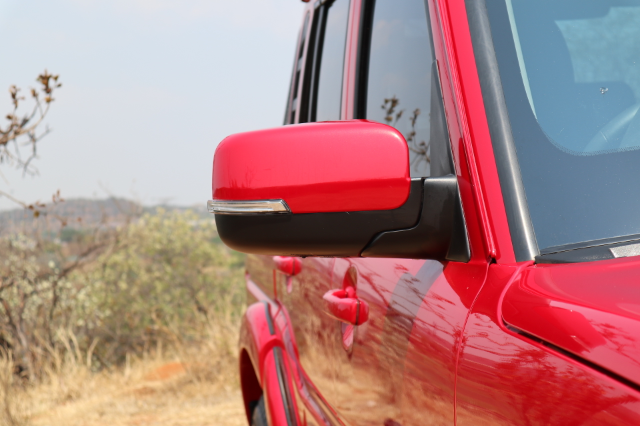
An unfortunate downside of living with a Pik Up double cab involves wind noise, of which there is rather a lot. Remember when I mentioned those exposed rain gutters? Well, combined with the big outside rear-view mirrors and upright front glass, they create quite a roar at higher speeds. This isn’t a serious issue at the national speed limit, but anything faster generates quite a din – enough to drown out any engine- and road noise.
Related: Get all the details about the Mahindra Pik Up S11 in this launch report.
Space and comfort
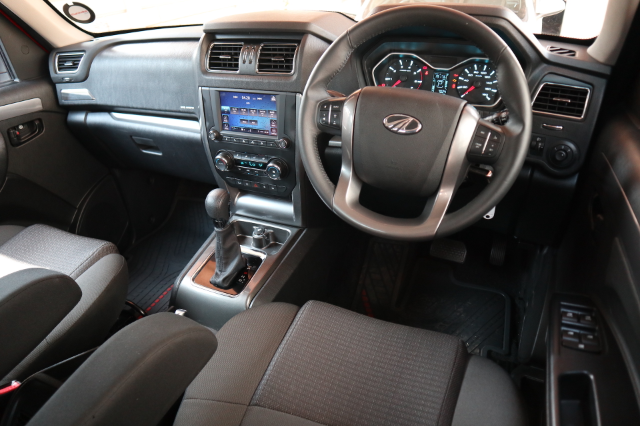
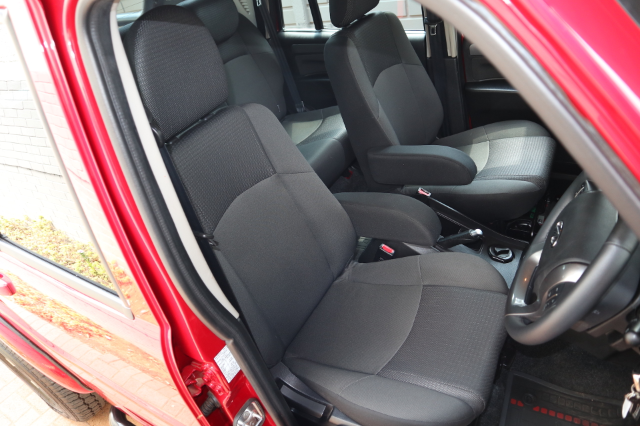
There’s plenty of good news inside the cabin, where front-seat occupants are treated to generous headroom and comfortable seats, upholstered in durable-looking cloth. The seating position has a slightly unusual sit-up-and-beg posture, but this in turn helps to eke out extra legroom and poses no comfort penalty.
A further impression of space is created by the deeply scalloped dashboard design and wide centre console. However, in spite of its generous dimensions, that centre console falls rather short on oddments stowage space, with no real provision to easily stow mobile phones or house keys. Those front inner arm rests are nice to have, but a spacious storage box would have been rather more useful, to supplement the two small square receptacles which take up most of the acreage next to the hand brake.
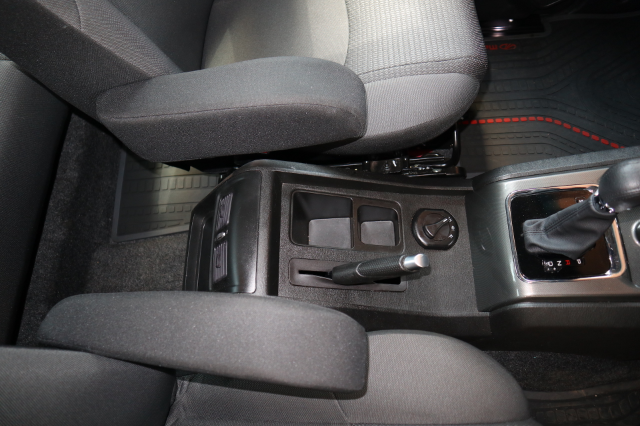
There’s a little tray in front of the gear selector, and its shape suggests that it might be intended to be a cupholder, but that could only be if we’re talking about espresso cups - it’s far too small and shallow to accommodate anything larger. The same applies to the door pockets, which are too narrow to hold a wallet and tends to swallow cell phones on the move.
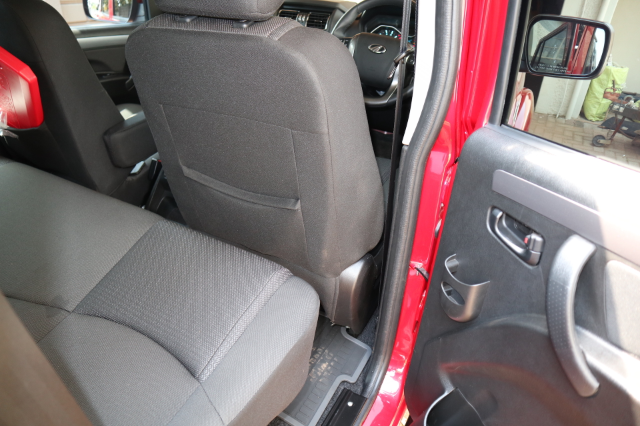
Also on the small side was rear-seat legroom. This was partly as a result of my lanky frame, which demanded full rearward adjustment of the driver’s seat, but also because the front seat backrests have a rather bulky shape. Use the rear seating area to locate a couple of child seats instead, and it will be more than adequate for a young family, especially if the parents aren’t particularly tall. As a bonus, there are console-mounted air-con outlets for the rear occupants, they have access to seat back pockets, and their doors are blessed with decently-sized bottle holders.
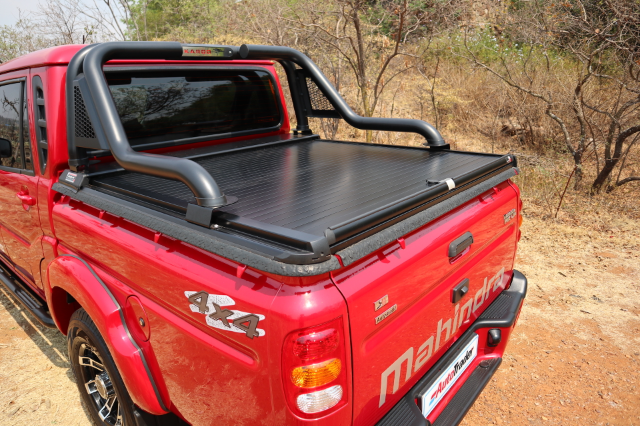
There’s also some compensation in the load bay, which features a rolling shutter and rubberising as part of the S11 Karoo specification. The load volume available under that hard cover is usefully large and evenly-shaped, and it coped perfectly well with all the domestic duties to which it was assigned during its stay: moving car parts, furniture and garden refuse. Even in 4x4 guise, the load bin can accept almost 1 000 kg, with a braked tow rating of 2 500 kg. What more does a city-bound family really need?
Space efficiency and packaging is unfortunately an area where the Pik Up is showing its age – its newer (and much more expensive) competitors are all a fair bit more thoughtfully laid out, with better space allocation for the chattel that comes with modern traveling. But, even with its elderly skeleton, the high-spec Pik Up has a number of modern surprise-and-delight features, which places it ahead of those competitors in the toy count and value race.
Related: The big old easy – Ané Theron also spent some time with the Mahindra Pik Up S11. Read her review here.
Standard equipment
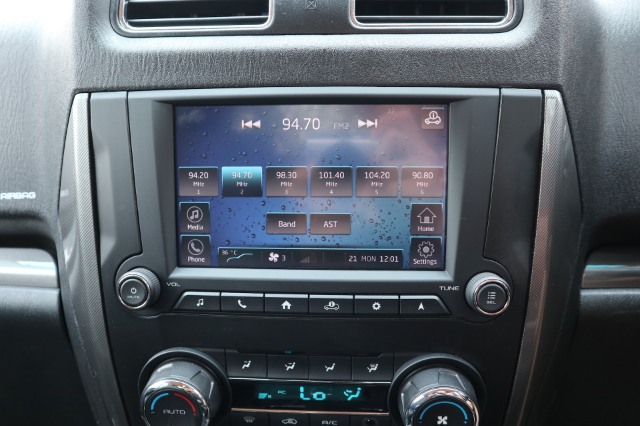
Here’s a quick sample of the convenience goodies you’ll get as standard with an S11 Pik Up: automatic climate control, cruise control, colour touchscreen infotainment system with USB, Bluetooth and Aux inputs and navigation, rear-view camera, a multi-function steering wheel, electric windows all round, electric rear-view mirror adjustment, a heated rear windscreen, voice control, rain-sensing wipers, automatic on/off headlight control, and cornering lights. The warranty and service plans are both really competitive as well.**
That’s quite a lot of standard stuff, especially considering that a 4x4 Pik Up S11 can be had for only R 414 999, or R 429 999 with a Karoo dress-up kit. Going the 4x2 route will see the price of an S11 drop to R 384 999, or R 399 999 for the Karoo. Just imagine: a big, comfy automatic double cab bakkie with a long list of standard features for the same money as a low-trim mainstream-brand bakkie! So... where’s the trade-off?
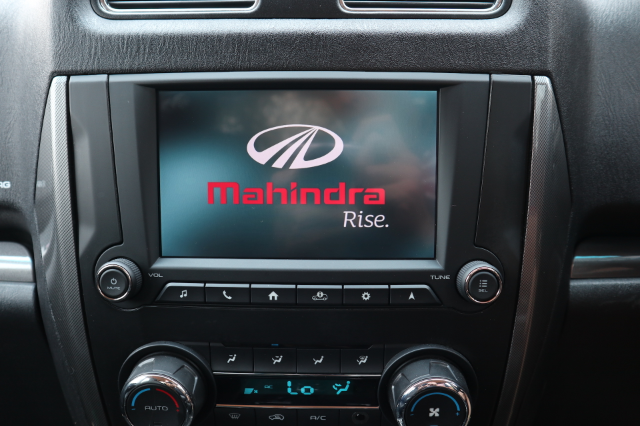
Well, some of those high-tech features aren’t as well-integrated as you’d expect in 2020. Take the centre touchscreen, which also serves as the rear-view camera’s monitor, as an example: upon first engine start, it goes into an elaborate start-up sequence. As a result, by the time it’s finished telling me that I was in a Mahindra and warned me to pay attention to the road, I’ve already reversed out of my driveway before the camera could kick into action. More patience on the driver's side would reduce the annoyance factor in this regard significantly.
Another odd quirk relates to the climate control system: regardless of the settings when you turned the bakkie off, it will always start up, and set itself to recirculation mode. This is presumably in response to the exceedingly poor air quality in its native India, where you'd do anything in your power to keep outside air on the outside, but it's an unusual feature that proves its worth in time.
The same applies to the sat-nav system: yes, it will get you where you need to go, but the user interface is so clunky that it’s simpler to just stream turn-by-turn navigation instructions from your phone via Bluetooth. In other words, there’s still some work to be done to tie it all together into a cohesive package, but such complaints do tend to fade to insignificance when considered relative to the S11’s pricetag and overall abilities.
Related: Mahindra Pik Up S11 4x4 test drive – be sure to check out these features!
Safety
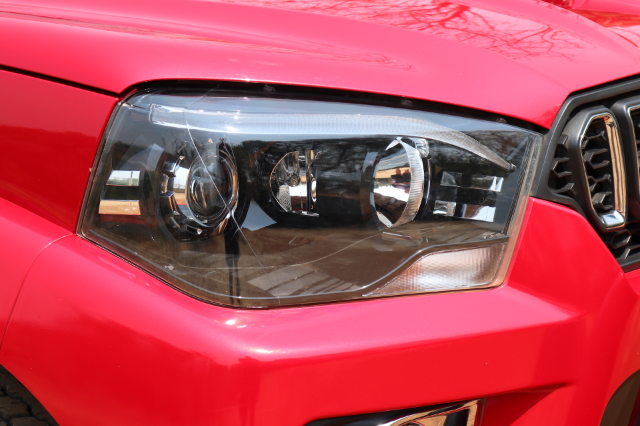
Most of the safety hardware boxes are ticked, with two airbags, traction control and ABS as standard. Furthermore, the chances are that the latest Pik Up has beefed-up crash safety credentials – at least, compared to its direct Scorpio ancestor, which scored 3 stars in ANCAP testing back in 2012.
This compares very favourably to other budget bakkies (some of which are zero-star products), and the presence of traction control proved to be a bonus when unleashing (!) all that torque in a low gear. Rear ISOFIX child seat anchors and door anti-intrusion beams are also on the standard equipment list.
Price
This is where the Mahindra Pik Up S11 Karoo delivers its knockout punch: a new vehicle with a fresh warranty and service plan, lengthy standard equipment list, decent safety spec, and a good blend of all-round abilities for not a lot of money (a maximum of R 429 999).
Similar money can buy a middling-mileage, low-trim used automatic Ranger, a high-spec older Hilux auto with intergalactic mileage, or a bare-bones new 4x2 automatic Isuzu double cab. As a result, the S11 is one of the least-expensive vehicles to offer its particular blend of features and capabilities. One potential spanner in the cogs could however come from China, where the new GWM P Series looks set to pose a strong challenge, with similar features and a modern design, around the same price point.
Related: What is covered by the Mahindra Pik Up manufacturer’s warranty?
Verdict
As a daily driver, the Mahindra Pik Up S11 Karoo is an agreeable and comfortable companion, even if parking it takes a bit more work than modern standards demands. But, for such a comparatively small outlay, you’d have to look quite a bit further east to find a similarly compelling buying proposition. It has a smoother ride and better safety credentials (and more safety features) than most other budget bakkies, and useful gadgets and thoughtful features by the bucket load. It’s also easy on the wallet at the fuel station, and the available cabin space is adequate if not generous.
The Mahindra Pik Up S11 is not perfect, but its value statement and rugged, old-school charm makes up for most of the minor irritations. In the next report, I’ll relay the tale of my off-road foray in The Firetruck, where it demonstrated a whole other element of its make-up, and delivered some very nice surprises in the process.
* Pricing was accurate at the time of writing, but may change without prior notice.
** Included in the standard list price is a warranty for 4 years or 120 000 km, and a service plan for 5 years or 90 000 km.
Expert rating:
3.5/5: As a practical, high-value alternative to the establishment, the Mahindra Pik Up S11 has a lot to offer. It’s obviously not an ideal city car, though...
Recommended Next:
Shop for new and used Mahindra Pik Up bakkies for sale here.
GWM P Series – We review it first!