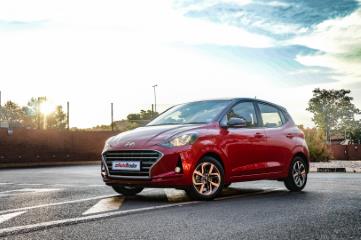
Hyundai Santa Fe 4WD Elite review (2021): A true alternative in the 7-seat SUV sector
From its humble beginnings as a value-packed large SUV at the turn of the century to a desirable luxury proposition in just its fourth generation in 2021, the Hyundai Santa Fe’s evolution has been impressive, to say the least. We received the top-spec 4WD Elite to test recently and found ourselves suitably impressed.


The first generation of Hyundai’s Santa Fe arrived locally in 2005, making it one of the models, along with the first Tucson, the Getz and indeed, the Atos, that helped cement the brand’s reputation for producing affordable and reliable products. The evolution of Hyundai’s product line continues to impress as the South Korean carmaker produces vehicles that are less utilitarian, more luxurious and dare we say it, desirable.
Introduced to other global markets as early as 2018, the fourth generation of the brand’s popular 7-seat Santa Fe finally arrived on local shores earlier in 2021, sporting a familiar diesel powertrain, but being new in virtually every other conceivable way. The flagship 4WD elite derivate arrived for a weeklong stay recently, so we put it through its paces.
Styling
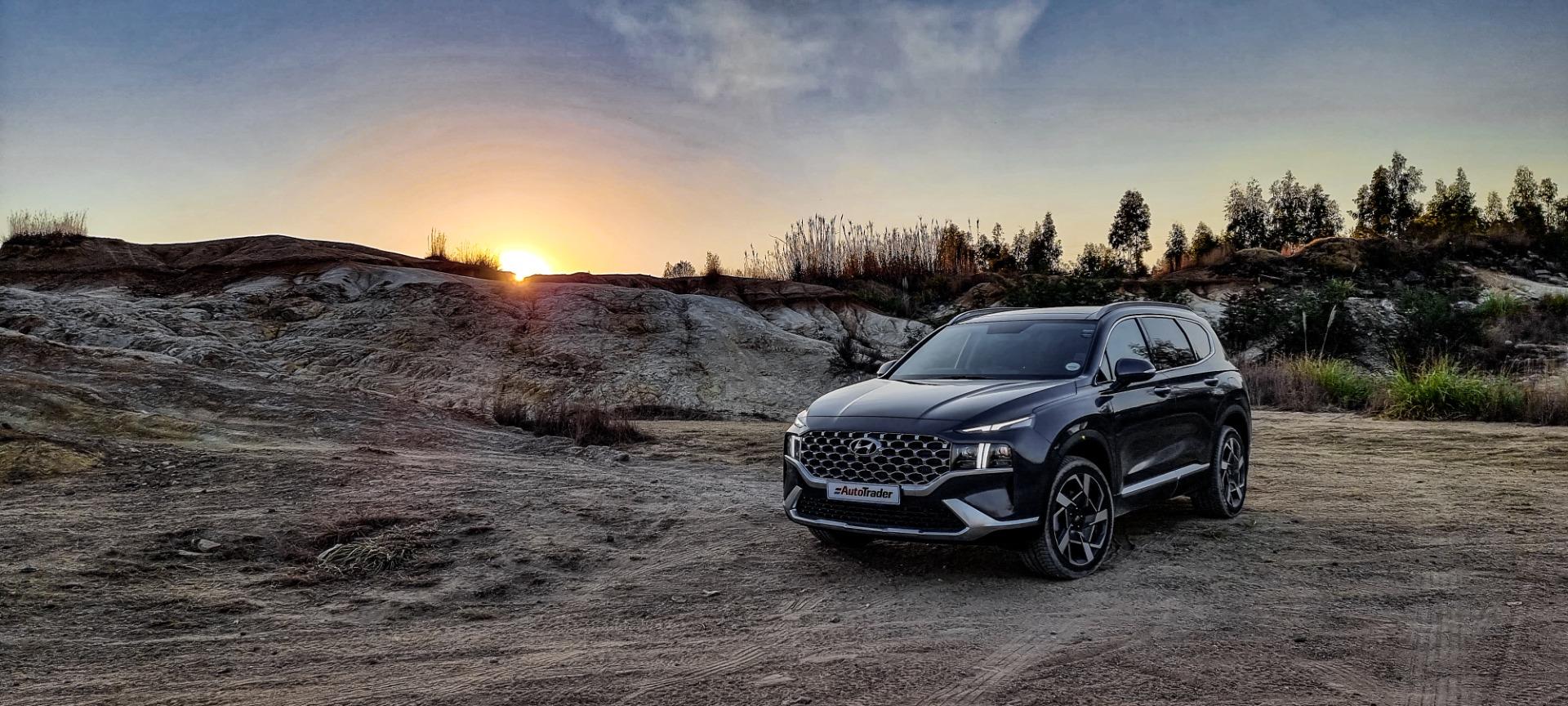
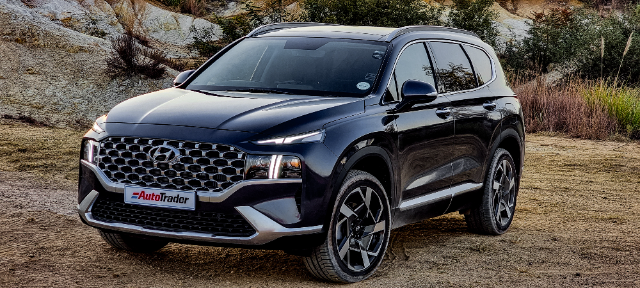
When discussing the evolution of the Hyundai brand, it is impossible to overlook its radically different styling over the past half a decade. The Santa Fe is perhaps the best example of how the brand has upped its game in the design department. Up front there is a massive grille with a geometric pattern, which also incorporates the low-mounted headlights, while the now-signature daytime running lights sit on top of the headlights in a t-shape, creating a pair of eyebrows if we are looking to anthropomorphise its front end.
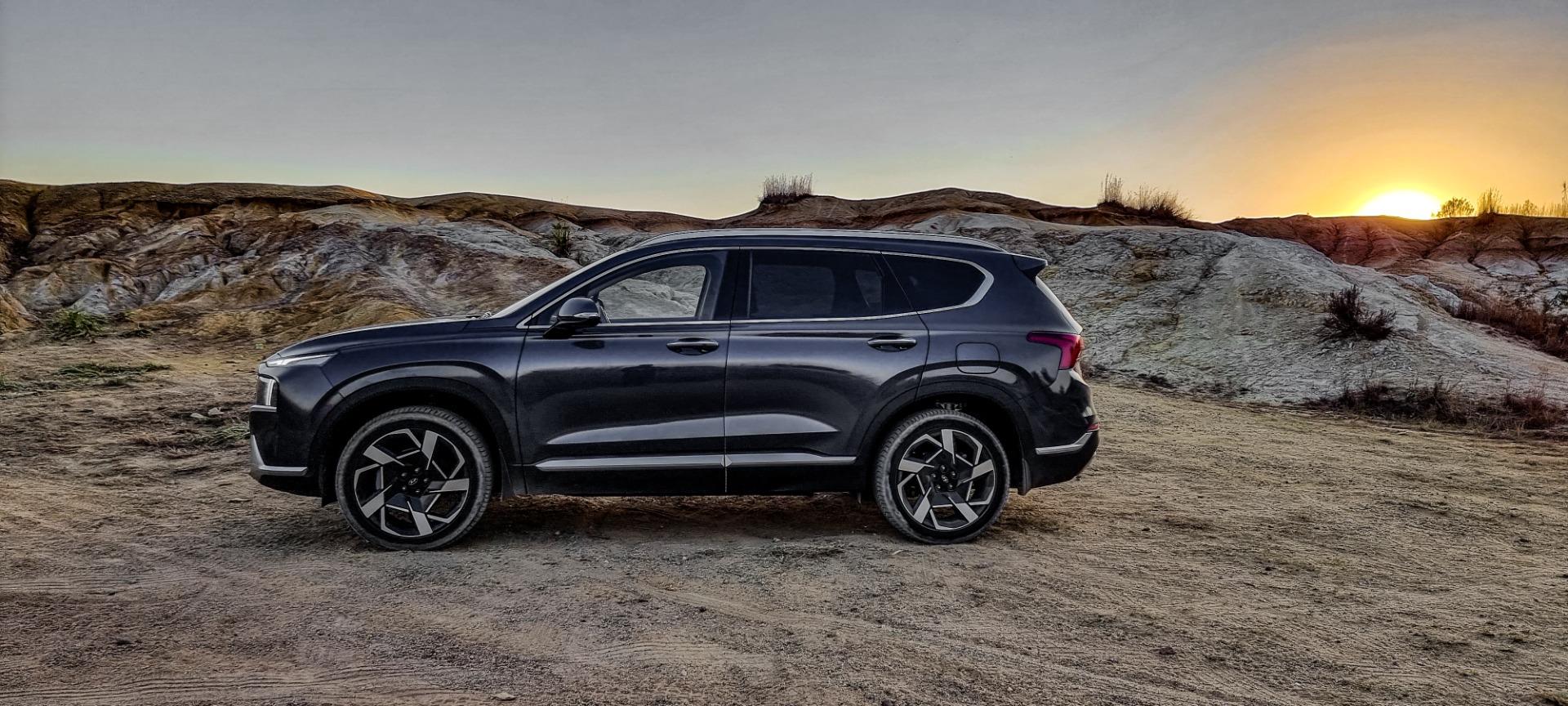
The side profile is attractive too, with chrome strips running on the lower end of the doors while the 20-inch alloy wheels on the test unit look fantastic, even if they will compromise the product’s off-road ability. The rear-end is more recognisable, with wrap-around tail lamps connected by a horizontal line on the boot lid. The rear bumper is broad and contrasted by a lower light bar with aluminium trim at the bottom. The overall design is incredibly attractive and certainly the most outlandish among its rivals, which is a good thing in a segment where the competition is so prominent.
Interior and space
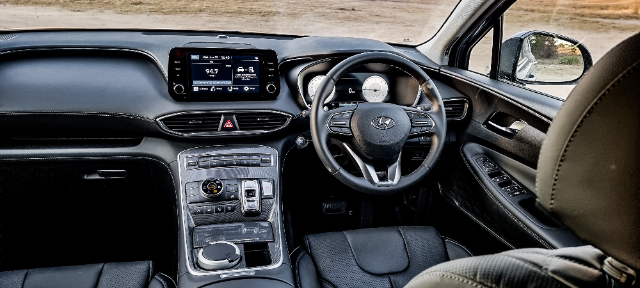
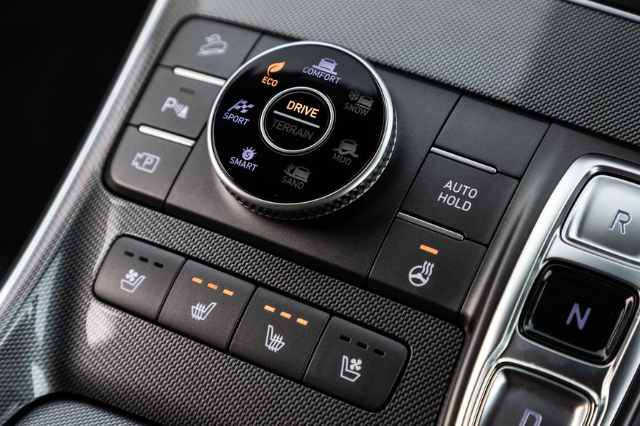
The interior is best characterised as premium, with an array of features that took us several days to fully utilise and experience. From an ergonomics perspective, Hyundai has done a good job of simplifying things, and even though there is a plethora of buttons at your disposal, the layout is functional and doe not appear cluttered. The centre console does not feature a gear level, but instead three buttons allowing you to select Drive, Neutral and reverse. Next to the gear select buttons is the drive and terrain selection button, a heated steering wheel function, heated/ventilated seat function as well as the parking assistance system settings.
In terms of infotainment, there is a reasonably good 8.0-inch colour screen that offer Bluetooth, USB, Apple CarPlay and Android Auto functionality which can be controlled via the multi-function steering wheel or on the screen itself. The Santa Fe also includes a 12.0-inch digitised instrument cluster that is configurable, allowing for a variety of colours and styles to be selected.
Other features include front and rear PDC with a reverse camera, rear ISOFIX child seat anchor points, a panoramic sunroof, front and rear USB ports, keyless entry, cruise control, blind-spot monitor, lane change assist and four-zone climate control, to name a few.
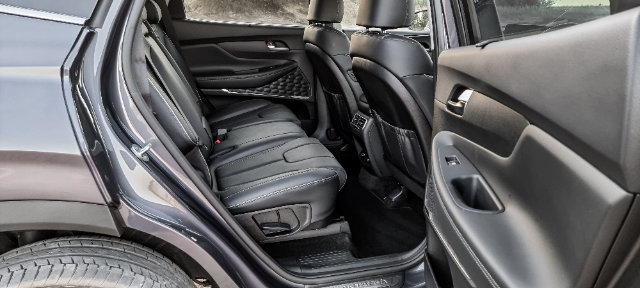
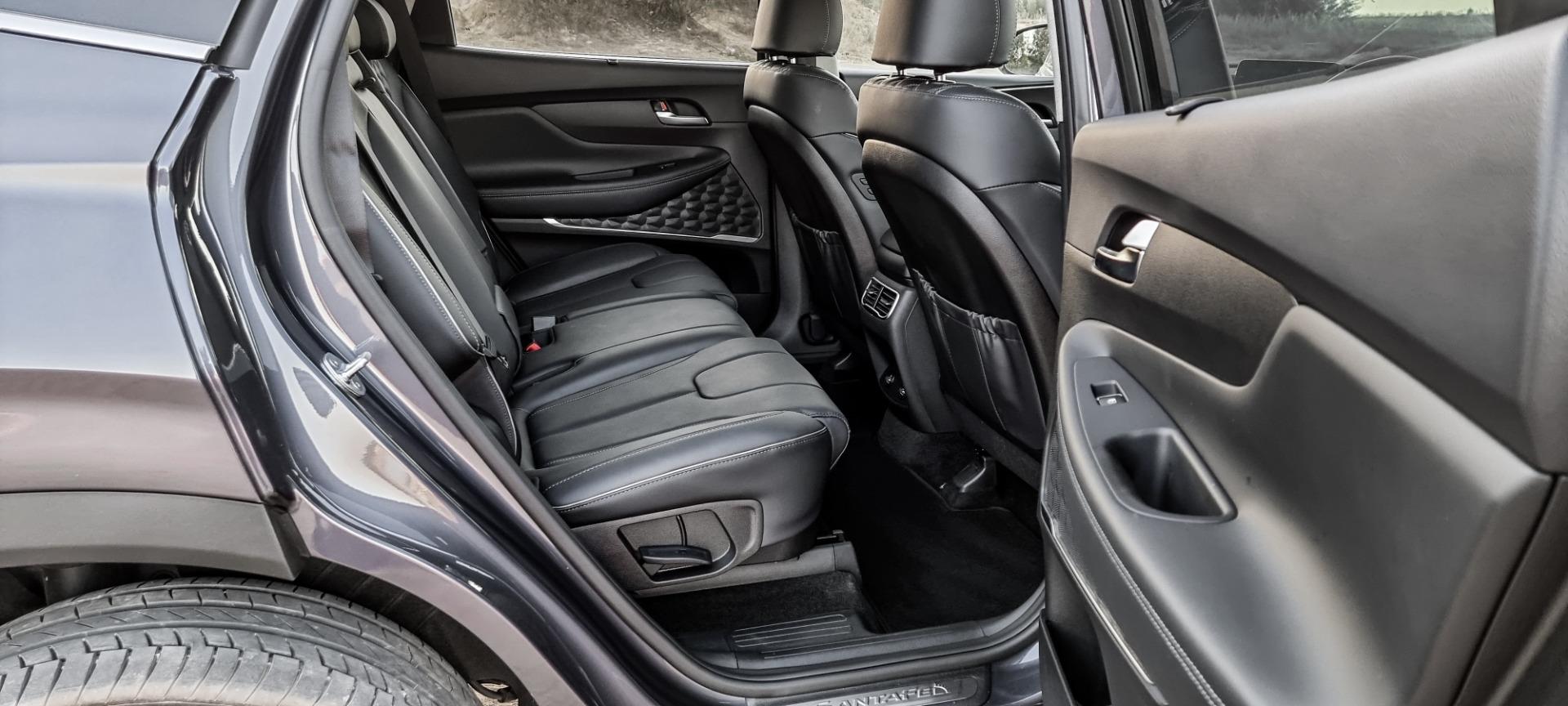
Practicality is where this product truly shines, with a variety of large and well-integrated storage areas and seating for seven occupants. The first and second rows offer a great deal of head and legroom while the third row is best used for children or shorter folks. The second and third row of seats can also be stowed, electrically, making the loading of large items incredible easy, with boot space that ranges from 332, 1 032 and 2 041-litres respectively. There is also a hand-free tailgate, which came in handy when approaching the car with hands full of shopping bags.
Performance and driving impression
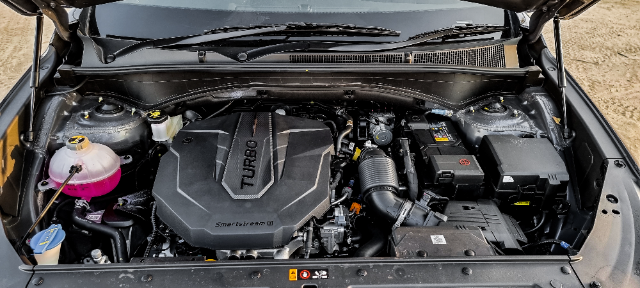
Powering the Santa Fe, from a local context, is a 2.2-litre turbodiesel engine that produces 148kW and 440Nm of torque which is paired with an 8-speed dual-clutch automatic gearbox. Couple the impressive punch from the powertrain with its 1 810kg kerb weight, which is light compared with the bakkie-based rivals in this segment, and you have a product that goes about its business effortlessly out on the road. Regardless of whether you are on the freeway or in an urban environment, we found the Santa Fe to be refined, quiet and comfortable.
Since our test unit featured the brand’s all-wheel drive system and a terrain selection mode, we decided to take it to the local quarry to test out its credentials. Sporting 206mm of ground clearance and respectable approach and departure angles, we managed to sail through the relatively basic off-road course. The problem came when things became technical, where we feared damaging the large 20-inch alloy wheels and lower-profile tyres, while the all-wheel drive system did its best with the limited traction availed by the rubber on offer. A smaller set of wheels and some dual-purpose tyres would remedy these problems, though.
Safety
The Hyundai Santa Fe line-up was crash-tested by the Euro NCAP new car assessment programme in 2018. It achieved a 4-Star rating including 94% for adult occupant safety, 88% for child occupant safety, 67% for pedestrian safety and 76% for its safety assistance systems.
Fuel economy
Hyundai claims a fuel consumption figure of 7.9 L/100km for the all-wheel drive Santa Fe. Our time with the car showed a figure of 8.5L/100km, which is impressive for a car of this size.
Pricing
There are not many options to tick on the Santa Fe specification list, so our press unit was listed at R869 500, however, those that do not require all-wheel drive and few specification niceties can opt for the front-wheel drive Executive model, which retails for R769 500. Regardless of the model chosen, this appears to be quite a lot of car for the money.
Verdict
During its stint with us, the Santa Fe impressed with its generous specification, relaxing ride quality, relative frugality, and spacious interior. While this all-wheel drive model is relatively capable off-road, it will not be as well suited to the rough stuff as a Toyota Fortuner or Ford’s Everest.
That being said, most of us spend most of our time on the road, doing the school run and getting on with our daily tasks, an area where the Santa Fe goes about its business in a more refined and enjoyable manner. It will come down to the owner’s specific needs, but we suggest driving one of these before taking the plunge on any other 7-seater in this segment.