


Maybe it was down to spending too much time watching Cartoon Network, but I always found myself feeling faintly ridiculous in the previous Hyundai Atos. I believe it was down to the extreme boxiness of the original Korean mini-car, and wheels so tiny, they looked as if they could double as the new round Beeno snacks on a large doggie’s dinner dish.
Funny looks aside, there were enough people out there that opted to make the previous-gen Atos a success, as some 45 000 were sold before the car went off the market here in 2013.
But with the previous-gen i10 recently discontinued, the timing was right to introduce the new Atos into a market where the likes of Renault’s Kwid and Datsun’s Go are notching up some serious sales.
Related: First Drive: Hyundai Atos - It's back! (Launch Report)
Styling
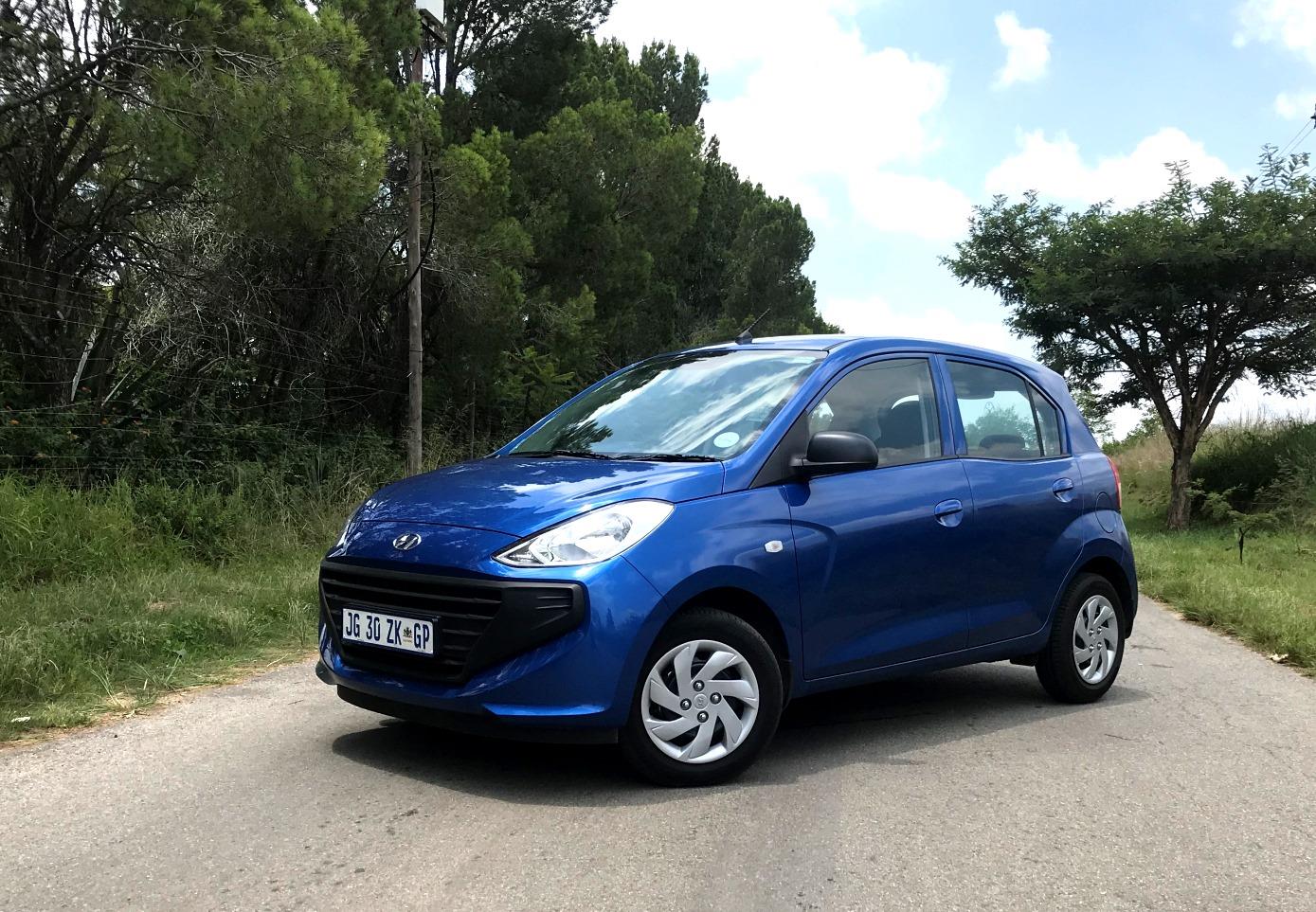
Conservative? Sure. But this new Atos looks as if it was designed by someone whose artistic sensibility wasn’t wholly formed by watching re-runs of Scooby Doo. The new Atos has a snub nose that is rounded rather than angular, and the windscreen is raked quite dramatically. It starts far forward in the bonnet area and ends up about halfway along the front side window, so the screen offers great outward visibility.
The roof at this point actually tapers ever-so-slightly downwards, and in this way Hyundai has shed the Atos of its old box-on-wheels image for ever.
On the flanks there’s a hefty, upwards-trailing styling crease that links the front wheel arch flair with the rear, and these are quite dramatic in their way, giving the car substance. The slightly diagonal styling line is echoed by the lower side-window line which also rises gently, and these elements combine to giving the Atos a subtle hint of forward-leaning attitude.
Related: Top 12 articles of new cars under 200k
Space and Comfort
The new car is bigger than the old car, measuring 3,61 metres in length and 1,64 in width. When climbing aboard, one first notices that the doors feel quite substantial by A-segment entry-car standards. The second thing you notice when you get behind the wheel is that the seat height is quite high, and it is also non-adjustable. The steering column is also non-adjustable. Taller people may have to duck their heads a bit in the door opening, but once ensconced there is more than enough headroom.
The same goes for people in the back seat. The leg room is not overly generous, but as rear passengers sit quite upright, it is adequate, and rear head room is quite generous. But being narrow, we would have to rate this as a four-seater, five at a push for short journeys.
Good-quality interior finishes
The second thing that may strike you as you hop aboard is that the interior is finished with what looks to be good-quality, durable plastics. The textile upholstery is of a very durable-looking material, way ahead what the likes of the Kwid and the Go are offering. The fit and finish is also top of this entry-class. Sure, the plastics are not of the soft-touchy-feely-pricey variety, but they look as if they’ll stand up to some serious abuse before decomposing!
The infotainment pod is also well-integrated into the dash and offers Apple CarPlay compatibility, while there is a USB charger in the console that also links to CarPlay, as well as providing phone-charging capability.
Related: Used cars ranked by practicality: Budget Hatchbacks
The Drive
The engine fitted to the Atos is a 1,1-litre four-cylinder, which makes it pretty unique in this market, as most manufacturers of small cars have gone along the three-cylinder route. It’s a normally-aspirated 12-valve engine developing 50 kW at 5 500 rpm, which means it revs to 6 000 rpm with ease. The rev-counter is actually red-lined at 7 000 rpm!
The engine is rated at 90 Nm of torque, which is not going to make you go looking for any tug-of-war competitions. But the initial impression of get-up-and-go is good because Hyundai has sensibly given this car a very short first-gear-ratio.
The overall impression is one of adequate performance for city motoring as long as you aren’t in too much of a hurry. Pulling off on up-hills does require a bit of revs to get her moving off the line.
Ride and handling
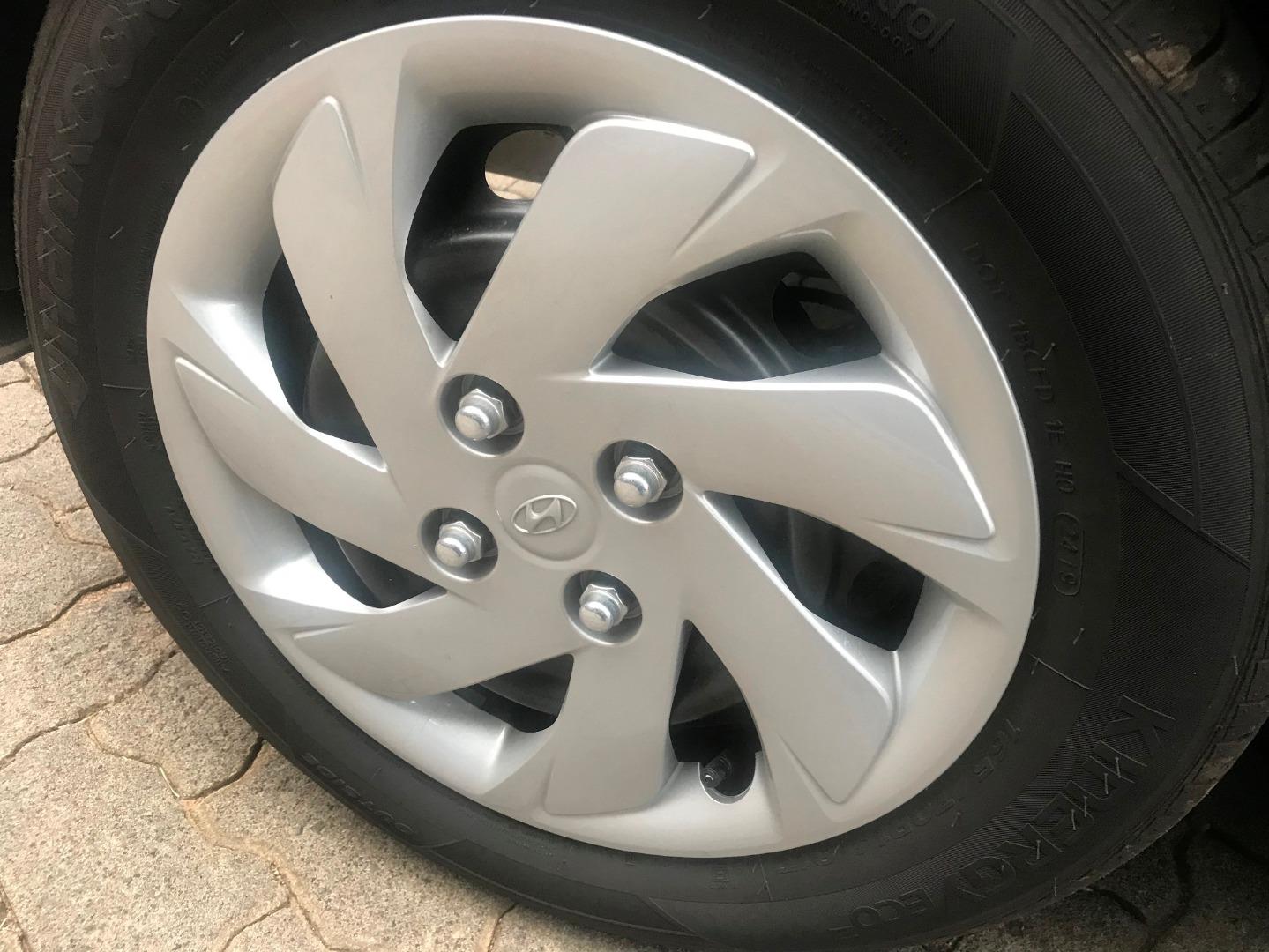
Hyundai make solid cars and out of all the small cars I have experienced recently – Renault Kwid, Datsun Go and Peugeot 108 – this Atos has the most substantial feel. There is not a hint of body flex or shuddering as the engine is started up. And the little car has reasonably-sized tyres of 165/70 14 configuration wrapping its steel wheels.
The ride is generally quite good, although it doesn’t deal too well with ridges and potholes. The directional stability is reasonable, but out on the highway you are aware that this is a short car with a relatively high centre of gravity, and it is light at only 866 kg. What this means is you have to be sensitive on the steering wheel to keep it going where you want it to. It doesn’t wander of its own accord, but you have to concentrate!
Performance
Hyundai quote a top speed of 155 km/h and a 0-100 km/h time at 14,5 seconds. That latter seems a bit optimistic, up here at the Reef. In short, the performance is more than adequate for urban driving without getting in anyone’s way. The light weight and well-chosen gear ratios (the other four gears are grouped quite close together) mean that you can change up to a higher gear early without losing steam on a level road.
On a highway with ups and downs, well, you might find yourself shifting back to fourth gear on a slight uphill to maintain a 120 km/h cruising speed, and perhaps dropping to third if you lose momentum at the approach to a steeper hill. With the car loaded with four adults, you will indeed have to stir that little gear lever!
Fuel consumption
I was really impressed with the fuel economy. During a period where I was driving very conservatively, with a good percentage of my travelling done on the freeway, I actually saw the consumption metre on the computer register a figure of 4,9 litres/100 km. That is excellent for any manner of petrol-engined car.
This consumption figure did not worsen appreciably, and over a week’s test period (admittedly not engaging in any drag races with V8s and the like) I returned an overall figure of 5,2 litres/100 km. Hyundai claim a very realistic figure of 5,7 litres/100 km and I managed to beat this by half a litre!
Safety
Small cars are not the best when it comes to crashing into solid objects, simply because their size means there is not much room for deformable crumple zones. Nevertheless the Atos has a really solid feel to it and it comes equipped with driver and front-passenger airbags, ABS braking and ISOFIX child seat mounts on the rear bench seat.
Verdict
There’s lots to like about this Atos. But perhaps the biggest incentive to buy one is the price. It is listed at R159 900 for the only model available, the Hyundai Atos 1.1 Motion. This makes it very competitive against the likes of the competitors already mentioned here, and in this league it has a quality feel that others battle to match. We would have no hesitation in recommending an Atos.
Even better news is that it is covered by Hyundai’s class-leading warranty of 7-years/200 000 km for the drivetrain and 5-years/150 000 km for the car as a whole. A 1-year/15 000 km service plan is also included.
Recommended next
New city-hatchbacks: An alternate view on the Datsun Go, Renault Kwid, Hyundai Atos, Nissan Micra
Hyundai Atos vs Renault Kwid vs Datsun Go: which one has the best infotainment system?