Hyundai Creta 1.5D Executive review (2021): Frugality wrapped in a more premium package
What was once a generic SUV in terms of its exterior and interior styling has been transformed with the introduction of the second generation of Hyundai’s Creta in South Africa. We had a chance to sample the newcomer, in Executive guise, powered by the super-frugal diesel engine.



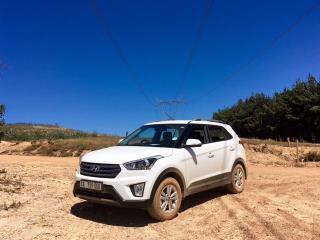
Hyundai’s Creta was first introduced locally in 2017 and was updated in 2018 as Hyundai began introducing a raft of new models, resulting in a five-strong SUV product line-up. The first generation Creta was late to the local market, having been introduced to India, where it is built, back in 2015 while in China the product is badged the ix25 and was introduced in 2014.
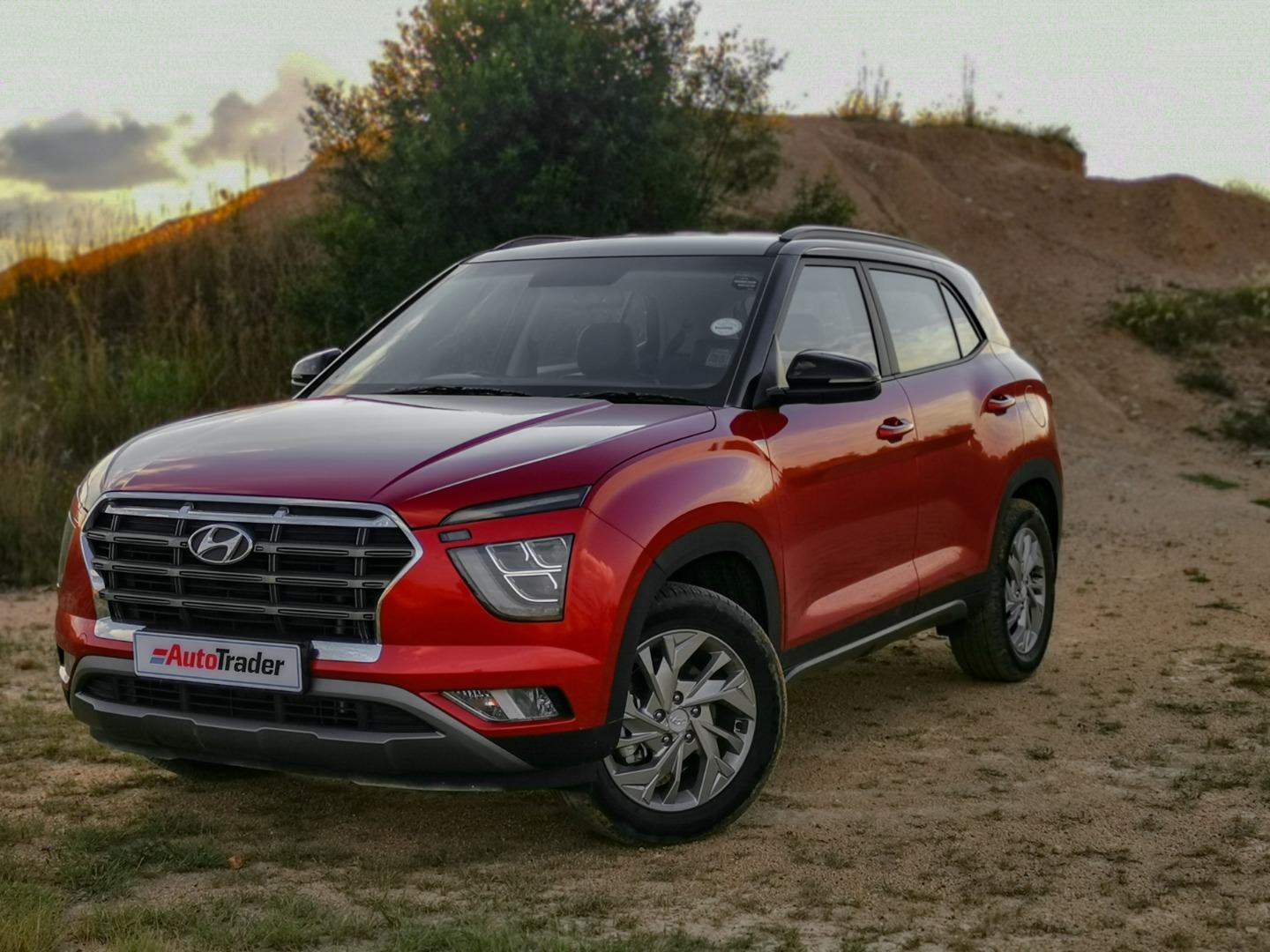
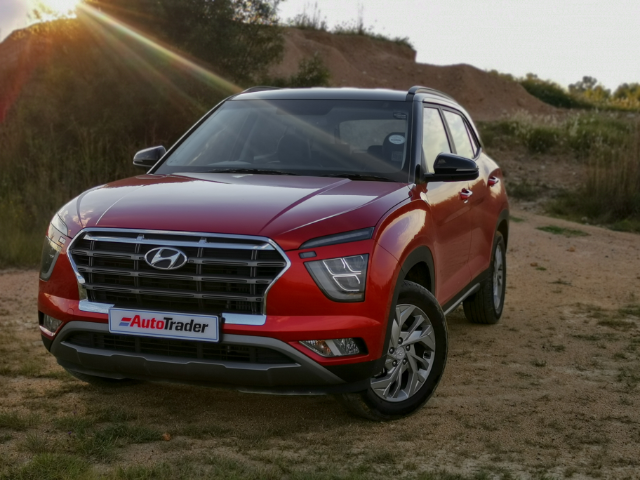
Despite a relatively short run within the local market, the previous Creta found nearly 15 000 homes locally during its tenure, meaning that the new version has quite a bit to live up to from a sales perspective. Having arrived at the tail end of 2020, we were eager to get behind the wheel of the newcomer, which arrived for testing in a fresh exterior hue called Red Mulberry.
Styling
Exterior styling is an inherently subjective thing, but we must commend Hyundai for totally transforming the looks of the Creta versus its predecessor. Up front, it now resembles its Kona and Venue cousins more closely with the uniquely shaped LED headlights situated below the daytime running lights on either side of the brand’s large corporate grille, which dominates the front-end design.
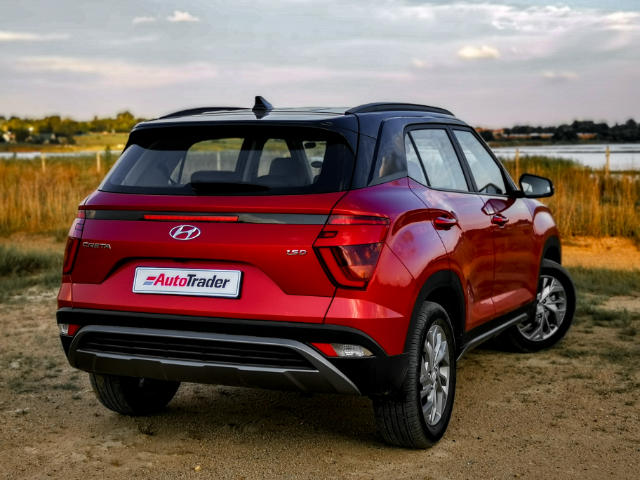
The side profile is characterised by the two-tone paint option with a black roof, the squared-off wheel arches, 17-inch alloy wheels and a shoulder line that creates a semi-circle near the rear door towards the rear bumper. The rear-end is perhaps the most polarising part of the exterior, with sharp, segmented rear lights along with a light bar that extends across the width of the boot below the rear window. The bold exterior is sure to be either a hit or a miss, but one thing’s for sure, it is certainly an attention grabber.
Interior and space
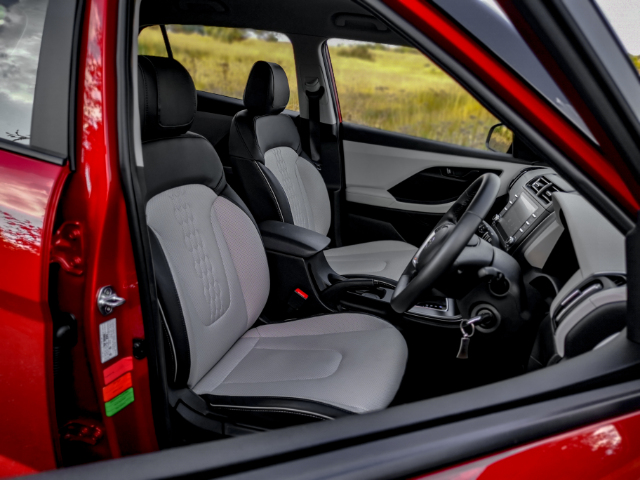
Stepping inside the Creta and the complete product overhaul is again apparent, with a redesigned facia and increased emphasis on a minimalist look and feel. The multifunction steering wheel features a flat bottom and is wrapped in leather with contrasting white stitching to match the black and white artificial leather seats and cream and black plastic surfaces used throughout the cabin. The use of lighter colours contrasted by black surfaces creates an impression of space, making the Creta feel bigger than it is.
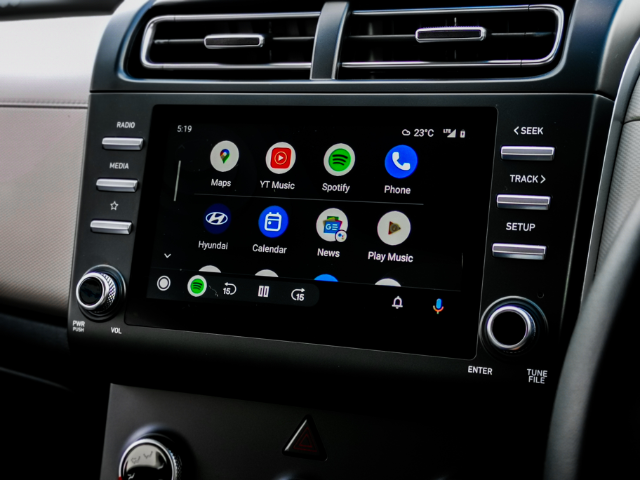
The infotainment system is basic but features Android Auto and Apple CarPlay functionality along with a matte finish on the 8.0-inch screen itself, which we found to be better at avoiding excessive reflection in direct sunlight. Other niceties inside include a USB socket for rear passengers located below the air vents, a USB port and 12V power socket in the centre console and a USB port in the centre storage bin.
In terms of practicality, the Creta features a 433-litre boot, which expands to a 29-inch mountain bike-swallowing 1 401-litres with the rear seats folded flat. There is also a good deal of rear passenger head and legroom as well as a centre armrest with two cupholders, which can be folded away to allow for a third rear seat.
Performance and driving impression
The Creta, in turbodiesel guise, sports a 1.5-litre four-cylinder version of the brand’s ‘U engine’, a line of small capacity diesel engines that have been in production since 2004, with displacements ranging from 1.1-1.7-litres with both three and four-cylinder options.
Previously, the Creta diesel model featured a 1.6-litre unit, also mated with a 6-speed torque converter automatic gearbox, however, in this writer’s opinion, the newer powertrain is more refined and more enjoyable to pilot. Performance is not high up on the list of this car’s virtues, with an 11.7 second 0-100km/h time and a claimed top speed of 173km/h, however, judging a small diesel SUV based upon its performance credentials is missing the point of the product entirely.
Out on the road, the Creta impresses, with respectable low-end torque and relatively effortless progress. The general road noise and refinement is more than acceptable for a car such as this, with the rumble of the diesel engine only audible at lower speeds and during harder throttle applications. There is also 190mm of ground clearance, meaning that despite the front-wheel drive layout, the Creta was able to head off of the beaten path, tackling mild off-road work while demonstrating respectable stability across gravel surfaces.
One must bear in mind that this is a small capacity diesel, and must be approached as such, with an emphasis on using the 250Nm of torque between 1 500 and 2 750 r/min and realising that there really isn’t much of the 84kW available above 3 000r/min. For those not interested in adapting their driving approach for the small diesel, there is a turbo petrol, displacing 1.4-litres and producing 103kW and 242Nm of torque, however, this will set you back R15 000 more and will not be as economical.
Safety
The latest Creta is yet to be crash-tested by one of the authorities on the matter, however, the previous generation Creta was tested by the Latin NCAP back in 2015 where it scored 4-Stars. This rating included a 15.5 from a possible 17.00 for adult occupant safety and a less impressive 29.87 from a possible 49.00 for child occupant safety. It is reasonable to assume that with a redesigned so-called ‘Superstructure’, 6 airbags (2 on the Premium version), ISOFIX child seat anchor points, ABS and stability control, that the latest version is safer than the car that it replaces.
Fuel economy
Having sampled both the new and previous iteration of the Creta fitted with an oil-burner, I can say with confidence that the newcomer is more frugal, with a consumption figure of just 5.3L/100km during my week with the vehicle, some 0.6L/100km lower than Hyundai’s claim. That means that despite sporting just a 50-litre fuel tank, the Creta offers nearly 1 000km of range on a single tank of diesel.
Pricing
At R472 900 for the model on test, the Creta finds itself competing in not one but two SUV segments, providing competition to the likes of the new Mazda CX-30, Peugeot’s latest 2008 and its Kia Seltos sibling while also straddling the line between the likes of the Volkswagen T-Cross and T-Roc and even the Audi Q2, among others. Included in the price is a 4-year/60 000km service plan as well as a 5-year/150 000km warranty with an additional 7-year/200 000km drivetrain warranty.
Verdict
The latest Creta proved a surprisingly adept package, improving upon its predecessor from a build quality, practicality, economy, and packaging perspective. This should certainly feature on your list if you are in the market from a medium-sized SUV, however, it is difficult to ignore the fact that this has become a rather expensive car now.