

In this article:
Hybrid motoring is an attractive proposition for South Africans at the moment with ever-rising fuel costs. The technology isn't that new and has been popularised in commuter vehicles, especially the ever-popular SUV segment. Enter the Jolion, one of Haval's most popular models, which now gets hybrid technology and is badged the HEV.
Related: Haval Jolion (2021) Launch First Drive Impression
The Jolion HEV dials up the style factor and driving convenience, as we discovered recently. The HEV makes use of a self-charging hybrid system that aims to make hybridisation more accessible to the South African buying market. There are also some aesthetic features which differentiate the normal Jolion from the Hybrid. We had the Luxury trim on test. If you're keen on the Jolion S which was also released recently, my colleague Lawrence Minnie has done a review here.

Styling
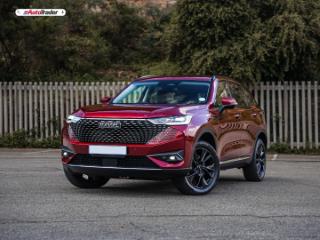
The HEV looks more or less the same as the normal Jolion but with key features changing up the style just for the HEV. From the front on, the boomerang-shaped headlights get a change by way of increasing the LED real estate. Making what was before a simple front bumper trim piece with a slim LED light strip, it now forms a large part of the headlight which doubles as indicators too. The arrangement of the LEDs in the headlights compliment the front grille with chrome trim across the black plastic.

Other changes for the HEV include blue accents found in the headlights and badging for the vehicle. The rear changes include a large rear spoiler and bumper diffuser finished in a bar of satin silver. The wheels are of a five-spoke two-tone design but with a futuristic split-spoke design. The car looks good in white and the blue accents complement it nicely. If you're unsure of what colour to pick, we have a colour guide here.
Related: Is a used Haval a good car?

Space & Interior
The Jolion HEV's interior remains similar to the rest of the Jolion range, with the only notable change found in the instrument cluster with gauges to suit the hybrid drivetrain. Other than that, the Jolion cabin is spacious and has padded leatherette seats which are well supported and comfortable. Rear occupants receive ample legroom, HVAC vents and charging ports. You can also let in more light with the panoramic sunroof which stretches all the way to the rear seats. Various soft-touch materials and gloss plastic trim pieces find their way into the HEV's interior. You also have a floating dashboard to round off the look but also double as a storage pocket. In the boot area, you have 337-litres of capacity which can be extended to 1 133-litres when you fold down the rear seats. Overall, the interior is pleasant in the Jolion HEV and geared more for longer journeys.
Related: BAIC Beijing X55 vs Haval Jolion vs Hyundai Creta: Which one has the best infotainment system?

Comfort & Convenience
The HEV is noticeably quiet on the road, so quiet that you don't even perceive the changeover from EV mode to the internal combustion engine (ICE). Even with the ICE revving up, the Jolion HEV is still quiet. The NVH (Noise Vibration and Harshness) is minimal, and the Jolion rides comfortably and makes for a great commuter. The infotainment system needs some revisions in the user interface, though. The home and aircon icons are on the far top left of the screen and are quite small to see let alone touch to access. Not only that, there are physical buttons just below the infotainment screen that control the aircon, but this could be implemented better in our opinion. There are two blank button plates that could have been used to control the fan speed and perhaps even the temperature too.

What also confused this reviewer at least was how to put the car into different driving modes, as the driving mode selection is within the driver settings when it should have rather been front and centre for drive settings should you wish to change on the fly. A telescopic steering wheel would have been welcome. Lastly, the instrument cluster has a noticeable amount of light glare making it difficult in some situations to see the cluster. Much of it can be alleviated by turning up the cluster brightness but there isn't a memory function for that so you have to remember to adjust the brightness whenever you start the car during the day. Other than those though, we quite liked the audio system in the Jolion which had a balanced sound signature with some depth to it. Android Auto connectivity worked decently and was fine to use. We also compared which cars had the best infotainment system against the Jolion's here.
Related: Honda BR-V vs Haval Jolion vs Renault Duster: Which one is the best value for money?

Performance
The HEV utilises a self-charging hybrid system. You have a 1.5-litre turbocharged engine with an electric motor in front with a supporting battery pack in the rear. The transmission on offer here is Haval's Dedicated Hybrid Transmission (DHT) which combines the outputs from the combustion engine and electric power and sends it all to the front wheels. In action, the transmission feels like a CVT. The total output is 140kW of power and 375Nm of torque. How does it feel? When driving gently and cruising about in town, the HEV is smooth and responsive with seamless changeovers from electric to petrol power depending on the speed and amount of power needed in a particular situation. The HEV provided impressive performance when you put your foot down. I found that the power and torque caught me off guard a few times during my tenure.
In terms of handling, the HEV is decent and as you'd expect a compact SUV to be. The ride oscillates between soft and firm but errs more to the softer side with some body roll, which is to be expected. The vehicle rides fine in both city and open road settings with minimal vibration. The steering feel can be adjusted from a soft to a sportier handling feel. We left our test unit in Sport mode which we felt was best.

Fuel Economy
Claimed fuel consumption for the Jolion HEV is 5.0 L /100km. In our testing, we managed 6.2 L/100km but lower figures can be realistically achieved. It was just too much fun to feel the strong acceleration so it couldn't be helped. If you're curious about which car has the lowest running costs, the petrol-only Jolion is featured here in this comparison.
Related: Haval Jolion test drive: make sure to check these features out

Safety
In terms of safety, you'll find the following in the Jolion HEV but in Luxury trim.
- 6 Airbags (Dual front, side and curtain)
- EBD and Brake Assist
- Stability Control and Traction Control
- Anti-Roll System and Secondary Collision Mitigation
- Hill Assist - uphill and downhill
- Tyre Pressure Monitoring System
- Rear Parking Sensors
- Reverse Camera with guidelines
- Driver fatigue alert
- Anti-Theft Alarm System.

Price
The Jolion HEV comes with a 4-service /60 000km service plan, a 5-year /100 000km Warranty and an 8-year/150 000km Hybrid Battery System Warranty.
| Model | Price (incl. VAT) |
| Haval Jolion HEV Luxury | from R549 950 |
| Haval Jolion HEV Super Luxury | from R579 950 |
Related: We also had a best value for money comparison where the petrol-only Jolion appeared here.

Competitors
- Toyota Corolla Cross GR Sport Hybrid
- Mazda CX-30
- Proton X50
- Fiat 500X
- Volkswagen T-Cross
- Mitsubishi Eclipse Cross
Related: Everything you need to know about the Haval Jolion

Verdict
Hybridisation in the Haval Jolion is a welcome addition and is executed quite well from our experience. The styling changes are attractive too. Some downsides include user interface and user experience issues with the infotainment system. Other than that, our time with the Jolion HEV was a pleasant one, and most importantly, efficient. If you're keen on a Jolion HEV, don't forget to search AutoTrader for the latest used and new offerings. While you're at it, try out our Instant Offer tool to sell your current car quickly and easily to fund your potential Jolion HEV purchase.