Haval Jolion review (2021): Value-filled crossover hits all the right notes
Haval has been on a roll of late, securing a large amount of local market share courtesy of its competitively priced and well-specified range of SUVs. One of the key factors in its success is the Jolion, a car that we recently had a chance to sample for a week.


Introduced earlier in 2021, Haval’s Jolion is taking the local compact crossover segment by storm, offering a nearly unbeatable amount of car for the money. With rivals as accomplished as the Peugeot 2008, Volkswagen’s T-Cross, the Renault Duster, Ford’s EcoSport and Hyundai’s Venue, to name but a few, the Jolion certainly has its work cut out for it.
Based on the unintentionally comically named L.E.M.O.N platform, the Jolion signals Haval’s statement of intent, to establish itself among the most popular SUV producers in the markets that it has targeted, one of which is South Africa. The Jolion range consists of five models, from the entry-level City derivative to the flagship Super Luxury. The latter was dropped off for us to experience recently and was finished in a rather loud shade of green.
Styling
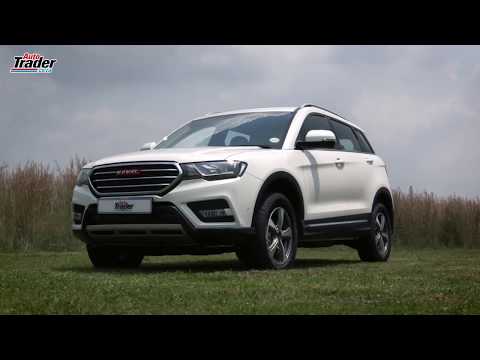
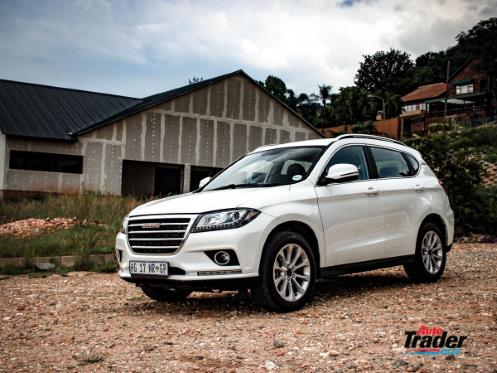
The Jolion is certainly a good-looking product, a sentiment affirmed by a quick vox pop at my local shopping centre where a small sample size of people thought that it was a Volvo, a compliment in every sense of the word. The front end is dominated by the large grille and LED headlights with DRLs that extend from the edge of the headlight down towards the lower bumper.
The side profile and rear-end are where I see that Volvo-esque styling with a strip of chrome on the lower end of the front and rear doors, while at the rear the taillights start on the rear quarter panel and extends across the boot lid on either side, only broken by the large “Haval’ badge. The lower bumper features fog lamps with a chrome surround, rounding off a fantastic exterior design that is far superior to the generic H2 that the Jolion replaces.

Interior and space
The interior is another massive step-up for Chinese products, from our experience, with a contemporary design that places a great deal of emphasis on connectivity. The general fit and finish is an improvement from the H2 as well, providing some soft-touch materials and solid ergonomics. There are some areas, such as the gear lever and some plastic surfaces that still leave something to be desired in terms of quality and visual appeal, though.

The 12.3-inch infotainment system dominates the interior aesthetic and features Apple CarPlay and will soon offer Android Auto functionality too. In addition to this, the system allows you to adjust the climate control, change the look and feel of the system drastically, change driving settings, seat settings, comfort settings and programme the assistance systems, which should be done before setting off as this is rather distracting. There is also a 7.0-inch digital instrument cluster which looks good but lacks the functionality that we were expecting and is not as high a resolution as the infotainment system.
The interior also features an array of storage areas, with a handy storage area complete with USB ports below the centre console, large door bins, a handy storage area near the drivers left elbow and two USB ports at the rear. The model on test also features a wireless smartphone charger, which is a nice touch.

From a space perspective, the Jolion is difficult to beat in this segment, with an exceptionally capacious rear row, able to seat three occupants easily. The front seats are also broad and able to accommodate most people comfortably while the boot caused some contention during the test as Haval have said that it is 332-litres but reports from overseas quote 430-litres. Either way, we were able to fit two sets of golf clubs and two tog bags comfortably.

Performance and driving impression
Looking at the powertrain and driving impression of the Jolion is where we finally find a chink in the Haval’s armour. On paper, the 1.5-litre turbocharged petrol engine and 7-speed dual-clutch gearbox appear sufficient, with 105kW and 210Nm of torque propelling a car weighing 1 370kg. The problem is that out on the road, the engine and gearbox prove to be the Jolion’s weakest attribute, with relatively poor fuel returns, sluggish acceleration, and a general sense that this is not a particularly good four-cylinder powerplant.
The powertrain’s shortcomings are only irksome when pressing on, meaning that for the average owner that sits in traffic and does a combination of urban and suburban driving, the engine and gearbox will be sufficient. Aiding the impression that the Haval is a good commuter is its light steering, a good deal of noise cancellation and wind noise buffering as well as its relatively soft ride. We attempted some dynamic driving through a few twisty bits and surmised that this is far from the Jolion’s forte, so par for the course in this segment.

Safety
The Jolion is yet to be crash-tested by an organisation, however, it has a long list of safety items which include ABS with EBA, hill start assist, traction and stability control, hill descent control and 6 airbags.
There is also a raft of semi-autonomous driving features such as adaptive cruise control, automatic emergency braking, lane departure warning, lane keep assist, and blind-spot monitor. We found the adaptive cruise control and lane keep assist to be overly sensitive and in need of some calibration, which is to be expected as this is relatively new technology for the brand.
Niggles aside, these features should ensure that the Jolion is a safe product, however, we await the results of a crash test which will happen later this year.

Fuel economy
We have already established that the 1.5-litre turbo petrol engine which is paired with a 7-speed dual-clutch gearbox is not exactly the most inspiring powertrain to use. From an efficiency perspective, it falls short of its 7.5 L/100km claim, with our weeklong stint culminating in an average fuel consumption figure of 9.1l/100km.
Pricing
Our flagship Super Luxury test vehicle is as well specified as a Jolion can be, and yet its list price is an incredibly reasonable R398 900. What’s more impressive is that if you can live without the semi-autonomous driving features, the Luxury auto model presents even more value, with a list price of R367 900, making that variant our pick of the range.

Verdict
The Jolion has been one of the surprise packages to emerge in the local automotive scene this year. Its value for money combined with the latest in-car technologies and contemporary styling makes it a compelling package. If you are shopping in this segment, the Jolion must be on your shortlist of test drives.