



In this article:
There was a time when one would approach a Korean-built vehicle with caution. In the early days of Hyundai, Kia, and Daewoo, one would have to carefully consider the purchase and be rather bold in accepting their offerings. Their prices were attractive but their products were largely unknown and untested. Now though, one doesn't think twice about considering a Hyundai or Kia and their prices are pegged right up there with the other, established premium offerings - and rightfully so. They're rather good vehicles.
Now doesn't this sound all too familiar?
Related: Haval H6 HEV (2022) First Drive Review
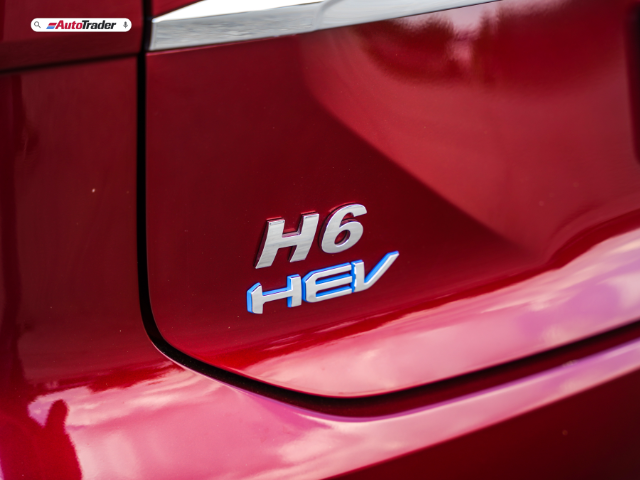
The more recent onslaught from firms like Chery and Haval has made South Africa stand up and take notice, but not without being met with the same sort of scepticism around their quality and durability. Haval is certainly committed to South Africa and continues to up its game, offering products that are starting to cause concern for the more established brands. Their latest slew of offerings are pegged at considerably opposite ends of the spectrum but address the gaps that have been identified in the market. The H6 GT adds a little spice and performance to proceedings while the H6 HEV is a more environmentally conscious approach with its hybrid drivetrain and reduced running costs.
Styling
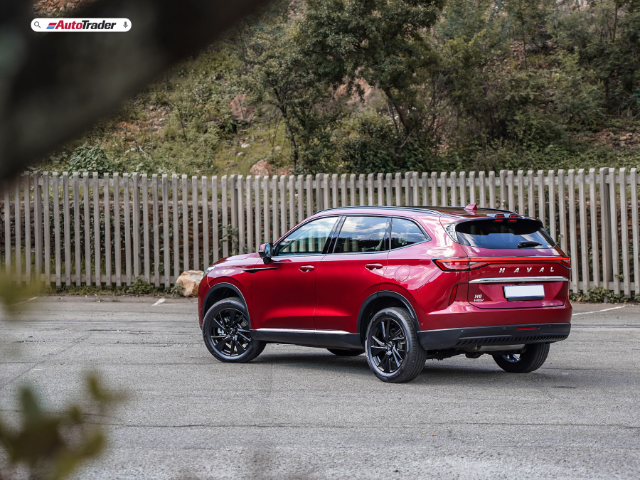
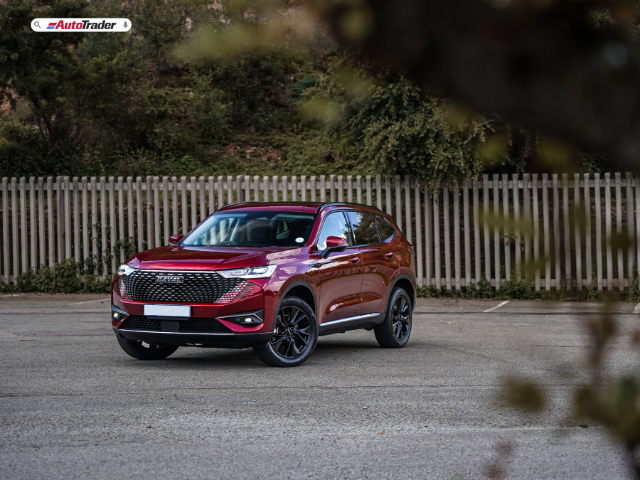
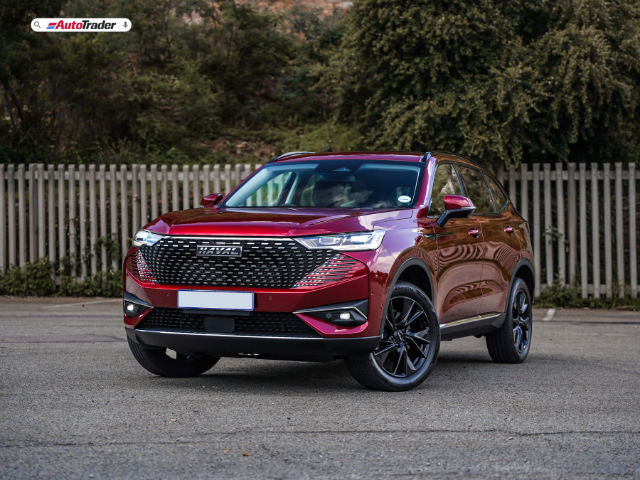
The H6 HEV is immediately set apart from its non-hybrid brethren with a stylish and intricate front-end treatment. LED headlights rest above a reverse element grille where the chrome detail elements extend outward from the grille and filter into the bumper itself. A large, lower, trapezoidal air dam is flanked by fog lamps and attractive black canards mimicked down the side of the vehicle underneath the wing mirrors.
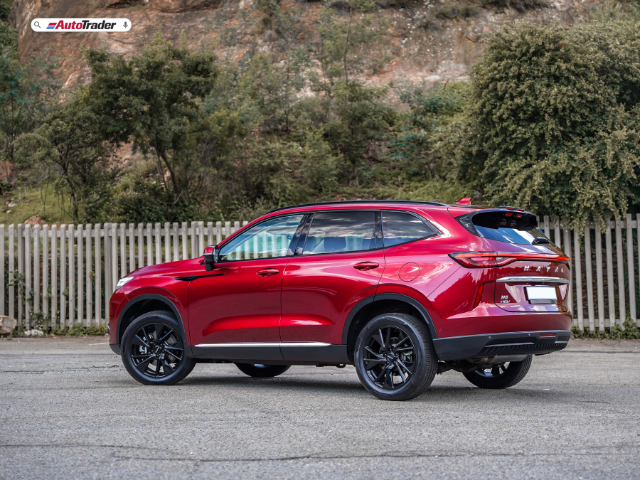
The SUV form rolls around on dark, 19-inch sport alloy wheels, shod in 225/55R19 tyres. Contrasting with the paintwork are gloss black trimmings around the windows and along the lower sills, continued around the back with black detailing on the raised tailgate wing with its split high-level brake light. It's here at the rear where the HEV is set apart with a central LED taillight strip that joins the two outer LED taillights, spanning the width of the electronically operated tailgate.
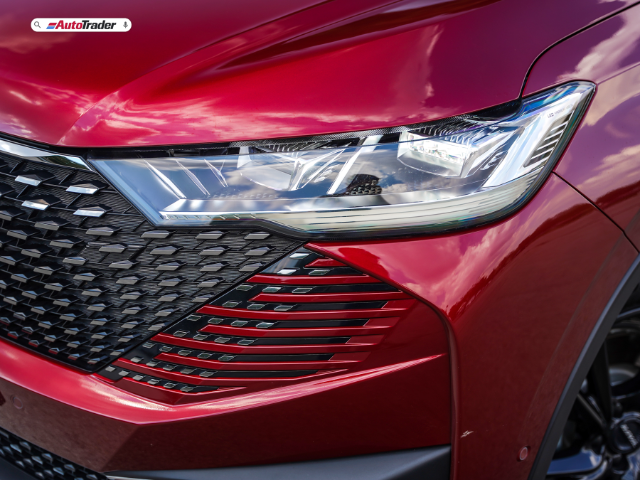
The Haval H6 has become rather popular and the styling changes to the HEV derivative help separate it from the rest. The front-end treatment adds a distinctive air of class and sophistication while the rear remains elegant. Sadly, not much can be done about the generic SUV shape but that doesn't detract from the attractive visage that the H6 HEV presents.
Space & Interior
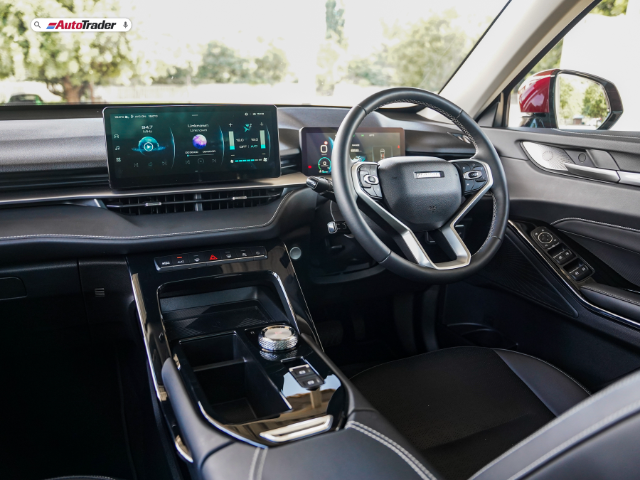
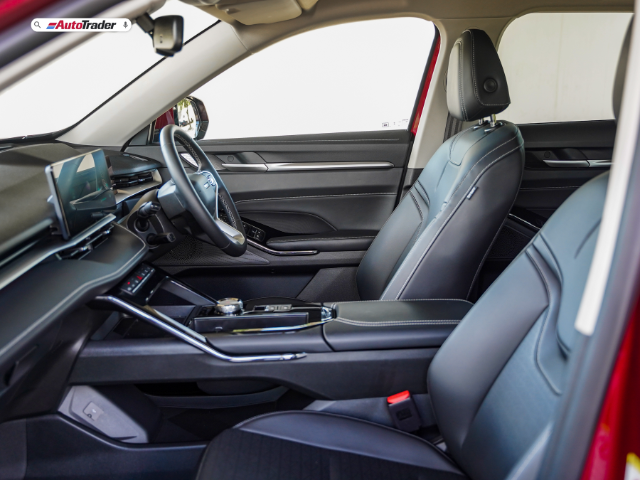
The H6 HEV is not small and nor is it cramped. The cabin offers a spacious, minimalist design with ample storage space. On this Ultra Luxury variant, there's no shortage of synthetic leather and raised stitching - all with a wonderful execution and marvellous feel. Just the right amount of piano black plastics and small amounts of brushed silver plastics are used to break what overall is a rather dark cabin.
The H6 HEV is only a 5-seater but rear legroom is more than generous and front passengers will not struggle with head or shoulder room either. While Haval doesn't publicise the boot space locally, I'm led to believe that you get 600 litres of space which is further expandable to over 1400 litres with the rear seats folded forward. This proved rather practical over the festive season when it came to transporting some larger items for the festivities.
Comfort & Convenience
With the H6 HEV being pegged as a premium vehicle and the nomenclature stating that it is indeed "Ultra Luxury" I was certainly expecting a comfortable, pliable ride from the HEV. I was not left disappointed and despite the large 19-inch wheels and tyres, the general compliance from the suspension was fantastic. You will get vehicles that ride smoother than this but not at this price range. I was genuinely taken aback by how well the engineers managed to tune the suspension. There are a few of the other 'premium' brands that could take note in this regard.
Ergonomically, the HEV was also dialled in. The electrically adjustable seats with both heating and ventilation proved to be comfortable on the longer journeys and gave no cause for concern at any point in time. The only cause for concern came from the convenience features.
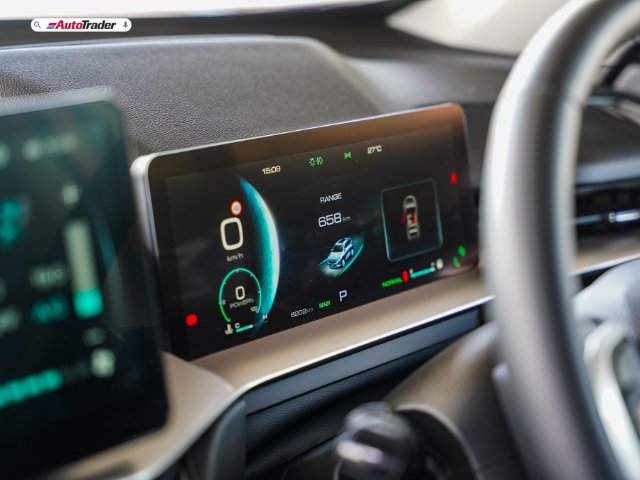
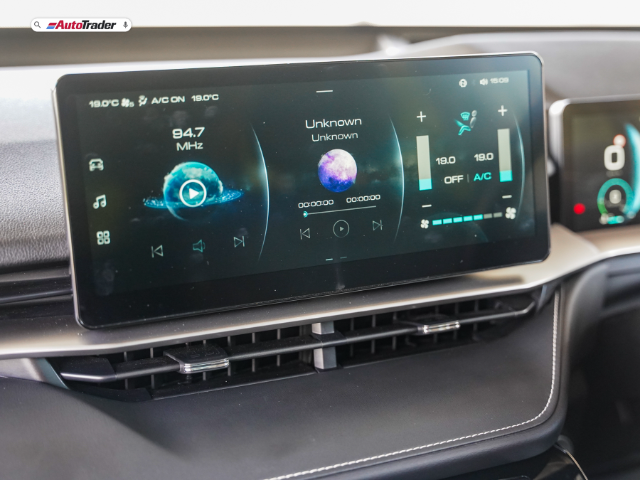
In their bid to simplify things and create a minimalist interior, Haval moved virtually all the controls to the infotainment screen. To say that this is mildly infuriating is to put it kindly. The infotainment screen is an impressive 12.3-inch touchscreen unit with admirable response times and features, but accessing the features is easier said than done. The UX is not where it needs to be with things like the volume control tucked away forcing one to swipe down first and then use a touch slider to adjust. There is the steering wheel mounted controls but I prefer it when the passengers are not touching my steering wheel.
HVAC controls are also integrated into the unit as are the drive modes, assistance systems and settings and all your audio controls. The unit accepts Android Auto and Apple CarPlay but once this is activated, you're unable to swipe down on the screen to access the volume control. This forces you to have to exit CarPlay and then swipe and slide... not ideal.
Performance
As the name suggests, the H6 HEV is equipped with a smaller engine than we're accustomed to seeing in the H6 lineup, which ordinarily would be a 2.0-litre. The 1.5-litre unit in the HEV benefits from a turbocharger and the assistance of an electric motor and battery pack. This Series Parallel (Self-Charging BHEV) uses an electric motor as part of the 2-speed Direct Hybrid Transmission (DHT) to fill in the gaps, handle coasting duties, and will provide initial drive up to approximately 50 km/h at part throttle application. As a result, you get 113 kW and 233 Nm from the petrol engine alone and 139 kW and 300 Nm from the electric motor alone. Combined, and after the inherent drivetrain losses, you get a total power output of 179 kW and 500 Nm torque. this is enough to propel the HEV to 100 km/h from a standstill in only 8.5 seconds and is enough to have the traction control light flashing like a strobe.
You need not worry about managing the electric drivetrain as all of this happens automatically. The H6 will decide when to switch between petrol and battery to provide the best possible power and economy. You can opt for one of three drive modes to favour one or the other though. You can choose between Normal, Eco or Sport. The gearbox programming is also finely tuned and at no point did I wish I was in another gear or struggle with an intersection.
Fuel Economy
The entire point of the H6 HEV is to be more fuel efficient, it's the reason that it exists. With Haval having been a relatively hot topic in the last few years, you will have heard about the rather dismal fuel consumption figures and the inability of owners to hit the manufacturer's claims. It's no secret, Haval's are thirsty. The rest of the H6 lineup with their 2.0-litre turbocharged engines will hover around the 9 l/100km mark if you're lucky. A far cry from the 7s that they claim. The primary reason for this is South Africa's poor fuel quality, high altitudes and hot environment.
The H6 HEV helps solve this problem by downscaling the petrol engine to 1.5 litres and adding electric assistance. The small 1.8 kWh battery is sufficient for this purpose and helps give the HEV a claimed combined cycle fuel consumption of 5.2 l/100km. In the real world, you'll see figures between 6.9 and 7.2 l/100km which is still more than acceptable, considering the sheer size and total power output of the H6 HEV.
Proton X70 vs Chery Tiggo 8 Pro vs Haval H6: Which has the lowest running costs?
Safety
The H6 HEV is Haval's flagship offering, alongside the GT which is geared more toward performance than efficiency. As such, it received Haval's full complement of safety systems that include adaptive cruise control, lane keep assist, lane departure warning, great cross-traffic alert, emergency braking assist and automatic emergency braking for pedestrians and cyclists, and traffic sign recognition. This is all good and well but you will spend your first few days configuring the system to get the sensitivity the way you want and to disable the infuriating bussers and alarms that trigger an event.
The H6 HEV is also equipped with the standard fare of airbags, ABS and traction controls and stability programs.
Price
All of this convenience and style comes at a price though and hybrid technology also costs a little more. This all makes the Haval H6 HEV 1.5T a little pricier than one would expect from the Chinese brand. The H6 HEV 1.5T Ultra Luxury retails for R669 950 and is sold with a 5-year/100 000 km warranty and a 5-year/60 000 km service plan. The hybrid system battery is guaranteed for 8 years.
Competitors
When you start talking about nearly R700 000 for a Haval, you start playing in the territory of the Volkswagen Tiguan, Toyota Fortuner and even the RAV4. Add R15 000 to the list price and you're getting behind the wheel of a Toyota RAV4 2.5 Hybrid which will offer you similar fuel savings and less frustration when it comes time to selecting a radio station.
Renault Koleos vs Haval H6 vs Toyota RAV4: which one is the best value for money?
Verdict
I spent the December period with the Haval H6 HEV and was suitably impressed with what it had to offer. It's wonderfully trimmed and the perceived quality is outstanding. The firm certainly has come a long way in this department. The excellent suspension and gearbox, as well as the drivetrain made using the H6 a pleasure. No trip was too far and I hardly had to worry about wasting fuel. The HEV is the answer that Haval fans have been looking for, even if it does come at a premium.


