

Walking into a local dealership to trade in your car can feel like a high-stakes negotiation where the floor manager holds all the cards. You hand over the keys, watch them walk around your pride and joy with a clipboard, and wait for them to hit you with a lowball number that feels like a slap in the face.
Here’s the reality: South African dealerships aren’t guessing. They run on strict valuation models. When you understand how dealership evaluations work and prepare your car accordingly, you stop leaving thousands of Rands on the table.
Value my car for free, now

To ensure you get the best offer on your car, there is 'homework' to be done before you approach the dealership.
Understanding trade-in vs retail value
When evaluating your car, dealerships operate on two distinct figures. Understanding the difference between them is key to managing your expectations and negotiating effectively:
- Trade-in value: This is the wholesale price a dealership is willing to pay to acquire your car. It will always be noticeably lower than what you see similar cars selling for online. This lower figure provides the dealer with the necessary margin to recondition the vehicle, hold it on their floor, cover overheads, and eventually turn a profit.
- Retail value: This is the price the dealership lists the car for on the showroom floor or website. It represents the top-end market value of a fully prepped, polished, and ready-to-sell vehicle, which often includes a dealer warranty or guarantee.
The gap between these two numbers is the dealer's operating margin. If you want to dive deeper into how this affects the money in your pocket, check out our recent article titled "What's my car worth?" How to set the right selling price.

Mileage is everything - don't wait too long to sell or trade in if you are someone who replaces their car every few years.
The invisible walls: Odometer benchmarks
Mileage is the primary driver of depreciation, but value doesn't drop off in a smooth, linear line: it hits steep, invisible ledges.
- The 80,000 km sweet spot: This is a crucial line in the sand on SA dealership floors. Under 80,000 km, your car is prime inventory for the dealer’s retail floor. It’s easy to finance through major banks like WesBank or Absa, and it usually still qualifies for extended warranty and service products.
- The cliff: Once you cross 80 000 km, the dealer’s reconditioning risk increases, and the buyer pool shrinks. Cross 100 000 km, and the valuation drops significantly because bank financing structures become far stricter.
- The play: If your odometer is sitting at 77 000 km and you are planning to upgrade later this year, trade in before you cross that 80 000 km mark to secure a noticeably higher offer.
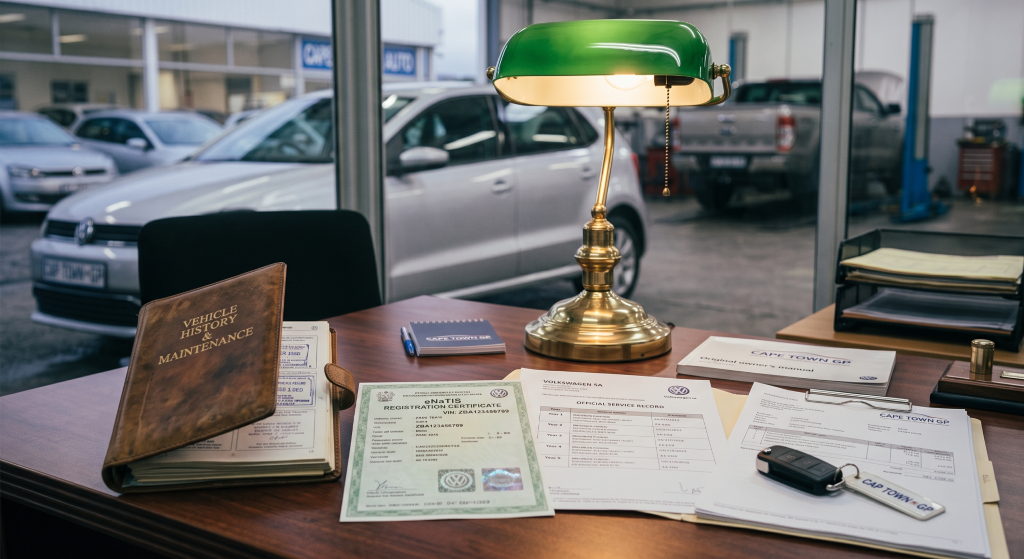
Having all your admin ducks in a row means more money in your pocket.
Service history: Paperwork is worth cold, hard cash
A missing service book is the fastest way to watch an evaluator mark your car down from "Clean" to "Fair" condition.
| Service history status | Dealer perception | Estimated financial impact |
| Full dealer / stamped book | Low risk; engine and mechanicals properly maintained. | Top Tier Offer (0% penalty) |
| Partial history / missing stamps | Maintenance gaps; potential hidden wear. | 5% – 10% Deduction |
| No records / DIY repairs | High risk; immediate mechanical discount required. | 15%+ Deduction |
Pro Tip: Lost your book? Call the franchise dealership network that serviced the vehicle. They can pull up and print your full service record on official letterhead. That free printout can instantly protect thousands of Rands in value.
Vehicle age vs warranty limits
Vehicle age matters, but floor managers care most about where the car sits relative to its original factory warranty and maintenance plan.
- Years 1 to 3: This window carries the steepest initial depreciation curve. Unless you put down a sizable cash deposit upfront, trading in during this period often leads to negative equity—where you owe the bank more than the vehicle's market value.
- The year 4 to 5 mark: This is usually the ideal window to sell. Depreciation has slowed, yet the car often retains a portion of its active factory plan.
- Out-of-warranty territory: Once a car passes the 5-year mark, dealers automatically budget for potential component repairs before putting it up for resale.
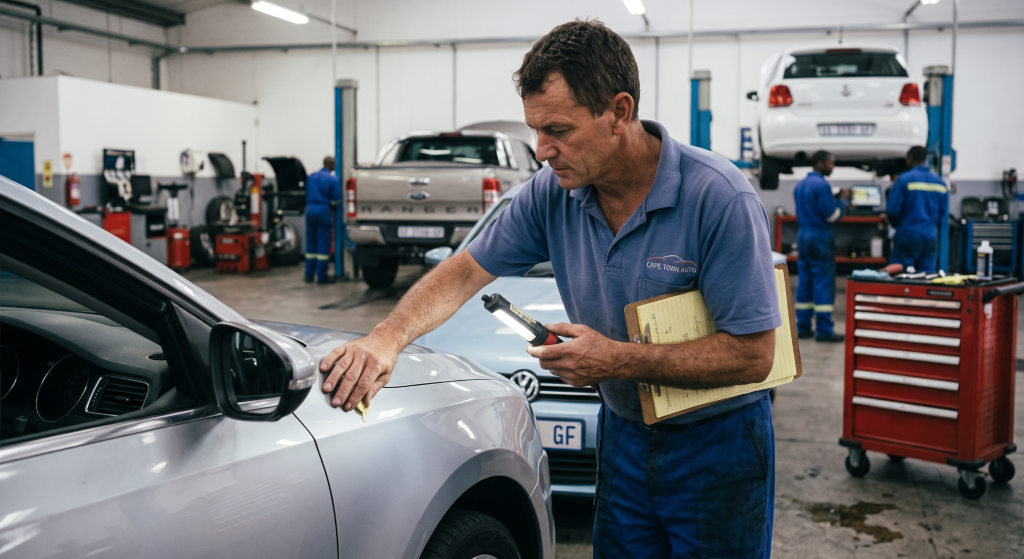
So it begins...
The seller's guide to acing that pre-inspection checklist
Evaluators look for small visual and functional defects, which can discount your valuation by far more than the actual repair cost. Spending a little time prepping your car pays off massive dividends:
Appearance & detailing
- Get a full valet and polish: Don't just pop through a R75 petrol station car wash. Treat the car to a proper interior valet to remove stains and odours, and get the bodywork machine-polished to remove light swirl marks and scratches. Spending R1 000 here can add R5 000+ to your trade offer.
- Headlight restoration: If your plastic headlight lenses are yellowed or hazy, polish them clear with an inexpensive restoration kit or quick detailer visit. Faded lights can make a 2023 model look like a 2017 model.
- Perform an engine bay wipe-down: While a high-pressure wash isn't necessary (and can sometimes cause electrical issues), wiping away heavy dust, grease, and debris from the engine cover and plastics gives the impression of a meticulously maintained vehicle.
- Wipe the infotainment: Reset the infotainment system to factory settings so your personal Bluetooth devices, contacts, and home addresses aren't visible during the test drive.
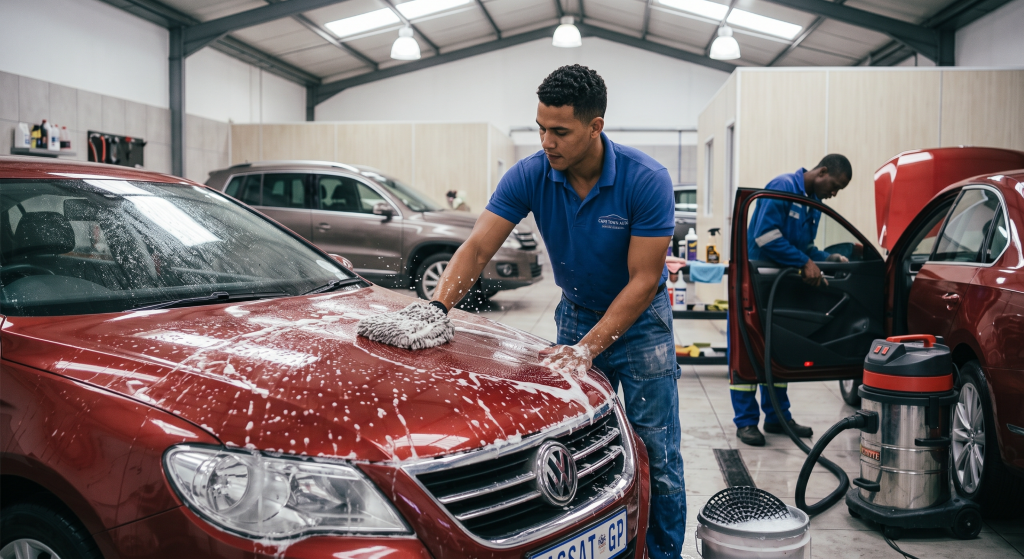
A good valet can add thousands to your price!
Mechanical & functional checks
- Fix minor bulbs, wiper blades, and chips: Replace blown interior or registration plate bulbs, and get minor windscreen chips resin-filled. Evaluators use these small oversights to justify large reconditioning deductions.
- Check and top up fluid levels: Ensure the engine oil, coolant, brake fluid, and windscreen washer fluid are at their correct levels. Low fluid levels instantly signal neglect to an evaluator.
- Address dashboard warning lights: A glowing "Check Engine," airbag, or ABS light is a massive red flag that can drastically reduce a trade-in offer. If it's a minor sensor issue, getting it resolved before the inspection prevents the dealership from assuming the worst-case scenario.
- Test all cabin electronics: Verify that the air conditioning blows cold and that all electric windows, side mirrors, and sunroofs operate smoothly without strange noises. Evaluators push every button, and malfunctioning electronics lead to immediate reconditioning deductions.
- Check tyre pressure and ensure good presentation: Ensure all tyres are inflated to the correct pressure and have adequate tread. Visually underinflated tyres make a poor first impression during the walk-around.
Documentation & included assets
- Dig up all accessories and spare keys: Locate the spare key fob. A missing modern transponder key instantly knocks off R3,000-R6,000. Make sure the spare wheel, jack, wheel spanner, and lock-nut key are in the boot.
- Organise the paper trail in a binder: Compile your eNaTIS registration certificate, ID copy, original manuals, service records, and receipts for any recent maintenance into a single, neat folder. Handing a floor manager a tidy binder signals that the car was meticulously cared for.
More practical selling advice
If you are navigating the process of selling your car in South Africa, check out these guides.