



Turbochargers (we'll say turbo for the rest of this article) are a ubiquitous car feature nowadays but they only really became popularised in the 1980s. Turbos are an easy means to gain a large amount of power without having a massive engine displacement and there's an element of efficiency to them. As a result, plenty of petrol and diesel cars have turbos attached to them. How does it all work? We'll go ahead and explain it all here.
Related: What is a car trim?
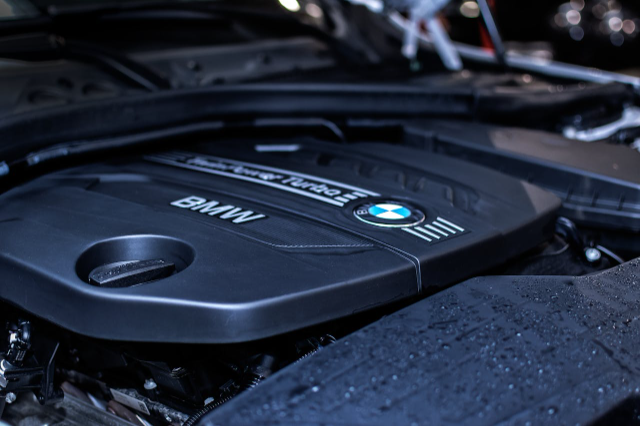
Understanding how a car engine works
Turbochas are installed on internal combustion engines. To understand how turbos work, though, you first need to understand how an internal combustion engine works. Simply put, it's all in the name; in each cylinder, there are mini explosions taking place. For these explosions to take place, you need air, heat, fuel, and an igniter. In a typical car, you'll find an Otto Cycle engine, which basically turns gasoline into motion. Inside an Otto Cycle Engine, which follows the sequence of:
- Intake - Air is sucked into the combustion chamber via an intake valve, fuel is sprayed in with an injector, the piston goes down and then the intake valve closes.
- Compression - The air-fuel mixture is compressed as the piston goes up.
- Ignition - When the piston reaches the top of the combustion chamber, the air-fuel mixture ignites from a spark from a spark plug, an explosion occurs and the piston is forced down.
- Exhaust - After the explosion, the exhaust valve opens, and the piston goes up and pushes the gases from the explosion out of the combustion chamber
Many regard the Otto Cycle engine as the 4-stroke engine. There is also the Atkinson Cycle engine, typically used with Hybrid vehicles, but that's a discussion for another article.

How does a turbo work now?
Turbos were initially used on aircraft engines but were experimented with on car engines, which proved to be successful. Basically, a turbo is a form of forced induction, which means the turbo forces more air into the combustion chamber. Powering the turbo is the flow of exhaust gases from the exhaust component of the 4-stroke cycle that spins a turbine in the turbo. The spinning turbine on the exhaust side of the turbo is attached to a shaft that spins another turbine on the compressor side of the turbo. The more exhaust gas that flows through the turbine as the engine revs up, the faster the turbine spins and forces more air into the combustion chamber. With more air and increased fuel in the air-fuel mixture, you get a bigger explosion and, therefore, more power. If you've ever driven a turbocharged car, you'll notice a power surge as you rev up the car; that's the turbo at work. The beauty of a turbo is that it's not an on-and-off switch; it's a power curve and, particularly with modern engines, more linear.

Over time, turbos nowadays are more complex with computer systems and more complex in managing how much exhaust gas flows through the turbo. Back then, Turbos were seen more for performance applications, but there's also an efficiency aspect to them. This component operates at high speed, high pressures and temperatures, so the refinement of this piece of engineering has stepped up, and even other components have come to better the efficiency of the turbo. The intercooler cools the hot air coming out of the turbo, and an oil cooler cools the turbo's oil (Since there are moving parts) so the unit doesn't overheat.

Pros and Cons of a turbo
Pros
The turbo is an easy way of increasing an engine's power and torque, and it is a good addition to smaller-capacity engines. Turbos can also be used for fuel efficiency rather than performance. Diesel engines benefit greatly from turbos. Engines with turbos also tend to be quieter. They also make a car fun to drive.
Cons
Earlier turbos used to deliver a large lump of power in a small window, which resulted in either turbo lag or turbo threshold. Turbo lag simply is a time delay between pressing the accelerator and the turbo delivering its power. Turbo threshold is the point when your turbo starts spinning to generate 'boost' because the engine speed is sufficient enough. Modern-day turbos have mitigated most of this, but it can make some cars irksome to accelerate. When they go wrong, turbos can also be expensive to repair.

Turbo Popularity
A large majority of cars, both petrol and diesel, use turbos these days, from state-of-the-art luxury rockets to humble grocery getters and even fun cars. They've also proved helpful in reducing vehicle emissions while still maintaining relatively high power outputs. Diesel-powered engines have had the turbo as a mainstay thanks to great efficiency and superior torque. Even with hybridisation, turbos are still very much in use, and the turbo has had some electrification testing of its own by some manufacturers to improve its functionality and efficiency.


