
There's an old saying that goes " The deal's not done until the paperwork is complete", and it couldn't be truer when it comes to buying or selling a car. The finance may be completed and money may have changed hands, but the new car isn't yours until all the paperwork has been signed off.
Related: How to register a used car
Transferring car ownership in South Africa is governed by the National Traffic Information System (eNaTIS) and involves specific steps and documents for both the seller and the buyer. The entire process must generally be completed within 21 days of the sale to avoid penalties.
What to do if you lose your car’s registration documents

The Seller's Responsibilities
Obtain a Roadworthy Certificate (RWC): If the current certificate is older than 60 days, the seller or buyer, as negotiated, must obtain a new one from an accredited testing station.
Complete the NCO Form: The seller must complete the Notification of Change of Ownership (NCO) form with the buyer.
Submit NCO and Documents: The seller must submit the completed NCO form and a copy of their ID to a registering authority (licensing office) within 21 days of the sale. This legally removes the vehicle from their name and prevents future liability for fines.
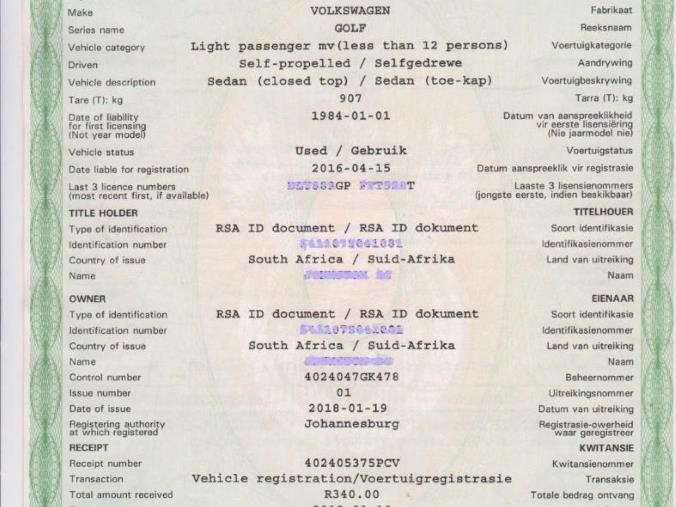
Hand Over Documents: The seller must give the original Vehicle Registration Certificate (RC1), the RWC, and a signed copy of the NCO form to the buyer.

The Buyer's Responsibilities
Gather Documents: Collect all necessary documents, including the ones received from the seller (RC1, RWC, NCO copy).
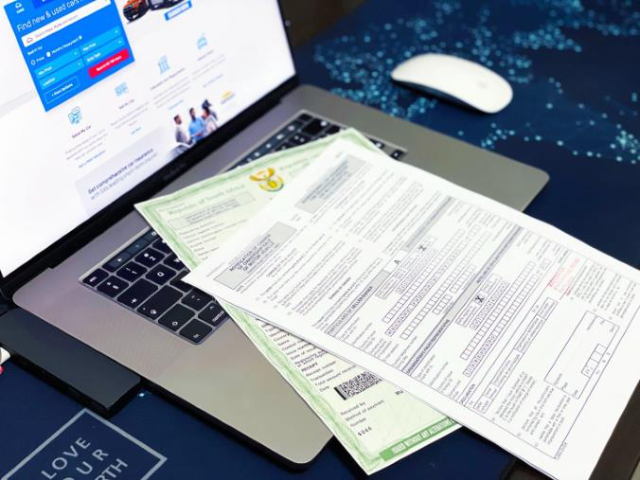
Complete the RLV Form: Fill out the Application for Registration and Licensing of Motor Vehicle (RLV Form).
Visit a Registering Authority: Go to the nearest motor vehicle registering authority or licensing office.
Submit and Pay: Submit the RLV form along with all required documents (ID, proof of residence, RWC, RC1, NCO copy, etc.). You will pay the change of ownership fee, registration/licensing fees, and any necessary penalties/arrears.
Receive New Documents: The registering authority will process the application and issue a new Vehicle Registration Certificate and a new Motor Vehicle Licence Disc in the buyer's name.

Essential Documents for Both Parties
| Document | Purpose | Notes |
| Vehicle Registration Certificate (RC1 / "Blue Book") | Proof of current title holder and owner. | The seller hands the original to the buyer. |
| Identity Documents (ID) | Certified copies of both the seller's and the buyer's ID. | South African ID/Smart Card or a valid passport/foreigner ID with a permit. |
| Notification of Change of Ownership (NCO Form) | Seller's official notification to the registering authority of the sale. | Must be completed and signed by both the seller and the buyer. |
| Roadworthy Certificate (RWC) | Confirms the vehicle meets safety standards. | Must be valid and not expire more than 60 days prior to the transfer date. Usually the seller's responsibility, but it can be negotiated. |
Buyer's Additional Requirements
| Document | Purpose | Notes |
| Proof of Residence | Confirms the buyer's physical address for the registration record. | Must be dated within the last three months (e.g., utility bill, bank statement). If the bill is not in the buyer's name, an affidavit from the bill's owner is required, along with the bill and a copy of their ID. |
| Application for Registration and Licensing of Motor Vehicle (RLV Form) | Application to register and license the vehicle in the new owner's name. | Completed by the buyer. |

Other Key Requirements
Outstanding Fines: All outstanding traffic fines and license fees linked to the vehicle must be settled before the transfer can be completed.
Financed Vehicles: If the vehicle is financed, the finance house, which is typically the Title Holder, must provide a settlement letter and/or an official change of ownership form.