The Toyota Corolla Cross has become South Africa's darling crossover, and for good reason. It's practical, reliable, and efficient. But choosing between petrol and hybrid isn't as straightforward as you'd think.
Here's the thing, though: forget what the brochures tell you about fuel consumption. Real-world driving tells a very different story, which might change your mind about which one to buy.
Toyota Corolla Cross vs. VW T-Cross vs. Jetour Dashing
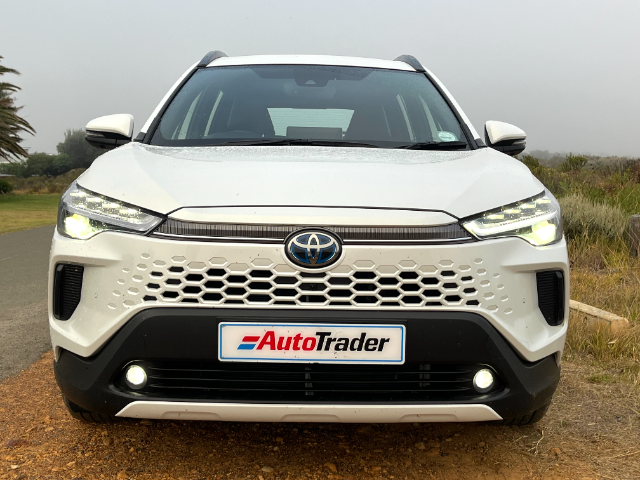
The local Corolla Cross lineup
Toyota offers the Corolla Cross in seven variants across petrol and hybrid powertrains, with prices ranging from the entry-level Xi to the flagship hybrid GR-Sport.
Top 3 things you need to know about the Toyota Corolla Cross
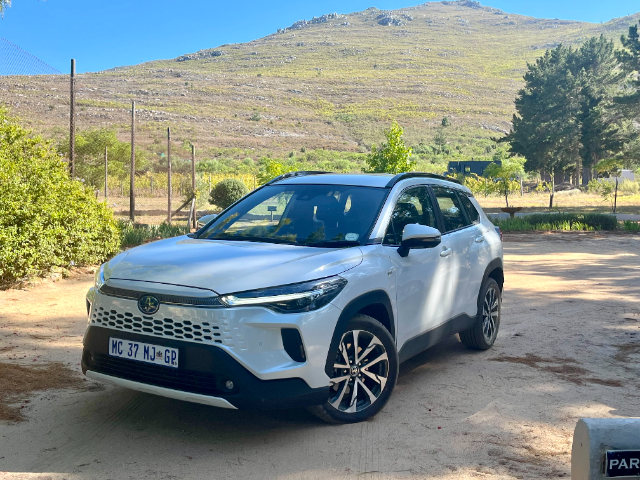
Toyota Corolla Cross Xi (R414 800) - What you get:
This isn't a poverty-spec model. You get 17-inch alloy wheels, touchscreen infotainment with Bluetooth and three USB ports, keyless entry and push-button start, rear parking sensors with reverse camera, LED headlights and taillights, five airbags, ABS with stability control, and hill-start assist. The catches? Manual air conditioning, cloth seats, and a basic steering wheel. There are no front parking sensors, rain sensors, or fog lights, either.
Step up to XS (R452 200) and you gain:
Automatic climate control with dual-zone, leather upholstery, leather steering wheel, front parking sensors, rain sensors, front fog lights, roof rails, and a rear armrest. This R37 400 jump transforms the cabin feel completely.
Move to XR (R501 500) and you have:
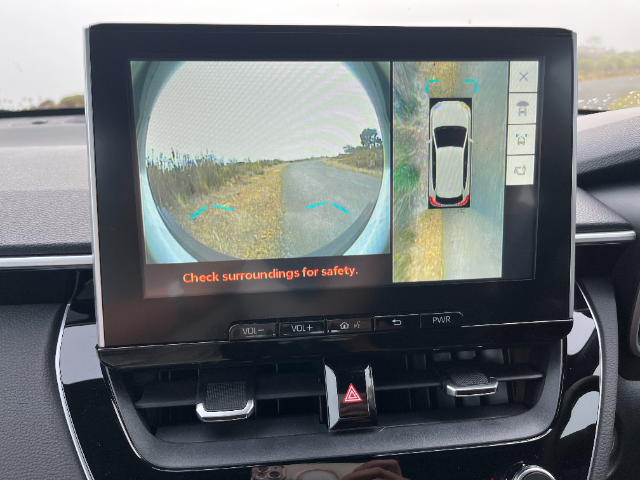
Power-adjustable driver seat, seven airbags (adds curtain protection), lane departure warning with lane keeping assist, blind-spot monitoring, adaptive cruise control, collision warning with auto braking, high-beam assist, 18-inch wheels, 360-degree camera system, hands-free electric tailgate, and auto-dimming interior mirror. This R49 300 step brings serious safety and convenience upgrades.
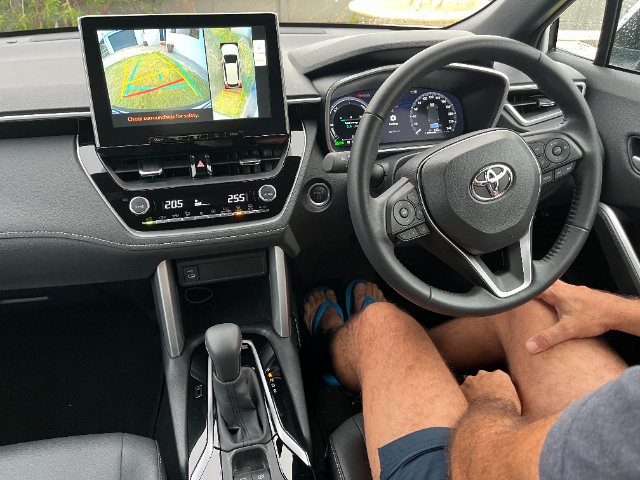
The GR-Sport (R518 200) is primarily cosmetic, but has other aces up its sleeve:
Identical equipment to the XR but with sportier styling and suspension tuning, along with 18-inch wheels with 225/50 R18 tyres (vs 17-inch in the others) for a more dynamic driving experience. You're paying R16,700 for these privileges.
Hybrid models:
- HEV XS: R494 400 (R42 200 more than petrol XS)
- HEV XR: R545 200 (R43 700 more than petrol XR)
- HEV GR-Sport: R561 700 (R43 500 more than petrol GR-Sport)
The value story: The Xi is genuinely well-equipped for R414 800. The XS transformation at R452 200 is worth every rand if you want a proper premium feel. The XR brings crucial modern safety tech, while the GR-Sport is for badge buyers.
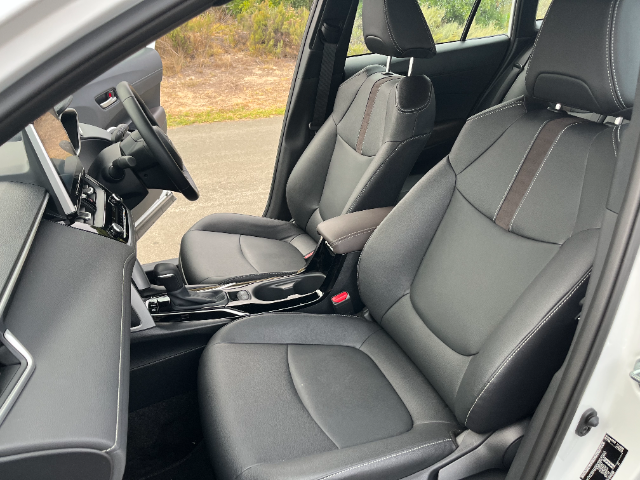
Fuel consumption: reality vs claimed
Manufacturers usually offer figures of dreamy consumption, but things look completely different regarding real-life driving conditions. Have a look at the specs and claimed versus true consumption of both models below:
Regular petrol (all models):
- 1.8-litre four-cylinder making 103kW and 172Nm
- CVT automatic (smooth but not exciting)
- Real-world consumption: 8.3L/100km (claimed 6.8L/100km)
- 47-litre tank = roughly 565km actual range
Hybrid (HEV models):
- 1.8-litre petrol engine (72kW) + electric motor (53kW) = 90kW total
- Same CVT but with electric assistance
- Real-world consumption: 5.6L/100km (claimed 4.3L/100km)
- 36-litre tank = roughly 640km actual range
- Pure EV mode up to 50km/h for silent running
Here's the reality check: the petrol engine is thirstier than Toyota's average claims, while the hybrid delivers closer to its promises. That means the real-world efficiency gap is 2.7L/100km – bigger than the brochure suggests.
The hybrid's party trick? It can run silently on pure electric power up to 50km/h in light throttle conditions. This makes it perfect for school zones, residential areas, and crawling through traffic jams without burning a drop of petrol, but only if there is enough energy stored in the battery.
Toyota Corolla Cross vs Omoda C5
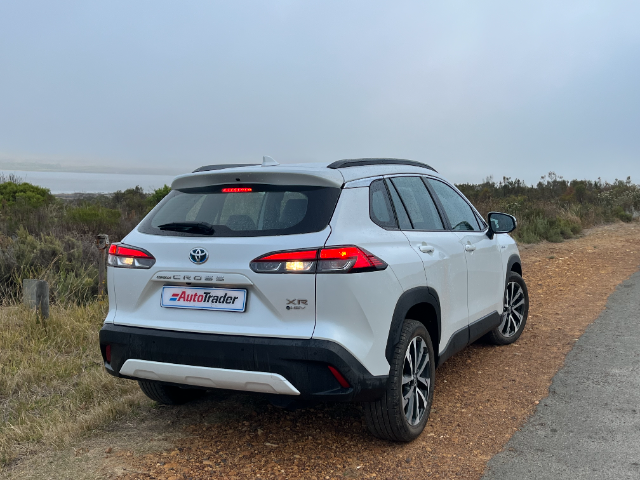
The real-world driving maths
Here's where it gets interesting. At current fuel prices (R21.24/litre at the reef), that 2.7L/100km real-world advantage means the hybrid saves about R57.35 per 100km driven, unless you're mainly doing long-distance driving.
Based on the R43 000 average price difference:
- 15 000km/year: Break even after 5.0 years, save R8 602 annually
- 20 000km/year: Break even after 3.8 years, save R11 470 annually
- 25 000km/year: Break even after 3.0 years, save R14,337 annually
- 30 000km+/year: Break even after 2.5 years, save R17 204 annually
Suddenly, those numbers look much more attractive than the brochure figures suggest.
What is the resale value of a Toyota Corolla Cross
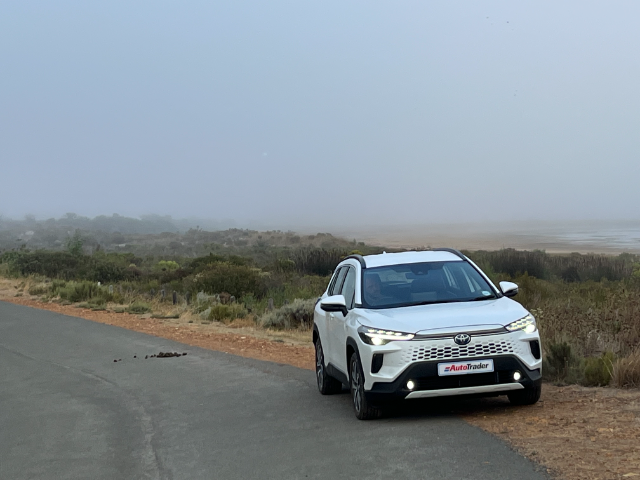
So, which one should you buy?
Go petrol if:
- You're budget-conscious (that Xi at R414,800 is genuinely good value, or buy a pre-loved Xs or Xr!)
- Highway driving dominates your life
- You tow regularly (800kg vs 400kg capacity)
- You prefer simple, proven tech
Go hybrid if:
- You spend time in traffic daily (EV mode under 50km/h is brilliant)
- You drive more than 15 000km annually
- Environmental impact matters to you
- You love silent electric running in residential areas
- You mostly do short urban trips
New Toyota Corolla Accessories you didn't know you needed
Still not sure? Take our quick quiz
Before we dive deeper, let's figure out which camp you fall into:
Your driving habits:
1. How many kilometres do you drive per year?
- A) Less than 15 000km
- B) 15 000-25 000km
- C) More than 25 000km
2. What's your typical driving split?
- A) Mostly highway/freeway (70% or more)
- B) Mixed city and highway (50/50)
- C) Mostly city/suburban (70% or more)
3. How much driving involves speeds under 50km/h?
- A) Very little (mostly flowing traffic)
- B) Some (peak hour traffic, suburbs)
- C) Lots (school runs, traffic jams, shopping centres)
Your budget and priorities:
4. The R42,000-R44,000 price difference is:
- A) A significant stretch for my budget
- B) Manageable if there's good value
- C) Not a major concern
5. How long do you typically keep a car?
- A) 3-5 years
- B) 5-8 years
- C) 8+ years
6. On road trips, frequent fuel stops are:
- A) Really inconvenient for me
- B) Not ideal, but acceptable
- C) Fine, I need regular breaks anyway
Mostly As = Petrol is your match. You're a highway warrior who values simplicity and maximum range. That Xi at R414 800 is a steal.
Mostly Bs = It's closer than you think. With real-world consumption figures, the hybrid becomes more attractive. Consider the hybrid if you're keeping the car longer than 5 years. (Break-even typically happens around 4-5 years, so longer ownership gives you years of pure fuel savings after recovering the hybrid premium.)
Mostly Cs = Hybrid all the way. You're the perfect hybrid customer. City driving, low-speed EV mode, and that 2.7L/100km real-world advantage will save you money.
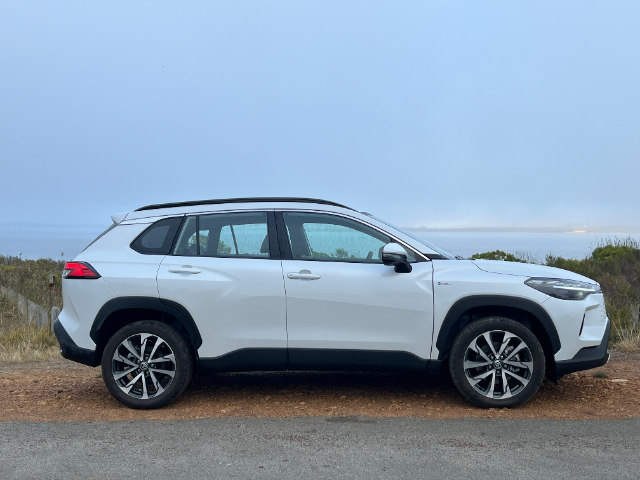
A tale of two drivers
We've taken two examples of people who fall into the two categories of hybrid and petrol engines.
Meet John, the sales rep
John covers the Free State for his pharmaceutical company, racking up 35 000 km a year between Bloemfontein, Kimberley, and Johannesburg. Long highways, tight schedules, and every fuel stop cost him time. Highway driving at the speed limit also allows the average consumption to drop.
John's choice: Still petrol XS (R452 200)
Why? Even with the petrol's somewhat thirsty 8.3L/100km real-world consumption, that 47-litre tank gives him confidence for covering his territory. At his mileage, he'd save R20 014 annually with the hybrid and break even in just 2.1 years. But those extra fuel stops and smaller tank would still drive him mad on long routes. The financial case is there, but practicality wins.
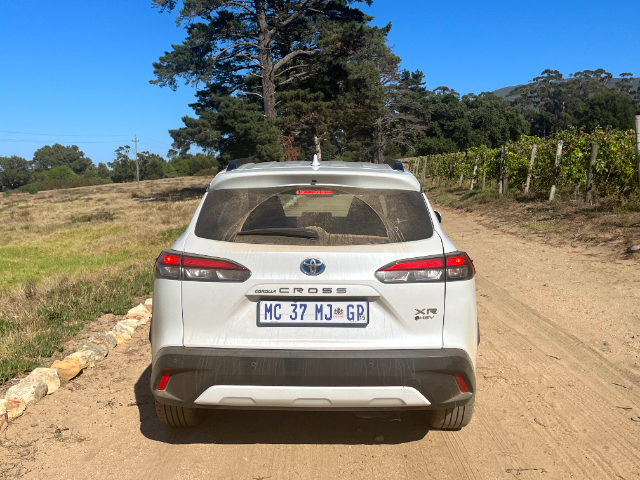
Meet Sarah, the suburban mom
Sarah lives in Sandton, doing 18 000km a year of school runs, shopping trips, and ferrying kids around. Her world is stop-start suburban traffic with plenty of robots and shopping centre queues.
Sarah's choice: HEV XS (R494 400), a no-brainer
Perfect hybrid territory, and the real-world numbers make it even more appealing. Those daily school runs with EV mode under 50km/h, energy recovery at every robot, and fantastic 5.6L/100km real-world efficiency in stop-start conditions. She'll save R10 306 annually in fuel and break even in 4.2 years. Plus, silent electric starts won't wake the neighbours on early morning school runs.
The bottom line
Real-world testing has turned the tables. The petrol engine's 8.3L/100km consumption makes the hybrid's 5.6L/100km efficiency look even better.
Regular petrol is still perfect for highway heroes and budget-conscious buyers, especially the entry-level Xi at R414,800. But if you're doing decent mileage with any city driving, the hybrid case is much stronger than we initially thought.
The hybrid rewards city dwellers, anyone driving over 15 000km annually, and those who value silent electric running. The break-even times are realistic for most buyers, not just high-mileage drivers.
My advice? Test both, but pay attention to how much low-speed driving you do. The hybrid may be perfect for your daily needs if you regularly crawl through suburbs, school zones, or sit in traffic.
Toyota Corolla Cross First Drive Review
Important disclaimer: The fuel consumption figures mentioned (8.3L/100km for petrol and 5.6L/100km for hybrid) are averages based on Toyota customer reviews and real-world driving experiences. Your actual fuel consumption will vary significantly depending on your individual driving style, traffic conditions, vehicle maintenance, load, use of air conditioning, and driving terrain.
Fuel prices fluctuate regularly and may increase or decrease from the R21.24/litre used in our calculations.
AutoTrader South Africa accepts no responsibility for variations in fuel consumption or fuel costs that may differ from the estimates provided in this article. These calculations are provided as a general guide only, and should not be considered guaranteed fuel consumption or savings figures.