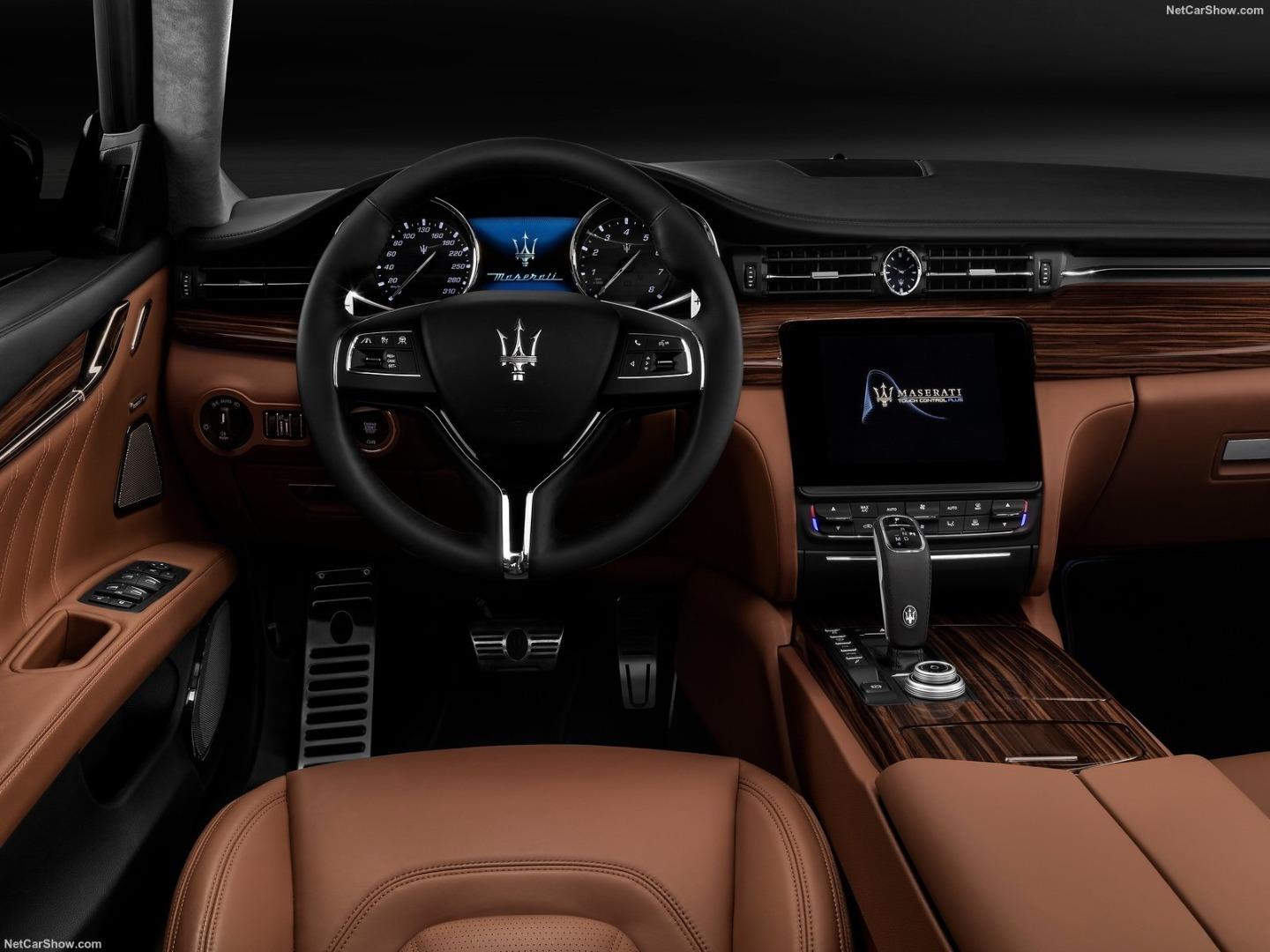
When you mention the Maserati name in conversation, three topics usually come up; classic Italian styling, power and the noise it makes at full tilt. As such when Maserati announced the diesel derivatives of its Ghibli and Quattroporte models, there were divided opinions.
Related: 5 Maserati Quattroporte accessories you didn’t know you needed
Maserati is no strangers to experimenting with engine technology and has recently unveiled its hybrid Ghibli as well as the MC20 which utilise an F1 derived, V6 petrol motor named the Nettuno. Furthermore, the brand is looking towards fully electric powertrains for the future and has even gone as far as developing a unique sound for the electrically-propelled vehicles. Soon we might see the end of the long and fruitful relationship between Ferrari and the Bolognese automaker.
Engine line-up
Under the bonnet of the Quattroporte and Quattroporte S petrol derivates feature a 3.0-litre, twin-turbocharged, V6 motor design and assembled by Ferrari, however, produced by Chrysler's Kokomo, Indiana and Trenton Engine Plant in the United States of America. The Quattroporte GTS and Trofeo variants come fitted with a version of Ferrari's F154 motor which takes shape as a 3.8-litre, twin-turbocharged, V8 engine.
The main differences from the Ferrari motor being the Maserati version have wet-sump lubrication and a cross-plane crankshaft. The diesel motor also comes in 3.0-litre V6 form, fitted with a single variable geometry turbocharger. The motor was designed and is assembled by the company VM Motori before making its way into diesel Quattroporte and Ghibli derivatives.
The figures
For this article, we will be comparing the standard petrol and diesel V6 models as well as the more powerful Quattroporte GTS petrol V8 variant.
| Maserati Quattroporte | Maserati Quattroporte | Maserati Quattroporte GTS | |
| Fuel | Diesel | Petrol | Petrol |
| Engine | 3.0-litre, V6 | 3.0-litre, V6 | 3.8-litre, V8 |
| Turbo | Variable Geometry Turbocharger | Twin-turbo | Twin-turbo |
| Power | 202 kW | 257 kW | 390 kW |
| Torque | 600 Nm | 500 Nm | 650 Nm |
| 0-100 km/h | 6.4s | 5.5s | 4.7s |
| Top speed | 252 km/h | 270 km/h | 310 km/h |
| Fuel consumption | 7.5 L / 100 km | 11.2 L / 100 km | 10.7 L / 100 km |
| CO2 emissions | 198 g/km | 260 g/km | 250 g/km |
Verdict
While the diesel derivative makes a strong case for itself in frugality and torque, it lacks behind the petrol variants in terms of speed and power. Furthermore, although the diesel variant has a unique soundtrack under stress, it does not compare to the symphonies escaping from the petrol derivatives.
When you are considering a premium Italian performance sedan, the last thought to cross your mind is how much the fuel is going to cost. Keeping this in mind and with the petrol derivative costing R 2 380 000, a mere R30 000 more than the diesel offering, our choice is the V6 petrol. Not only because of the sound it produces or the excitement the extra power will provide but also because it could be the last time we experience a non-hybrid or electric Quattroporte.
Recommended next: