

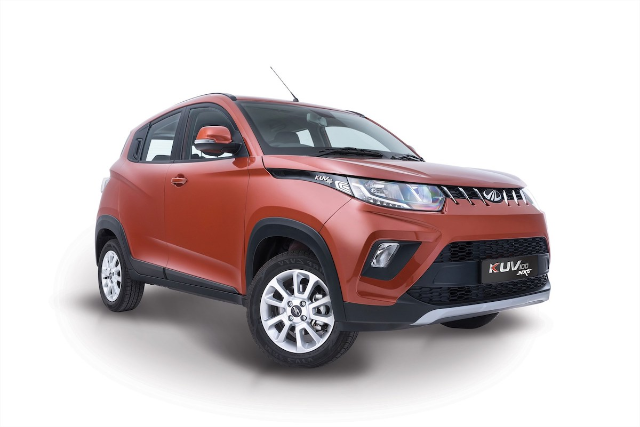
The diminutive Mahindra KUV100 may not be the first choice for many a first-time car buyer, what with its odd-proportions and rather unconventional styling, but there's no denying that the package on offer is rather appealing on paper. But we don't drive on paper, we drive on roads and choosing between the petrol model or the diesel one is an important factor.
The KUV100 is offered with a choice of two engines, both with a 3-cylinder, all-aluminium design. The G80 is a 1.2-litre naturally aspirated petrol engine while the D75 is a 1.2-litre turbodiesel offering. There are 5 different models with the G80 engine and two different models with the D75.
Related: Mahindra’s Crossovers now more attractive than ever
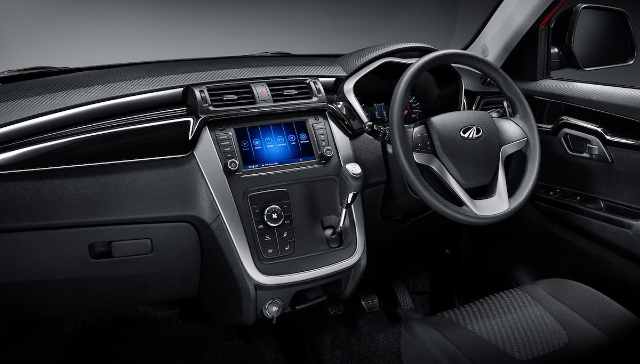
Performance
The KUV100 is not and will never be a performance car. It's a compact city car and it doesn't pretend to be anything but a city car. Mahindra focussed on safety and comfort when designing the KUV100 and wanted to offer a fuel-efficient engine rather than a barn-storming highway terror.
The D75 turbodiesel employs common rail injection and an intercooled turbocharger system to give you 57 kW at 3750 RPM with a maximum torque output of 190 Nm between the 1750 and 2250 RPM range.
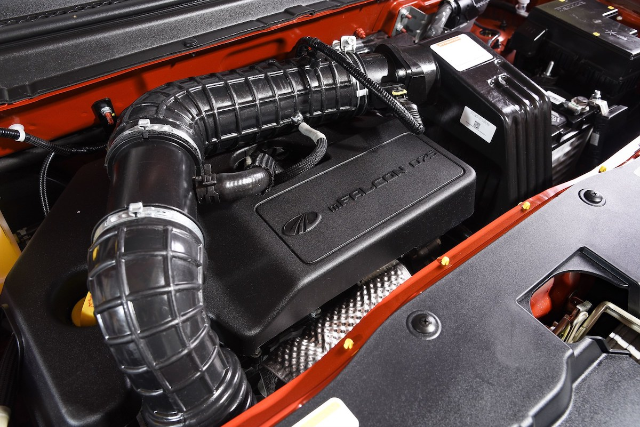
In the G80 model, you will get a naturally aspirated inline 3-cylinder mFalcon engine, equipped with multipoint fuel injection and variable valve timing to produce 61 kW and 115 Nm torque. Power peak is at a rather high 5500 RPM and torque is delivered at 3500 RPM.
Acceleration figures come in at 14.5-seconds for the diesel model and the petrol model is identical at 14.5-seconds in the sprint from 0 - 100 km/h. Top speed is a bit of a moot point but if you're the kind to venture there you'll be able to eek 160 km/h out of both models.
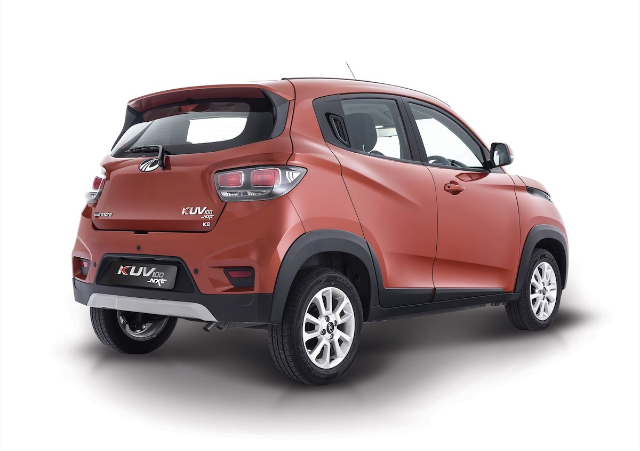
Efficiency
So we've ascertained that neither model is pretending to be a race car, but what about a pocket-friendly eco-mobile? Well, here the KUV100 does rather well.
The diesel engine is quoted to return fuel consumption figures of 5.0 l/100km in town and 4.0 l/100km on the open road for a combined cycle fuel consumption average of 4.3 l/100km.
It's a slightly different story for the petrol though with the urban cycle registering 7.1 l/100km and the extra-urban cycle coming in at 5.3 l/100km. This also gives it a combined average of 5.9 l/100km which is still rather admirable.
It's worth noting that the KUV100 was also a class winner in the recent Wesbank Fuel Economy Tour.
Drive
Mahindra has worked hard at refining its offerings to make them more appealing to markets outside of India and as such has gone to great lengths to make sure that noise intrusion in the cabin is kept to a minimum. New engine mountings make the petrol engine the quietest of the two with considerably lower NVH (Noise, Vibrations and Harshness) levels than the diesel.
If you're hell-bent on getting the most out of the fairly small 35-litre fuel tank then you will have to live with the slightly clattery nature of the diesel. If this isn't high on your priority list, you could do a lot worse than the 1.2-litre petrol.
Recommended next:
Top 5 Mahindra KUV 100 Nxt accessories you didn’t know you needed
Fiat Panda vs Suzuki Ignis vs Mahindra KUV100: here's our winner.
Mahindra KUV100 vs Datsun GO vs Suzuki Celerio: here's our winner.
