
Mahindra’s Crossovers now more attractive than ever
Mahindra’s Crossovers now more attractive than ever


By Martin Pretorius
Their styling may be an acquired taste, but there are some compelling reasons for buyers to consider a Mahindra SUV/Crossover. This Indian manufacturer has now reinforced their traditional strong suit of solid value for money, through the latest expansion of the local model ranges and some specification and styling updates.
Times are tough, and modern car buyers pay closer attention to value for money than ever before. And, perfectly poised to take full advantage of this trend, Mahindra has been riding a bit of a wave lately. Repeatedly posting serious (in excess of 20%) year-on-year sales growth in spite of a contracting marketplace takes some doing, and yet the Indian company has managed to do this since at least 2015. It’s easy to understand why: their offerings are well-specified, considering their very reasonable pricetags; and in many respects, those products are quite good as well. It probably doesn’t hurt that they have a model range large enough to fill every single niche in the budget SUV market, either.
So it’s understandable that the latest model updates to the small KUV100 and the large-ish XUV500 doesn’t mess too much with a successful recipe. Instead, there are minor trim and styling updates, largely unchanged mechanical bits, and some extra value in the form of new entry-level as well as range-topping derivatives. We spent some time with both to give you details and driving impressions.
Mahindra KUV100 NXT
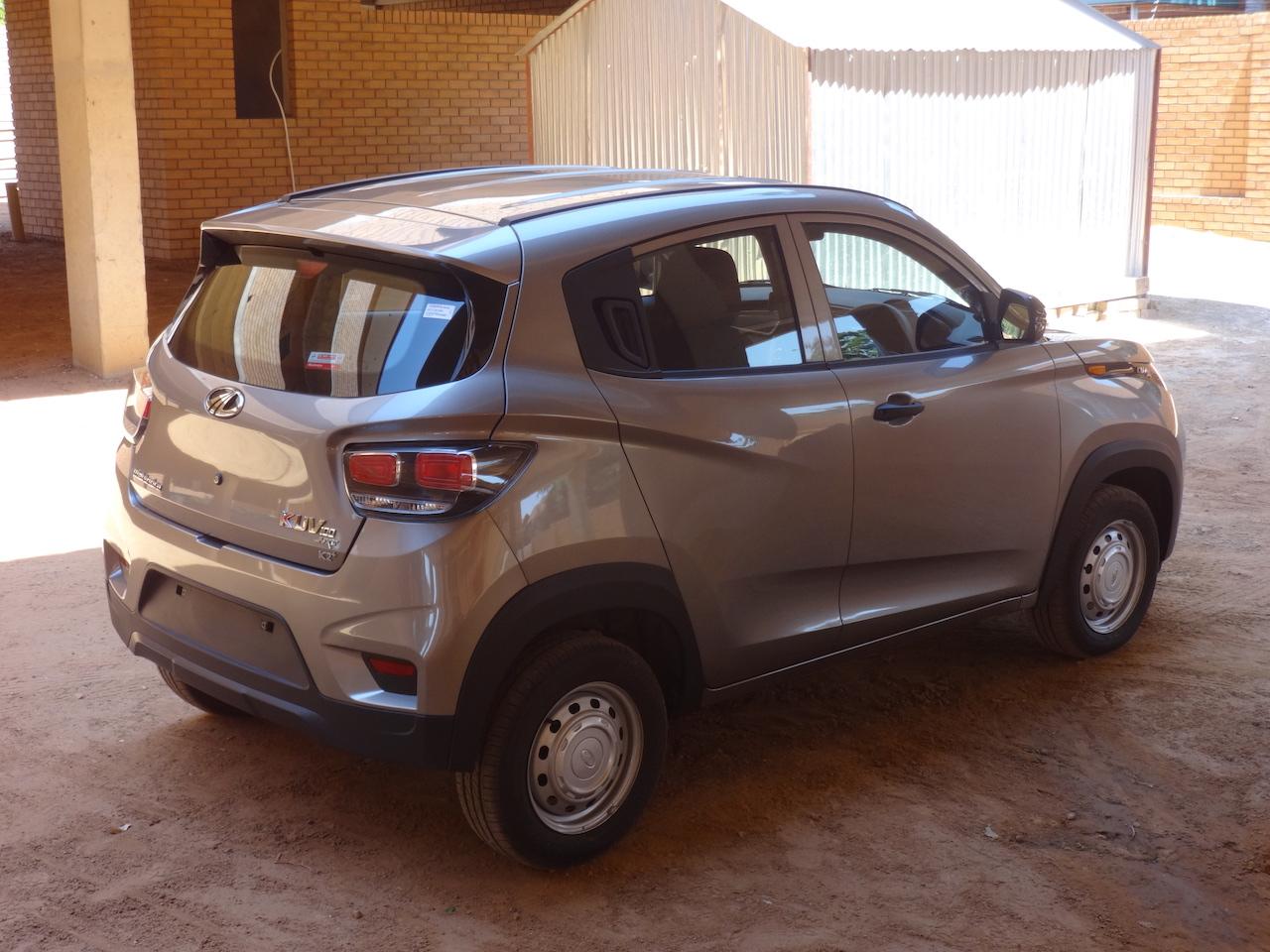
The entry-level to Mahindra’s crossover range has received considerable attention in the marketplace since its local release in 2016. Sure, its appearance is.... unusual, but it’s endearing in a quirky kind of way - the only reason you might lose it in a car park is because it’s quite small, because its styling certainly stands out, especially with the latest upgrades, which brings new bumpers, lights, grille and sharper creases. It’s also very inexpensive, and now even more so than before.
What’s new?
This model update brings with it a new K2+ variant, which forms a new lower book-end for the KUV100 NXT range. In this entry-level car, you’ll get air-conditioning, power steering, ABS brakes and two airbags. It rolls on 14-inch steel wheels with small plastic hubcaps, has vinyl upholstery, and no radio... but it will only set you back R134 999. That makes it one of the least expensive new cars on local roads, and all that without compromising on safety equipment...
Even bearing in mind that the service plan is optional on K2+ and K4+ (R 163 999) derivatives, and that you can’t have a diesel engine with either of those trim levels either, that still seems like an auspiciously good deal. Adding spice to the biryani, Mahindra offers a special deal on the K2+, where you can get one for only R 2 199 per month over 72 months, with free insurance for the first year thrown into the deal as well.
Specifications
The K6+ upgrades to 14-inch alloy wheels, a 4-speaker sound, electric mirrors to go with the power windows (which arrives at K4+ spec), and remote central locking, and still stays under R188 000 in petrol guise. The K8+ Petrol scrapes in under R200 000, and gives you a touchscreen infotainment system, climate control, rear parking sensors, and a chilled glove box, among other nice things. That’s quite a lot of stuff for not a lot of money.
Diesel derivatives are a fair bit more expensive, though – the K6+ Diesel will set you back R204 999, and the K8+ Diesel is listed at R 219 900. Silly model designations are standard across the range...
Performance and economy
That sounds pretty enticing, but of course, there are some drawbacks – there has to be, with these feature lists and pricetags. Firstly, KUV100 drivers should make peace with leisurely progress. I had opportunity to sample a K8+ in diesel format, and its limited motor skills were quite evident. With only 57 kW of power (but a hearty 190 Nm of torque) from the little 1.2-litre turbodiesel, it gets going quite smartly from standstill, before collapsing around the 3 000 r/min mark. A 0 – 100 km/h sprint is probably possible in theory, and the top speed is unlikely to be much more than 140 km/h, so it most definitely isn’t rapid.
The 1.2-litre petrol is unlikely to be much speedier, because it has only 61 kW and 115 Nm on tap. They’re both very economical, however, with the diesel posting an official average consumption figure of only 4.3 liter/100 km, and the petrol claiming a 5.9 liter/100 km average. Real-world testing returns close to those numbers, with the diesel easily averaging less than 5.0 liter/100 km.
The Drive
It’s probably a good thing that the little KUV100 isn’t a fast car, as its underpinnings is geared towards comfort rather than agility. And that’s actually perfectly fine for a city car – its small dimensions keep it from feeling ponderous, but its cushy suspension helps to absorb road shocks pretty effectively. It’s not even particularly noisy, and the controls (steering, clutch and gear lever) are pleasingly easy to operate. However, the driver’s seating position is weird: the gear lever sprouts from high up on the centre console, and the tilt-only adjustable steering wheel is mounted quite far forwards, enforcing a curious straight-armed driving posture.
This comfort bias obviously takes its toll on the KUV100’s cornering abilities, where it changes direction easily enough but dissolves into heaps of body lean when provoked. The skinny tyres also don’t have a lot of road grip, so fast driving attempts will be met with squealing rubber. But then, this car isn’t fast by any measure, so the handling is entirely adequate for the modest performance on offer.
KUV100 Cabin
The dashboard’s appearance takes a light step upmarket with a new black/dark grey colour scheme, with some brightwork to break the darkness. High-spec variants even get piano-black inserts for a nicer feel. It’s not plush, but it appears to be very well screwed-together from fairly durable materials. It’s probably nicer than most other new cars around this price point, so that’s a good thing.
There’s plenty of space inside, and the large forward- and side glass affords some generous sightlines. Under-floor and under-seat storage compartments are a nice touch as well, though utility space is limited, even with the rear seats folded down. For the rest, it’s pretty much Generic Budget Car inside, so don’t expect too many surprises, but given its market segment, it’s actually not a bad place to spend time.
XUV500 gets more-intensive attention
The largest of Mahindra’s monocoque-construction SUVs has always been a surprisingly accomplished package. Yes, the centre console plastic felt and looked cheap in the past, it was a bit noisy, and it looked... unusual as well (as do all of Mahindra’s products, really), but it was also really smooth-riding, spacious, well-specified, and with a surprising turn of speed from the torquey 2.2-litre turbodiesel engine. This update aims to rectify some of the negative points, while amplifying the positives – and, you guessed it, improve the value proposition.
What’s new?
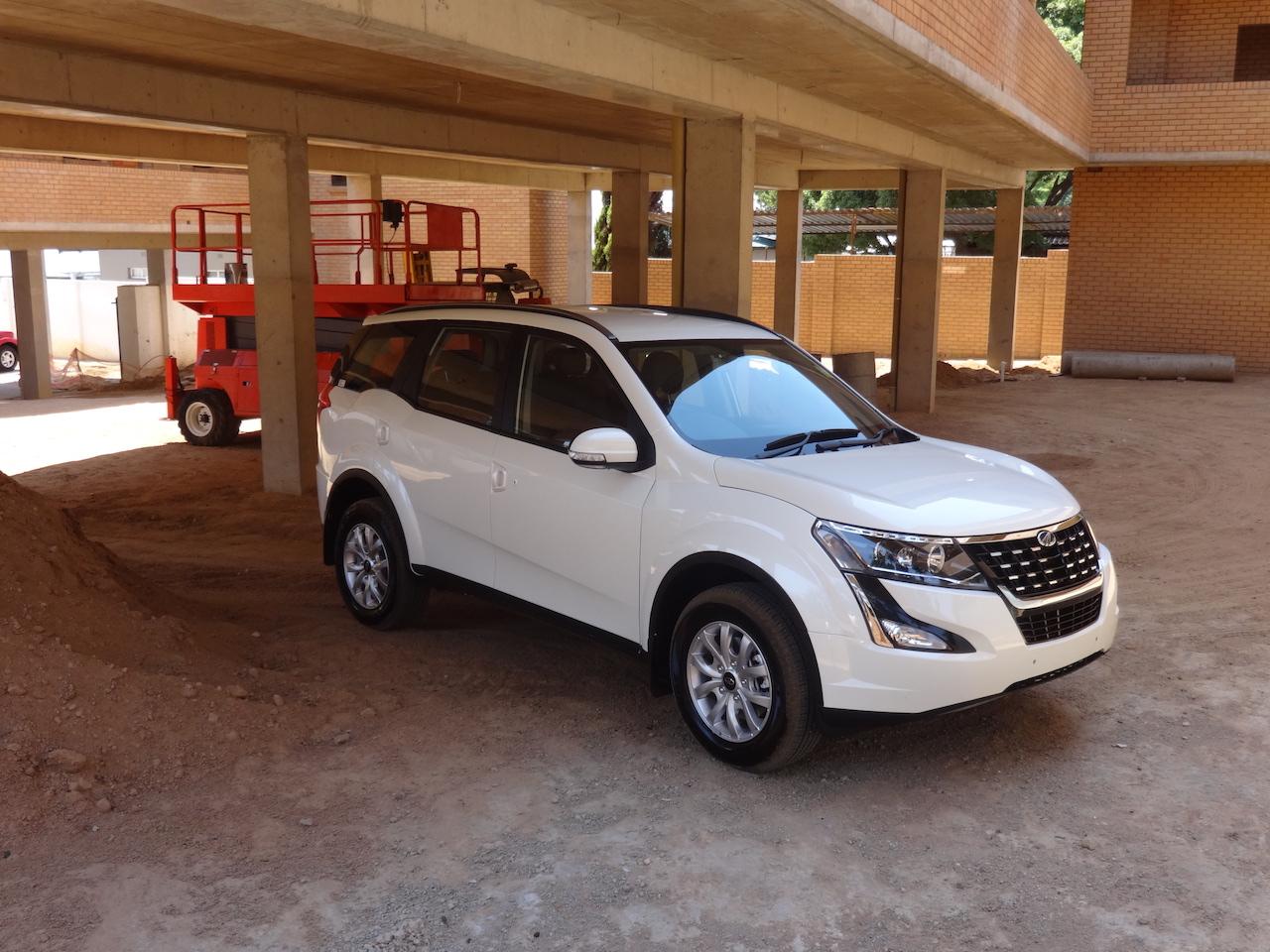
The most noticeable changes involve the appearance, where the grille- and front bumper details are cleaned up nicely. The DRLs are also redesigned along with their light clusters, and the bonnet’s creases are sharper than before. It’s the same story at the back, where new taillight clusters and a redesigned tailgate adds a more contemporary appearance. Those exaggerated fender bulges stay, however, as does the hump in the shoulder line, so it’s still easily recognizable as an XUV500.
The model line-up gets a reshuffle as well, with the number of manual derivatives reduced to two and the availability of automatics increasing by two, along with the introduction of a new range-topping variant. Only the entry-level W4 and second-from-top W8 are still available with a manual gearbox, the W8 has an automatic option as well, and the W6 and top-spec W10 are automatic-only. This automatic transmission is a 6-speed torque converter unit, with its manual shift mode operated by a tiny rocker switch on the gear selector.
Equipment
The W10 takes over from the W8 as the highest trim level, and brings with it a fair bit of new equipment. There’s an electric sunroof up top, keyless entry with an engine start button, and electric adjustment for the driver’s seat. That’s in addition to the W8’s rear-view camera, leather upholstery, 7-inch colour infotainment touchscreen with navigation, tyre-pressure monitor, and six airbags.
Meanwhile even the W6 has stability control, hill-hold assistance, hill descent control, a 6-speaker audio system, climate control, automatic wiper operation, bending headlamps, alloy wheels, and chrome exterior trim. It’s only the W4 that doesn’t come very highly-specced, really, yet it still has most of the basics in place: two airbags (like the W6), ABS, power windows and -mirrors, air-con, a basic 4-speaker audio system, and remote central locking.
The Drive
The re-aligned XUV500 range now starts at R 299 999 for the W4, and maxes out at R 419 900 for the W10. Yet again, that’s pretty good value, offering a pretty practical and spacious 7-seater crossover with a 2.5-ton towing capacity, at prices that generally won’t get you more than a 5-seater anywhere else. And the nicest surprise is that it’s pretty decent on the road as well as on paper: the XUV500 still rides very smoothly, the engine is still punchy enough for general use, and added sound insulation has muted some of the previous noises.
But the perfect car doesn’t exist, and the XUV500 also has its share of quirks and irritations – chief of which being the driver’s seating position. Again, the steering wheel is mounted too far forward, though this is less pronounced than it is in the KUV100. The W10’s electric seat also didn’t drop down quite far enough to put my lanky frame at ease, but that’s not an uncommon problem for my unusually tall physique...
XUV500 Performance and economy
With 103 kW and 330 Nm on tap, performance in the W10 is adequate rather than scintillating, possibly because the Aisin automatic gearbox is quite partial towards early upshifts. It shifts down again eagerly enough, but this tends to lead to some hunting between the top three gear ratios on the open road. Far better to just lock it in top gear via the manual transmission mode, and let the engine’s wide torque spread do the work instead.
Previous experience with the manual transmission W8 proved much the same point: it’s best to shift up fairly early and tap into that nice torque reserve. Driven in this manner, the manual XUV500 should easily show low-7 liter/100 km average consumption figures, giving credence to the manual’s claimed average of 6.5 liter/100 km and the automatic’s claim of 7.4 liter/100 km.
Seen in isolation, the updates to both the KUV100 and XUV500 aren’t really dramatic. But, seen as a cumulative effort, these enhancements serve to strengthen two popular model ranges, expand their appeal, and offer tailored model derivatives to cater for a wider audience. It’s more of the good stuff, less of the bad, and still at very attractive prices. These refreshed crossovers should certain achieve Mahindra’s goal of sustaining their growth in our market – and buyer scores some nice new things in the process. That’s a win all around, then.
Mahindra KUV100 NXT Prices:
K2+ Petrol : R 134 999
K4+ Petrol : R 163 999
K6+ Petrol : R 187 999
K6+ Diesel : R 204 999
K8+ Petrol : R 199 999
K8+ Diesel : R 219 999
Mahindra XUV500 Prices:
W4 Manual : R 299 999
W6 Auto : R 359 999
W8 Manual : R 374 999
W8 Auto : R 403 999
W10 Auto : R 419 999