
Mahindra KUV100 vs Datsun GO vs Suzuki Celerio: here's our winner.
Mahindra KUV100 vs Datsun GO vs Suzuki Celerio: here's our winner.


Martin Pretorius
It’s very difficult to pigeonhole Mahindra’s smallest car. On the one hand, it tries really hard to look like an SUV, but on the other hand, it mainly competes with budget-priced small hatchbacks in terms of size and feature content. For this reason, we narrowed this comparison down to the entry-level KUV100 (in K2+ trim), and pitched it against the least-expensive variants of the Datsun GO and Suzuki Celerio. They all have small 3-cylinder engines and decent standard safety kit, but they’re also more different than you might think. Let’s see how they stack up.
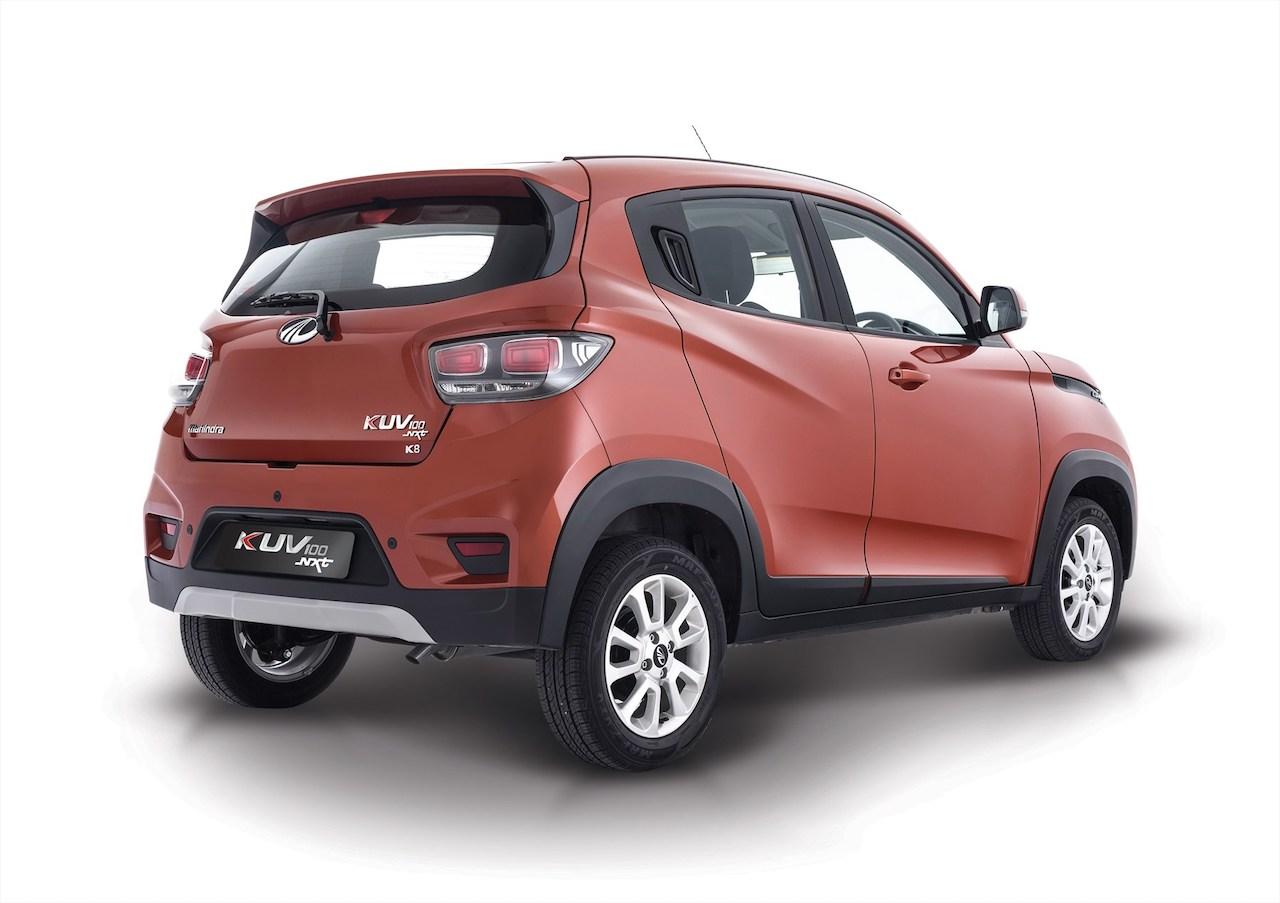
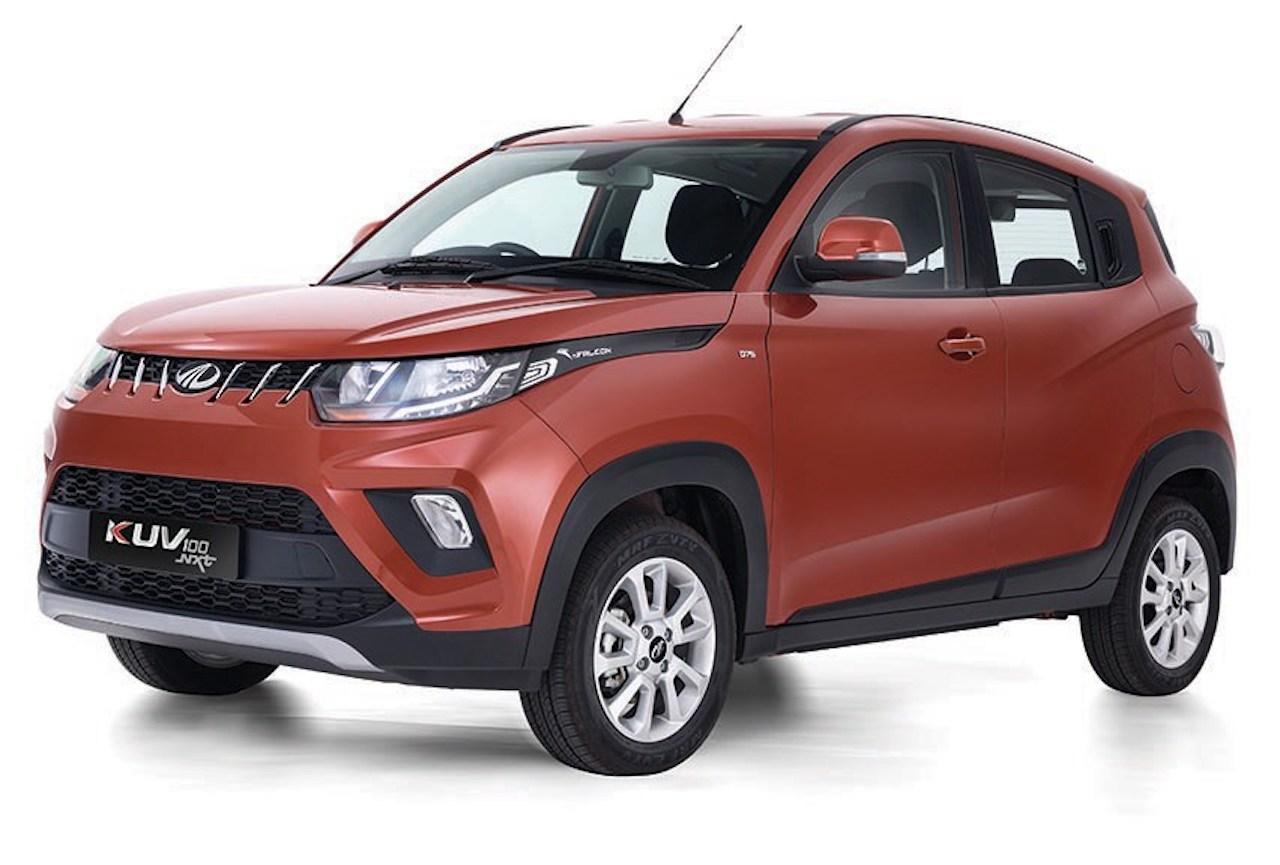
Mahindra KUV100 Nxt G80 K2+
Its name is quite a mouthful for such a little vehicle, but it basically just denotes the new petrol-powered, entry-level variant of the recently-refreshed KUV100 range. Right from the outset, it must be noted that the K2+ is the least expensive car in this comparison, undercutting the Suzuki Celerio 1.0 GA by almost R5 000, and the Datsun GO Mid by almost R10 000. In fact, there isn’t much else on the market for less than the K2+, and if you insist on airbags and ABS, this is the cheapest car with these safety features.
There is a penalty for this low price, however. The K2+ comes without a radio or infotainment system (just like the Suzuki), and there’s little in the way of creature comforts, apart from power steering and air conditioning. To add insult to injury, the road wheels carry tiny centre caps, proudly showing off the silver-painted steel rolling stock. Let’s just say that it’s not pretty...
It is however quite practical. With a luggage capacity (with all seats in use) of 243 litres, it slots midway into this trio, and because it’s the widest car in this group, the cabin leads in shoulder room. Of course, that high roof also pays dividends in head room, so taller drivers or those with claustrophobic tendencies will be best served by the little Mahindra.
It’s a good thing that they’ll be comfortable, too, because the KUV100 is rather slow. With only 61 kW and 115 Nm to drag along a kerb weight of 1190 kg (and a stubby, tall body), performance will never be anything but leisurely. Mahindra doesn’t list a 0 – 100 km/h sprint time for this model, but the best that could be said about its athletic abilities is that you should be able to cruise at the speed limit, but not much faster. It is quite frugal, though, with a claimed average consumption of only 5.9 litres/100 km.
Following years of derision in the local motoring press, Datsun finally relented and added some much-needed safety features to their budget offering. Released in 2018, the refreshed GO receives ABS brakes and two airbags, along with a redesigned (and much, much nicer) dashboard and individual front seats with a floor-mounted handbrake. It’s a decent little car now, and, combined with the other virtues it’s always had, suddenly becomes a good buy in its own right.
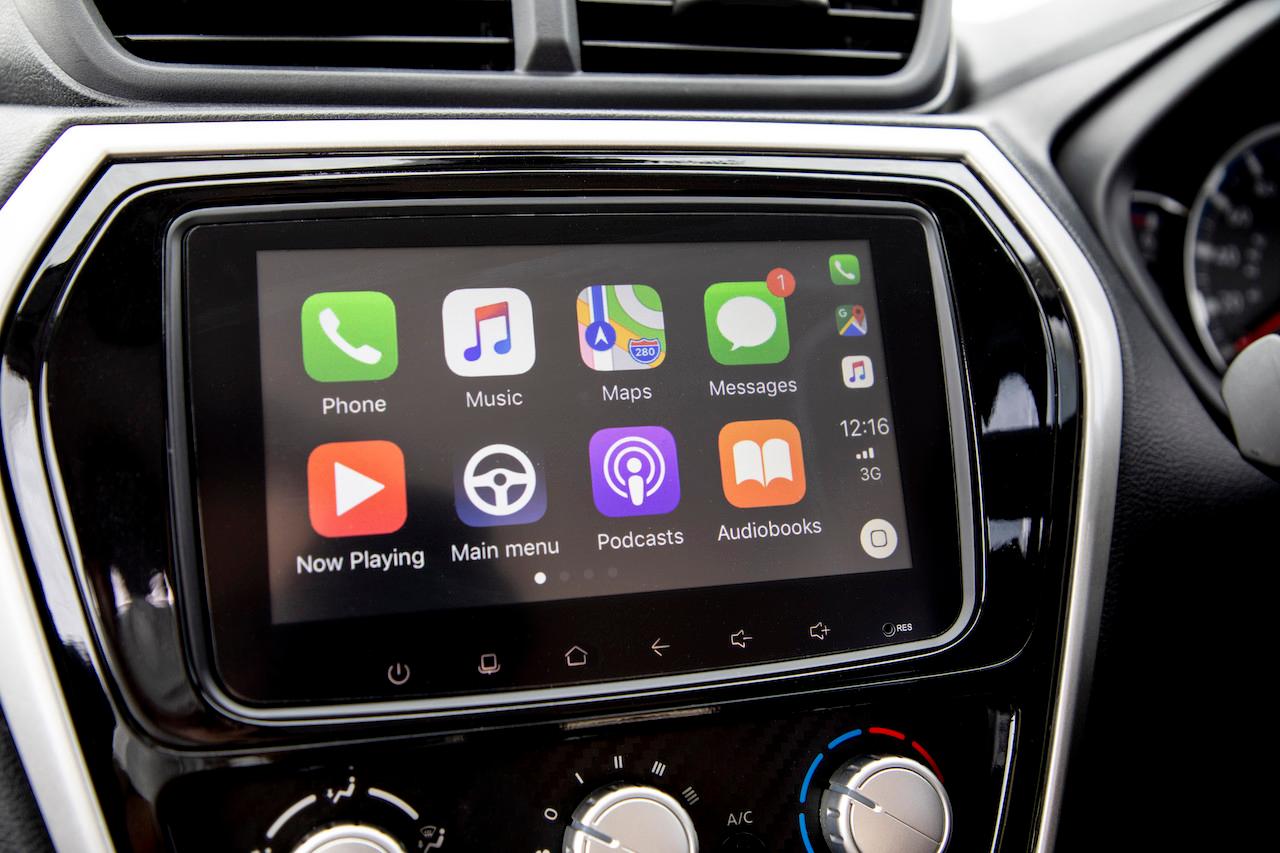
As the most-expensive car in this trio, it also has the highest equipment level. Included in the standard kit is electric windows and mirrors, air conditioning and power steering, rear parking sensors, and even a nice touch-screen audio system with Apple CarPlay and Android Auto. Seen in this light, its price premium over the other two actually seems like fair value.
It’s even (slightly) more practical than the others as well, because it has the largest boot at 265 litres, and because it’s also the longest car here, it has the most cabin space. Performance is about what you’d expect, with its 50 kW and 104 Nm being tasked with moving a kerb weight of only 779 kg. Not fast at all, but with a 0 – 100 km/h being quoted at 13.3 seconds, it’s spritely enough for urban traffic. It’s also impressively frugal, with a claimed average consumption figure of only 5.2 litres/100 km.
The smallest Suzuki has been with us for a few years already, and in fact received a very light facelift in 2018. It’s still much the same car as always, however, with 50 kW and 90 Nm from its 1.0-litre engine (the smallest here) fighting a bit of an uphill battle against its larger-engined opponents. It’s also physically the smallest car in this group, with the shortest length and the narrowest body.
As a result, it’s also the least practical, with the smallest boot and a passenger compartment which favours smaller occupants. It is however the best-made car here, with higher tactile quality in the cabin and extra seals in places where the other two make do with the bare minimum of insulation. As a result, it’s also surprisingly refined on the open road, though high cruising speeds are best avoided due to a marked sensitivity to cross winds.
Being the entry-level Suzuki, the Celerio GA is also quite spartan. Standard kit stretches to air conditioning and power steering, but an audio system, electric windows and central locking only appear on the higher-trim GL variant. As with its competitors, it does come with decent safety kit in the form of two airbags and ABS brakes. But for the rest, the Celerio GA is quite barren, making the nicer-specced GL look all the more appealing.
Performance is slightly behind the Datsun GO (but definitely ahead of the Mahindra), with a 0 – 100 km/h sprint in 14 seconds, thanks to its feathery kerb weight of 835 kg. And, as always with Suzukis, it’s very parsimonious, drinking only a claimed average of 4.7 litres/100 km.
Verdict
When all these factors are taken into account, the Suzuki and the Mahindra end up very close to each other, with the Celerio beating the KUV100 to second place purely on the basis of fuel efficiency. There’s little to choose between them in terms of features, but that legendary Suzuki frugality swings it for the Celerio, because it's such an important consideration for a budget car.
The surprise of this comparison is however the Datsun GO. Yes, it costs a bit more than the others, but its perkier performance, still-excellent efficiency, practicality and comparatively packed features list means that it has to be the best choice between these three contenders. From a poor excuse for a third-world-car to a genuinely compelling product, the latest Datsun GO has finally become the car it’s always deserved to be. Surprised? You’re not alone....