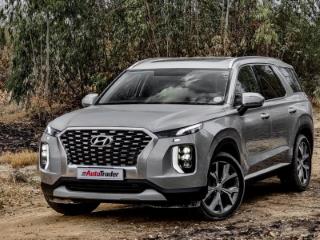
Which Hyundai H1 is better – petrol or diesel?
In the Hyundai H1 range, if you want a petrol-engine model you have to opt for a manual gearbox, whereas the diesel models only come with an automatic gearbox. The choice is made more complex by big pricing differences between the petrol and diesel models.



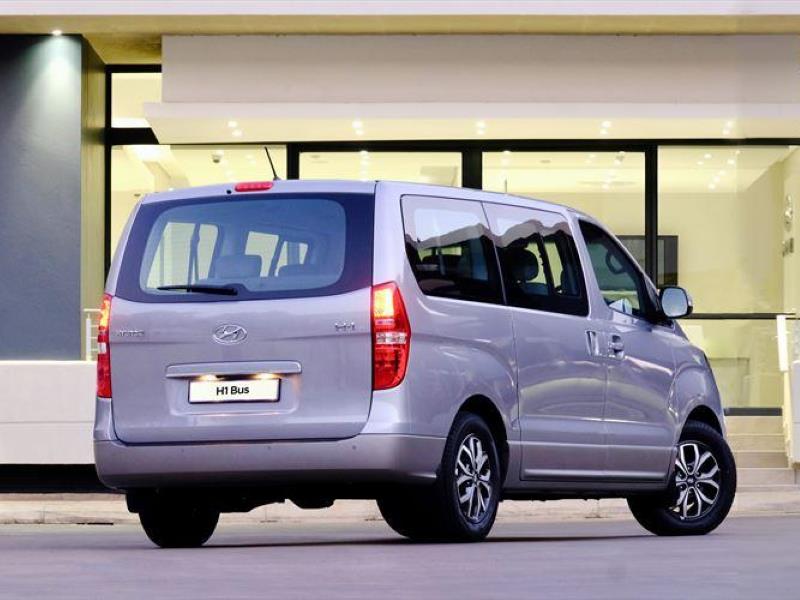

Hyundai’s H1 was on the South African market for over 10 years and remained a very successful product for the Korean-based manufacturer. The big vehicle was launched in both van and bus configuration in early 2009 and has only undergone minor revisions in that time. The futuristic-looking Staria has since replaced it, but the H1 remains a solid pre-owned proposition.
Initially, the H1 was launched with just a single engine in the range – a multi-port fuel-injected petrol engine displacing 2.4 litres, with 126 kW and 224 Nm of torque. A year later, in 2010, Hyundai introduced its 2.5-litre diesel engine in the H1, which has proven to be the more popular engine choice. This diesel engine initially produced 120 kW and 392 Nm of torque.
Related: AutoTrader's Engines & Body Types Glossary of Terms
But before you set off to sell your car quickly and easily with our Instant Offer tool and start your search for used Hyundai H1 models on AutoTrader as your next family or business vehicle, let us find out whether you should go for the petrol or diesel variant.
Related: Top 5 Accessories for your Hyundai H1

Large families and shuttle businesses love the H1
The Hyundai H1 is beloved by large families and is very popular with shuttle companies, as well as businesses needing a van with a large load area. It is available in a 3-seater Panel Van format, a 6-seater Multicab format, as a 9-seater Executive Bus, a 9-seater Elite bus and, since May 2018, in a 12-seater Elite Bus configuration.
The latest 12-seater variant features a folding feature for the third row of seats so that it can still be used as a 9-seater with a sizeable luggage space when the fourth row of seats is not needed.

Engine choice
Towards the end of its model cycle, the 2.4-litre four-cylinder petrol engine was only available in the 9-seater Executive Bus, with a 6-speed manual transmission. This was the entry-level model in the H1 Bus range, and its petrol engine remained unchanged after a decade, with the same 126kW power output and 224Nm of torque.
The other four derivatives all use the 2.5-litre four-cylinder common rail diesel. The output of this engine increased over the years to 125 kW and 441 Nm. All the diesel models come only with an automatic transmission.
For a video review of the Hyundai H1 Bus in 2.5 CRDi form, click here.

Which is better, petrol or diesel?
There is no question that the diesel engine with its five-speed automatic gearbox is the best driving choice in the Hyundai H1. The 0-100 km/h time in the manual petrol model is in the region of 17.0 seconds, whereas the diesel manages the same sprint in just 12 seconds. Also, the diesel gives far better real-world fuel consumption, in the region of 10.5 to 11.0 L/100 km, versus 13.5 to 14 L/100 km for the petrol model, which is always working harder.
If the initial cost of the vehicle is a major consideration, then the petrol engine derivative of the H1 9-seater Bus is a tempting choice. When new, the petrol model was over R100 000 cheaper than the diesel. However, it was only available in six-speed manual form, and with such a large vehicle, the manual transmission is much fiddlier under stop-start conditions.

Diesel the better driving experience
The torquey 2.5-litre CRDi engine is definitely a much better driving experience in the large and relatively heavy Hyundai H1. The extra torque and automatic gearbox make the going seem effortless. As a compromise between the purchase price and hassle-free performance, the 6-seater Multicab makes a lot of sense as a family vehicle with excellent utility space, offering what is arguably the best of both worlds.