
Which Fiat Fullback is better: diesel or petrol?
In the face of the mighty Hilux, Ranger and D-Max, the Fiat Fullback was sadly always destined to be a bit player in the local bakkie market. That’s a pity, because this Italian/Japanese offers a pretty good selection of engines, and caters to the leisure- and working bakkie segments alike. We looked at the current model range to decide which power unit we’d prefer: petrol or diesel?



From humble workhorse to snazzy family vehicle: the Fiat Fullback range can cater for almost any bakkie need. Of course, it’s not as popular as its mainstream opponents, but that doesn’t diminish the appeal of its well-regarded powertrain options.
This range’s entry-level variants covers the single-cab “working” market’s main areas of activity, and the high-end derivatives can stand toe-to-toe with its segment’s class leaders. Which Fullback is better? That depends on what you need from your bakkie...
Related: Shop for new and used Fiat Fullback bakkies for sale here.
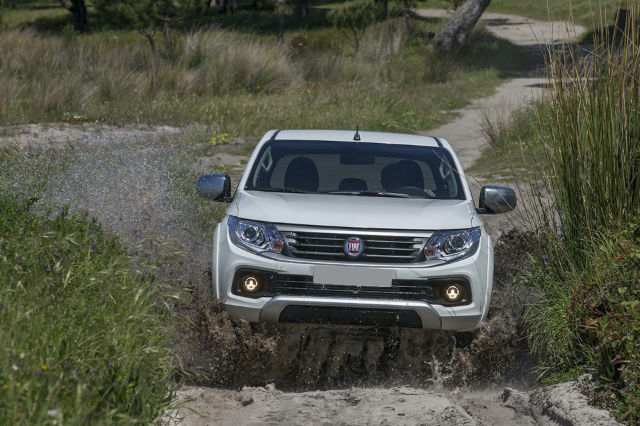
Fiat Fullback 2.4 (petrol)
This is the least-expensive way to get behind the wheel of a Fullback, which means a pared-down spec sheet and exclusive availability with a single-cab body. Nonetheless, this engine can be had with two trim levels (the lower one of which is literally called “de-spec”), where the slightly more-upmarket one adds air conditioning and a service plan. For the rest, the “de-spec” Fullback 2.4 is identical to the “normal” one.
They both derive their power from the old but well-proven Mitsubishi 4G64 4-cylinder petrol engine, driving the rear wheels through a 5-speed manual transmission. In this application, it offers 97 kW and 202 Nm – the latter only arriving at a lofty 4000 r/min, and making for a rather peaky power delivery (especially in a bakkie). Fuel consumption isn’t stellar, either, with both Fullback 2.4 single-cabs needing an official 10.3 ℓ/100 km on average.
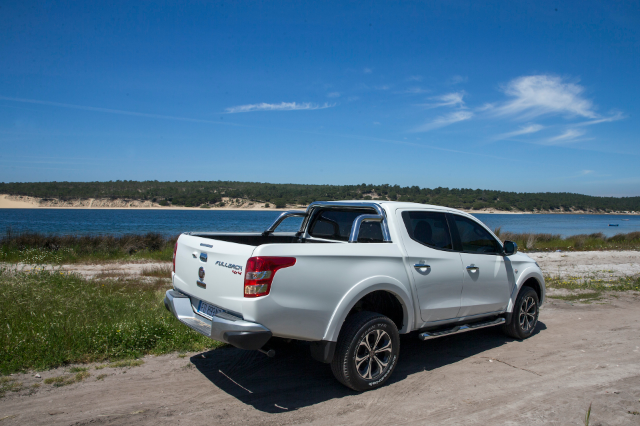
Fiat Fullback 2.5Di-D (diesel)
This is the Fullback’s mainstay engine, and is applied with different power ratings according to the various usage profiles, although they’re all still mated to a 5-speed manual gearbox. In the basic single-cabs (also available in “normal” or “de-spec” trim), there’s 94 kW and 240 Nm on tap from this 2.5-litre turbodiesel mill.
It’s immediately more appealing than the 2.4 petrol, simply because it makes more torque, earlier in the rev range (2000 r/min). Fuel economy is also miles better than the 2.4 petrol, with a claimed average consumption of 7.8 ℓ/100 km. This makes the 2.5Di-D a more-suitable powerplant for business owners and fleet managers, even though it costs about R54 000 more than the equivalent petrol variant.
Step up to a 4x2 double-cab, and the outputs go up to 100 kW and 324 Nm, creating a decent entry-level leisure bakkie powerplant. It’s quite well-priced too, barely breaching the half-a-million-Rand barrier in this trim. Claimed fuel consumption is still very good, with an official average figure of 7.9 ℓ/100 km in this trim.
Make the final jump to a 4x4 with this engine, and you’ll get another power hike: 131 kW and 400 Nm is still respectable, and it’s quite inexpensive for a modern 4x4 double-cab as well. Its list price of R 529 257 is great value in this segment, and its claimed fuel consumption of 7.7 ℓ/100 km is actually the lowest of all the 2.5-litre diesel Fullbacks.
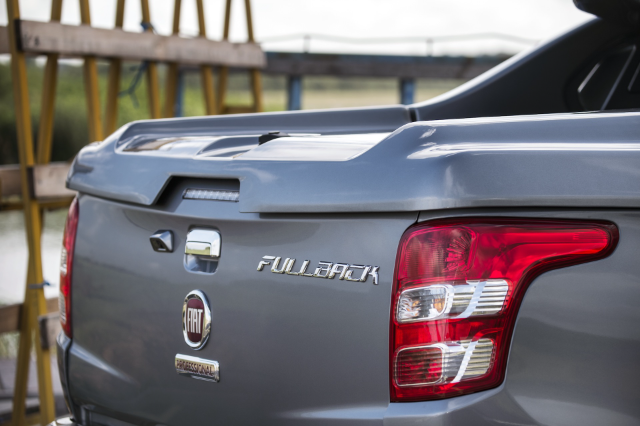
Fiat Fullback 2.4Di-D automatic (diesel)
If you want a self-shifting gearbox, you’ll need to upgrade to a 2.4Di-D double-cab – available with either 4x2 or 4x4 drivetrains, but both endowed with a 5-speed torque converter automatic transmission. These variants employ the latest-generation Mitsubishi 2.4-litre turbodiesel, generating 133 kW and 430 Nm in this application.
Thanks to its high-tech construction (with an aluminium block, balance shafts, and variable camshaft timing), it’s very refined for a big 4-cylinder diesel, and it’s claimed to be very efficient as well. Official average fuel consumption figures are 7.8 ℓ/100 km with either drivetrain (although the 4x2 will definitely use less fuel on normal roads, due to reduced drivetrain losses). Prices for the Fullback 2.4Di-D range are R 575 268 (4x2) or R 644 868 (4x4).

Which one is better?
The 2.4-litre petrol engine is a bit of an odd duck in this company: its roots date back to 1980, and it’s neither particularly potent nor very fuel efficient in relation to its newer opponents. It will give a long service life (as is evident from all the ancient Colt 2.4 bakkies still running around), but today’s buyer can certainly find much better alternatives.
As for the 2.4Di-D variants, they could both have been extremely appealing – if only they weren’t priced so closely to their Mitsubishi Triton cousins. There’s only R 10 000 difference between the top-trim Fullback 2.4Di-D 4x4 auto and the equivalent Triton, but the Mitsubishi gives a much more assertive appearance, better safety specifications (LED headlights and 7 airbags, as opposed to halogens and 2 airbags), and a newer 6-speed automatic gearbox for the comparatively small added outlay.

The 2.5Di-D is a far more compelling alternative, even if it is also rather more expensive than the 2.4 petrol (especially in workhorse trim). Yes, it costs more than the petrol to buy, but that 30-odd percent fuel saving (and lashing of extra torque) should make the Fullback 2.5Di-D single-cab a better business proposition all round.
But it’s in the double-cabs where the 2.5Di-D really gets a chance to shine, and especially so in 4x4 guise. It almost matches the modern 2.4Di-D on outputs and consumption, and yet it won’t get close to the R 600 000 barrier even with 4x4. If you don’t want your bargain double-cab to come from China or India, Fiat has something just for you...


