Which charge type will get you from nearly empty to nearly full, the fastest?
Charging an EV may seem like a complicated principle at first, but in reality, it's rather simple. Understanding the different types of chargers will help you gauge which chargers will give you the best performance. Here's the type of charger you need to use to get charge in your battery, fast.


Electric vehicles (EVs) require a bit of a mindset shift to be able to utilize them to their full potential. Small changes to your driving habits and refuelling approaches are required to ensure that you don't run into problems while out on the road. The traditional mindset of only replenishing your fuel when it's nearly empty isn't the best way to go about using your EV effectively instead, it's better to replenish the charge before the battery runs too low as the 20-80% range is the quickest to recharge. This brings us to another shift that's required.
Related: Where are electric car charging stations near me?
Charging times need to be factored into your daily or weekly routine. The world doesn't have to come to a complete stop when this happens but knowing how to make the most of this downtime or scheduling this downtime for more convenient times of the day will go a long way in ensuring that you have the least amount of disruption. Home charging is the most effective way of maintaining your EV, making the most of the time it's parked up overnight. However, you may find yourself out and about, having travelled further than anticipated and now needing a charge from a public charger. Can you run an EV on public charging alone?
These charges do cost you a little more but they're a convenient way of travelling further distances and getting the most range out of your car. They are not difficult to use, you can find our guide on charging EVs here, and you don't even need to worry about inclement weather; it's all safe. However, not all public chargers are the same so let's find out which charge type will get you from nearly empty to nearly full, the fastest.

Charging Basics
EV chargers come in two different varieties; alternating current (AC) and direct current (DC). Batteries supply DC current and require DC current to charge as well. AC power is more commonplace in general electricity supply as it is able to be stepped up and stepped down, allowing for the safer transmission of power from the power stations to our homes. Over these large distances, the energy loss is minimised if AC is transmitted as opposed to DC. In general, all power outlets will supply you with an AC power supply but this isn't suitable for charging a DC battery.
EVs have built-in systems that convert the AC input to a DC output and then feed this into the battery. This process takes time and adds to the overall charging time and the amount of power that can be plumbed into the vehicle. Therefore, a DC charge can go straight into the battery without requiring conversion and can transfer a higher rate of charge as well.
Which is faster?
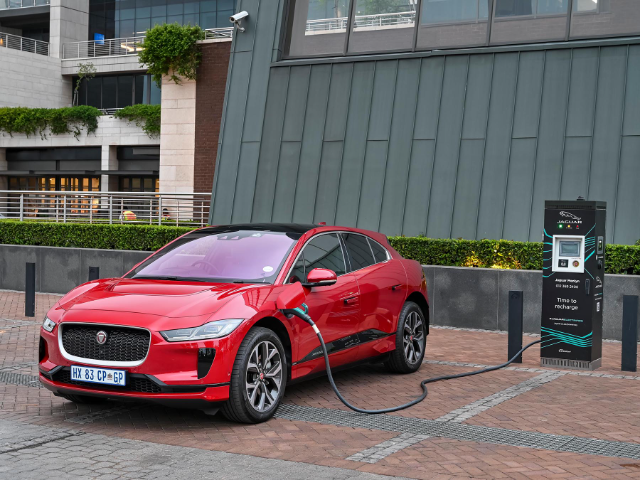
AC charges need to be limited to allow for the conversion to DC to take place. Most EVs will only allow for a maximum of 11 kW of power to be applied for charging when using AC with a few allowing for a higher, 22 kW input. DC chargers are sometimes capable of putting out as much as 250 kW with the maximum currently available in South Africa currently at 150 kW through a select few Audi charging stations. Most public DC chargers will offer either 50 or 60 kW of charging power.
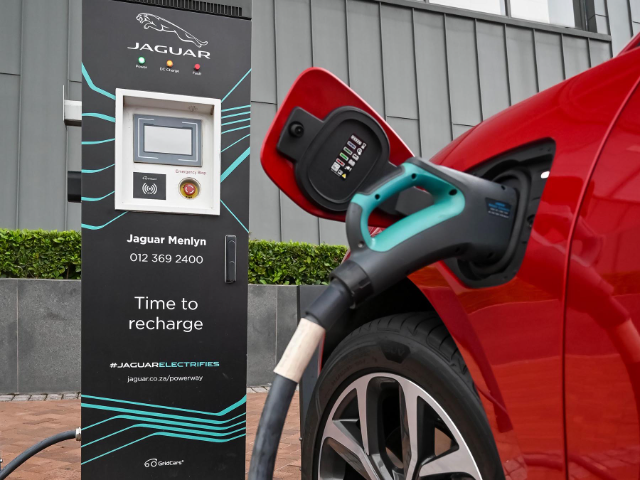
If you were to think of your battery as a bucket that takes 1000 marbles to fill, putting in a handful of 11 marbles at a time would take longer than scooping in 50 marbles each time. Your EVs battery works in a similar way; the more you can put in each time, the faster it fills up.
DC charging is the best way to get a battery from nearly empty to nearly full, in the quickest time. Now find out where you can find a DC charger near you.