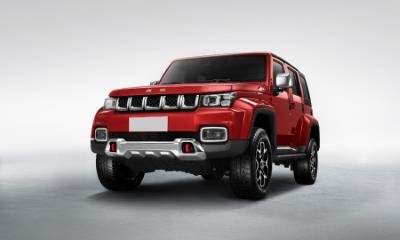
Which BAIC B40 Plus is better: diesel or petrol?
During the 2019 Festival of Motoring, Chinese automaker BAIC unveiled the B40 Plus locally and confirmed that the model is destined for local shores. In 2021 BAIC introduced the model with a choice of diesel and petrol motors. We compare the two power units to find out which is better.


Slowly but surely, Chinese vehicle manufacturers have been entering the local automotive market and one of these is BAIC. Currently on offer from the brand are the Beijing X55 crossover and the B40 Plus SUV. The BAIC B40 Plus, which was introduced in 2021, not only resembles the Jeep Wrangler but is built with the same purpose in mind, to take on challenging off-road terrain.
Hidden under the body is a rugged ladder frame chassis, while the pilot further benefits from a selectable four-wheel-drive system with a low-range transfer case and rear diff lock. Approach and departure angles are rated at 37 and 31 degrees, respectively, while a ground clearance of 220 mm is on offer.
Related: BAIC B40 Plus (2021) launch – the beer-budget 4x4
If you are planning on selling your car quickly and easily with our Instant Offer tool and start your search for new and used BAIC B40 Plus models on AutoTrader. You can also expect to find 17-inch wheels in all four corners. And behind the front wheels, a double-wishbone suspension set-up. At the rear, BAIC incorporated a five-link rigid rear axle. The interior has a 10-inch touchscreen infotainment system, while the driver benefits from a digital instrument cluster configurable in three themes: Trek, Speed and Classic.

The figures
| BAIC B40 Plus - Petrol | BAIC B40 Plus - Diesel | |
| Engine | 2.0-litre, turbocharged, 4-cylinder, petrol | 2.0-litre, turbocharged, 4-cylinder, diesel |
| Transmission |
6-speed automatic (8-speed automatic for the City Hunter and Champion derivatives) |
6-speed manual |
| Power | 160 kW | 110 kW |
| Torque | 320 Nm | 350 Nm |
| Fuel consumption | 10.1 L / 100 km | 8.5 L / 100 km |

Verdict
When comparing the two powertrain options, it becomes clear that they are rated relatively similar in power and torque. However, owners will most likely find that the petrol derivative will reach 100 km/h slightly quicker than the diesel and should reach a higher top speed. The diesel variants benefit from an additional 30 Nm of torque, and this could be the difference between cresting a steep hill or not.
Where the diesel shines out even more is with its claimed fuel consumption, returning with an average of 8.5 L / 100km, making it cheaper at the pumps and ultimately bringing down the overall cost of ownership. As such, for us, the diesel variant is our pick.
Recommended next: