What safety features does the Toyota Land Cruiser FJ have?
The Land Cruiser FJ is finally here and has original FJ Cruiser followers divided. Be that as it may, you might be wondering what safety features it has. We take you through both variants to see what they offer in this respect.


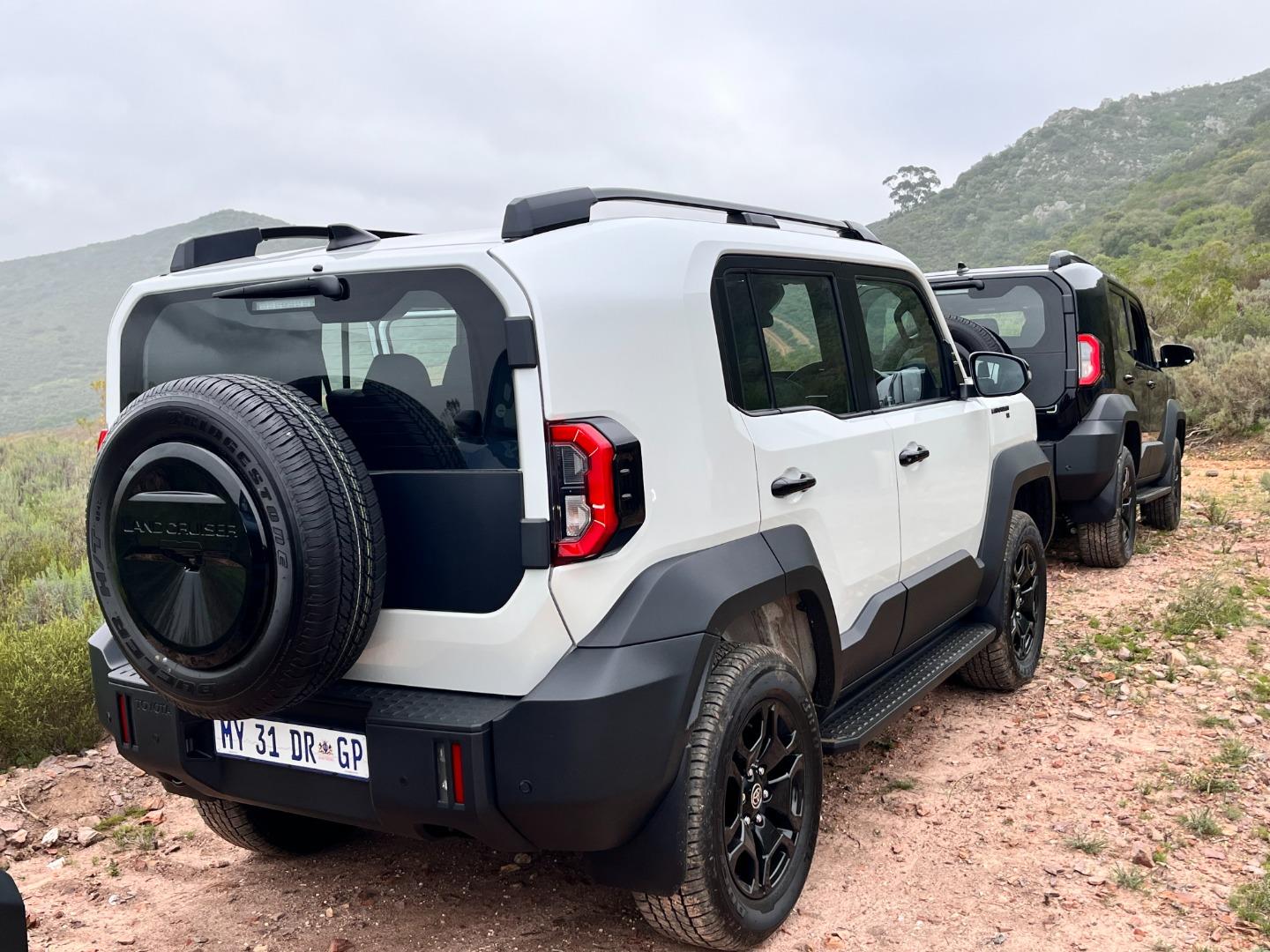
The arrival of the new Toyota Land Cruiser FJ in South Africa brings a mix of retro design and modern engineering to the local market. This is no 'Barbie FJ', it's a venerable off-road machine with the sexy looks to match. Like Sydney Sweeney in neoprene!
For those interested in this rugged SUV, safety equipment is a major selling point. Toyota has structured the local range into two grades, the GX and the VX, with the safety technology serving as a key difference between them.
Search Toyota Land Cruiser FJ models on AutoTrader

Core protection
Every Land Cruiser FJ comes with a strong foundation designed for occupant protection. Both the entry-level GX and the top-tier VX models share the same core active and passive safety architecture.
This includes a seven-airbag system that protects passengers with front, side, and curtain coverage, supplemented by a driver-side knee airbag.
Launch report: Toyota Land Cruiser FJ 2026 First Drive
Dynamic stability and off-road control
Dynamic stability is managed through a comprehensive electronic suite. Vehicle Stability Control works to keep the SUV on its intended path, while the Anti-lock Braking System is bolstered by Electronic Brakeforce Distribution and Brake Assist to maximise stopping power.
Shootout: Land Cruiser FJ versus toughest modern rivals in SA!

For those who plan to head off-road, the vehicle includes a standard rear differential lock to ensure traction in loose terrain. Steep or technical environments are managed by Hill-start Assist Control and Downhill Assist Control, which maintain composure on steep inclines and declines.
Security is also standard across the range, featuring a factory-fitted alarm system, an immobiliser, and front and rear parking sensors to aid in manoeuvring.
Comparison table: safety features
| Safety Feature | GX | VX |
| Seven Airbags | Standard | Standard |
| Anti-lock Braking (ABS) with EBD | Standard | Standard |
| Vehicle Stability Control (VSC) | Standard | Standard |
| Rear Differential Lock | Standard | Standard |
| Hill-start & Downhill Assist | Standard | Standard |
| Front and Rear Parking Sensors | Standard | Standard |
| Rearview Camera | Standard | PVM (360-degree) |
| Pre-Collision System | No | Standard |
| Adaptive Cruise Control | No | Standard |
| Blind Spot Monitoring | No | Standard |
| Lane Departure Alert | No | Standard |
| Parking Support Brake | No | Standard |
| Adaptive High Beam | No | Standard |
Advanced assistance: The VX Grade
The VX grade further enhances the safety profile by incorporating the Toyota Safety Sense 3.0 suite. This system introduces active driver assistance technology that can intervene during daily driving:
A Pre-Collision System uses sensors to monitor the road for other vehicles and pedestrians, providing automated braking when necessary.
Highway driving is made more convenient with Adaptive Cruise Control, which maintains a set distance from the car ahead, even in stop-and-go traffic.
Lane Departure Alert helps the driver stay in the correct lane, while Blind Spot Monitoring provides warnings when vehicles are hidden from view.
Visibility is significantly enhanced in the VX through the Panoramic View Monitor. This camera system provides the driver with a 360-degree view around the vehicle, a major advantage in tight parking situations or when navigating narrow off-road trails.
The VX also includes a Parking Support Brake that stops the vehicle automatically if an obstacle is detected at low speeds, along with an Adaptive High Beam System that manages light distribution to prevent glare for other road users.
Quick drive in the new LC FJ at Toyota Matsuri ('26)
Choosing the right model
Buyers looking for a traditional, mechanical off-roader may find the GX fits their needs perfectly, as it retains all essential safety and traction systems without the extra layer of digital intervention.
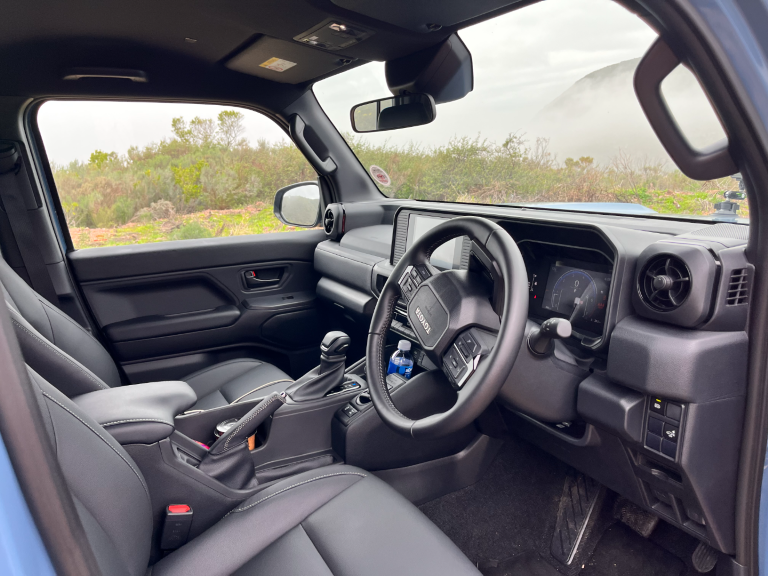
The VX is better suited for those who use the vehicle as an everyday family car, as the added driver assistance systems provide a higher level of convenience and active security for long-distance travel. I was quite taken with its PVM that allows you to see 'through' the bonnet. It can be unnerving when you're scaling an incline and you can't see beyond the FJ's nose. This alleviates the problem nicely!
Determining which model offers the best value depends on how you plan to use the vehicle, but from a pragmatic buyer’s perspective, the decision typically splits along these lines:
The case for the GX (R714 000)
The GX is objectively the better value if your definition of value is utility per rand.
Mechanical parity: You get the exact same chassis, 2.7-litre engine, 4WD system, and rear differential lock as the more expensive model. For a serious off-roader, the hardware that dictates capability is identical.
Lower long-term maintenance risk: By avoiding the complex Toyota Safety Sense (TSS) sensors and the 360-degree camera system, you have fewer high-cost electronic components that could potentially fail or become expensive to repair out of warranty.
Customisation base: If you are an enthusiast planning to fit aftermarket bumpers, suspension, or specialised off-road lighting, you aren't paying for integrated systems that might get in the way of or be made redundant by those upgrades.
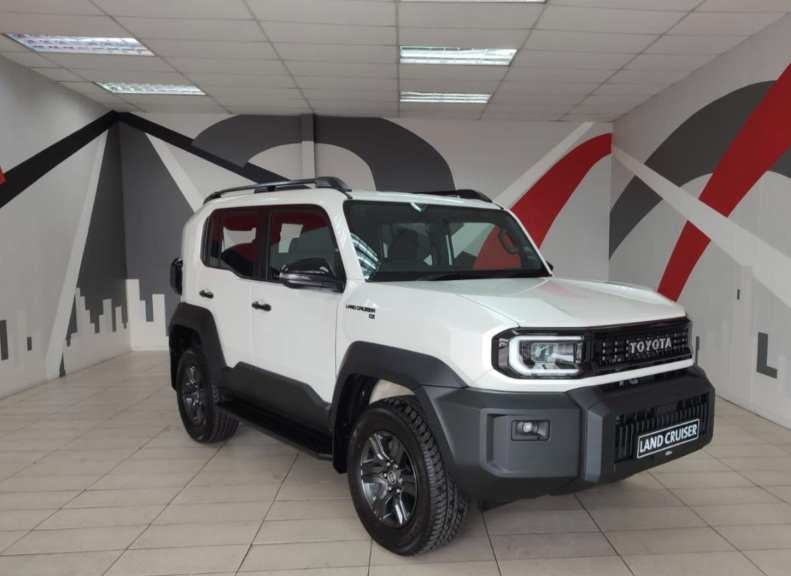
The case for the VX (R761 400)
The VX offers a better value if your definition of value is modern convenience and residual support.
Technology-to-price ratio: For a R47 400 premium, you are getting an extensive suite of active safety (TSS 3.0), the 360-degree camera (which is genuinely transformative for tight trails), and creature comforts like synthetic leather and adaptive high beams. If you tried to retrofit that level of technology or interior finishing yourself, it would cost significantly more than the R47 400 price gap.
Dual-purpose viability: If this is the only car that must perform equally well on the school run, highway commutes, and weekend trails, the VX justifies its cost every day. The convenience of full-speed adaptive cruise control and blind-spot monitoring is immense for fatigue management on long road trips.
Resale appeal: In the modern South African market, family-oriented buyers, who make up the bulk of the SUV segment, expect active safety tech. A VX model will likely be easier to sell on the used market in five years because it feels "current" compared to the more basic GX.
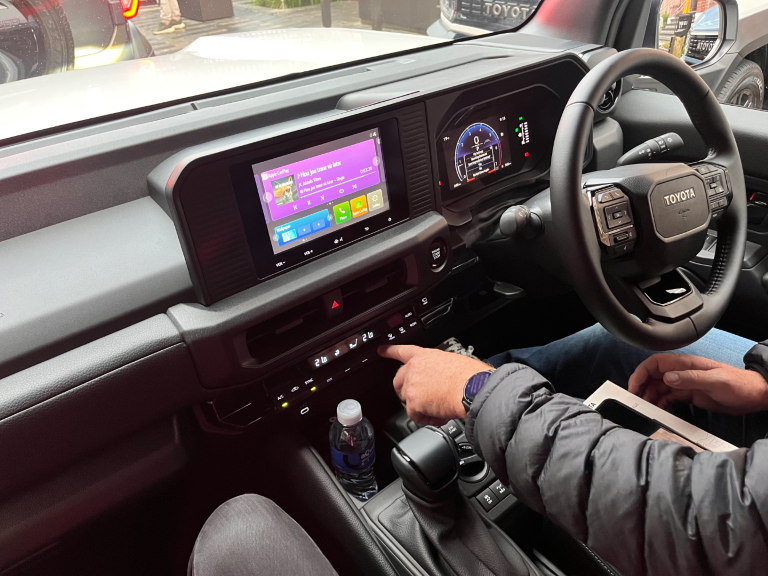
Final verdict
Choose the GX if you are a traditionalist or an overlander who values simplicity and mechanical durability above all else. It is the most "honest" Land Cruiser between the two variants.

Choose the VX if this is a primary family vehicle for adventurous folks who spend hours in the car. The safety suite and creature comforts provide a better living experience for the price difference, and it offers better future-proofing for resale.
Not quite sold on the new Land Cruiser FJ? Search for the 'OG' FJ Cruiser on AutoTrader to see what you can find.