
Say you've just bought a new car and need to go through the motions of admin and documentation. When you're at your local licensing department and seeing what NaTIS is all about, a bunch of forms and codes may be intimidating, but have no fear, we have plenty of guides to demystify all of this. Today, we'll look at the RC1.
Related: What is proof of ownership of a vehicle in South Africa?

What is the RC1?
Under NaTIS (National Traffic Information System), the RC1 is one of the most essential pieces of vehicle documentation. Officially, this is referred to as the "Certificate of Registration In Respect of a Motor Vehicle". This document is also commonly referred to as the vehicle's 'Papers'.
The document is the vehicle's identity document, verifies that you are the legal owner, and is required when selling a vehicle to transfer ownership. It acts as a title deed for your vehicle.
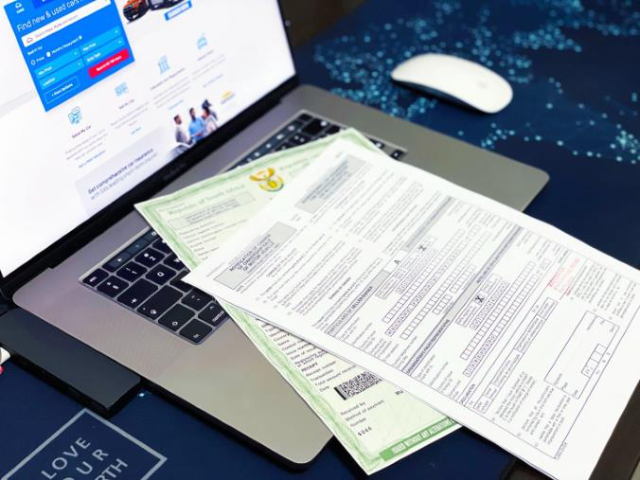
RC1 Particulars
Registering authority - Where the car is registered. Usually this is a city, town or region.
Register number - This is the NaTIS system number, where the vehicle's details are logged. In essence, this is the ID Number of the car under NaTIS.
VIN Number - VIN stands for Vehicle Identification Number. This is the ID number relative to the vehicle and is stamped on the vehicle's chassis as well and affixed to a plate.
Engine Number - This relates to the vehicle's engine ID and is stamped on the engine block. This number may change if a replacement engine is obtained after police clearance is completed.
Make - The vehicle manufacturer.
Series Name - This is the car's model, e.g., Polo, Swift, Tiggo.
Vehicle Category - This refers to the vehicle type and size. There are 7 different types to consider. Namely:
- A – Motorcycle.
- B - Light Passenger Vehicle. Carries fewer than 12 passengers.
- C – Heavy Passenger Vehicle. Carries more than 12 passengers.
- K – Light Load Vehicle. GVM is less than 3500kg.
- L – Heavy Load Vehicle. GVM is greater than 3500kg.
- U – Special Vehicle. Industrial or Agricultural vehicle
- M – Heavy Load Vehicle. GVM is greater than 3500kg, and the vehicle has a trailer attached.
Drive - How the vehicle is powered. There are 4 types of propulsion.
- Self-Propelled - Most vehicles fall under this category.
- Trailer.
- Semi-Trailer.
- Trailer drawn.
Tare - The vehicle's unloaded weight. This is what determines the cost of your vehicle's license.
Date of liability for first licensing - This refers to the date the vehicle was first logged into the NaTIS system.
Vehicle Status - There are 4 to consider here.
- Code 1 - New Vehicle
- Code 2 - Used Vehicle
- Code 3 - Rebuilt Vehicle
- Code 4 - Scrapped, though the certificate may state it's new or used.
Date liable for registration - Refers to when you took ownership of the vehicle. The date on the Settlement Letter, the notification of change of ownership, or the receipt from the seller determines this. If you delay this after taking ownership, you will incur a late fee.
Last License - The license number is what's on your number plate. Lists the previous 3 license numbers that were recorded on the system for that vehicle. It may not record the latest number if the vehicle was issued a new number upon purchase. This depends on whether you've licensed the vehicle at the same time as you purchase it.

Titleholder - This is the legal owner of the vehicle.
Type of Identification - This refers to the identification of the Titleholder, which can be an RSA ID for a person, but a Traffic Register Certificate is acceptable. In the case of a business, however, a Business Registration Certificate is required.
Identification Number - Refers to the Titleholder's ID number. In the instance of a company, the Company Registration Number will fall here. In the case of a financed vehicle, this changes.
Country of Issue - Where the above ID document was issued.
Name - The name of the Titleholder
Owner - Who is the legal owner of the vehicle? Whether the car is financed or paid off, you are the owner of the vehicle. If the Owner and Titleholder are different, the Owner can't sell or deregister the vehicle unless authorised by the Titleholder.
Type of Identification - Applies to the Owner.
Identification Number - Applies to the Owner.
Name - The Owner's name.
Control Number - This serves as an anti-fraud feature along with the document's watermark. The refers to when and where the specific document was issued and serves as an internal NaTIS number. When any transactions are done relating to this document, the Control Number is checked. When applying for a duplicate certificate, though, the Control Number naturally changes.
Issue Number - An internal NaTIS number that records the transaction of the document.
Date of Issue - Date when the document was issued or printed.
Registering Authority - Where the car was registered.
Receipt Number - Cost receipt for the registration.
Transaction - Refers to the type of transaction, in this instance, Vehicle Registration.
Total Amount Received - The total cost paid for the registration certificate.
Date - The day the money was paid for the registration.
Received by - The name teller who performed the transaction.
Method of Payment - How the certificate was paid for. The term 'Multiple Adding' will appear if you've registered, licensed and paid for a vehicle at the same time. If you've done a single transaction, then it would show as 'Single Transaction'

When do I need an RC1?
You need this document when you're buying and or selling a vehicle. If you're buying, you need to obtain this document from the seller and submit it along with change of ownership forms to your nearest licensing authority in order to register the vehicle in your name. If you're selling, on the other hand, this document proves you're the legal owner and is needed when transferring ownership. If a change of ownership doesn't happen, anything that happens with or to the vehicle means the authorities will send all fines and fees to you.

I'm financing my car through a bank, am I entitled to this document?
When you're financing a car, the Bank/Finance House becomes the titleholder and holds the document until you pay off the vehicle. Though you are registered as the owner of the vehicle. Once the vehicle is paid off, you need to request a release letter in order to obtain the document and have it processed for you to become the titleholder.

Recommended Reading
Everything you need to know about the ownership certificate
Car ownership transfer: The legal requirements & process
What documents do I need to provide to the buyer of my car?