



Suzuki has been on a roll in South Africa during the past few years, setting new sales records almost every month. From being a really marginal sales performer, Suzuki earned sixth spot overall in the new car sales charts here in September, with a total of 1 787 new cars sold.
What has made this achievement even more remarkable is that it has been achieved in a year hit badly by COVID-19. In fact , overall South African passenger car sales were over 30 per cent down, compared to September 2019 figures. Total new-car passenger sales for September were 22 798.
A re-focussed model line-up
Where Suzuki has scored in the past few years is that the company has re-focussed its passenger car line-up here. Affordability has been a key note, and more up-market models with high prices, like the Grand Vitara and Kizashi, have been dropped from the range. Instead, Suzuki offers cars ranging in price from R139 900 for the newly-introduced S-Presso in 1.0 GL form, to R416 900 for the Vitara 1.4T GLX.
This price range is targeted right at the heart of new-car sales action. What’s more, Suzuki has cleverly introduced high-image cars in this affordable range, such as the Ignis and Jimny, which spin off on the more workaday examples in the range.
The Swift remains a mainstay model
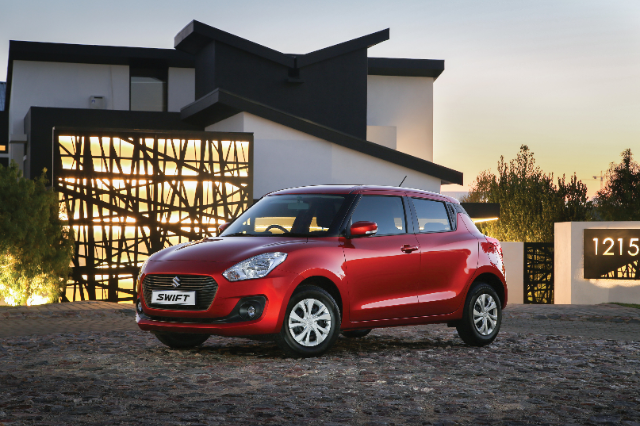
Since Suzuki’s entry into the passenger car market here a little over a decade ago, the Swift hatchback has been the mainstay model, and it pretty much remains so to this day. In September 2020, 533 Swifts were sold, and this figure is likely to increase as word continues to grow about Suzuki’s reliability and excellent fuel economy.
The latest version of the Swift was introduced here in June 2018, and this new hatchback range was much more focussed on affordability than before. Built in India, the new Swift doesn’t have quite the quality feel that the previous generation enjoyed, as the car is built to a price, with practicality taking precedence over finer interior finishes. This is not to say that the new Swift is shoddy, but it has a lighter, more hard-plastic feel than the older version, and is in fact much lighter, weighing just 875 kg, which is some 95 kg lighter than the previous Swift.
Engines
The 1,2-litre naturally-aspirated engine
At the June 2018 launch, the latest Swift range was introduced with just one engine. This is the K12M 4-cylinder unit, displacing 1 197 cc and carried over from the previous-gen Swift. It has a relatively high compression ratio of 11,1:1, and the output of 61 kW and 113 Nm of torque is quite impressive for a little non-turbo unit.
Acceleration is not neck-snapping, but its 0-100 km/h time of 12,0 seconds is more than adequate for a light car, as its top speed of 170 km/h. More impressive, perhaps, is its through-the-gears power delivery. Thanks to the very light weight of the car its capability in traffic is excellent, and the five-speed gearbox has ratios that are excellently matched to the engine’s power characteristics. Fuel consumption average is claimed at an impressive 4,9 litres/100 km
The 1,4-litre Turbo engine

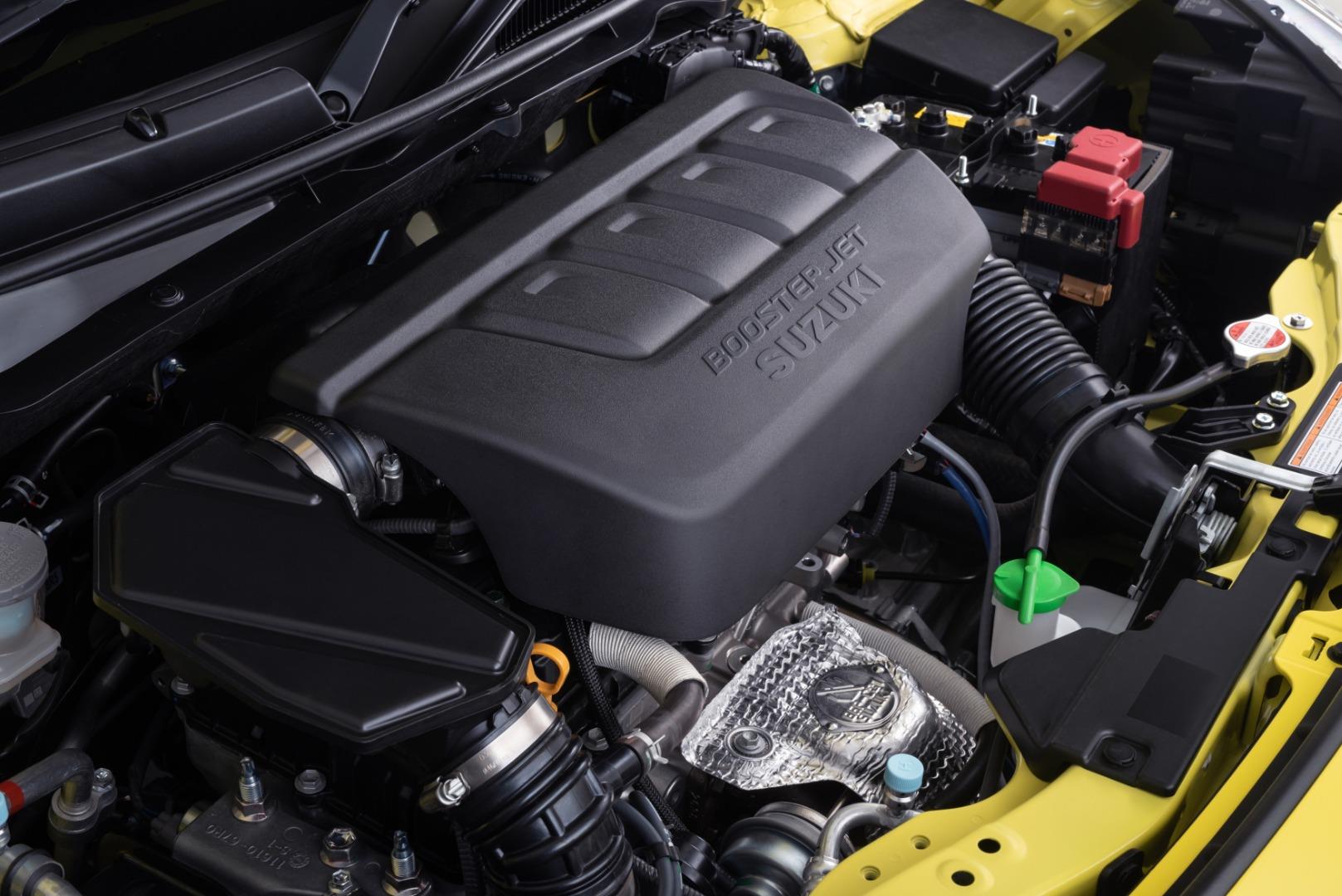
While many customers remain satisfied with the Swift’s honest performance, enthusiasts mourned the passing of the previous-generation’s Sport model. This was redressed in July 2019 with the appearance of the first turbocharged Suzuki here, in the form of the 1.4T Sport. This model uses a 1 373 cc turbocharged engine which Suzuki calls its BoosterJet unit. Officially known as the K 14C DITC BoosterJet 4-cylinder, it features direct fuel injection employing a high pressure 7-nozzle injector system. It is characterised by an integrated intake and exhaust manifold, with very short inlet tracts, and a revised variable valve timing system that uses a roller-rocker type design.
Nevertheless, the engine is profiled equally towards economy as well as performance and its rated maximum of 103 kW is quite modest for a 1,4-litre turbocharged unit. But the peak torque figure of 230 Nm is impressive, making the Swift Sport very easy to drive. A wide power band that means you can trundle around town in fifth or sixth gear and still have some useable throttle response at your disposal.
Acceleration is good, rated at 8,0 second for the 0-100 km/h sprint, while top speed is 205 km/h. The claimed average fuel consumption for the Suzuki 1.4T Sport in manual form is 6,1 litres/100 km.
And now for the efficiency award!
The Swift 1,.4T is a much more sophisticated car overall than the 1.2 models, with a much more up-market build quality. The pricing reflects this, as the 1.4 T sport sells for R327 900, as opposed to the least expensive Swift 1.2 GA, which retails at R171 900.
What is surprising, perhaps, is just how fuel-efficient the turbocharged engine is. This was brought home by the results of last year’s WesBank SA Fuel Economy Tour, where Suzuki took a whole bunch of class wins. The Swift 1.2 GLX manual returned an overall figure of 5,1138 litres/100 km, while the Swift Sport 1.4T manual managed an overall figure of 5,5977 litres/100 km.
Whilst we recognize that these cars were driven carefully with fuel economy in mind, speaking to competitors after the event revealed that the average speeds set for the 2 500 km event by the organisers meant that the figures were in fact very much achievable in a real-world context. Granted, the Swift 1.4T would definitely gobble much more fuel than the naturally-aspirated 1.2 GA when driven hard in a robot-to-robot drag racing context!
The mix of fuel economy and performance is the deciding factor
Another factor is that the 1.4T is some 100 kg heavier than the 1.2 GA, thanks to its more lavish equipment level, bigger engine and more turbo-related engine ancillaries. Those fuel economy run figures have convinced us that, given the much greater performance figures on tap for the turbo, allied with very impressive economy, it is the 1,4T BoosterJet engine that wins the efficiency award, in our book. But, we hasten to add, the little 1.2-litre non-turbo engine runs it very close.
*Pricing was accurate at the time of writing, but may change without prior notice.
Recommended next:
Suzuki Swift Sport loses weight and adds muscle
How much is your used Suzuki Swift worth?
Is the Suzuki Swift good for new drivers? Here’s our verdict.