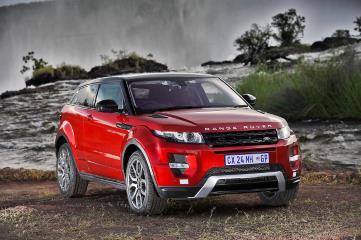
We compared Range Rover Evoque engines, and the efficiency crown goes to…
Land Rover’s Range Rover Evoque has been a popular entry point into this premium brand’s model range for the past decade. It has seen frequent updates over the years, along with a comprehensive redesign in 2018. Since that update, the local Evoque range has expanded to encompass three engine choices, with petrol, diesel and hybrid drivetrains on offer. Which one deserves the efficiency crown?


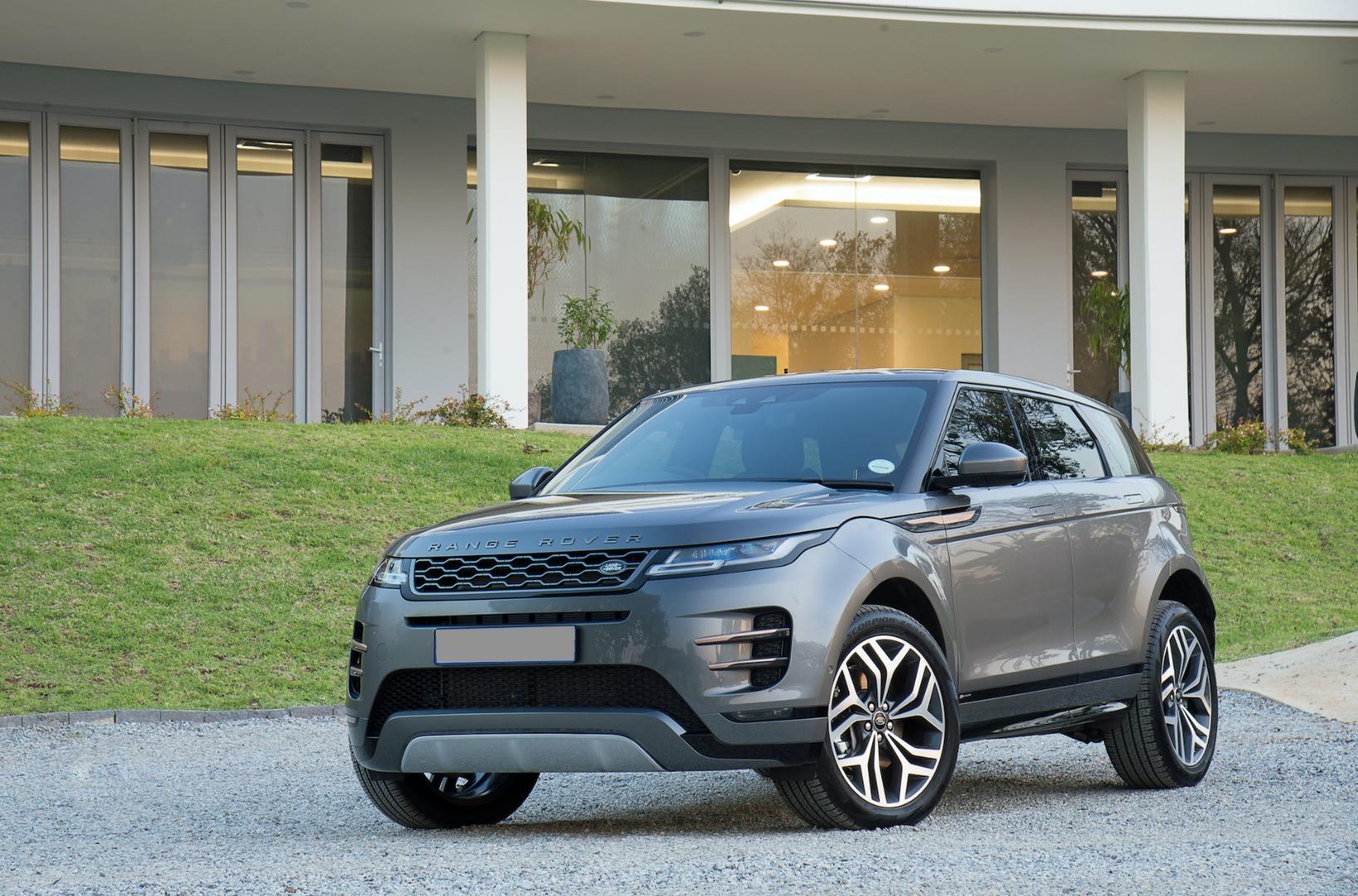
As is common practice across the Land Rover product range, there’s a bewildering array of trim levels and special editions on offer with all three engine choices, so we narrowed-down the scope of this investigation to the lowest trim level that can be had with any one of these engines. In the Evoque’s case, that specification is called the “R-Dynamic SE”, and it slots roughly midway into the model hierarchy.
Selecting a common trim level means that weight-, performance- and consumption data can be compared directly, bringing the differences between them down to only their engines. It must be noted that, whichever trim level or engine is selected, all local-market Evoques are equipped with AWD, in contrast to other markets, where lower-power variants can be ordered with a FWD-only drivetrain.
Related: Shop for new and used Range Rover Evoque cars for sale here.

Range Rover Evoque D200
As with the lower-powered petrol option (labelled “P250”), the diesel engine can be mated to any trim level, from the most-basic “D200” (without even an “S” attached to its name) to the loaded “Autobiography”. Under the bonnet is a 2.0-litre turbodiesel 4-cylinder from the Jaguar Land Rover (JLR) “Ingenium” engine family, mated to a 9-speed automatic gearbox.
While its outputs are quite respectable for a diesel engine of this size, 147 kW and 430 Nm isn’t really enough to turn the Evoque D200 into a rocketship. It’s claimed to dash from a standstill to 100 km/h in a respectable 8.5 seconds and run on to a top speed of 213 km/h, though, so it’s certainly adequately powerful for most usage cases.
Fuel efficiency is its main selling point, with a claimed 5.4 ℓ/100 km average consumption. Reviewing an Evoque D180 (predecessor to the current D200) in 2020, our test average of 9.1 ℓ/100 km wasn’t anything spectacular, however, indicating that even conservative drivers will be unlikely to see lower than low-7 ℓ/100 km figures in mixed-cycle driving. Freeway driving will result in consumption closer to the official claim, however.
Average fuel consumption - combined cycle (manufacturer’s claim):
5.4 ℓ/100 km
Estimated fuel range (determined using official tank capacity of 65 litres):
1204 km
Range Rover Evoque P250
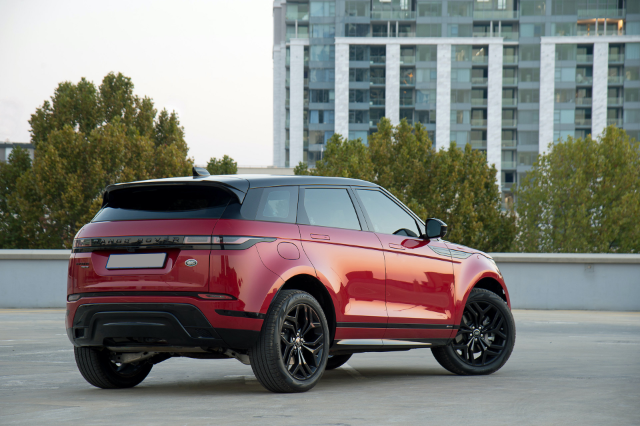
Slotting into the middle of the local Evoque engine range, the P250 is powered by a petrol version of the corporate Ingenium turbo engine. It makes a fair bit more power than the D200, but falls short on torque: 184 kW and 365 Nm makes for a rather different power delivery to that of the diesel’s 147 kW and 430 Nm. That power advantage makes the P250 rather quicker than the D200, with the 0 – 100 km/h sprint time dropping to a claimed 7.6 seconds and the top speed reaching up to 230 km/h.
The penalty for the improved performance comes at the fuel station, because the P250 posts an official average consumption of 7.9 ℓ/100 km, making mid-9 ℓ/100 km figures quite likely in normal driving. Interestingly, all three Evoque powertrains have different fuel tank capacities, with the P250’s 67 litre tank being the largest. Good thing, too, because it’s also the thirstiest of this bunch...
Average fuel consumption - combined cycle (manufacturer’s claim):
7.9 ℓ/100 km
Estimated fuel range (determined using official tank capacity of 67 litres):
848 km
Range Rover Evoque P300e
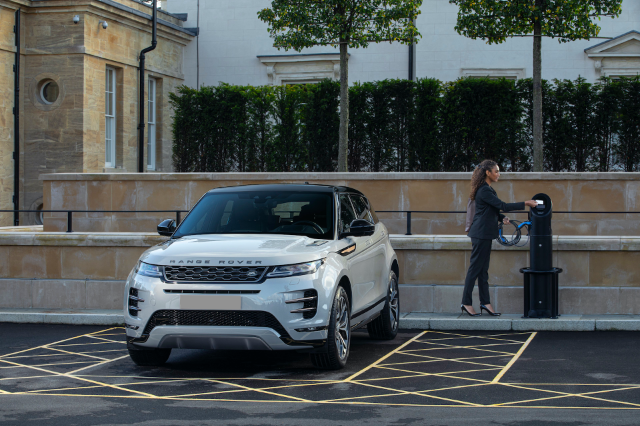
This one has the highest power- and torque outputs, in spite of also having the smallest engine displacement. In P300e’s case, it’s a 1.5-litre, 3-cylinder version of the Ingenium turbopetrol engine, giving 147 kW and 280 Nm, but with an electric motor attached to take the system totals up to 227 kW and 540 Nm. Consequently, the P300e has the quickest 0 – 100 km/h acceleration time at 6.4 seconds, in spite of the highest kerb weight in its range (300 kg more than the D200).
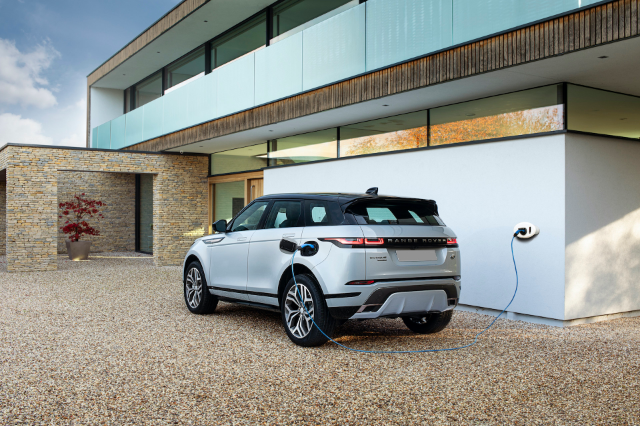
It’s a plug-in hybrid, and can drive in pure-EV mode for up to 66 km. That’s good, because its fuel tank of 57 litres is the smallest in the Evoque range. Predictably, the hybrid Evoque posts the most-impressive fuel efficiency claims, with its official consumption quoted at 1.9 ℓ/100 km.
Your experience may (and most likely will) be wildly different, however, unless most of your driving involved heavy stop-start traffic – that’s where EVs and hybrids make the most sense. Long-distance cruising will paint an entirely different picture, and likely push real-world consumption past the 6 ℓ/100 km mark (or even higher, if you maintain higher cruising speeds).
Average fuel consumption - combined cycle (manufacturer’s claim):
1.9 ℓ/100 km
Estimated fuel range (determined using official tank capacity of 57 litres):
3000 km
Verdict:
The Evoque P300e’s possible fuel range of 3000 km will only apply to those buyers whose driving happens mostly in congested traffic. Frequent long-distance travellers will however find the D200 to be the most-efficient choice in the range, because that is the one driving scenario where a good diesel will still beat an EV or hybrid hands-down.
Rather think of the P300e as a high-performance variant that can be exceptionally light on fuel in town: it’s the quickest in the range, and promises the lowest fuel consumption under the appropriate conditions. But, even though its performance is only middling in this model range, the P250 is likely to be the most-engaging to drive, combining relatively low weight with a perky boosted petrol engine. It’s all a matter of priorities.