
Range Rover Evoque vs Audi Q3 vs BMW X4: which one has the lowest running costs?
Range Rover Evoque vs Audi Q3 vs BMW X4: which one has the lowest running costs?




By Farzana Chaumoo
We compare the running costs of three premium SUVs.
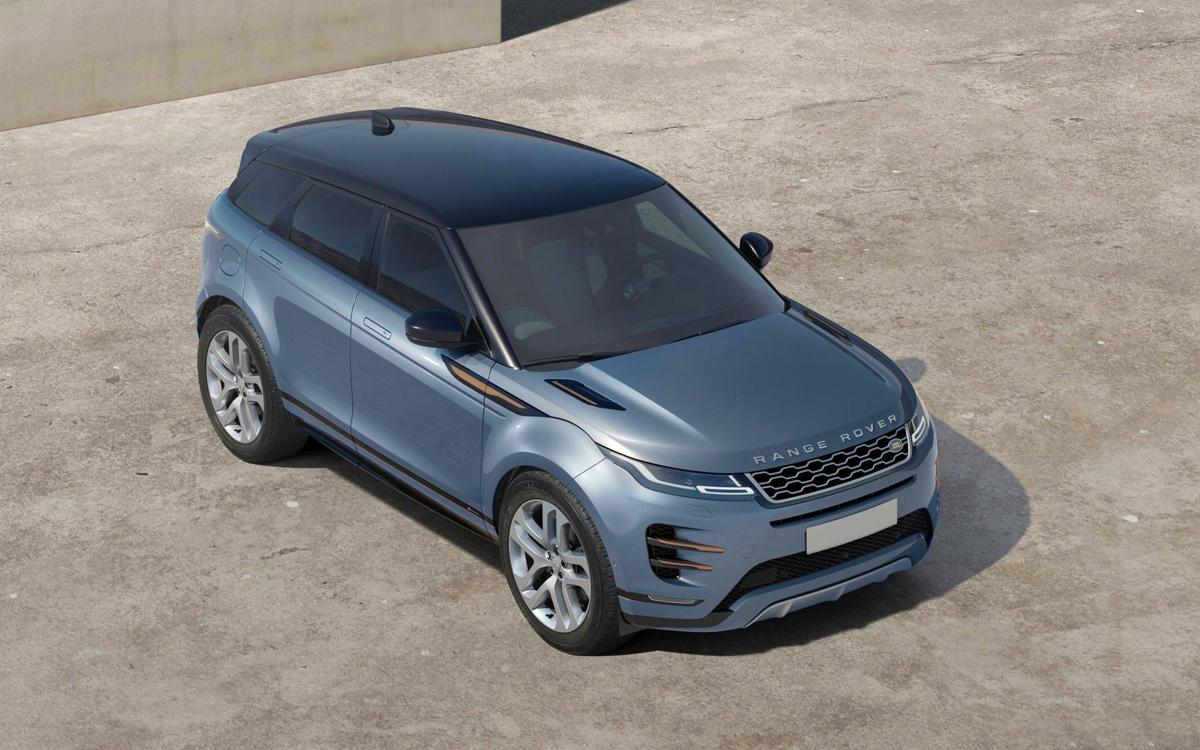
Range Rover Evoque
In terms of the Range Rover Evoque, the front-wheel-drive eD4 versions are the cheapest to run, however, these are not available in SA. It is the petrol-fuelled models that require deeper pockets. Working in the Evoque’s favour is strong resale values. Provided you choose carefully, Range Rover Evoque running costs are generally low. But keep in mind, as compared to more conventional cars, SUVs are usually more expensive to run and so components like tyres and brakes wearing are likely to wear out quicker and will also cost more to replace.
There are only two engines in the Evoque range. You can select between the 2.0-litre diesel or the 2.0-litre petrol Ingenium engine, both of which are in all-wheel-drive form. On the 2.0-litre diesel engine, the Evoque has a claimed fuel economy of 5.8l/100km (combined cycle) and CO2 emissions are rated at 153 g/km. If you’re after a petrol Evoque, fuel economy is rated at 7.4l/100km and CO2 emissions are quoted at 169 g/km.
The state-of-the-art Ingenium engines that power newer Evoque models provide superior performance and lower emissions. It’s filled with plenty of clever tech and even the drive system reduces thirst.
Reliability wasn’t a strong suit for Land Rover and the Range Rover Evoque may suffer from that legacy. Reportedly, it has already been subjected to six recalls despite it being built on a heavily revised version of the Land Rover Freelander 2’s underpinnings where minor faults should have been ironed out.
On the other hand, build quality appears good and well-assembled with barely any squeaks and rattles. The quality of materials used for the Evoque is also befitting of the Range Rover badge.
Fuel economy: a front-wheel-drive eD4 is most frugal but in this instance the diesel
Depreciation: Many models will retain 50% after 3 years
Servicing: Evoque servicing can be expensive and sticking to its servicing schedule will help in the long term. Servicing on older models take place every 12 months or 26,000km for the diesel engines and every 16,000km or once a year for petrol engines. For the 2017 Ingenium engines (petrol or diesel), service intervals are every 34,000km or every 2 years.
Audi Q3
Audi Q3 running costs shouldn’t be an arm and a leg. Its diesel engines are said to be more consistently economical than the petrol ones but different wheel sizes can impact fuel economy.
Get a break down of Audi engines here.
In terms of reliability, the Q3 has had a decent track record as it shares a platform and many components with the Audi A3. The previous model has proved to be pretty reliable and only three recalls have occurred in its lifetime while there is very little concern over its build quality.
Fuel economy: Audi Q3 2.0 TDI 110 kW for a good balance of power vs fuel efficiency.
Depreciation: the Q3 is a desirable SUV and should hold its value
Servicing: Can be tailored depending on usage. Servicing every 15,000 km or 1 year for the first service and thereafter every 30,000 km or 2 years for the all-new 2019 Q3.
BMW X4
In the BMW X4 range, the diesels offer impressively frugal economy for a large SUV, but also considering not driving like a hooligan. M Performance models won’t return as impressive fuel economy and are costly while servicing and insurance are also generally pricey.
The entry-level xDrive 20d is the most fuel-efficient powertrain on offer. The 2.0-litre diesel engine claims to return up to 5.4–5.6l/100 km while CO2 emissions were measured at 142–149 g/km on a combined cycle which, if driven with a gentle right foot can be achieved. At the top of the range, the X4 M40i is the least economical engine in the line-up returning 9.0–9.2l/100 km and emitting 209–213 g/km of carbon emissions. On the other hand, at least you’ll have some fun burning all that fuel.
While fuel costs can be seen as reasonable for this model, servicing and maintenance will cost a bit but there are packages available from BMW. Similarly, insurance may also be costly for some, due to the desirability of the X4 being a powerful SUV.
Considering its size, the BMW X4 can be seen as having fair green credentials for its size. A lot of BMW’s latest tech can be found in the X4. Read about the second-gen X4 launched in September 2018.
BMW’s record for reliability is strong. The first gen X4 was only recalled once and the second-gen model, which is based on the latest X3 also received plenty of new parts and components. Engines are shared amongst BMW models so it has proven and trusted reliability.
Fuel economy: xDrive 20d proves to be sufficiently frugal
Depreciation: Desirable and should retain value
Servicing: BMW has condition-based servicing, servicing happens as required but a minimum time period is 18 months.
Verdict
Cost of ownership on the BMW X4 starts at R846,542.00, while the Evoque price starts at R738,475.00 and the Audi Q3 starts at R532,500.00. According to research, the Range Rover Evoque and BMW X4 fight for the position here. Resources display that the Evoque has the best running costs. While the running costs are a major factor that influences purchasing decisions, it is also the cost of ownership that plays a considerable part in this decision. Taking into account the massive price difference between these models, the Q3 might still be the most considered purchased regarding overall costs.