Volvo has the bold ambition of being an all-electric carmaker by the year 2030, and when looking at the most recent changes made to its local line-up, it would appear that the Swedish automaker is as serious about making this a reality in South Africa as it is in Europe and the rest of the world.
Related: Volvo XC90 B6 AWD R-Design review (2021): Mild-hybrid treatment for segment stalwart
The brand recently invited us to sample its current electrified range and made mention that its product portfolio is set to grow throughout 2022. Since the brand believes that plug-in hybrids are the best short-term solution for South Africans, it was interesting to sample a mild hybrid, followed by a plug-in hybrid before transitioning to an all-electric vehicle (EV) towards the end of the day, demonstrating the varying degrees of electrification and their subsequent pros and cons.

Mild hybrids
In the second half of 2021, Volvo stopped selling diesel models as a part of its range, and in their place, the turbocharged petrol engines received a 48-volt mild-hybrid system. In B5 badges models, the 2.0-litre engine is turbocharged, while the B6 units are both turbocharged and supercharged. The engines are paired with an 8-speed AISIN-sourced torque converter automatic gearbox that sends power to either front or all four wheels depending on the derivative. The 48-Volt mild-hybrid system uses a Kinetic Energy Recovery System (KERS) which recovers brake energy to charge a 48V battery which includes an integrated starter generator while providing additional energy to support the engine.
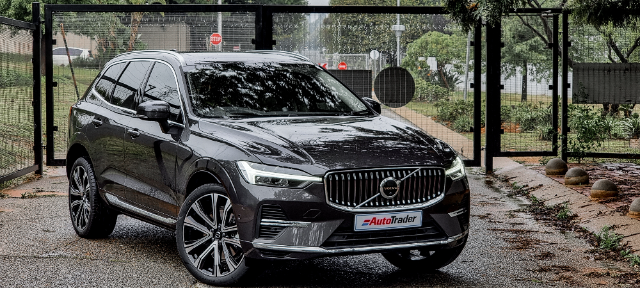
At the event, we sampled an entry-level, front-wheel drive XC60 B5 Momentum model and proceeded to cover approximately 50km before switching into an all-wheel drive model for roughly the same distance. The driving route was mostly stop-start traffic and low-speed driving, meaning that the respective 6.9 L/00km and 7.3 L/100km claimed fuel consumption figures were difficult to replicate, with figures closer to 10.2 L/100km being achievable. Having made mention of the fuel consumption, the list price is a key factor too, with the entry-level B5 model coming in over R400 000 less than the plug-in hybrid model, meaning that while it will likely appeal to a different audience versus the T8, the higher fuel bills will take a long time to reach parity with the initial list price of the plug-in hybrid.
Plug-in hybrids
In addition to the mild-hybrids now being standard in the XC60 and XC90 models, there are now plug-in hybrid models available in these ranges too, with the XC90 having received a bigger battery pack and the XC60 getting the benefit of this technology for the first time. The average South African has a daily commute that rarely exceeds 45km, and with this in mind, the rationale of the T8 hybrid models is sound.
Each model features the same turbo and supercharged 2.0-litre petrol engine from the B6 derivatives but is now paired with a larger 18.8kWh (previously 11.6kWh) battery pack sending power to an electric motor. The result is the most powerful production Volvo powertrain ever, with 107kW/309Nm from the electric motor and 233kW/400Nm from the internal combustion engine. In the all-electric driving mode, the XC60 T8 can cover a claimed 81km before needing a charge and the larger, heavier XC90 gets a driving range of 77km in EV mode.
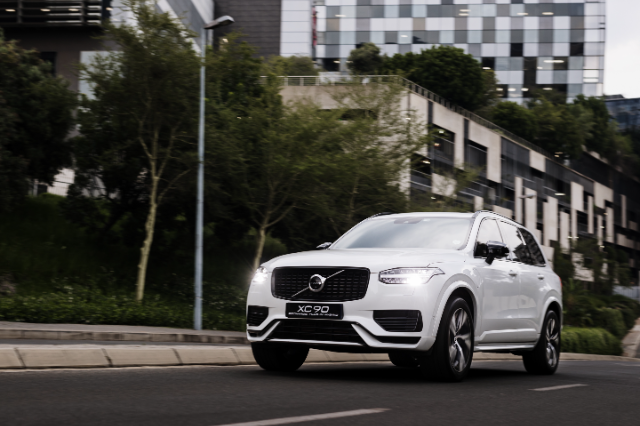
We started by driving the XC60 variant, which boasts impressive acceleration figures, with a claimed 0-100km/h time of 4.8 seconds and a claimed fuel consumption figure of 1.6 L/100km. During our test drive, the performance of the T8 impressed, despite this particular route being congested, we had an opportunity to experience the acceleration of the vehicles, and since most of our journey was done on all-electric power, our average fuel consumption was just 3.7 L/100km upon return.
We then hopped into the XC90 version, which is 158kg heavier than the XC60, resulting in a slower, 5.6 second 0-100km/h time and a higher 2.1 L/100km claimed fuel consumption figure. Despite the increased size and weight, the XC90 T8 still goes very nicely, and during this driving session, we managed to get out onto the open road, where the vehicle used its internal combustion engine more frequently, resulting in a fuel consumption figure of 5.4 L/100km.
Driving electric
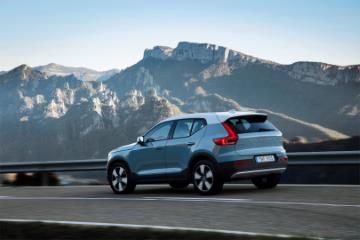
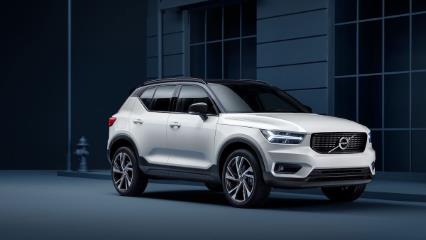
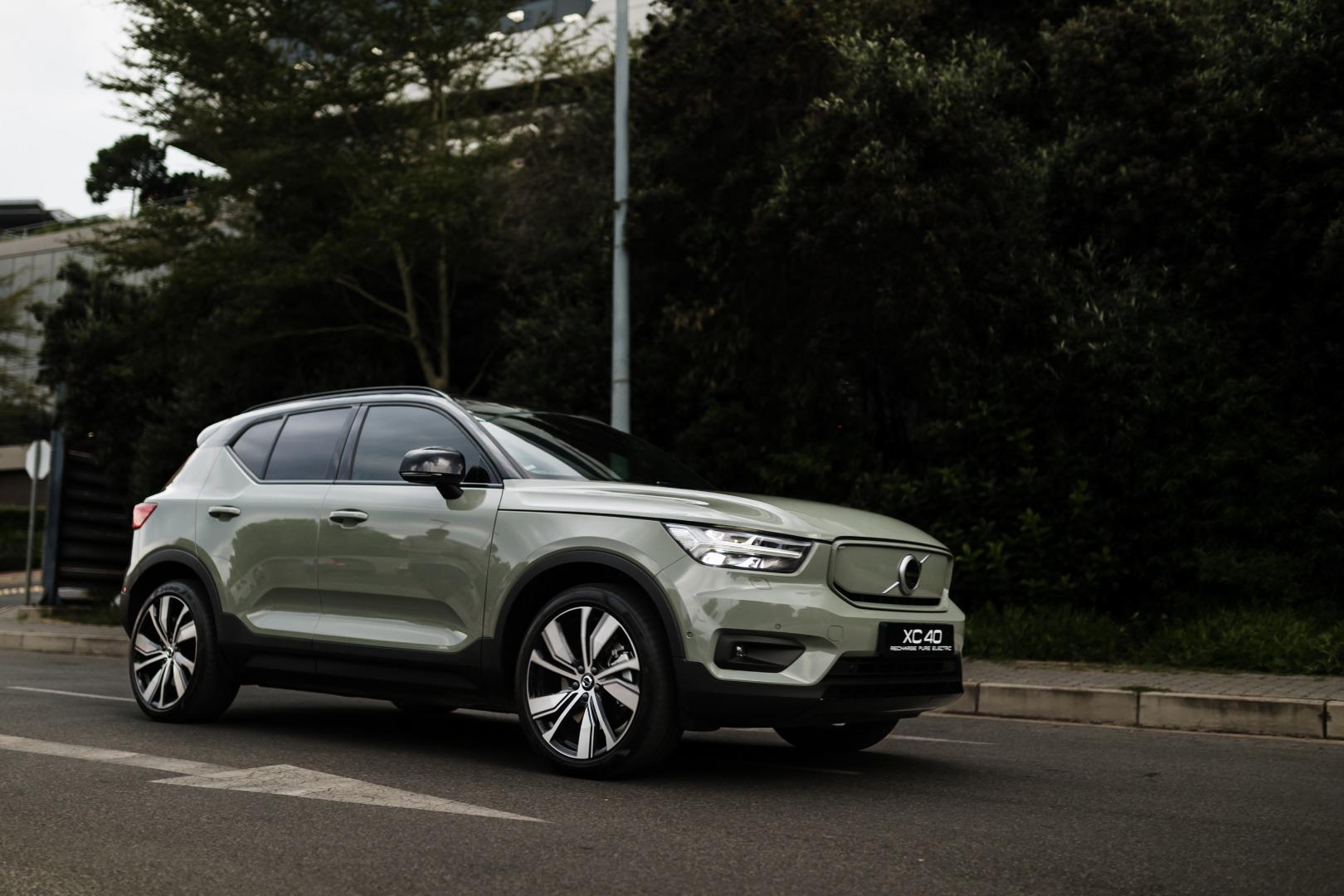
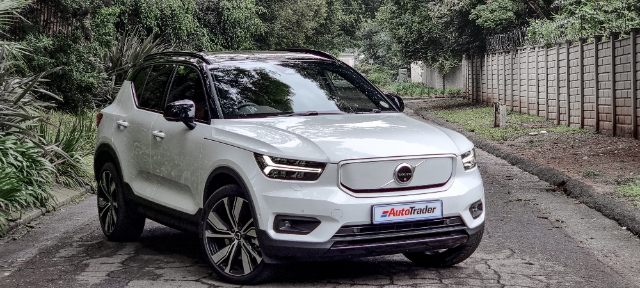
I had my first experience driving the all-electric version of the XC40 at the event too. Badged the P8 Recharge Twin AWD, as its name suggests, there are two electric motors fed power by a 79kWh battery pack (75kWh usable). Total system output is 300kW and 660Nm of torque, allowing for a claimed 0-100km/h time of 4.8 seconds and a claimed driving range of 418km on a single charge, as per the WLPT testing procedure.
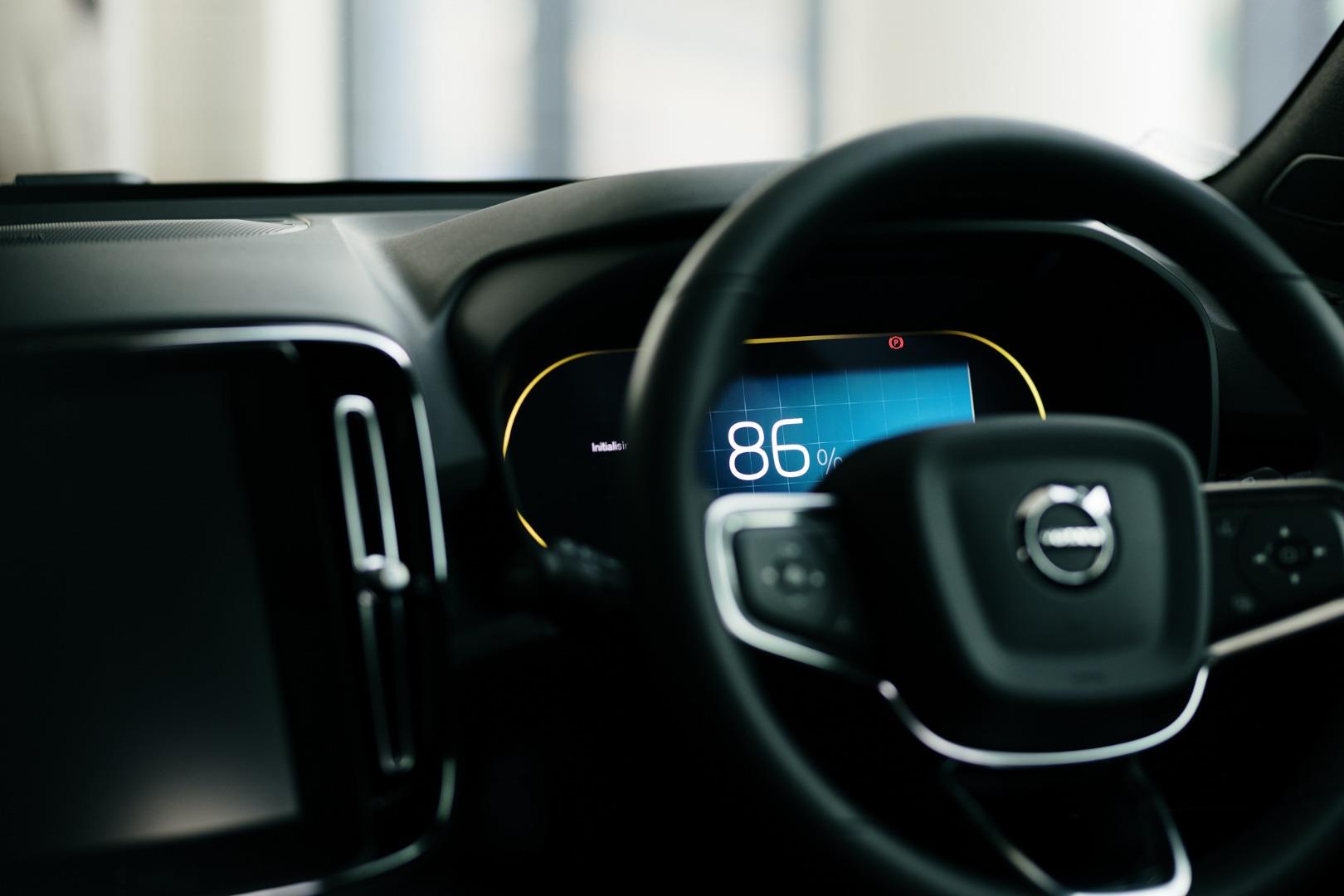
During the test drive, the vehicle read a total average consumption figure of 23.2 kWh/100km, which, when taking the usable 75kWh battery pack into account, means that a range of just over 320km is possible, however, our upcoming road test will include a more thorough and indeed, realistic representation of the real-world range of this model. The consumption aside, the P8's accelerative performance is, in true EV fashion, a real grin-including experience, with the instant torque delivery and uninterrupted power supply making this a very fast car up until the national speed limit.
There is no disguising a 2.1-ton kerb weight, but dynamically, the P8 acquits itself commendably, with a lower centre of gravity than other XC40 models and handling characteristics that err on the side of safe understeer, which is entirely understandable in a vehicle of this type. Other than the potent acceleration, body-coloured front grille and near-silent operation, life on-board the P8 is standard XC40 fare, with the same 414-litres of boot space, a new Google-based infotainment system that works a treat for Android users and the same clever storage solutions and solid build quality one might expect from a premium product.
Related: First all-electric Volvo XC40s arrive locally
Verdict
It was incredibly interesting to drive a variety of electrified products from the same brand, showcasing the progression of electrification and indeed, its integration with internal combustion engines. As impressive as the all-electric XC40 is, we feel that for South Africans, these are still best used as second or even third cars, with the likes of the plug-in hybrid T8 models serving as a better transition into electric mobility, while the mild hybrid models have showcased modest fuel saving versus previous variants.
Pricing
The Volvo line-up range is covered by a five-year/100 000km maintenance plan and comprehensive warranty. The plug-in hybrid and all-electric models get an eight-year/160 000km warranty on their battery packs too.
| Model: XC40 | Price |
| XC40 T3 Momentum | R 695 442 |
| XC40 T4 Momentum | R 695 618 |
| XC40 T3 Inscription | R 708 842 |
| XC40 T3 R-Design | R 709 242 |
| XC40 T4 Inscription | R 750 018 |
| XC40 T4 R-Design | R 750 418 |
| XC40 T5 AWD Inscription | R 820 322 |
| XC40 T5 AWD R-Design | R 820 722 |
| Xc40 P8 Recharge Twin AWD | R1 200 000 |
| Model: XC60 | Price |
| XC60 B5 Momentum | R 750 094 |
| XC60 B5 AWD Momentum | R 889 498 |
| XC60 B5 AWD R-Design | R 940 998 |
| XC60 B5 AWD Inscription | R 944 598 |
| XC60 B6 AWD R-Design | R1 007 602 |
| XC60 B6 AWD Inscription | R1 011 102 |
| XC60 T8 Recharge AWD R-Design | R1 218 900 |
| XC60 T8 Recharge AWD Inscription | R1 222 400 |
| Model: XC90 | Price |
| XC90 B5 AWD Momentum | R1 237 084 |
| XC90 B5 AWD R-Design | R1 308 484 |
| XC90 B5 AWD Inscription | R1 308 984 |
| XC90 B6 AWD R-Design | R1 365 050 |
| XC90 B6 AWD Inscription | R1 365 550 |
| XC90 T8 AWD Twin Engine R-Design | R1 560 100 |
| XC90 T8 AWD Twin Engine Inscription | R1 560 600 |