


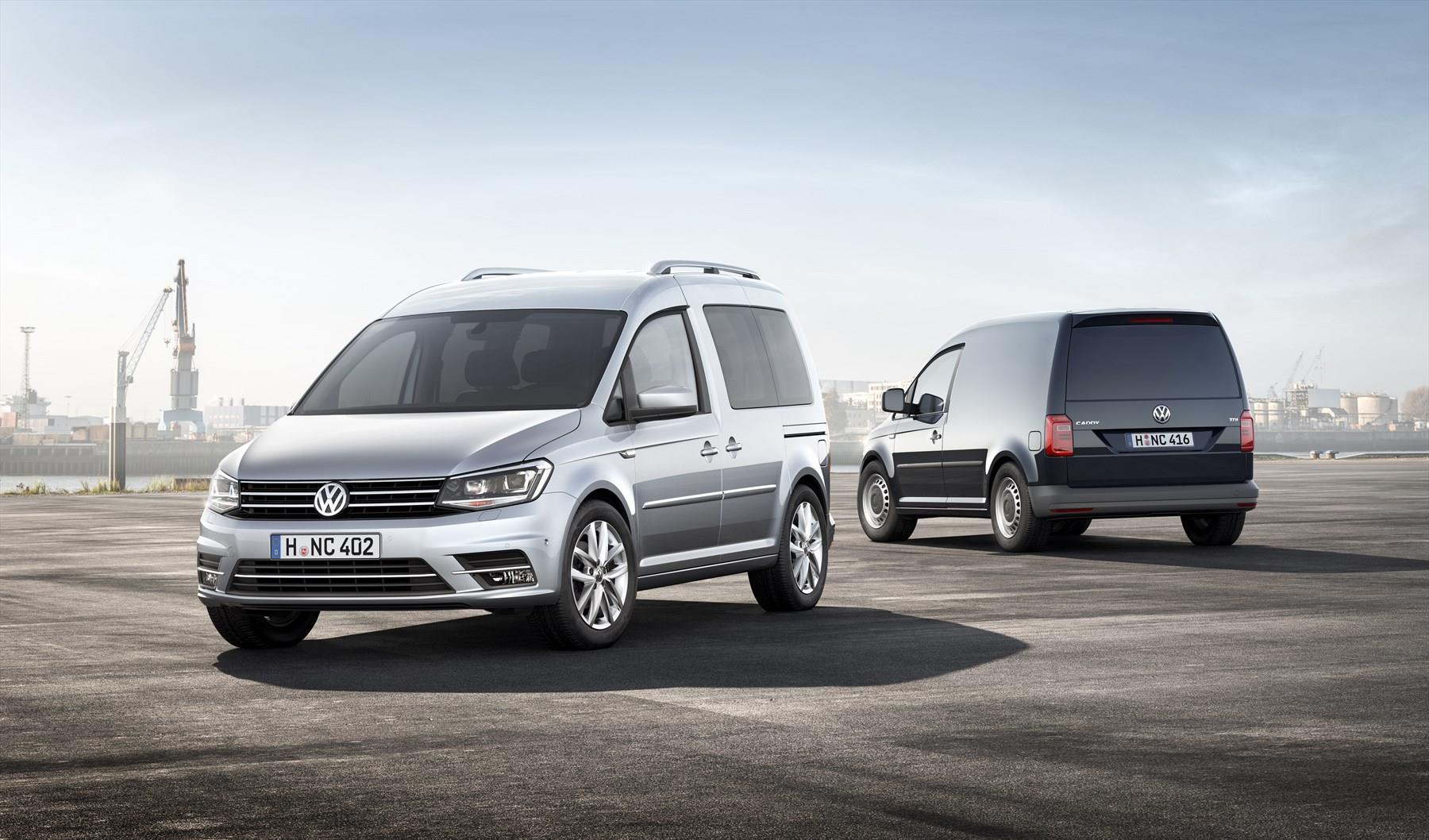

Volkswagen’s Caddy holds quite a unique place in the South African new vehicle market, mainly because of the sheer size of the Caddy range. There are no less than 15 Caddy models. These range from the basic 1.6 Crew Bus at R315 700 and the 1.6 Panel Van at R329 200 to the luxurious, more car-like Caddy Maxi 2.0 TDI Trendline Automatic at R546 400.
The vehicle is marketed here by Volkswagen’s Commercial division, and while it is true to say that the bulk of Caddy sales are to be found in the light van segment, a number of families have also picked up on the usefulness of what is a pretty basic MPV.
A good way to get a handle on the differences between the various Caddy models is to separate them into passenger and commercial categories. The commercial models are the Panel Van and the Crew Bus models, the latter targeted more towards shuttle operators. The Trendline and Alltrack models have more of a passenger car specification.
Sophisticated feel
One of the Caddy’s best features, no matter which model you choose, is that it has a sophisticated ride for a van-orientated vehicle, and also a very car-like cabin.
The Caddy comes in short-wheelbase and long-wheelbase versions, which are known as Maxi models. One of the Maxi’s obvious advantages is that it has a much longer wheelbase than the normal Caddy. The Maxi’s wheelbase is 3 006 mm, while the standard Caddy’s wheelbase is 2 682 mm.
In the case of the Maxi passenger versions, these offers 5-7 seating as well as the capability of a very voluminous load capacity. The Maxi 5-seater Crew Bus is rated with a 1 650 litre load volume, which makes it a very useful family holiday car, as well as ideal for shuttle transport where passengers have lots of luggage.
The VW Caddy Panel Van 1.6 R329 200

This 2-seater van is the most popular Caddy on the market. It is used by small business in the main part, although weekend hobbyists have found it very useful for transporting bicycles and even small motorbikes. The Panel Van’s wheelbase is 2 682 mm, and has a load volume of 3 200 litres. The load capacity by weight is 762 kg. In addition, it has a towing weight limit of 700 kg (un-braked) and 1 500 kg (braked), making it a very handy hauler.
Engine-wise we would opt for the 1.6-litre petrol model, as this engine has a better reputation for untroubled service than the VW small capacity diesels. Its uncomplicated fuel-injected design delivers 81 kW and 155 Nm of torque. Fuel consumption is claimed at 7,3 litres/100 km, and this means it should deliver 8,5 litres/100 km easily in real-time usage, although this will depend on the loads being carried.
To us, this bare-bones basic version of the Caddy represents all that is best of the VW brand. The driving environment is extremely pleasant for a van, the road-holding is car-like, and the performance is more than adequate, with a 12-second 0-100 km/h time and a top speed just south of 170 km/h.
The competitors
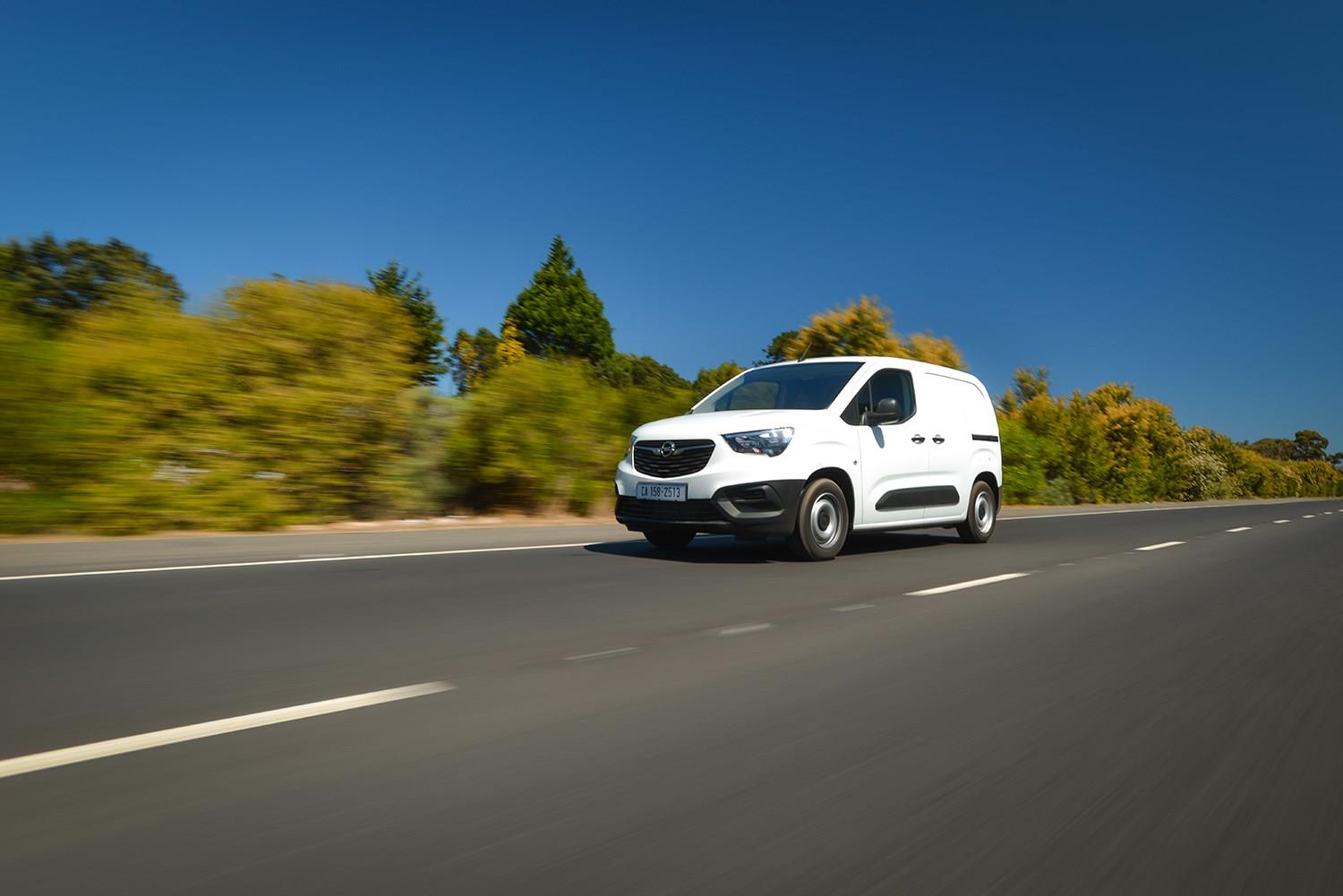
Opel Combo Cargo 1.6 TD Panel Van, R335 000

The Opel Combo comes in two Cargo versions, which is the name Opel give to their panel-van specification for the Combo. The Combo Cargo 1.6TD in short-wheel-base form is the one we are focussing on here, but also available is a Cargo 1.6 TD Long Wheel Base model at R372 000. Then there is the passenger-orientated 1.6TD Combo Life, which uses the same 1.6 turbo-diesel engine and gearbox as the Cargo models.
The 2-seater Opel Combo Cargo is configured very much along the lines of the Volkswagen Caddy, but it does boast some advantages compared to the Caddy 1.6 petrol model. Being a small capacity diesel, it has less power at 68 kW, but much more torque at 230 Nm. It also offers typically frugal diesel consumption, with a claimed 4,8 litres/100 km
Size-wise, the Combo has a slightly bigger cargo area than the Caddy, at 3 300 litres (compared to the 3 200 litres of the Caddy). Load capability by weight is slightly lower on the Combo, at 650 kg (the Caddy has a 762 load carrying rating), and towing rating is also slightly down on the Caddy.
What the Combo does offer is electric windows and heated wing mirrors as standard, whereas electric windows are an extra-cost option on the Caddy.
Fiat Doblo Cargo 1.4 (Aircon) R278 000

The Fiat Doblo Cargo is a funky-looking little van that is comparable to the VW Caddy and the Opel Combo Cargo in size and load-carrying capability, but a chunk cheaper on price, in 1,4-litre petrol form. If you wanted to save yourself even more money, there is a non-aircon version at R267 900. However, there are diesel versions available at R311 000 for the 1.3 Multijet, and a 1.6-litre diesel in Long-wheelbase form at R346 000.
Here we focus on the least-expensive Cargo 1.4, as it offers such a distinct price advantage to the Caddy 1.6 panel van and the Opel Combo, while being similar in size. The wheelbase is 2 755 mm, slightly longer than the Caddy’s and the claimed load volume is 3 400 litres, the biggest of all three vehicles in this comparison.
As for load capability, the Doblo measures up well with a 750 kg rating, but towing rating is listed at 1 000 kg (braked), with no listing for an un-braked towing capability.
Power-wise, the Fiat Doblo 1.4 has a 70 kW power output with 127 Nm of torque, somewhat down on power compared to the 81 kW Caddy, and well-down on torque compared to the Opel’s 230 Nm.
Specification-wise, both the Caddy and the Combo have dual airbags up front, but the Doblo only has a driver’s airbag as standard. A passenger-side airbag is an extra-cost option.
Warranty wise, the Doblo comes with a 3-year/100 000 km service plan and a 3-year/100 000 km warranty. The service plan is better than either the Caddy’s or the Combos, both of these having 3-year/60 000 km service plans.
Our choice?
The three models under the spotlight here offer an interesting choice. If you habitually load the vehicles heavily, the extra torque of the Opel diesel is going to be a handy attribute, although it is interesting that both the Fiat and the Volkswagen have higher load ratings (this is due to rear suspension settings more than engine pulling power). VW fans, of course, would argue that there is a diesel version available in the Caddy, with comparable pulling power, and there are also diesel variants of the Fiat.
The Opel is a more modern vehicle in that it has more standard-fit connectivity capabilities than the VW or the Fiat. Both the Fiat and Opel have electric windows as standard, while these are optional on the Volkswagen.
And of course, the Fiat offers quite a price advantage. You may get slightly less power, but you get an outlay saving of some R50 000 by opting for the Fiat, and this makes it really interesting that size-wise and load-carrying-wise it can match both the Caddy and the Combo!
If money were no object, I’d go for the Caddy because of the assurance that this vehicle offers, not only for its design and execution, but also because of Volkswagen’s vast dealer network. But a R50 000 saving is not to be sneezed at. Especially as these vehicles are targeted at small business use, where capital outlay is often a huge factor. Thus, rather surprisingly, the winner here is the Fiat Doblo Cargo.
Recommended next:
Opel Combo Cargo vs Fiat Doblo vs Volkswagen Caddy: here’s our winner
What is covered under the Volkswagen Caddy warranty?
Fiat Doblo vs Opel Combo vs Volkswagen Caddy: which one is the best value for money?