
Top 4 things you have to know about the new Mercedes-AMG G63
The Mercedes G-Class AKA Geländewagen AKA G-wagon is the most desired vehicle from the extended family of the Three-Pointed Star. In AMG guise it is even more so. Its profile is as iconic as that of the Land Rover Defender, the Mini Cooper and the VW Beetle, so the new generation is almost identical to its almost forty-year-old forebear. It’s a fascinating piece of kit and we have listed the top four things to know about this superstar.

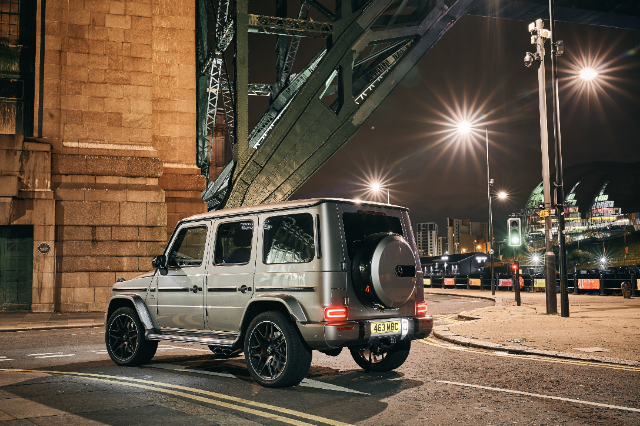
1. It’s really new, although it doesn’t seem that way
Mercedes wisely decided not to mess with a winning formula, so the youngest G-wagon is almost a copy of the old car. This decision does have one or two disadvantages: The upright windscreen adds a measure of wind noise as air from the front has to deal with the hostile angle of the glass.
The new G is much bigger than its predecessor, which really benefits the occupants. The increase in length (+101 millimetres), width (+121 millimetres) and height (+40 millimetres) provides the basis for a significantly more airy and spacious cabin than in the previous model. The table below shows just how much interior space has mushroomed. By the way – front and rear passengers enjoy the luxury of seat heaters in the G 63.
| Area | Difference |
|
Legroom in the front |
+38 mm |
|
Legroom in the rear |
+150 mm |
| Shoulder room in front | +38 mm |
| Shoulder room in rear | +27 mm |
| Elbow room in front | +68 mm |
| Elbow room in rear mm | +56 mm |
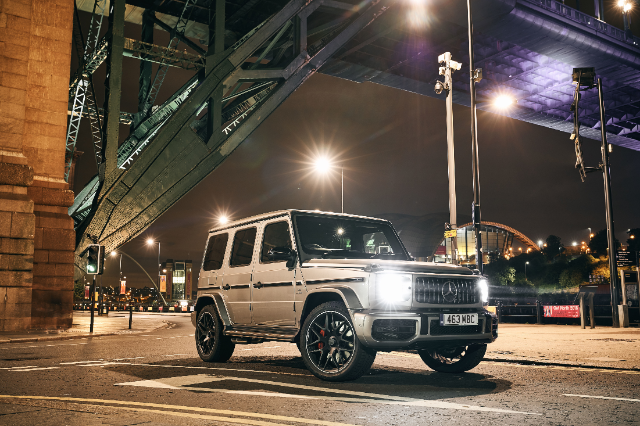
2. It has three diff-locks and a ladder-frame chassis
The amazing thing about the G 63 is that it remains supremely capable off-road, in spite of its high performance and on-road comfort. It has a new “intelligent” multi-plate clutch that behaves like an automatically-controlled diff-lock. This helps the new G 63 to navigate quite treacherous terrain before the driver has to engage the differential locks manually. The three chunky, metallic buttons that activate the front, centre and rear diff-locks individually, are proudly displayed above the centre stack, to be used as a last resort!
To the delight and surprise of the 4x4 fraternity, Mercedes decided to retain the ladder-frame design of the Geländewagen chassis. This makes the vehicle ultra-durable, while maintaining its extreme off-road credentials.
“The components of the double-wishbone front suspension are directly mounted to the ladder-type frame without a subframe. The attachment points of the lower wishbone are positioned as far up as possible. This arrangement ensures good driveability both on and off the road. A strut tower brace, known as a suspension bridge, now connects the front strut towers, which increases the torsional rigidity of the ladder-type frame,” a statement from Mercedes-Benz reads.
Low range can be engaged at speeds of up to 40 km/h and it’s is possible to switch from low to high at speeds of up to 70 km/h.
Related :Going against the green grain at Frankfurt – a 662 kW Brabus-massaged G-Class
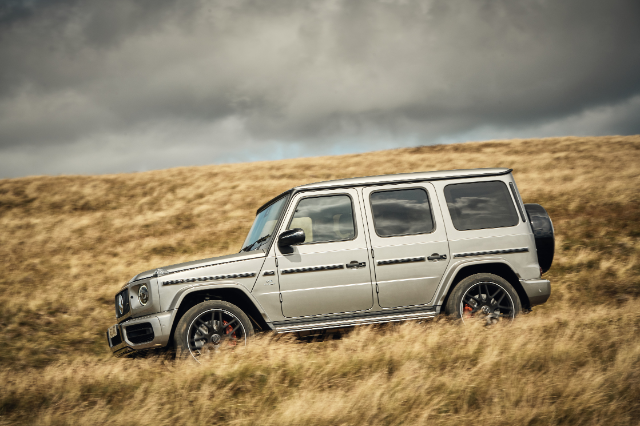
3. It’s heavy, but it’s quick
If you’re going to pack this much luxury, power and bundu-bashing capability into a large vehicle, it’s not going to be a Weigh-Less model. No wonder the G 63 tips the scales at a hefty 2.5 tons (kerb weight). Combine that with a tall body and you’re going to have a time trying to cheat Newton’s laws.
The AMG 4.0-litre V8 biturbo engine replaced the previous 5.5-litre V8 biturbo engine in the old Mercedes-AMG G 63. The widely-used new engine generates 430 kW and delivers a maximum torque of 850 Nm. Mercedes says this is available across a wide rev range between 2 500 and 3 500 rpm and provides a feeling of effortless power, despite its kerb weight. The G 63 can sprint from 0 to 100 km/h in 4.5 seconds, which is quicker than a Mercedes-AMG A 35 4Matic hatch (R815 000). The G 63’s maximum speed is limited to 220 km/h – or 240 km/h with the AMG Driver’s package.
The engine puts its ample power down via a very quick 9-speed automatic transmission and the all-wheel drive system has a sporty 60-percent rear torque bias.
You can imagine that a vehicle so uncompromising in its pursuit of off-road prowess can be a handful on road, when endowed with such power. In some ways it is.
To keep it together, Mercedes-AMG completely redesigned the suspension, which features coil springs all-round. The front axle has independent, double-wishbone suspension, and a rigid axle with a five-link suspension is used at the rear. Don’t forget the adaptive adjustable damping either. These elements do make the new G 63 more dynamic and comfortable than its predecessor, but the feeling of top-heaviness is always there.
Related: Mercedes-Benz G-Class test drive: make sure to check these features out
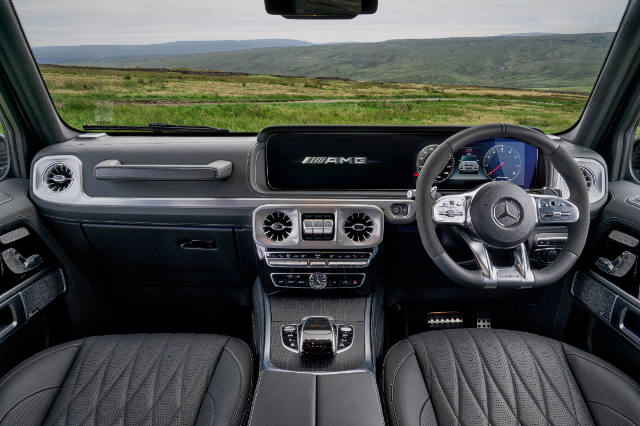
4. It’s (almost) the most expensive new Merc in SA
There was a time when the G 63 AMG was the most expensive Mercedes you could buy new in South Africa. With a price tag of R 3 111 480 for the Mercedes-AMG G 63 and R 3 606 180 for the Mercedes-AMG G 63 ‘Stronger Than Time’ edition, you might think they’re still at the top of the pile.
Recently, the Mercedes-AMG GT R coupe arrived. Did it dethrone the Mercedes-AMG G 63 (that thinks it is) Stronger Than Time? Nope. The GT R can be yours for R 3 311 680. The most expensive Mercedes-AMG is the S 63 cabriolet, at R 3 650 600. Still, that’s not the priciest Merc in SA. That honour belongs to the Mercedes-Maybach S 650, a pimped S-Class, that’s priced at R3.8m.
But do not fear, for there’s a much cheaper diesel G 400 d, also in ‘Stronger than Time’ trim, for R 2 674 000. It’s no slouch either, dismissing the 0-100 sprint in just 6.4 seconds. Still too much? Wait for the Mercedes-Benz GLB, which will arrive in the country soon and will be less than R750 000 to buy.
