
Top 3 Alfa Romeo Stelvio features that stand out from the competition.
The Stelvio is the Alfa Romeo of SUVs: it handles, goes and stops like a sports machine, manages to look sexy in spite of its tall profile, and does all this without compromising on practical aspects. This blend of attributes makes the Alfa Stelvio an appealing alternative to its mainstream opponents, so let’s highlight the top 3 features that really stand out from the competition.



Alfa's first SUV
In concept, there’s nothing particularly unusual about the Alfa Romeo Stelvio. It’s a medium-sized SUV, based on a passenger car platform, has the AWD system and raised ride height you’d expect, and its base engine is a 2.0-litre 4-cylinder.

But, just as it was with the great classic Alfas, the Stelvio is about more than just bland on-paper statistics – in a nice return to form for the storied Italian brand, the driving feel is the Stelvio’s main differentiating factor. It’s also really good-looking, practical and decently equipped, so the value proposition makes sense as well.
Related: Alfa Romeo Stelvio – an Italian supermodel in Gucci hiking boots.
1. Ferrari power
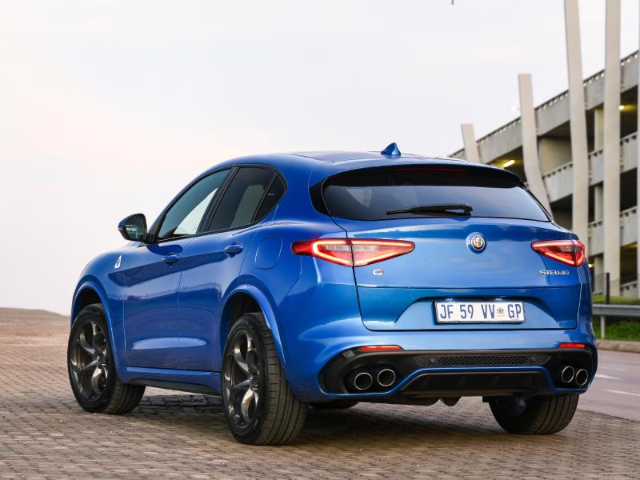
In high-performance “Quadrifoglio” trim, the Alfa Stelvio employs a 2.9-litre, twin-turbo V6 engine that’s derived from Ferrari’s latest V8. Only one other SUV can make a similar claim regarding its powertrain’s ancestry, and that’s the (vastly more expensive and rather larger) Maserati Levante Trofeo, which is blessed a V8 from the same family.
Outputs of 375 kW and 600 Nm are more than competitive in its market segment, and was enough to propel the Stelvio Quadrifoglio to a record-setting lap on the Nürburgring in 2017 (although that record was soon broken by the even more powerful Mercedes-AMG GLC 63 S). As at February 2020, almost three years later, it was still the fourth-quickest SUV around that track, and less than 10 seconds behind the latest record holder (the monstrous Audi RS Q8).
Related: Alfa Romeo Stelvio vs Mercedes-Benz GLC vs Jaguar F-Pace – here’s our winner!

2. Balanced dynamics
That stellar Nürburgring performance isn't due only to a potent engine, mind you. Key to the Stelvio’s strong performance is its superb underpinnings, based upon the Giulia sedan’s “Giorgio” platform. Key features include double wishbone front- and multilink independent rear suspension, 50/50 weight distribution, and (relatively) lightweight construction.
These attributes are shared right across the Alfa Romeo Stelvio range, and, along with an electronically-controlled, rear-biased AWD system, ensures sure-footed handling and eager direction changes. Even the steering feedback is good under duress (if perhaps not quite as sharp as that of a Jaguar F-Pace), giving a combination of dynamic attributes that sets the Stelvio apart from most of its competition.
Related: How much are the car repayments on a new Alfa Romeo Stelvio?
3. Carbon fibre driveshaft
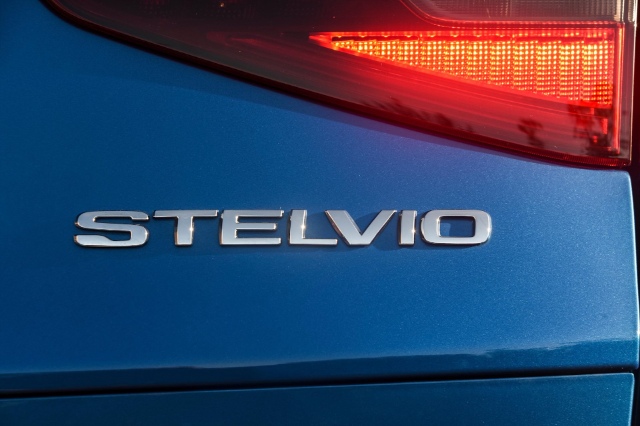
In keeping with its sporting credentials, the Alfa Romeo Stelvio also employs some rather unusual engineering solutions. One such item is the carbon-fibre drive shaft – something hitherto only found in rather more-extreme sports machines like the Nissan GT-R and some later BMW M-cars, but which is standard even on the base-spec Stelvio 2.0T.
Carbon fibre’s strength (to cope with the onslaught of torque) is one reason for the application of this technology. Another is weight reduction: switching to composite material for this component realises a weight saving of around 40%. Along with extensive use of aluminium for body panels and mechanical components alike, the carbon drive shaft helps to make the Stelvio one of the lightest cars in its market segment.
Related: Alfa Romeo Stelvio vs Mercedes-Benz GLC vs Lexus NX – which one is the best value for money?
Recommended Next:
Shop for new and used Alfa Romeo Stelvio cars for sale.