
Opel Mokka X vs Mazda CX-3 vs Peugeot 3008: here's our winner!
As one of the last General Motors-influenced Opels still on the market, the Opel Mokka X has largely slipped under the radar of compact SUV buyers. There are many appealing, much newer alternatives around these days, while its “X” stablemates (Crossland and Grandland) squeeze Opel’s elderly mid-level crossover on the showroom floor as well. Can the Mokka X still compete in a much more crowded market segment? We find out.



All the best intentions
The allure of the compact crossover market is difficult to resist. In real terms, these are the logical successors to the compact family hatchbacks with which many of us grew up, only with added ground clearance and chunky styling. Small enough to be maneuverable around town, spacious and versatile enough to cater for young families’ transportation needs, and rugged enough to deal with our deteriorating road conditions, they provide perhaps the most sensible transport options for modern-day needs.
But not all crossovers are created equal. Some of them are practical and box-shaped, while others are stylish but surprisingly cramped. So, to find out which ones suit today’s buyers the best, we compared the Opel Mokka X with two of the best alternatives from each school of thought: the square-cut Peugeot 3008, and the curvy Mazda CX-3. How does the ageing Opel measure up to today’s standards?
Opel Mokka X 1.4 Turbo Cosmo Auto

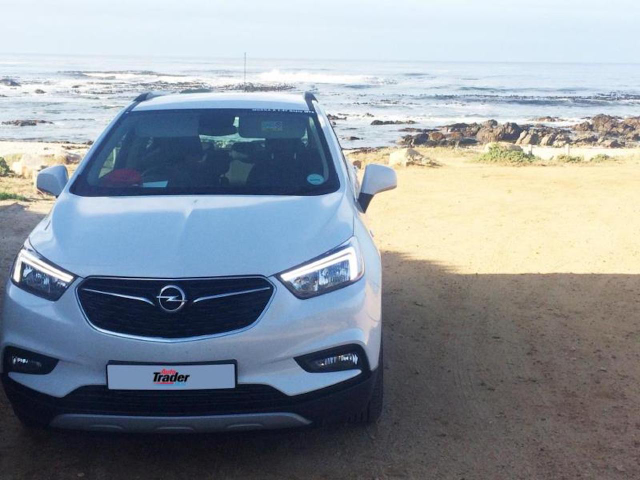
When it first appeared locally back in 2015 (before it got an “X” appended to its name), the Opel Mokka drew general applause from the motoring press. It was lauded for its sure-footed (if unexciting) handling, good build quality, and overall refinement, and it presented a credible alternative to the Nissan Juke. But it actually arrived a few years too late: having been available in Europe since 2012, the Opel Mokka was due for a facelift almost as soon as it landed here.
Even though it looked quite arresting with its squinting headlights and sharper edges, the 2017 refresh (which added the “X”) wasn’t enough to draw buyers into the showrooms – an issue that wasn’t improved by General Motors’ withdrawal from the local market and Opel’s subsequent purchase by PSA Group. Combined with the threat from ever-improving opponents, these factors led to the Mokka X struggling to find traction in South Africa.
Related: What changed when the Mokka received the X in its name?
In retrospect, the Mokka X never really had a chance, and now it represents a relic from Opel’s past. At the time of writing, the Opel Mokka X is still available new, but its days are numbered, as Opel- and Vauxhall-branded production of this model ceased in 2019. No direct replacement has been announced yet, and it’s doubtful that Opel’s new owners will invest in such a small slice of the market for a second round, especially after subdued sales on their first outing.
Engine, performance and consumption
The Mokka range has been scaled back to two variants, both featuring the same engine-gearbox combination. Under the bonnet is a 1.4-litre turbopetrol (originating from an older GM engine family), paired with a 6-speed torque-converter automatic transmission to send 103 kW and 200 Nm to the front wheels.
Related: Interested in a “pre-X” Opel Mokka? This is what the range looked like back then.
Performance is reasonable, largely thanks to the turbo engine’s wide torque plateau, but it’s still no rocketship: the 0 – 100 km/h sprint takes a claimed 10.7 seconds, and the top speed of 191 km/h is fair for this class. The gearbox is well-programmed and unobtrusive in operation, and fits well with the generally relaxed demeanor inherent to the Mokka X. Opel claims an average fuel consumption of 6.5 ℓ/100 km, which is a little optimistic, but it returned a still-respectable 7.4 ℓ/100 km over the course of week’s mixed-cycle driving when we reviewed it.
Standard equipment
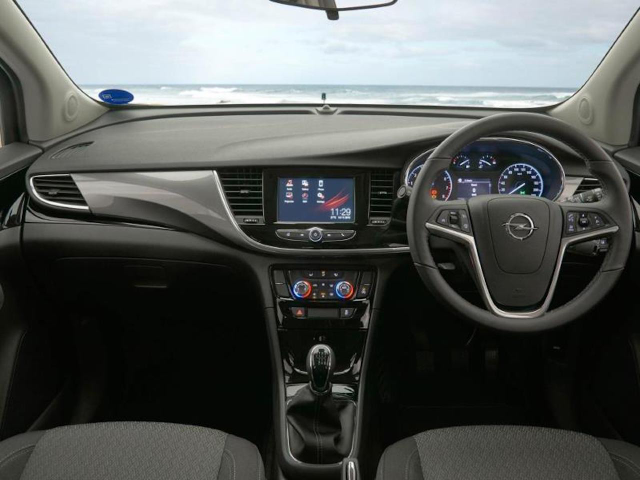
For this comparison, we chose the Mokka X’s top trim level, mostly to see how its available equipment compares to those in the newer opponents. The smart money will go to the entry-level Enjoy derivative, though: it has the same drivetrain and main safety attributes, but trades some of the high-end Cosmo’s niceties for a handy R 50 000 saving.
Cosmo spec is loaded with luxury-car features, nonetheless. Included in the standard equipment list are leather upholstery for the seats and steering wheel; heated front seats, outside mirrors and steering wheel; automatic headlights and wipers; 19-inch alloy wheels (which give the ride quality a somewhat stiff-legged quality); cruise control; and a colour touchscreen infotainment system with smartphone mirroring and navigation.
Related: Our review of the Opel Mokka X showed it to be quite a charmer.
Safety

It might be getting old, but the Mokka X carries very solid safety credentials. It scored 5 stars in its 2012 Euro NCAP crash test, features 6 airbags, ABS, stability control, and rear ISOFIX child seat anchors. Importantly, there’s no difference between the safety specs of entry-level Enjoy and top-trim Cosmo variants, so even the cheaper car will protect its occupants very well indeed. Cosmo spec does add some driver aids, however, with parking sensors front and rear, and a rear-view camera going on top of the basic safety kit.
Practicality
With its short overall length of only 4 268 mm, the Mokka X is a pretty compact car. As with the Mazda CX-3, these small-ish dimensions bring some compromises to the Mokka’s practicality: it’s decently spacious in front, and will happily carry two large adults in comfort. Things are however a bit less rosy in the back seat, where space is tighter all round. Shoulder- and leg room are at a premium (especially when the front seats are set for large occupants), and the tapering side window line could lead to some claustrophobia for rear-seat passengers.
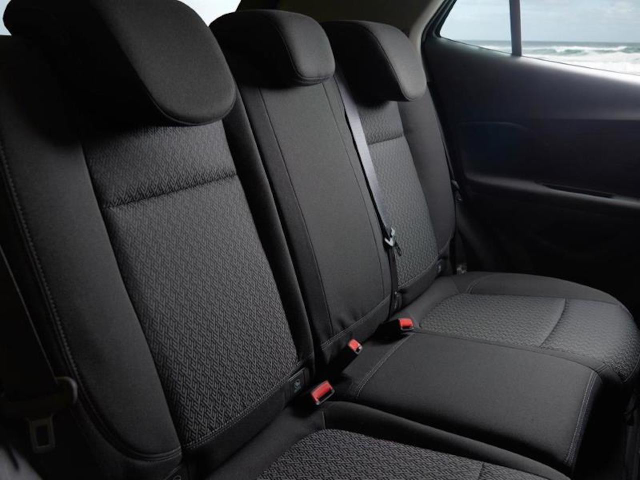
The luggage compartment isn’t penalised too badly, though, with 356 litres available when all seats are in use. That’s about on par for this size class, but is bettered by smaller and less-expensive alternatives such as the Volkswagen T-Cross and Suzuki Vitara. Good, but not great. At least there’s a full-sized spare wheel hidden under the boot floor.
Related: Is the Opel Mokka X good for families?
Price and value proposition
The Cosmo trim level doesn’t represent the best value in the Mokka X range. Its pricetag of R 439 000 puts it up against some very accomplished and larger (albeit entry-level) alternatives, but it does offer some thoughtful luxuries in compensation. Included in the price is a warranty for 3 years or 120 000 km, and a service plan for 5 years or 90 000 km.

Opting for the better-value Enjoy trim will see the heated leather seats and steering wheel disappear, along with the parking sensors, rear-view camera, and navigation system. It also gets smaller (17-inch) alloy wheels, but that’s not really a disadvantage, because it will smooth out the ride quality. These trade-offs (and no performance- or safety penalty) are however worth it for the substantial cash saving, making the Mokka X Enjoy one of the best-value cars in this class. The Mokka X Cosmo? Not so much – unless you absolutely have to have those seat heaters...
The competition
Mazda CX-3 2.0 Individual Plus

This one’s probably the style leader in its size class (within millimetres of the Mokka X all round), and looks even better following its recent mild facelift. Mazda’s really stepped up their design lately, with an upmarket appearance on the outside and a premium ambience inside the cabin. It’s also good to drive, with balanced handling and an unusual athleticism to its motions. No wonder it’s one of Mazda’s best-selling models in our market.
Under the bonnet is one of the modern era’s last non-turbo “survivor engines”. With a displacement of 2.0-litres, the CX-3 has the largest engine in this group, and posts still-competitive peak output figures of 115 kW and 206 Nm. However, the lack of a turbo means that low- and mid-range torque is rather lacking, and it will struggle to keep up with the other two opponents when breathing Highveld air. As with the other contenders, there’s a 6-speed automatic driving the front wheels.

Mazda claims a 0 – 100 km/h sprint in 9.5 seconds and a top speed of 192 km/h. The latter seems plausible, but that decent sprint time will only apply at sea level and prove to be a bit optimistic at Gauteng altitude. The CX-3 is also likely to suffer proportionally more when carrying a heavy load, making its claimed average fuel consumption of 6.7 ℓ/100 km a largely theoretical matter – expect closer to the mid-7 ℓ/100 km figures we recorded during our review, in normal driving.
Related: Revisiting the revised Mazda CX-3 – our review found a lot to like.
The Mazda CX-3 takes a bit of a beating in the practicality stakes, too. The cabin is best described as snug, with the rear seat space compromised in terms of leg- and headroom. Two full-sized humans will be happy in the front seats, but the rear pews are suitable only for people of less-than-average height, and preferably on short journeys. 6-footers need not apply.
And don’t bring too much luggage along, either, because the boot’s maximum volume is a bit of a joke. There’s only 264 litres available – enough for a long-weekend break for two people (with the rear seats flat), for instance, but nowhere near enough for a family of more than three people. A high loading lip doesn’t help when loading its meagre cargo, either.

But, when you accept that the CX-3 is in reality best suited for two people’s general use, there’s a lot to like about the car itself. It’s very good to drive, for instance: yes, it could do with more mid-range torque, but there’s satisfaction to be found in winding out an old-fashioned naturally-aspirated engine in the hunt for power. The handling characteristics are well-resolved as well, with a surprisingly sporty feel behind the wheel, backed up by a neutral handling balance and sharp steering.
Related: What changed during the Mazda CX-3 facelift in 2019?
In the range-topping “Individual Plus” trim seen here, the CX-3 is very well-equipped, with LED headlights, sunroof, leather trim on the seats and steering wheel, cruise control, 18-inch alloy wheels, (single-zone) climate control air conditioning, keyless entry and pushbutton start, navigation, and a colour infotainment display with steering-mounted remote controls among the standard features. Perceived cabin quality is also of a very high standard, with soft-touch materials in all the right places and very good build quality.

Standard driver aids at this trim level include blind-spot monitoring and lane departure warning, augmenting the CX-3’s 6 airbags, ABS, stability control, and ISOFIX rear child seat anchors. It received a 4-star rating from Euro NCAP in 2015, largely as a result of slightly sub-par child protection figures dragging down its averaged score.
Related: The top 5 safety features in a Mazda CX-3.
Given the rather narrow focus enforced by its space constraints, the Mazda CX-3 is somewhat of a niche product, rather than just another family hauler. However, its pricetag of R 425 800 will get buyers a good-looking car, with a decent specification level for not too much money. Both its warranty and service plan run for 3 years with no mileage limit, adding some more peace of mind.
Peugeot 3008 1.6T Active

Including the larger Peugeot 3008 in this comparison might appear unusual, because it actually competes in a different market segment. However, its pricetag (in entry-level Active trim) is only R 900 higher than that of the high-trim Mokka X. Should you have a need for a family vehicle, the Peugeot 3008 is definitely the best option from this trio, simply on account of its size and practical aspects. It also looks distinctive in a rather undistinguished market segment, which earned it the right to be included here as a reference point.
Related: Our launch report details the initial Peugeot 3008 range.
To go with its added size, the 3008 gets a bigger engine as well: under the bonnet is Peugeot’s venerable 1.6-litre, 4-cylinder turbopetrol, good for 121 kW and 240 Nm in this application. That’s a good bit of extra power (over the Mokka) for a very small price premium, which cuts the 0 – 100 km/h sprint time to a claimed 8.9 seconds and ups the top speed to 201 km/h.

Peugeot also claims an average fuel consumption of 7.0 ℓ/100 km, but low-8 ℓ/100 km will be more attainable in mixed-cycle driving. This fuel consumption disadvantage is where the 3008’s larger size and extra weight counts against it in this company, but the penalty is smaller than you might think.
Related: Our review of the Peugeot 3008 GT-Line found it very difficult to criticise.
On account of its extra size, the 3008's cabin and luggage space are both rather a lot more commodious than either the Mokka X and the CX-3 can offer. Especially the CX-3. The rear seats can comfortably accommodate above-average-sized adults, and luggage capacity is a minimum of 591 litres – that’s more than double the volume of the Mazda’s boot, and almost 70% more than you’d get in the Opel.

Of course, there is one big downside to choosing an entry-level example of one car over a range-topping variant of a smaller opponent, and that’s in its equipment level. But, in the case of the 3008 Active that doesn’t seem to apply as severely as you’d imagine. Included in the standard spec is dual-zone climate control, cruise control, 17-inch alloy wheels, cruise control, and a colour touchscreen infotainment system.
The only notable absent items, compared to the other two, are leather seat trim, front parking sensors and rear-view camera, the Mazda’s LED headlights, sunroof and driver aids, and the Opel’s heated seats and steering wheel. In compensation, the 3008 rather offers space and performance, neither of which the other two could even approach.
Related: We compare the three trim levels available in the Peugeot 3008.
The 3008 can certainly hold its head high in the safety aspects, with a 5-star Euro NCAP crash test rating, reinforced by 6 airbags, ABS, stability control, lane departure warning, and ISOFIX child seat anchors in the rear- and front passenger seats. Importantly, the 3008 receives identical safety equipment across the range.

As far as the price/size/features compromise and value proposition goes, the Peugeot 3008 makes for a compelling alternative to the two smaller “boutique” crossovers. Its list price of R 439 900 represents good value in its size- and performance class, and a surprisingly comprehensive standard equipment list means that it’s far from a penalty box, even at the range’s entry level. A warranty and service plan for 5 years or 100 000 km is included to further sweeten the deal, and beats the offerings from both competitors.
Related: We compare the value for money of the Peugeot 3008 to 2 similarly-sized opponents.
Facts and figures
Let’s recap the important numbers:
|
|
Opel Mokka X 1.6 Turbo Cosmo Auto |
Mazda CX-3 2.0 Individual Plus Auto |
Peugeot 3008 1.6T Active |
|
Engine size (cyl/size) |
4-cyl, 1.4-litre turbopetrol |
4-cyl, 2.0-litre petrol |
4-cyl, 1.6-litre turbopetrol |
|
Power/Torque |
103 kW/200 Nm |
115 kW/206 Nm |
121 kW/240 Nm |
|
Length (mm) |
4 278 |
4 275 |
4 447 |
|
Airbag count |
6 |
6 |
6 |
|
Luggage capacity (litres) |
356 |
264 |
591 |
|
Top Speed (km/h) * |
191 |
192 |
201 |
|
Ave Consumption * |
6.5 ℓ/100 km |
6.7 ℓ/100 km |
7.0 ℓ/100 km |
|
Warranty |
3 yr/120 000 km |
3 yr/Unlimited km |
5 yr/100 000 km |
|
Price |
R 439 000 |
R 425 800 |
R 439 900 |
* Manufacturer's official claimed figures.
Verdict
For the most part, the winner between these three cars depends on the buyer’s preference and needs. If the car has to carry a young family on a long road trip, the more-spacious Peugeot 3008 will be the clear favourite. For a couple without kids or only an occasional need for more than 2 seats, the very well-equipped Mazda CX-3 will tick most of the boxes. And for those with a usage case somewhere inbetween, the Opel Mokka X offers a fair compromise of attributes.

However, in high-level Cosmo trim, the Opel Mokka has to be the first to go. It holds a definite power advantage over the Mazda, and has a decent selection of comfort- and convenience items, but its steep pricetag might be a bitter pill to swallow. Far better to shed some luxuries and settle for the Mokka X in Enjoy trim, and enjoy much lower repayments without giving up on performance or safety.

The Mazda CX-3 is likewise caught mingling in a segment where it’s not really at home. Those high-tech gadgets and lovely styling are drawcards, especially considering its pricetag (the lowest in this group), but the practicality compromises enforced by that swoopy body means that a CX-3 won’t fit the usage case of a growing family. There are better-value options available lower down in the CX-3 range, of which we’d recommend the mid-level Dynamic trim level – that R 69 200 saving will make those cramped rear seats and small boot seem a lot more palatable.

This leaves the Peugeot 3008 as the rational choice in this price- and value-based comparison. It’s not as lavishly equipped as either of the other two, but it’s a lot more practical and powerful, without giving up too much on fuel efficiency and aesthetic appeal. Sure, it’s not as curvaceous as the Opel or the Mazda, but it’s an all-round better car. The 3008 1.6T Active is may just be the best-value buy in its range as well: a mid-sized SUV for compact crossover money seems like a very good bet!
* Pricing was accurate at the time of writing, but may change without prior notice.
Recommended Next:
Shop for new and used Opel Mokka X cars for sale here.