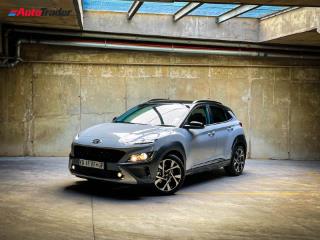
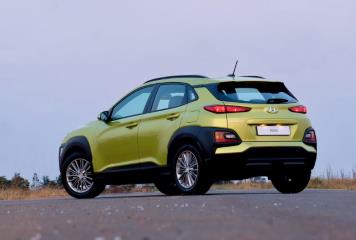
The Kona nameplate first appeared locally in 2017 and has become a popular choice amongst crossover buyers as more than 1 700 units have found homes in Mzansi. As a result, Hyundai not only introduced an updated model recently but added a more aggressively styled N Line flagship derivative to the range too.
For the New Kona range, the updates are not only skin deep as the Korean automaker added a brand-new powertrain to the model. We take a closer look at the 2018 model year Hyundai Kona and the latest iteration to find out exactly what the top three differences are and whether you should buy a new or used Hyundai Kona model on AutoTrader.

1. Styling
Upfront the styling has been drastically changed with the bonnet creating a sharp overhang on the reshaped wider grille for a more aggressive look. Flanking this is the updated LED daytime running lights which creates an even more narrow look. The lower bumpers have also been reshaped and smoothly flow into the body of the Kona.
Hyundai has also added vertically oriented aerodynamic inlets and a new skid plate to the front which both bolster the individual functions but also add to the robust and aggressive styling. The sides of the Kona remains somewhat similar to the outgoing model, however, new 17-inch alloy wheel designs feature for the entry Executive trim while the midrange Executive and N Line derivatives come fitted with 18-inch wheels.
The rear has also seen drastic updates with new sharper taillamp clusters and more horizontally stretched design elements to give the Kona a wider look. In terms of the Kona's dimensions, it remains greatly the same, however, the vehicle is 40 mm longer than the outgoing model to bolster the sleek look. New interior trim and exterior colour finishes also feature on the new model.

2. Interior
While stylistically the new Kona offers a very similar cabin environment, Hyundai has made updates to the instrument cluster console to be less round and more horizontally stretched. The button placement on the central infotainment system has also been altered. The Korean automaker has also added new ambient lighting which illuminates the cup holder and footwells.
At the rear of the cabin Hyundai has reconfigured the second row and in doing so bolstered both the rear occupant legroom and the boot capacity from 362-litres to 544-litres. Rear occupants also now have access to a USB port. While the Executive trims come standard with artificial leather seats, the N Line derivative comes with full leather seats with red piping and contrast stitching.
A rather impressive update is the updated 8.0-inch touchscreen infotainment system which now supports wireless Android Auto and Apple CarPlay. Hyundai also added a wireless cell phone charging pad which will feature as standard equipment to the new range. The N Line variant further benefits from a 10.25-inch digital instrument cluster.

3. Powertrain
While customers of the new Kona only have can only choose between two drivetrains like with the outgoing model, Hyundai has made some adjustments to the one and completely replaced the other, let us compare them side by side.
| 2018 Kona 1.0 TGDI | 2018 Kona 2.0 | 2021 Kona 1.6T | 2021 Kona 2.0 | |
| Engine | 1.0-litre, turbocharged, 3-cylinder petrol | 2.0-litre, 4-cylinder petrol | 1.6-litre, turbocharged, 4-cylinder petrol | 2.0-litre, 4-cylinder petrol |
| Transmission | 6-speed manual | 6-speed automatic | 7-speed dual-clutch automatic | 5-step CVT automatic |
| Power | 88 kW | 110 kW | 146 kW | 110 kW |
| Torque | 172 Nm | 180 Nm | 265 Nm | 180 Nm |
| 0-100 km/h | 12s | 10s | 7.7s | 9.7s |
| Top speed | 181 km/h | 194 km/h | 210 km/h | 195 km/h |
| Fuel consumption | 6.8 L / 100 km | 7.2 L / 100 km | 7.5 L / 100 km | 6.5 L / 100 km |
| CO2 emission | 138 g/km | 166 g/km | 143 g/km | 148 g/km |
*This table was compiled with information sourced from www.duoporta.co.za and www.quickpic.co.za